
19 min 07 sec
The Art of Gathering: How We Meet and Why It Matters
By Priya Parker
The Art of Gathering explores how to transform mundane meetings and social events into meaningful experiences. It challenges traditional hosting etiquette, emphasizing purpose-driven design and the courage to lead with intention.
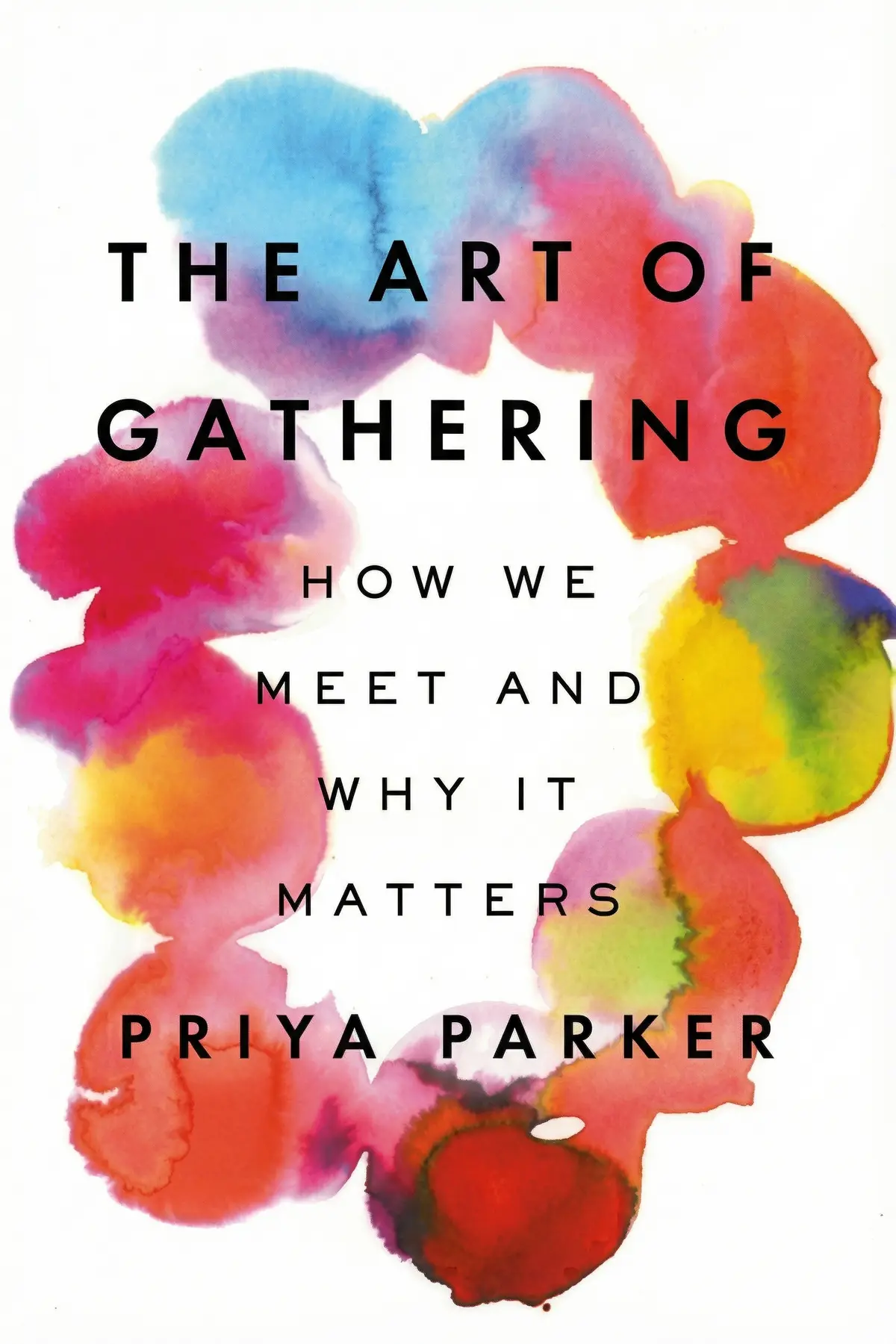
Table of Content
1. Introduction
1 min 49 sec
Think about the last time you attended a wedding, a business meeting, or even just a dinner party with friends. If you really look back, how much of that time felt truly alive? How much of it felt like you were just following a script that had been written decades ago, one that everyone followed but no one actually enjoyed? Most of our social and professional gatherings suffer from a kind of autopilot. We meet because it’s time to meet, or because it’s ‘what people do.’ We focus on the logistics—the food, the flowers, the PowerPoint slides—while the actual human connection, the very reason for coming together, gets pushed to the sidelines.
This is where we find ourselves in a culture of stale gatherings. We have become experts at the mechanics of hosting but have lost the art of bringing people together in a way that matters. This exploration is about reclaiming that art. It’s about moving beyond the superficial and understanding that every time two or more people congregate, there is an opportunity for something significant to happen. But for that to occur, we have to stop being afraid of taking control. We have to stop hiding behind ‘chill’ hosting and start designing experiences with a clear, bold intent.
Over the course of this summary, we are going to look at the fundamental shifts required to turn a standard event into a transformative experience. We will explore why a gathering’s success is determined long before the first guest arrives and why the most inclusive thing you can sometimes do is exclude the wrong people. We’ll talk about why the physical space matters more than you think and how the first and last five minutes of any event are the most valuable real estate you have. By the end, the goal is to equip you with a new lens through which to view every meeting, party, and conference, turning them from obligations into opportunities for genuine human magic.
2. Finding Your True Purpose
2 min 24 sec
Discover why ‘to catch up’ or ‘to have a meeting’ are not real reasons for gathering, and how a specific, debatable purpose can transform your next event.
3. The Power of Selective Inclusion
2 min 19 sec
Explore the uncomfortable but necessary truth that to make a gathering successful, you must be willing to leave some people out.
4. Design the Space as a Script
2 min 24 sec
Learn how the environment you choose acts as a silent host, dictating how people move, speak, and interact before you even open your mouth.
5. The Fallacy of the Chill Host
2 min 13 sec
Discover why being a ‘relaxed’ host often leads to chaos or boredom, and why exercising ‘generous authority’ is the key to protecting your guests.
6. Using Pop-Up Rules to Liberate
2 min 06 sec
Learn how temporary, arbitrary rules can break social norms and allow people to connect in ways they never would in the ‘real world.’
7. Don't Start with Logistics
2 min 16 sec
The first five minutes of your gathering are the most critical. Discover why you should never waste them on administrative details and how to launch with impact.
8. End with Meaning, Not a Frizzle
2 min 07 sec
Explore why the final moments of a gathering are just as important as the beginning, and how to avoid the ‘fizzle-out’ ending.
9. Conclusion
1 min 29 sec
In the end, the art of gathering is about much more than just hosting a successful event. It is about a fundamental respect for human time and human connection. We live in an age where we are constantly connected digitally but increasingly isolated physically and emotionally. Our gatherings are the primary way we bridge that gap, yet we so often treat them as chores or obligations. By applying the principles we’ve discussed—defining a sharp purpose, being selective about who is in the room, using the space as a tool, and leading with generous authority—we can reclaim these moments.
Remember that every gathering is an act of design. You are the architect of an experience. You have the power to create a space where people feel seen, where they feel safe enough to be vulnerable, and where real change can happen. It requires courage to step away from tradition and to risk being ‘uncool’ or ‘too intense.’ But the reward is a life filled with moments that actually matter.
The next time you are tempted to host a gathering ‘the way it’s always been done,’ stop and ask yourself what you really want to achieve. Who needs to be there? What does the room need to say? How will you lead them? If you take the time to answer those questions, you won’t just be having a meeting or a party. You will be practicing the art of gathering, and in doing so, you will be making the world a little more connected, one room at a time. Start small, be intentional, and don’t be afraid to take the lead. Your guests will thank you for it.
About this book
What is this book about?
Most of our gatherings are repetitive and uninspired because we rely too heavily on tradition and etiquette rather than focusing on the actual people in the room. This book serves as a manifesto for why we meet and a practical guide on how to do it better. It argues that by being more intentional—from how we define the purpose of an event to how we curate the guest list and manage the space—we can create moments that are truly transformative. The promise of the book is a shift in mindset: moving away from being a passive host who 'lets things happen' to becoming an active facilitator who creates safety and connection. Whether it is a high-stakes corporate board meeting or a casual family dinner, the principles laid out here aim to eliminate the boredom of the status quo and replace it with depth, discovery, and genuine human engagement.
Book Information
About the Author
Priya Parker
Priya Parker is a facilitator who works with corporate executives, activists, educators and more to create transformative gatherings. Trained in conflict resolution, Parker has worked on peace processes in the Middle East, Africa and India. She has been a member of the World Economic Forum’s New Models of Leadership Council, and her TEDx talk on purpose has been viewed over a million times.
Ratings & Reviews
Ratings at a glance
What people think
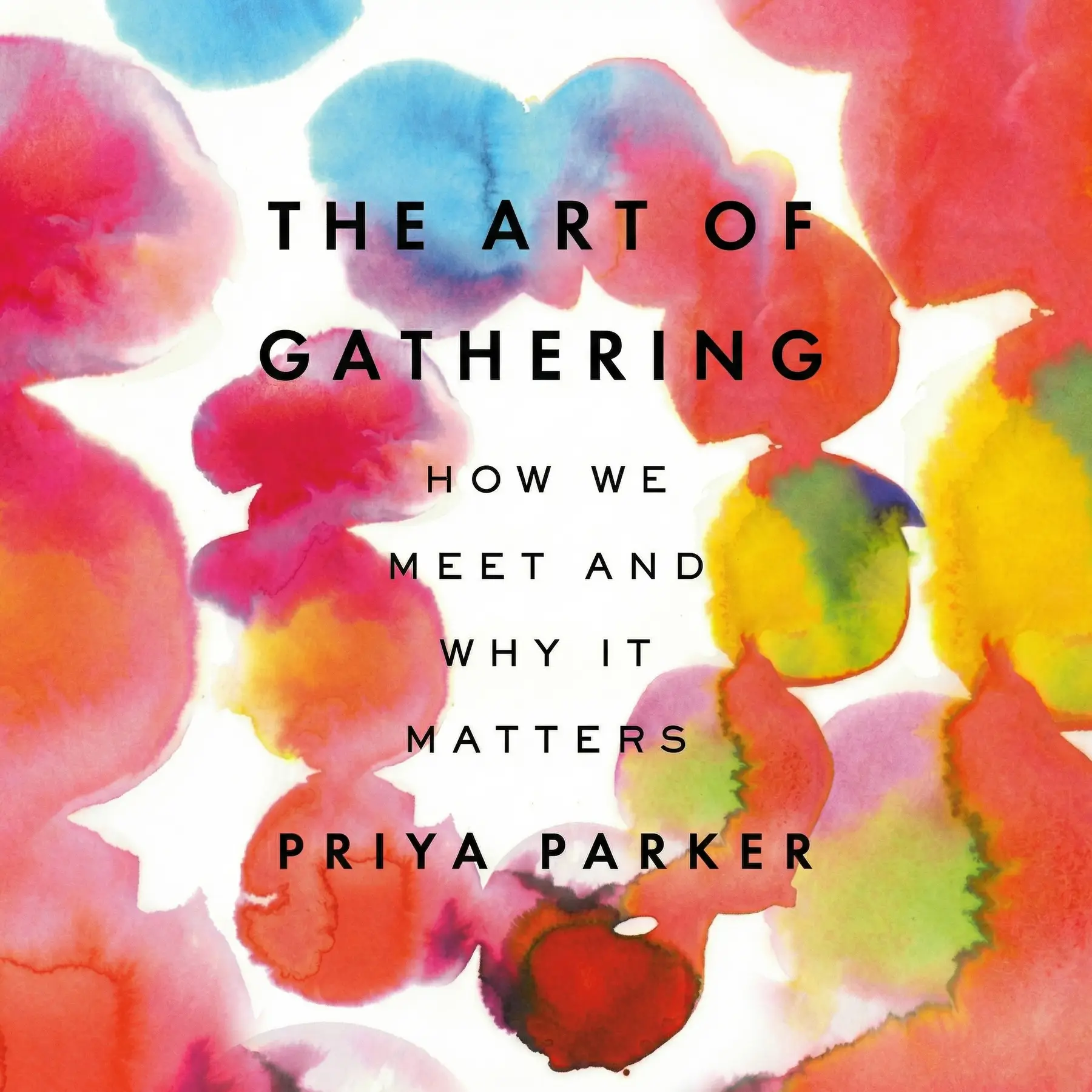
Listeners consider this work a necessary read for anyone who hosts others, providing perceptive guidance on organizing intentional meetings and events. The text offers valuable perspectives and assists people in developing community through deep dialogue, while also incorporating psychological theories that make the material stimulating and motivating. Listeners value how it masterfully demonstrates the importance of impactful get-togethers, resulting in a pertinent and significant experience.
Top reviews
Siraporn
As someone who organizes a lot of professional development workshops, I found Parker’s insights into intentionality to be a total game-changer for my workflow. She challenges the pervasive "chill" hosting style, arguing that a lack of structure actually does a disservice to your guests. I loved the concept of "generous authority" where you take responsibility for the group's experience rather than letting it drift into aimless awkwardness. While some of the high-level examples feel a bit out of reach for a normal person, the core principles of purposeful gathering are universal. My dinner parties will never look the same after applying her advice on how to start a night without boring, logistical introductions. Every event needs a clear reason for existing.
Show moreSelin
Wow. I didn't expect a book about meetings to make me feel so emotional, but Parker really gets to the heart of what it means to belong to a group. She highlights how most of our gatherings are stuck in autopilot, relying on stale traditions that don't actually serve the people in the room. I particularly loved the section on "generous authority" because it gave me permission to actually lead my events instead of just providing snacks and hoping for the best. Some might find her style a bit intense, but if you want to create memories that actually stick, you need to be willing to be a little bold. This is essential for anyone who leads a community.
Show moreHassan
Picked this up because I wanted to be a better host, and I walked away with a completely different perspective on how to lead my community. The book is filled with thought-provoking ideas about how we use space and time to signal what really matters to us in a social setting. I loved the examples of unconventional gatherings, like the story circles, which showed that you don't need a huge budget to make an impact. Frankly, we are all a little starved for real connection these days, and Parker provides a roadmap for moving past small talk into something more substantial. It’s an inspiring read that I think every manager and social butterfly should have on their shelf.
Show morePreeda
Finally got around to reading this after seeing it recommended everywhere, and I have to say the psychological concepts behind human interaction were fascinating. I appreciated how she deconstructs why some weddings feel like magic while others feel like a chore we are all just enduring together. To be fair, she is an inveterate name-dropper, and the constant references to the World Economic Forum can get a little grating after the third or fourth chapter. However, her point about excluding people to protect the purpose of the event is a hard truth that more hosts need to hear. It’s a practical guide for anyone looking to build deeper community through shared experiences instead of just hosting another generic get-together.
Show moreTak
Truth is, I went into this expecting a social psychology book and ended up with a manual for high-end event planning. There are some genuine gems here, especially the advice about not thanking people for their roles at the start of a speech, though I noticed she broke her own rule in the acknowledgments. I struggled with the tone at times because it feels like Parker is constantly patting herself on the back for her "visionary" gatherings. It’s a solid read for Type-A personalities who want to optimize their social lives, but it might feel overly mechanical for people who prefer organic spontaneity. It’s worth the read if you can ignore the high-society posturing.
Show moreAnthony
Not what I expected at first, but I've found myself quoting this book at work almost every single day since I finished it. Parker’s insistence on starting with a "why" rather than a "what" is such a simple shift, yet it changes everything about how you plan an agenda. I do think she contradicts herself occasionally, like when she tells you not to thank people by their titles but then spends pages doing exactly that in her own writing. Despite those small quirks, the advice on how to end an event with a sense of closure is something I hadn’t seen anywhere else. It’s an insightful look at the invisible architecture that makes or breaks our time spent together.
Show moreRoo
Look, if you can get past the constant name-dropping, there is actually some brilliant advice here for making your life more intentional. I appreciated the specific tips on seating arrangements and why the physical environment dictates the mood of the conversation more than we realize. Some of the suggestions are a bit much—like the idea of spending a day underground with a busker to build empathy—but the underlying logic about connection is sound. It’s a very Type-A book for a very Type-A world, but it helped me realize why so many of my past parties felt like a flop. It’s a great resource for anyone who wants their events to have a lasting impact.
Show moreNattapong
Ever wonder why some corporate consultants feel the need to turn every single human interaction into a structured "exercise"? This book provides the answer, and it’s every bit as exhausting as you’d imagine. Parker’s world is one where nothing happens naturally, and everything from a simple dinner to a protest must be micromanaged to achieve a specific psychological outcome. I found her dismissal of the "chill" host to be incredibly condescending to those of us who enjoy organic conversation without a 45-minute introduction process. The advice to have subway buskers train corporate sales teams was particularly absurd and feels like peak Silicon Valley nonsense. It’s all very performative and deeply disconnected from how real people live.
Show moreLucia
The chapter on "authority" was where I really started to lose interest because it felt like a justification for being a controlling host. While I agree that many meetings are aimless, the solution shouldn't be to turn every social interaction into a high-stakes psychological experiment with forced vulnerability. Parker’s examples are frequently so high-status—dealing with world leaders and gold-foil art installations—that the advice feels useless for someone just trying to host a book club. I also found her take on student protests at Middlebury to be quite misguided and felt it detracted from the supposed expertise. It feels like a long-form LinkedIn post that got stretched into a book through sheer force of will.
Show moreTakeshi
This was a total exercise in frustration and honestly felt like reading a manual written by Tahani Al-Jamil from The Good Place. Parker spends an exhausting amount of time name-dropping world leaders and exclusive summits, which makes her advice feel incredibly elitist and out of touch with reality. She suggests these bizarre, forced interactions that would make any normal person want to crawl under a table and hide forever. I found it deeply ironic that she mocks a lack of purpose while her own book feels bloated and desperately in need of a harsh editor. Save yourself the headache and just let your friends hang out without a choreographed screenplay or a designated "authority figure." It’s over-engineered nonsense.
Show moreFeatured in
Readers also enjoyed
AUDIO SUMMARY AVAILABLE
Listen to The Art of Gathering in 15 minutes
Get the key ideas from The Art of Gathering by Priya Parker, plus 5,000+ more titles in English and Thai.
- 5,000+ titles
- Listen as much as you want
- 7-day free trial
- Cancel anytime







