

A History of Iran: Empire of the Mind
Michael Axworthy
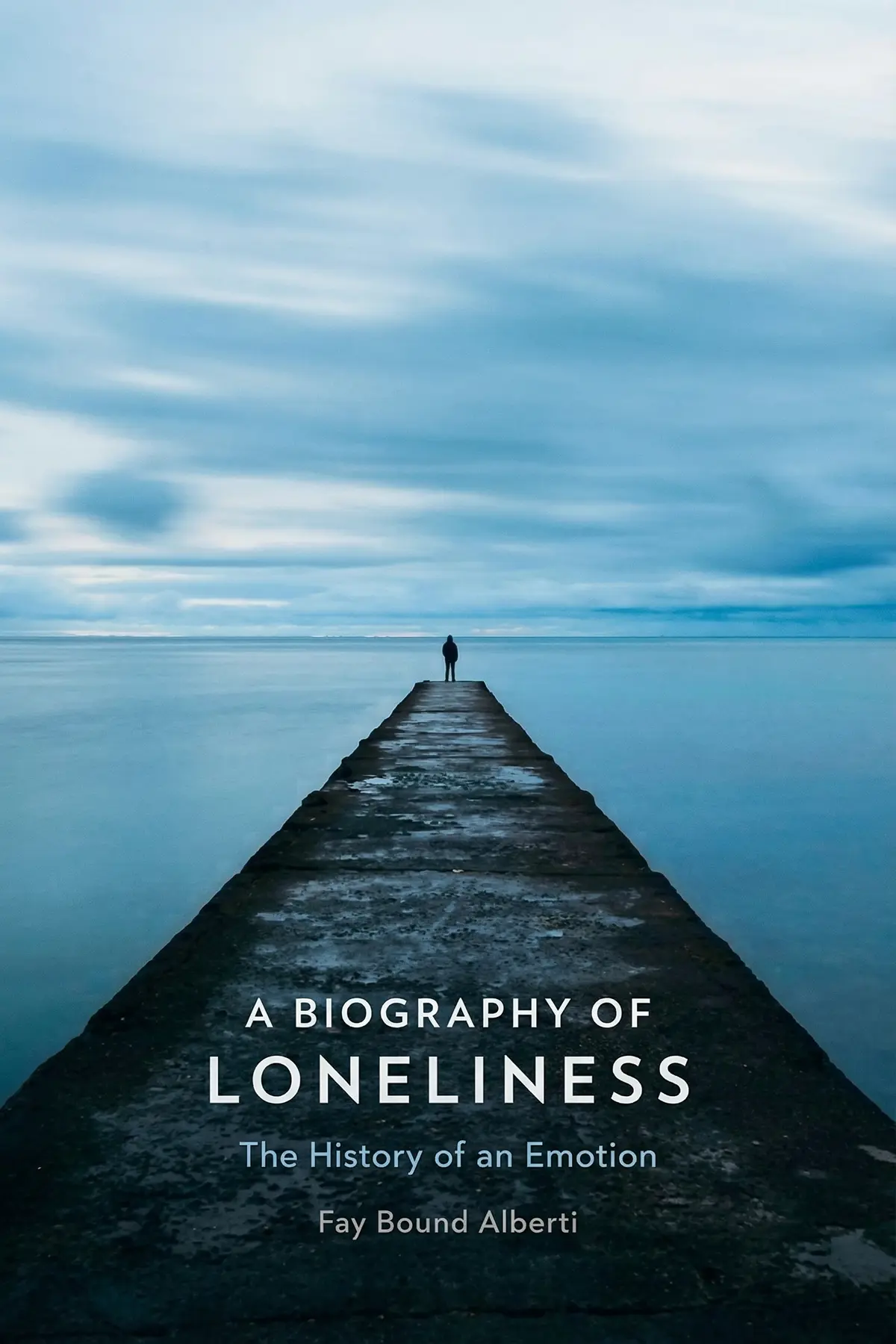
Explore the surprising history of loneliness, tracing its evolution from a spiritual state of solitude to a modern health crisis, while uncovering how societal shifts shaped our deepest emotional experiences.
1 min 22 sec
We often think of our feelings as timeless, as if the sadness or joy we feel today is exactly what a person would have felt five hundred years ago. We assume that loneliness, in particular, is just a part of the human condition—a biological inevitability. But what if that wasn’t true? What if the intense, hollow ache we call loneliness is actually a relatively new invention, a product of the way we’ve built our modern world?
In this exploration of A Biography of Loneliness, we are going to travel back in time to see how our inner landscapes have been reshaped by history. We will discover that for most of human history, the word ‘lonely’ didn’t even carry the emotional weight it does now. It described a place, not a state of the heart. The shift from living in tight-knit, God-centered communities to our modern, individualistic society has created a new kind of emotional void.
Through the lenses of literature, royal history, and even the digital age, we’ll see how loneliness became what many now call an ‘epidemic.’ We’ll look at why we’ve become so obsessed with finding ‘soulmates,’ why social media is more of a mirror than a cause, and how our economic systems have left the elderly behind. By the end of this journey, you’ll understand that loneliness isn’t just a personal failing or a medical symptom—it is a story that we have been writing collectively for over two centuries. Understanding that history is the first step toward finding a new way to belong.
2 min 37 sec
Could an emotion as fundamental as loneliness be a recent invention? Discover how a shift in language around 1800 revealed a massive change in the human experience.
2 min 16 sec
We are told that a single ‘other half’ can cure our isolation, but this romantic ideal might actually be making us lonelier than ever.
2 min 20 sec
Compare the mourning rituals of an eighteenth-century tradesman and a nineteenth-century Queen to see how grief became a lonely experience.
2 min 15 sec
Is social media really the cause of the loneliness ‘epidemic’? The truth is more complicated than just blaming our screens.
2 min 22 sec
Loneliness in old age is often called a ‘ticking time bomb,’ but the real issue might be how our society values human life.
2 min 29 sec
Loneliness isn’t just in your head—it’s in your body. But for some, this painful sensation is a necessary tool for creativity.
2 min 17 sec
How did a theory about biology turn into a recipe for isolation? Explore the link between Darwin, competition, and our lonely modern world.
1 min 45 sec
As we have seen, loneliness is not a timeless, unchanging burden of the human soul. It is a complex, modern phenomenon with a specific history that began only about two centuries ago. By tracing its ‘biography,’ we can see how the decline of religious community, the rise of the industrial individual, the myth of the romantic soulmate, and the pressures of a competitive economy have all converged to create the ‘epidemic’ we face today.
The throughline of this journey is that our emotions are not just internal—they are reflections of the world we build. We moved from the spiritual ‘oneliness’ of the past to the painful ‘loneliness’ of the present because we changed how we value ourselves and each other. We began to see ourselves as isolated units of production rather than parts of a sacred or social whole.
But there is hope in this history. If loneliness was made by the way we live, it can be unmade. We can start by rejecting the idea that it is an inevitable part of aging or a simple side effect of technology. We can challenge the ‘soulmate’ myth and begin to reinvest in broader communities. Most importantly, we can stop treating loneliness as a personal medical problem and start seeing it as a collective social challenge.
The next time you feel that familiar ache of isolation, remember that you aren’t just feeling a personal failing. You are experiencing a chapter in a much larger historical story. By understanding that story, we can begin to write a new one—one where connection is not a luxury for the ‘fittest,’ but a fundamental right for everyone. It is time to move beyond the age of loneliness and rediscover the power of belonging.
A Biography of Loneliness challenges the idea that feeling lonely is an eternal human constant. Instead, it reveals that the modern concept of loneliness only emerged around the nineteenth century, coinciding with massive shifts like the industrial revolution, the rise of individualism, and the decline of traditional religious structures. By examining historical diaries, literary icons, and modern social media, the book shows how our cultural environment dictates how we feel. This summary provides a historical roadmap of the heart, explaining how we transitioned from the sacred solitude of 'oneliness' to the modern 'epidemic' of isolation. It promises to reshape your understanding of why we feel disconnected today and offers a nuanced perspective on how we might address this chronic condition in an increasingly secular and digital world.
Dr. Fay Bound Alberti is a distinguished historian and writer who focuses on medicine, the human body, gender, and the history of emotions. She serves as a reader in history and a UKRI Future Leaders Fellow at the University of York. Her extensive academic career includes teaching at various universities across the United Kingdom and speaking widely on the cultural evolution of human feeling.
Listeners consider this socio-historical investigation of loneliness a compelling analysis of how today’s "epidemic" came to be, though some find the tone somewhat clinical or academic. They value how the narrative follows the movement from 18th-century "oneliness" to modern alienation, with one listener specifically praising its sharp observations on how capitalism and contemporary life have eroded societal connections. Additionally, listeners find importance in the book’s look at loneliness among different populations, like the aged and social media enthusiasts, to better grasp the need for potential policy shifts. Finally, they note that incorporating cultural references such as Sylvia Plath and The Beatles' "Eleanor Rigby" helps anchor the historical context of this multifaceted emotion.
Ever wonder why being alone feels so deeply shameful in modern society? Alberti traces that exact shift with remarkable clarity, demonstrating that loneliness is not a timeless biological reality, but a socio-historical construct forged by modern capitalism and aggressive individualism. Her analysis of how elderly isolation mirrors the tragic lyrics of The Beatles' 'Eleanor Rigby' struck an emotional chord that grounded her dense research. Solitude once meant a peaceful communion with oneself or with God; today, it is treated like a public health crisis that individuals are blamed for failing to cure. This book made me reconsider my entire relationship with being alone.
Show morePoignant, rigorously researched, and deeply necessary for our post-pandemic landscape. Alberti accomplishes something rare: she de-pathologizes the individual by shifting blame onto the fractured architecture of modern life. Loneliness is not a personal failure of charisma or sociability; it is the price tag of a society that dismantles public spaces, privatizes care, and demands hyper-individualism at all costs. Connecting the dots from nineteenth-century industrial urbanization straight to contemporary elder neglect and online atomization was brilliant. It reads with academic authority without completely losing touch with the quiet tragedy of the lonely person. A masterclass in the history of emotions.
Show morePicked this up right after learning that the UK actually appointed a Minister for Loneliness, curious about how our culture arrived at this supposed epidemic. Fay Bound Alberti provides a genuinely fascinating cultural history, showing how our current dread of being alone was essentially invented in the late eighteenth century. Before industrialization and aggressive capitalism broke apart communal living, people spoke of 'oneliness' without the crippling negative baggage we attach to it now. That shift from sacred solitude to toxic alienation was eye-opening. To be fair, the prose leans heavily toward academic jargon at times, and the literary detour into Sylvia Plath's journals felt somewhat disjointed from the broader social policy arguments. Still, it completely reshaped how I think about social isolation.
Show moreThe distinction between linguistic 'oneliness' and modern loneliness was an absolute revelation for me. Alberti demonstrates that until modern secularism stripped away collective communal life, solitude could be embraced as spiritually productive and creatively necessary. Seeing loneliness framed as a structural byproduct of free-market capitalism rather than an individual emotional deficiency felt both validating and deeply urgent. My only major critique is the uneven pacing across chapters. While the discussions around aging and societal abandonment are devastatingly sharp, the literary analysis of figures like Rainer Maria Rilke feels slightly perfunctory. Even so, it provides essential historical scaffolding for anyone trying to understand our fractured world.
Show moreFinally tackled this after seeing it compared to Olivia Laing's work, though it is a radically different beast. Where Laing uses art and biography to create an intimate memoir, Alberti operates strictly as an institutional historian dissecting a societal condition. Her examination of how class, gender, and neoliberal economic models dictate who experiences isolation is impeccably argued. I especially appreciated how she deconstructs the political rhetoric behind declaring loneliness an 'epidemic,' warning that medicalizing an emotion allows governments to dodge necessary welfare investments. The prose can be a bit stiff and scholastic, but the intellectual payoff is well worth the effort.
Show moreAs someone fascinated by the history of emotions, I really wanted to love this study. There is brilliant material here about how nineteenth-century industrial shifts replaced community interdependence with radical self-reliance, giving birth to what we now diagnose as chronic loneliness. Alberti makes a strong case that loneliness is a cluster of distinct physical and mental vulnerabilities rather than a simple mood. Unfortunately, the writing style wanders between dense academic theorizing and oddly shallow pop culture critiques. The author critiques the rise of neoliberalism effectively, yet when she turns to digital spaces, she offers a surprisingly tepid defense of online platforms that undercuts her larger structural points. It is worth reading for the core thesis, but prepare yourself for plenty of dry patches.
Show moreLook, there are two distinct books fighting for space inside these pages. On one hand, you have an urgent socio-political critique examining how market economies atomize citizens and leave marginalized demographics, particularly the elderly, adrift. On the other hand, Alberti attempts a lyrical cultural biography featuring Queen Victoria and Sylvia Plath that never quite meshes with the policy-oriented arguments. The syllable count is high, and the tone fluctuates between a dry academic syllabus and a reflective essay. Truth is, I learned a lot about how our emotional vocabulary transformed after the 1800s, but getting through it required serious patience. A worthwhile study, even if the execution wobbles.
Show moreA Biography of Loneliness is an intriguing intellectual puzzle that occasionally forgets to have a heart. Alberti's central historical trajectory—showing how 'oneliness' stood for peaceful physical isolation before industrial modernity transformed it into psychological misery—is brilliant scholarship. But in my experience, the academic detachment keeps the reader at arm's length. The discussions around Facebook and digital communities feel overly optimistic and frankly out of touch with the reality of algorithmic isolation. It offers plenty of food for thought regarding policy reform and social structures, but don't go in expecting an emotional catharsis. It is a textbook first, cultural critique second.
Show moreNot what I expected, and frankly a bit of a slog. I came in hoping for an empathetic exploration of what it actually feels like to be isolated in modern society, but this is an intensely detached sociological text. Alberti spends far too much time parsing academic definitions and reciting policy papers rather than capturing human experience. The chapter on social media felt remarkably dated, focusing disproportionately on Facebook while offering an oddly cheerful conclusion about online connectivity that ignores how algorithms deliberately foster insecurity. While the historical concept of 'oneliness' versus modern loneliness is undeniably interesting, it wasn't enough to save what felt like an extended dissertation.
Show moreDry, repetitive, and painfully detached from genuine human feeling. Alberti took one of the most agonizing, universal experiences of our era and flattened it into bloodless academic prose. The book promises cultural analysis, but its forays into poetry, Queen Victoria's mourning, and Sylvia Plath feel like superficial window dressing tacked onto a dry economic thesis. The sentence structures are exhausting, the pacing drags relentlessly, and the author's conclusions about social media being generally benign fly in the face of all current reality. If you want insight into modern alienation, go listen to 'Eleanor Rigby' instead. You'll learn far more in three minutes than from these two hundred pages.
Show moreMichael Axworthy
Tom Standage
Johny Pitts

Ishmael Beah
bell hooks
AUDIO SUMMARY AVAILABLE
Get the key ideas from A Biography of Loneliness by Fay Bound Alberti, plus 5,000+ more titles in English and Thai.







