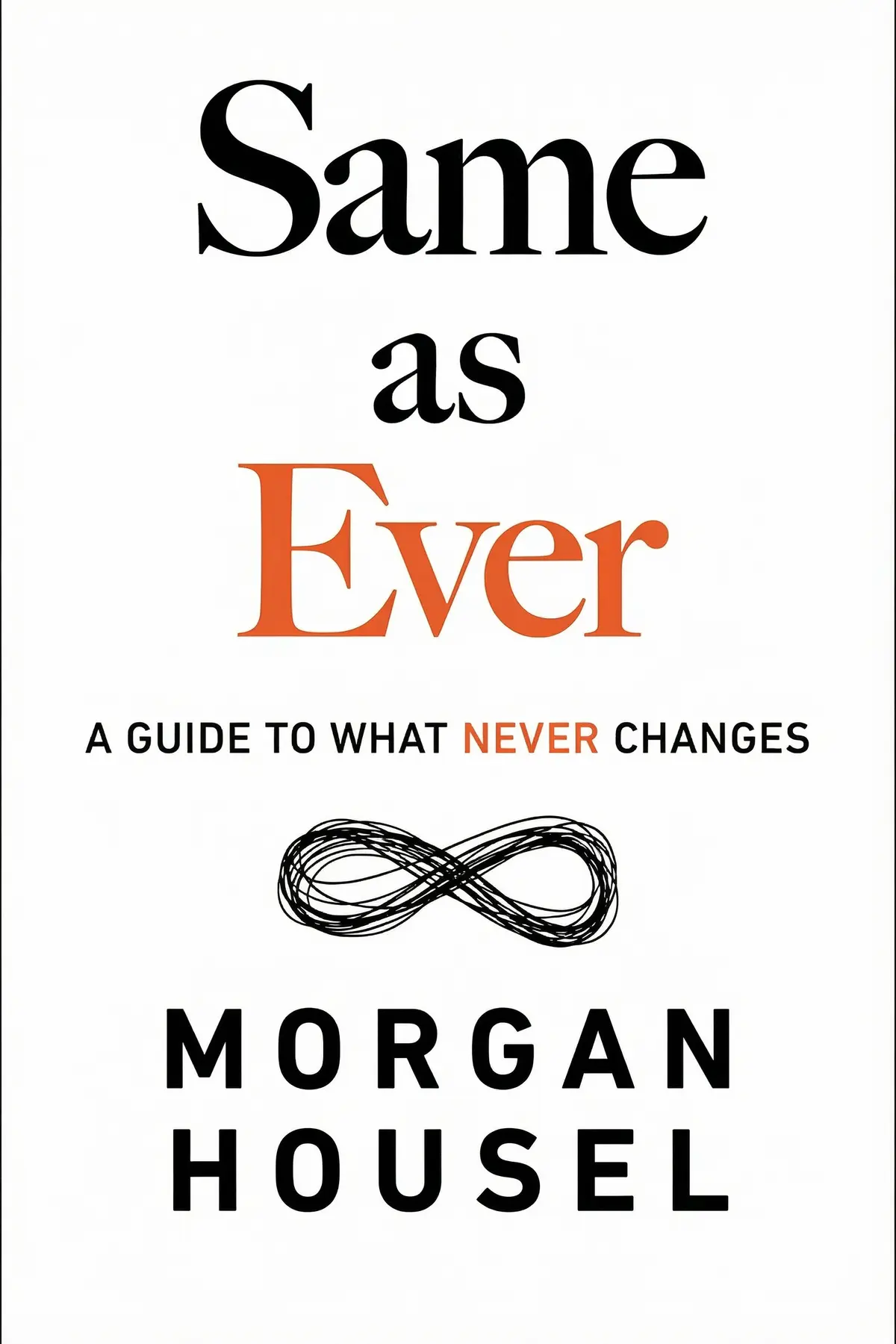
Same as Ever: A Guide to What Never Changes
Morgan Housel
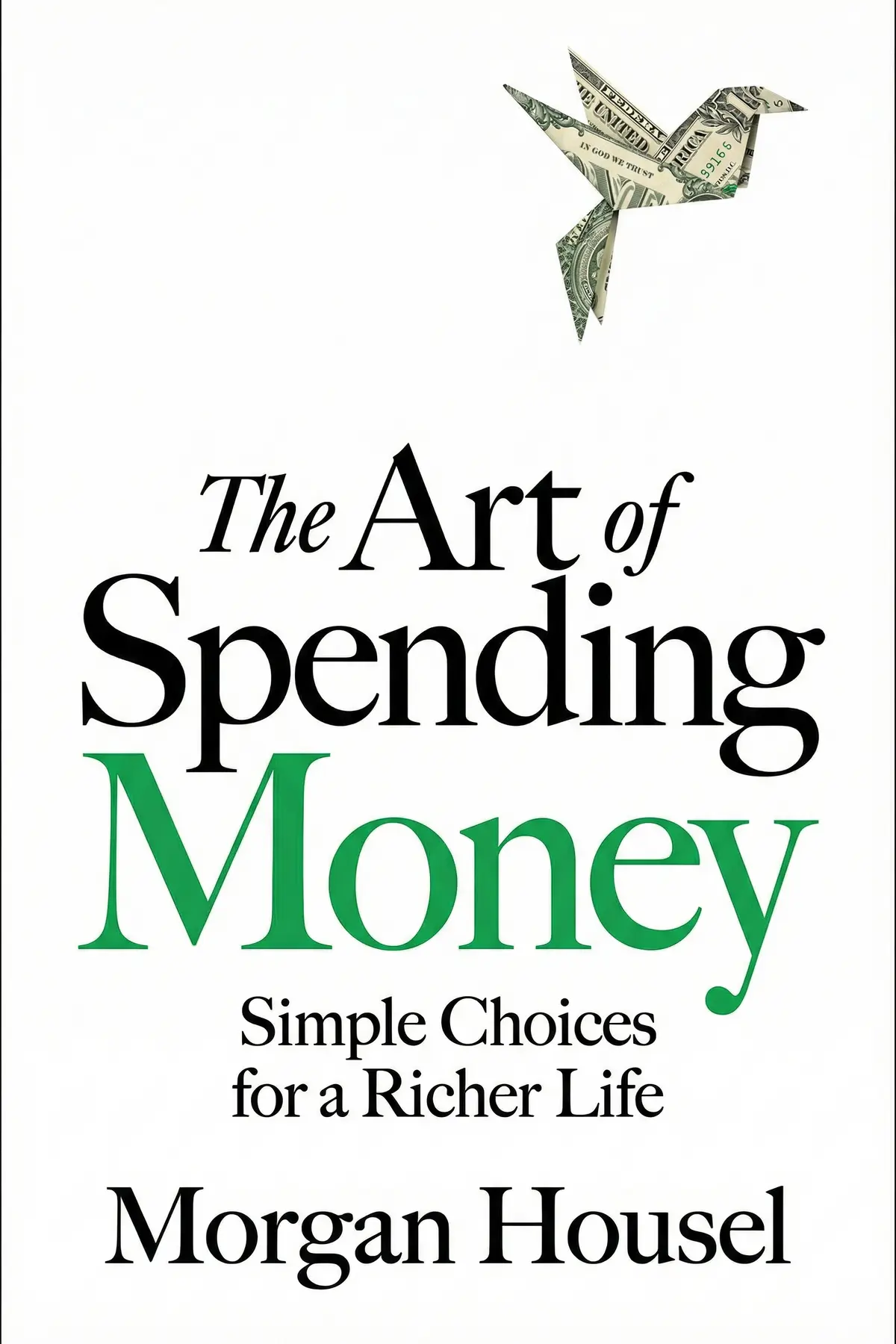
Explore the psychological nuances of financial choices. This guide moves beyond budgeting to help you align your spending with personal satisfaction, showing how to use money as a tool for a truly fulfilling life.
1 min 48 sec
Most of us spend the better part of our lives learning the mechanics of how to get money. we study for degrees, climb corporate ladders, and obsess over investment portfolios. But there is a second, arguably more difficult half to the wealth equation that rarely gets the same attention: the skill of actually using that money once you have it. We assume that if we have enough funds, the happiness part will simply take care of itself. Yet, if you look around, you’ll see plenty of wealthy people who are miserable, and plenty of people with modest means who seem to have found the secret to a rich life.
This gap between wealth and fulfillment exists because spending is an art, not a science. While math and logic govern the earning side, psychology and emotion govern the spending side. We are prone to chasing status symbols that lose their shine within a week, or we save so aggressively out of fear that we never actually enjoy the freedom our hard work was supposed to provide. We find ourselves on a treadmill of comparison, looking at what our neighbors have and feeling a persistent, nagging sense of being behind, regardless of how much we’ve actually achieved.
To bridge this gap, we need to shift our focus away from the numbers on a screen and toward the values in our hearts. In the following sections, we’ll explore how to turn money into a tool for intentional living. We will look at why comfort often leads to boredom, how to escape the traps of social expectation, and why the most successful people are often those who treat their lifestyle as an ongoing experiment. By understanding the deep-seated psychological triggers that drive our financial choices, we can begin to spend in a way that doesn’t just drain our accounts, but actually fills our lives with meaning. This is about more than just budgeting; it is about the fundamental quest to align your resources with the person you truly want to be.
2 min 33 sec
Financial success is often measured by numbers, but true wealth is found when capital serves human needs rather than social competition.
2 min 33 sec
Universal rules for spending often fail because they ignore individual temperament and the unique stories that shape our values.
2 min 55 sec
Human satisfaction is not a static state; it thrives on the gap between our current reality and our previous expectations.
2 min 32 sec
Instead of following a rigid budget, treat your lifestyle as an experiment to find the specific indulgences that provide the most value.
2 min 52 sec
Acknowledging the role of luck in our achievements fosters a spirit of generosity that is both morally right and practically beneficial.
1 min 33 sec
As we wrap up our journey through the psychology of financial life, it’s clear that ‘spending well’ is a skill that must be cultivated with as much rigor as ‘earning well.’ We have seen that money, at its best, is a flexible tool meant to support a life of meaning, health, and connection. It is not a scoreboard to use against others, nor is it a cure-all for our deepest emotional needs. To find true fulfillment, we must be willing to step off the treadmill of social comparison and look inward to discover our own authentic values.
Remember that happiness is found in the gap between our reality and our expectations. By maintaining a sense of contrast and treating luxuries as occasional delights rather than constant requirements, we keep our capacity for joy sharp. Treat your lifestyle as a grand experiment—be brave enough to try new things, but wise enough to cut away what doesn’t serve you. Above all, maintain the humility to recognize the role of luck in your success, and let that humility drive you toward kindness and generosity.
The throughline of this entire exploration is intentionality. A rich life is not one filled with the most things, but one where every dollar spent is a conscious choice that aligns with the person you want to become. Take these lessons into your daily life. The next time you reach for your wallet, pause for a moment and ask: ‘Is this serving my scoreboard, or is this serving my soul?’ When you start answering that question honestly, you’ll find that you’re no longer just managing money—you’re mastering the art of living.
Many people focus exclusively on the accumulation of wealth, believing that a higher net worth automatically translates into a better quality of life. However, the true challenge often lies not in the earning, but in the spending. This summary explores the intricate relationship between our bank accounts and our emotional well-being, arguing that financial success is a hollow victory if it doesn’t support a sense of purpose and joy. Through a series of psychological insights and illustrative narratives, the book examines why we often feel less satisfied the more we acquire. It breaks down the traps of social comparison, the phenomenon of lifestyle adaptation, and the importance of personal values in financial decision-making. Readers will learn how to treat their spending as an ongoing experiment, filtering out societal pressures to find what truly makes them happy. By the end, the goal is to shift the perspective from viewing money as a scoreboard to viewing it as a flexible resource for building a rich, intentional, and meaningful existence.
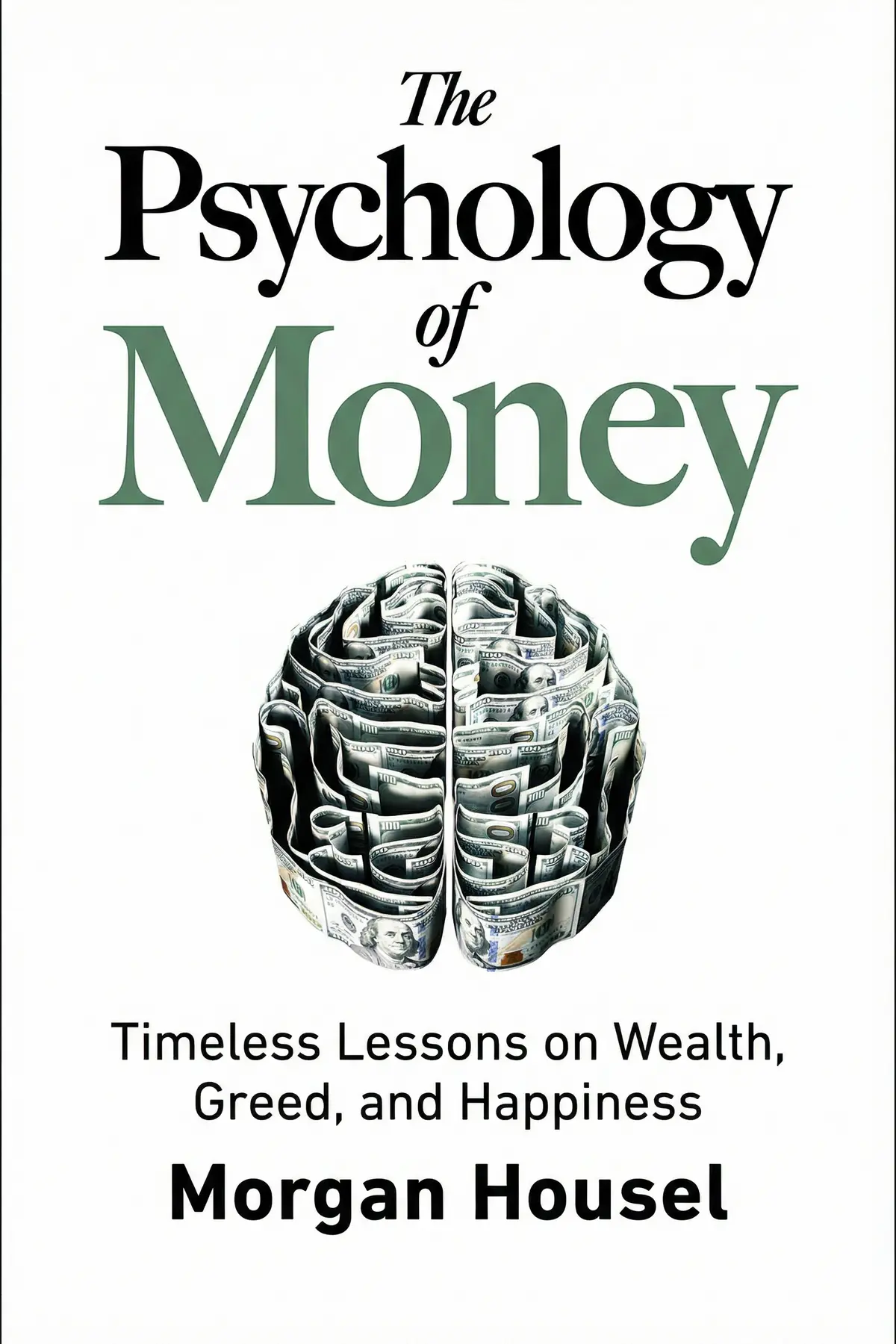
Morgan Housel is a partner at the Collaborative Fund and is widely regarded as a leading expert in the field of behavioral finance. He has been recognized for his excellence in financial journalism, twice receiving the Best in Business Award from the Society of American Business Editors and Writers. Housel is also a recipient of the New York Times Sidney Award and has been a two-time finalist for the prestigious Gerald Loeb Award. He is most famous for his best-selling book, The Psychology of Money, which established him as a master of explaining how human emotions and attitudes influence our financial outcomes.
Listeners find this work insightful and thought-provoking, with many noting it serves as the second installment in the Psychology of Money series. The book is well-crafted and easy to digest, featuring relatable daily anecdotes regarding financial situations. They value the straightforward perspective on spending and feel it is worth their time, as one listener compares it favorably to "The Psychology of Money."
Wow. This book hit me harder than I anticipated, especially the sections on how we use money to perform for others. Housel has this incredible knack for taking complex financial behaviors and stripping them down to their core emotional roots. I’ve always viewed saving as the ultimate goal, but he reframes spending as a skill that requires just as much intentionality and practice. To be fair, I never realized how much of my budget was dedicated to 'social debt' until I read the chapter on status. It’s a refreshing, honest look at why we buy what we do and how to break free from the hedonic treadmill. If you loved The Psychology of Money, this is the essential second act that completes the narrative. The writing is tight and the stories are genuinely memorable.
Show moreFinally got around to reading this and I’m kicking myself for waiting so long. Housel manages to explain the 'why' behind our bank statements in a way that feels like a conversation with a wise friend over coffee. Not gonna lie, the chapter on why low-income families make certain spending choices was incredibly eye-opening and handled with significant empathy. Most finance books are dry and clinical, but this one is human, focusing on independence rather than just a number on a screen. It’s a quick read that packs a psychological punch, making you question if you’re buying things for yourself or for the admiration of strangers. Every chapter challenges your assumptions about what it means to be 'wealthy' in a consumer-driven society. Definitely a must-read for 2025.
Show moreThe chapter on 'social debt' alone makes this entire book worth the price of admission. It perfectly articulates that hollow feeling we get when we buy things just to keep up with neighbors we don’t even like. Morgan Housel has a gift for making you feel seen without feeling judged, which is a difficult balance to strike in financial writing. I’ve been stuck in a cycle of scarcity and anxiety for years, and this book gave me the permission I needed to spend on what actually brings me joy. It’s a profound shift in perspective that prioritizes time and independence over material markers of success. This isn't just a book about money; it’s a manual for living a more contented, intentional life. I'll be gifting this to my younger self.
Show moreAfter hearing so many people compare this to The Psychology of Money, I was worried it wouldn't live up to the legacy. I was wrong. This book is a masterpiece of financial philosophy that focuses on the often-ignored 'spending' side of the equation. Housel’s ability to weave together stories of historical figures with modern psychological traps is simply unmatched in the genre. He doesn't tell you how to budget; he tells you how to think, which is far more valuable in the long run. In my experience, most financial advice is too prescriptive, but Housel respects the reader's autonomy. I found myself highlighting almost every other page because the insights were so sharp and relevant. It’s a beautifully written reminder that money is just a tool.
Show moreStop what you are doing and pick up this book if you’ve ever felt like you’re running in place despite earning more every year. Housel masterfully deconstructs the 'status trap' and explains why our desire for admiration often leads to financial ruin. Personally, I think most money books are about restriction, but this one is about the liberation that comes from knowing what you actually value. The prose is lean and efficient, making it a very quick read that stays with you long after you close the cover. It’s rare to find a book that is both intellectually stimulating and practically useful for your daily life. This is easily one of the best books on personal finance I’ve read in the last decade. Truly an eye-opener.
Show morePicked this up because Housel’s previous work changed my entire outlook on investing, and this follow-up is nearly as good. The writing is punchy and accessible, filled with those trademark anecdotes about historical figures that make the concepts stick. Personally, I found the discussion on the 'wide funnel and strict filter' for experiences to be the highlight of the entire text. However, there were moments where it felt like he was retreading ground from his blog posts, which might frustrate long-time followers. Frankly, it’s less about hard data and more about the philosophy of utility, so don't expect spreadsheets or tax hacks. It’s a solid 4-star read that will make you rethink your last three big purchases and why you actually made them.
Show moreThe Art of Spending Money is a rare finance book that focuses on the exit strategy rather than just the accumulation phase. Housel argues convincingly that the hardest financial skill isn't making money, but actually using it to improve your quality of life. I loved the distinction between using money as a tool for freedom versus using it as a yardstick for status. Truth is, some chapters felt a little repetitive, echoing themes of contentment that we’ve heard before from the minimalism movement. Still, his storytelling is top-tier, and the relatable everyday stories make the advice feel attainable rather than elitist. It’s a great companion piece to his earlier work that provides a necessary reality check on our modern consumer habits and insecurities.
Show moreEver wonder why your bank account grows but your happiness stays exactly the same? This book tackles that specific paradox with grace and a healthy dose of psychological insight. Housel examines how our upbringing influences our adult spending patterns, which forced me to reckon with my own history of financial insecurity. Frankly, the advice about having no FOMO being a vital financial skill is something I plan to internalize immediately. My only minor gripe is that the book avoids some of the harder questions regarding systemic economic pressures, focusing almost entirely on individual behavior. Despite that, it’s a thought-provoking read that will likely result in me purging several unnecessary subscriptions and focusing more on high-utility experiences. Well written and very accessible for anyone.
Show moreAs someone who has followed Morgan’s column for years, I had incredibly high expectations for this release. While the prose is as elegant and smooth as ever, I couldn't help but feel that the core message could have been delivered in a long-form essay. The anecdotes are charming, yet they occasionally felt like a distraction from the lack of a rigorous framework or systemic analysis. Look, it’s a pleasant read and definitely worth a borrow from the library, but it doesn't quite reach the heights of his first book. I appreciated the insight into how our backgrounds shape our spending fears, but I wanted more depth on the macro forces at play. It’s good, just not groundbreaking or particularly thought-provoking for seasoned finance readers.
Show moreNot what I expected at all given the massive hype surrounding this author. While Housel is undeniably a talented storyteller, this book felt like a collection of agreeable truisms that lacked any real intellectual bite or fresh data. I was hoping for a more critical framework for evaluating the return on life investments, but instead, I got a series of anecdotes about famous people. To be fair, the writing style is very clean and easy to get through, but the content felt thin and repetitive after the first fifty pages. If you’ve already mastered basic frugality and understand the concept of the hedonic treadmill, you won't find much new information here. It’s a self-help sermon for the comfortable that avoids the hard questions.
Show moreAUDIO SUMMARY AVAILABLE
Get the key ideas from The Art of Spending Money by Morgan Housel, plus 5,000+ more titles in English and Thai.