17 min 30 sec
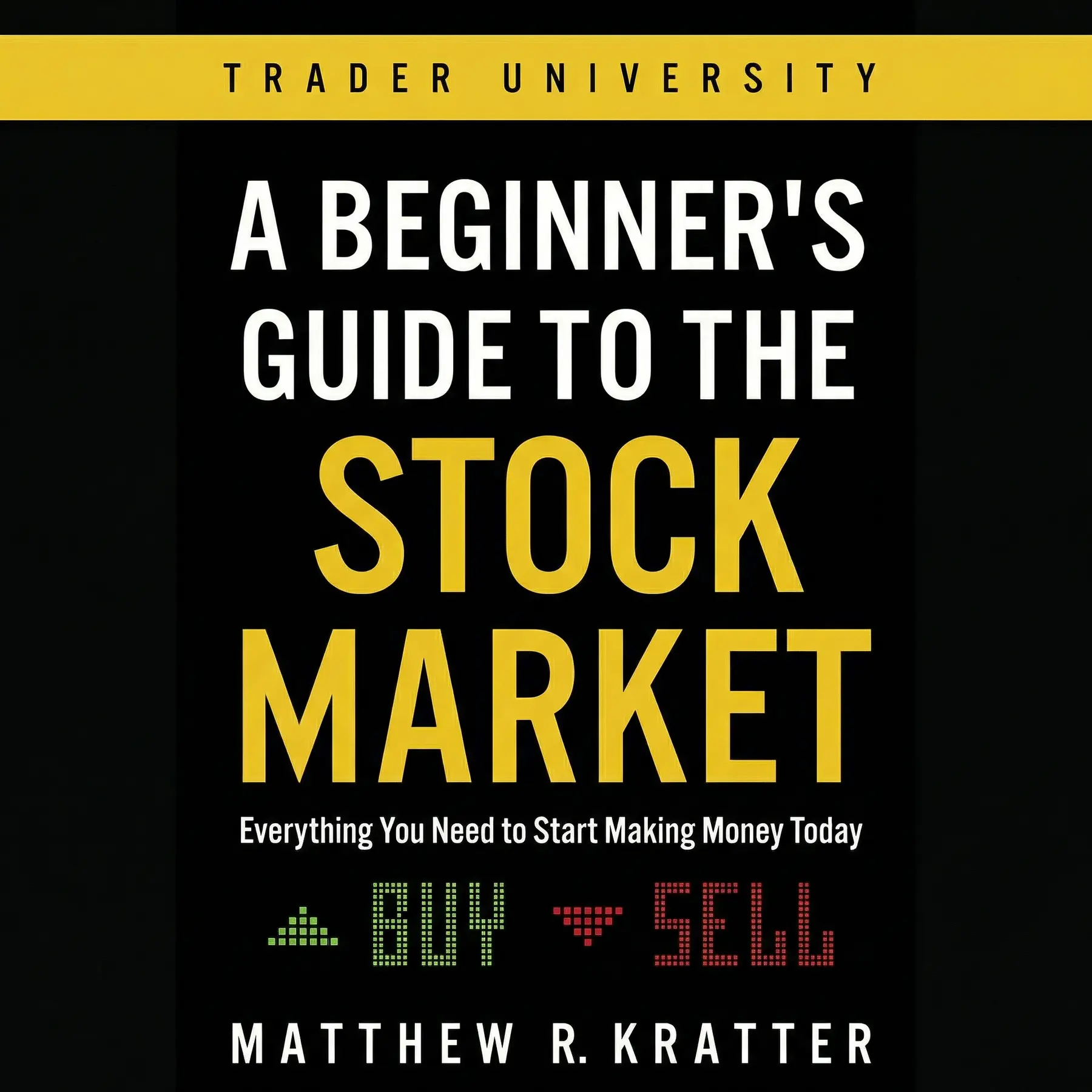
A Beginner’s Guide to the Stock Market: Everything You Need to Start Making Money Today
Discover a practical roadmap for entering the world of investing. This guide breaks down stock market basics, wealth-building strategies, and risk management techniques to help you grow your capital with confidence.
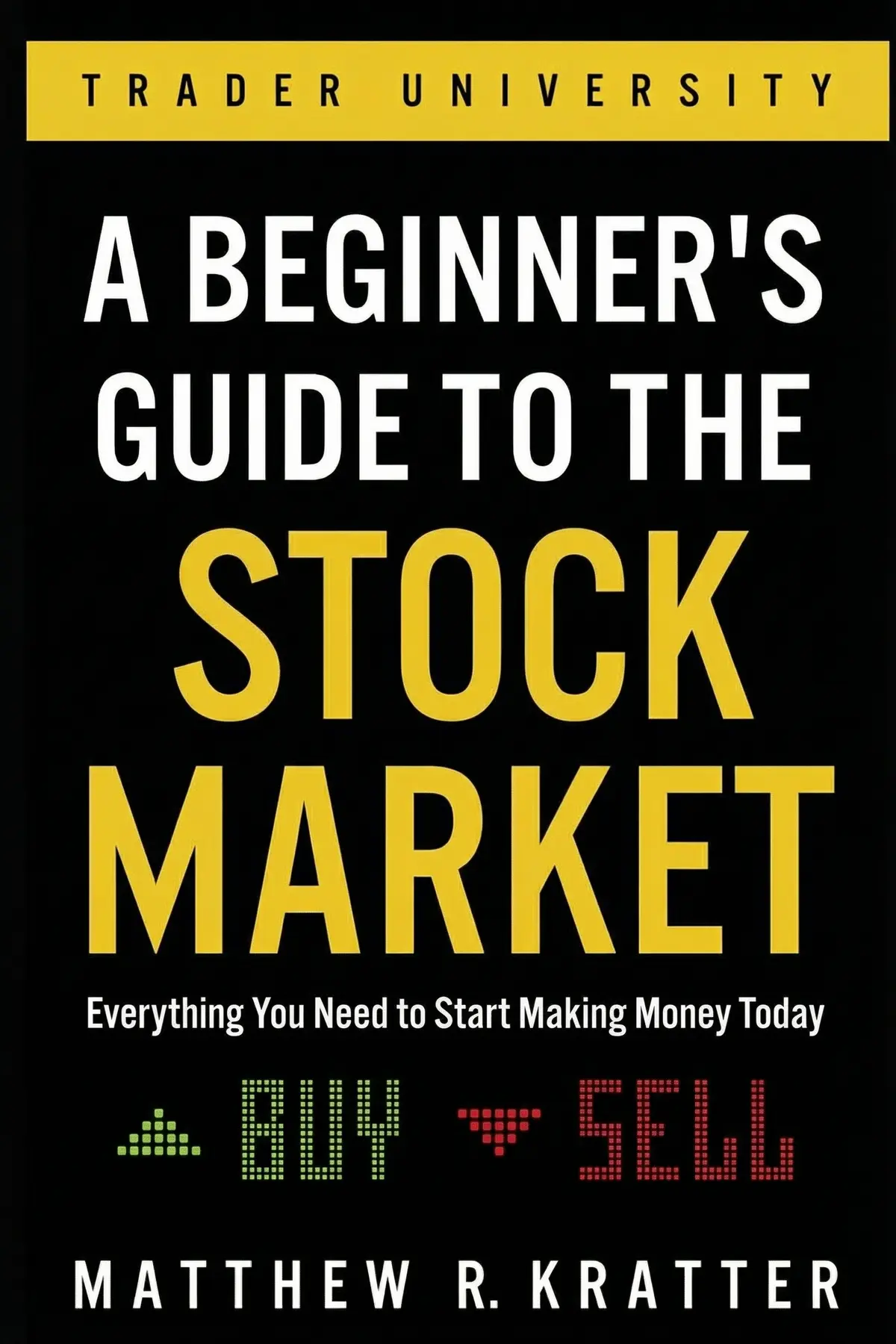
Table of Content
1. Introduction
59 sec
Have you ever looked at a financial news ticker and felt like you were staring at a foreign language? You aren’t alone. For many, the stock market feels like an exclusive club with a steep barrier to entry, filled with jargon and hidden risks. But what if the stock market isn’t a complex riddle, but rather a set of systems that anyone can learn to navigate?
This exploration of Matthew R. Kratter’s work provides a comprehensive roadmap designed to take you from total confusion to confident action. We aren’t just looking at how to buy a stock; we are looking at how to think like an investor. We’ll bridge the gap between where you are now and where you want your finances to be, focusing on the throughline of smart risk management and disciplined strategy.
Whether your goal is to build a massive retirement nest egg through passive means or to supplement your income with active trading, the principles remain the same. It’s about understanding what you own, why you own it, and knowing when it’s time to move on. Let’s strip away the intimidation and start building your financial foundation.
2. Establishing a Market Mindset and Core Mechanics
1 min 49 sec
Before you can profit from the market, you must understand the fundamental relationship between shares, companies, and the exchanges where they trade.
3. The Power of Passive Wealth Through Indexing and Dividends
2 min 05 sec
Wealth isn’t always built through fast-paced trading; often, the most significant fortunes come from the quiet power of consistency and patience.
4. Adopting the Wisdom of a Legendary Value Investor
1 min 39 sec
Success in the market often comes from identifying businesses with staying power and holding them with unwavering discipline.
5. Capturing Explosive Growth with Momentum Strategies
2 min 01 sec
Growth stocks offer the potential for rapid gains, provided you know how to read the signals and manage the inherent risks.
6. Navigating the Hype and Reality of IPOs
1 min 50 sec
Initial Public Offerings represent the birth of a public company, offering unique opportunities and significant hazards for the unwary.
7. Generating Income in a Flat Market with Covered Calls
1 min 52 sec
You don’t always need a stock to go up to make money; learn how to collect ‘rent’ from your portfolio through options.
8. A Disciplined Approach to the Art of Day Trading
1 min 47 sec
Day trading requires a specific set of rules and a focus on institutional movement to avoid the common pitfalls of retail speculators.
9. The Essential Defensive Strategy: Avoiding Common Pitfalls
2 min 02 sec
Protecting your capital is just as important as growing it; knowing what not to do is the first step toward long-term success.
10. Conclusion
1 min 26 sec
As we wrap up this journey through the fundamentals of the stock market, the most important takeaway is that investing is a skill, not a secret. We’ve seen that whether you choose the path of the passive indexer, the disciplined value seeker, or the strategic trader, the keys to success are consistency, education, and risk management.
You now have a toolkit that includes everything from the simple ‘pizza’ analogy of market ownership to the more advanced ‘rent-collecting’ power of covered calls. You know how to spot the ‘whales’ of the market by watching gaps and moving averages, and more importantly, you know which dangerous waters to avoid—like the siren song of penny stocks and the trap of falling knives.
The next step isn’t to try and master all of these strategies at once. Instead, pick the one that fits your personality and your lifestyle. If you have a busy job and want to set it and forget it, start with ETFs and dividend reinvestment. If you love the thrill of the charts, start practicing the 15-minute gap strategy with a small amount of ‘learning capital.’
The market will always be there, and it will always be moving. By staying disciplined, keeping your losses small, and letting your winners run, you are no longer just a spectator in the global economy. You are an owner. You are an investor. And most importantly, you are in control of your financial future. It’s time to take that first step and start putting your money to work.
About this book
What is this book about?
Many people view the stock market as a playground for the elite or a high-stakes casino, but this summary demystifies the mechanics of trading and long-term investing. It provides a clear, step-by-step foundation for anyone looking to transition from a casual observer to an active participant in the financial markets. The core promise is clarity and empowerment. You will learn how to distinguish between different types of stocks, understand the logic behind price movements, and implement strategies ranging from the ultra-passive index investing favored by legends to more active day-trading techniques. By the end, the complexities of market caps, dividends, and technical indicators are transformed into actionable tools. It’s not just about picking winners; it’s about building a sustainable system that protects your money while allowing it to grow steadily over time.
Book Information
About the Author
Matthew R. Kratter
Matthew R. Kratter is a seasoned investor and financial educator known for his expertise in stock market trading and bitcoin. His books on these subjects include The Little Black Book of Stock Market Secrets, Invest Like Warren Buffett, and A Beginner's Guide To Bitcoin. He’s the founder of Trader University, a platform which offers accessible courses to everyone from experienced investors to newbies.
Ratings & Reviews
Ratings at a glance
What people think
Listeners find this guide offers actionable advice and works as a fantastic introduction for novices. The material is simple to navigate and understand, using straightforward language that makes for an effective brief listen. Listeners also value the succinct writing and feel the content is well worth the cost.
Top reviews
Yaowares
Picked this up on a Sunday morning and finished it before lunch. As someone who always felt intimidated by Wall Street lingo, Kratter’s breakdown was genuinely refreshing to work through. He does not drown you in dense academic theory; instead, you get straightforward principles on how trading actually functions day to day. Learning why low P/E ratios can often signal toxic value traps rather than bargain deals completely altered how I screen potential tickers. Frankly, the book feels less like an intimidating textbook and far more like an approachable crash course over coffee. You certainly will not become a hedge fund wizard overnight, but it delivers tremendous value for such a quick investment of time.
Show moreBua
If you want a fast, no-nonsense roadmap to buying your first shares, start right here. Kratter strips away the bewildering clutter that scares ordinary people away from investing. His philosophy regarding 52-week highs versus 52-week lows was counterintuitive at first glance, yet his reasoning regarding momentum made immediate sense. The prose moves briskly, keeping explanations snappy and actionable without getting bogged down in convoluted mathematical formulas. In my experience, most finance guides bury useful nuggets beneath hundreds of pages of filler, whereas this text gives you the unvarnished playbook in an afternoon. This is truly an empowering primer for complete novices who want to take control of their financial future.
Show moreLevi
This manual accomplished in ninety minutes what three months of scrolling confusing Reddit threads could not. Everything is laid out with crisp logic, slicing straight through the bewildering terminology that keeps ordinary people on the sidelines. Kratter does a fantastic job explaining why low float and high short interest can propel growth stocks, transforming abstract Wall Street chatter into logical patterns. Each chapter is brief enough to digest during a commute, which kept me motivated to read straight through to the final page. It gives you just enough confidence to open a brokerage account without feeling overwhelmed by spreadsheet models. Superb introductory handbook.
Show moreSom
I devoured this entire book in a single evening and immediately set up my first recurring ETF order. The beauty of Kratter’s approach lies in its sheer efficiency; he respects the reader’s time by cutting out tedious fluff and zeroing in on actionable steps. Concepts like the 1% account risk limit and long-term dividend accumulation provide concrete guardrails for anyone feeling uneasy about market volatility. Sure, you can find much of this information scattered across the web if you spend forty hours digging, but having it curated in such an accessible format is invaluable. Personally, I found it worth every cent as an entry portal.
Show moreKaen
Coming from zero financial background, I needed something that wouldn't make my eyes glaze over on page three. Matthew Kratter delivers an accessible roadmap that demystifies market mechanics without condescension. His breakdown of the Dividend Aristocrats ETF (NOBL) gave me an immediate, sensible place to park my savings while I continue learning. My only real gripe—and the reason this isn't a full five stars—is the recurring nudge toward his other titles and YouTube channel. Look, an author deserves to cross-promote, but at times certain chapters wrap up right when concepts get juicy, nudging you toward his paid ecosystem instead. Still, for the price of a fancy latte, the fundamental literacy gained here is undeniable.
Show morePatcharaporn
The chapter warning beginners away from penny stocks and margin trading alone is worth the price of admission. Many newcomers dive into trading expecting lottery-ticket returns, only to blow up their accounts within weeks. Kratter aggressively counters that mentality by emphasizing capital preservation and sensible ETF selection. His conversational voice makes complex topics digestible, guiding you through company valuations without requiring an accounting degree. Truth is, the book is quite slender, and experienced folks will find it far too superficial. Furthermore, the subtle funneling into his online courses can feel slightly heavy-handed. Nonetheless, as a beginner-friendly foundation that protects novices from rookie catastrophes, it hits almost every target.
Show morePairot
A remarkably brisk read that delivers exactly what the cover promises—no more, no less. Kratter avoids the dense, sleep-inducing academic jargon that plagues traditional economics books, opting instead for bite-sized chapters and intuitive analogies. I particularly appreciated the discussion on avoiding value traps; understanding that a bargain stock is often cheap for a catastrophic reason prevented me from making a costly blunder. It definitely leans toward brevity, so anyone searching for advanced charting patterns or deep balance-sheet analysis will walk away disappointed. However, if your primary goal is to overcome initial hesitation and establish basic market literacy, you will find immense utility here.
Show moreRay
Can an 80-page booklet actually teach you how to navigate the market? Surprisingly, yes, provided your expectations remain grounded. Kratter excels at demystifying basic trading instruments, offering straightforward guidance on how to avoid catastrophic beginner pitfalls like shorting or leveraging on margin. His explanations of market orders versus stop limits are crystal clear. That said, the transition between passive index investing and active growth trading feels slightly disjointed, and topics like covered calls probably belong in an intermediate follow-up. Even with those minor pacing quirks, the book serves as an exceptionally clean launchpad for anyone paralyzed by financial terminology. A solid, cost-effective introductory resource.
Show moreSkylar
Useful in parts, but undeniably feels like an extended blog post stretched into an eighty-page pamphlet. To be fair, Kratter writes with remarkable clarity when discussing elementary concepts like index funds and share ownership. The issue arrives when the text abruptly shifts into day trading tactics, covered calls, and moving averages without offering sufficient connective tissue. One minute you are learning what an exchange is, and suddenly you are told to monitor share floats and short interest with barely any technical grounding. It left me wondering whether this was intended for cautious long-term savers or aggressive intraday speculators. The advice to keep risk under 1% per position is solid, but you will definitely need supplementary reading to execute anything safely.
Show moreGin
Far too shallow to justify calling itself a definitive beginner's guide. While Kratter is undeniably a smooth communicator, this booklet glosses over critical nuances that new traders desperately need to understand. He tosses out sophisticated concepts like exponential moving averages and IPO hype, yet fails to explain the underlying mechanics or how to properly calculate a risk-reward ratio. More frustratingly, large portions of the text read like an elaborate sales pitch designed to funnel unsuspecting buyers toward his proprietary courses and YouTube channel. Not gonna lie, telling green retail investors to buy stocks trading at all-time highs without thorough risk management instructions feels irresponsible. If you simply want to buy an S&P 500 index fund, you do not need this booklet to tell you that.
Show moreReaders also enjoyed


Big Mistakes: The Best Investors and Their Worst Investments
Michael Batnick
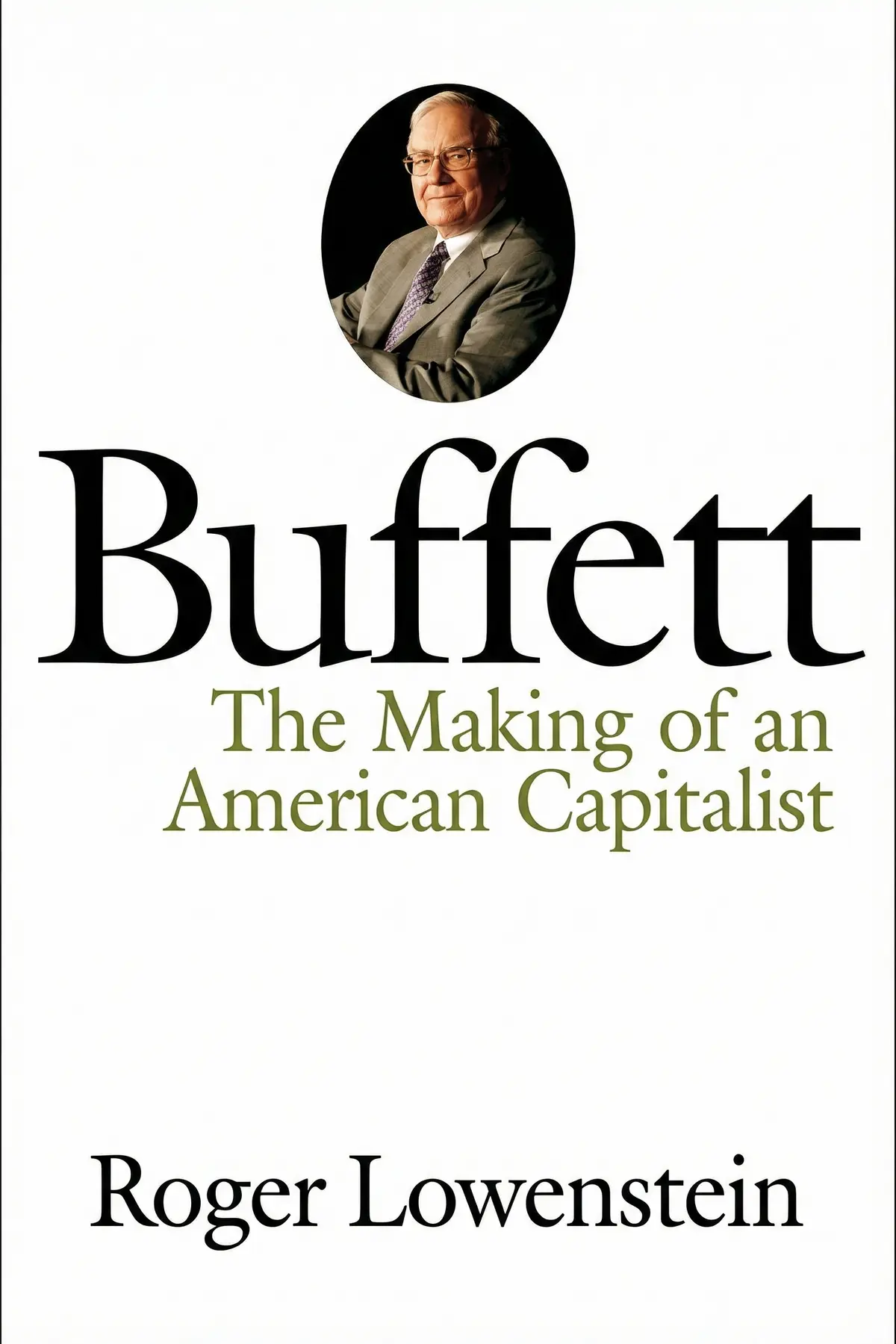
Buffett: The Making of an American Capitalist
Roger Lowenstein
AUDIO SUMMARY AVAILABLE
Listen to A Beginner’s Guide to the Stock Market in 15 minutes
Get the key ideas from A Beginner’s Guide to the Stock Market by Matthew R. Kratter, plus 5,000+ more titles in English and Thai.
- 5,000+ titles
- Listen as much as you want
- 7-day free trial
- Cancel anytime