
21 min 02 sec
The Contrarian: Peter Thiel and Silicon Valley's Pursuit of Power
By Max Chafkin
Explore the life of Peter Thiel, the billionaire venture capitalist who transformed Silicon Valley. This summary reveals how his contrarian philosophy and pursuit of power reshaped technology, finance, and American politics.
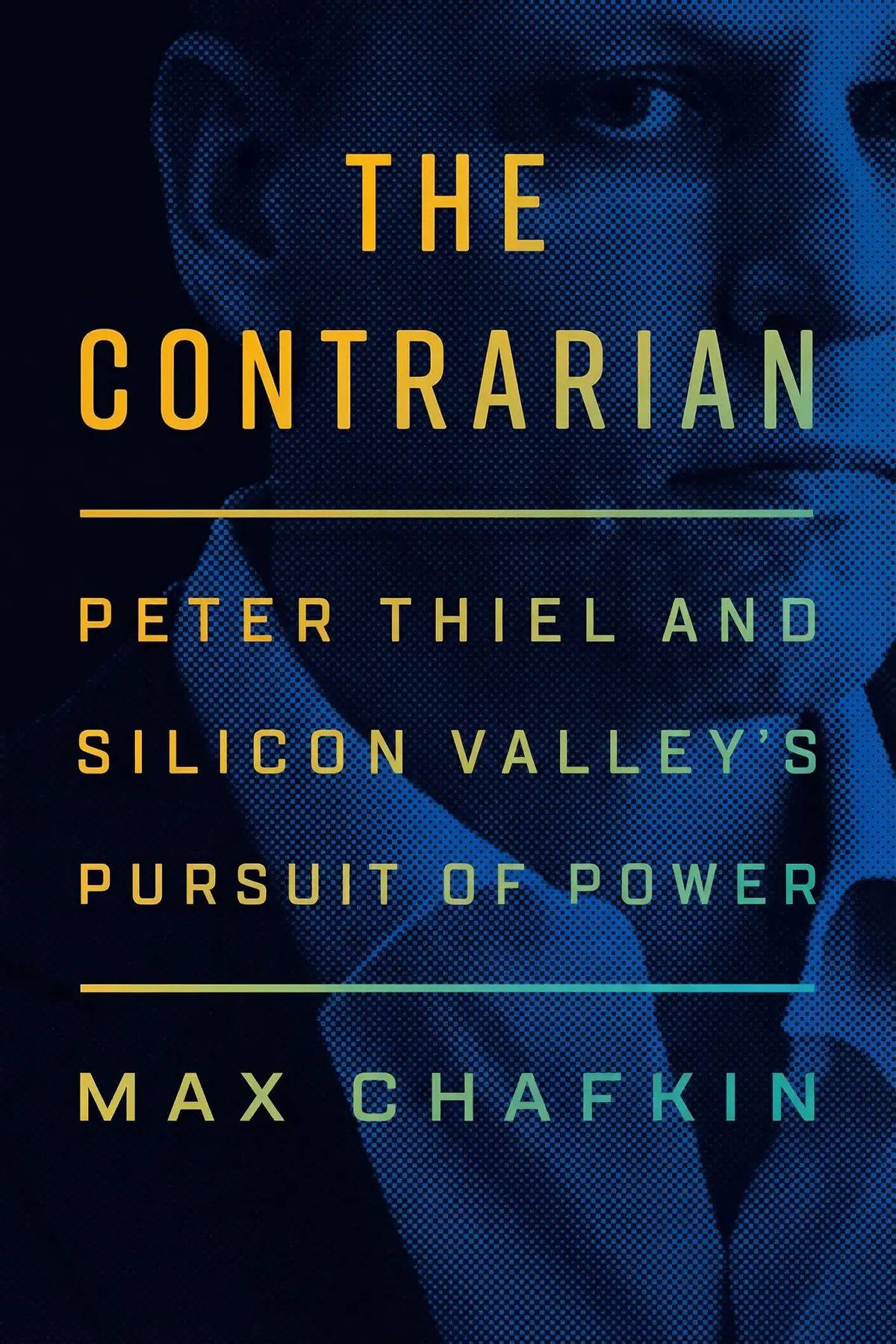
Table of Content
1. Introduction
1 min 44 sec
In the sun-drenched landscape of Silicon Valley, there is a figure who stands apart, not by blending in, but by purposefully clashing with the environment around him. Peter Thiel is a name that evokes a wide range of reactions: some see him as a visionary genius who sees the future before anyone else, while others view him as a calculated provocateur who uses his billions to undermine the very systems that made him rich. But regardless of your personal stance, one thing is certain: his influence is inescapable. He was there at the birth of the digital payment revolution with PayPal. He was the one who saw the potential in a young Mark Zuckerberg when others were skeptical. And he was the bridge between the high-tech world and the highest seats of political power during one of the most turbulent eras in American history.
This summary takes you through the remarkable and often controversial life of a man who turned being a ‘contrarian’ into a global brand. We will look past the headlines and the public personas to understand the core motivations that drive someone like Thiel. Is he a dedicated libertarian seeking to free the individual from the state? Or is he an opportunist who uses ideology as a tool for personal gain? By following his path from a competitive childhood in the suburbs to the inner circles of the White House, we can begin to see the throughline of his career. It is a story about the intersection of technology, money, and power, and how one man’s unique worldview has fundamentally altered the direction of modern society. Get ready to explore the life of a figure who doesn’t just predict the future—he tries to engineer it.
2. A Childhood Shaped by Competition and Fantasy
2 min 34 sec
What happens when a highly intelligent child feels like an outsider? Discover how early obsessions with chess and fantasy novels created the blueprint for a future billionaire’s worldview.
3. The Academic Roots of a Right-Wing Radical
2 min 28 sec
Stanford University was supposed to be a sanctuary of learning, but for Thiel, it became a battlefield. Learn how his reaction to campus culture sparked a lifelong political crusade.
4. PayPal and the Dream of Borderless Money
2 min 28 sec
Thiel didn’t just want to build a payment app; he wanted to dismantle the power of governments. Explore the libertarian vision behind the creation of PayPal.
5. Strategic Wealth and the Rise of the Tech Titan
2 min 38 sec
From a mansion overlooking the Golden Gate to the first big bet on Facebook, Thiel’s transition to venture capital was about more than just money.
6. Palantir and the Embrace of State Power
2 min 29 sec
How did a radical libertarian end up creating one of the world’s most powerful surveillance tools? Explore the contradictions of Thiel’s Palantir.
7. The Strategic Alliance with Donald Trump
2 min 14 sec
In 2016, Thiel shocked the world by backing a populist candidate. Discover the calculated reasons behind his support for Donald Trump.
8. Unmasking the Hypocrisy of the Tech Elite
2 min 38 sec
When the world’s most powerful tech CEOs met with the president-elect, Thiel was the one who pulled back the curtain. See what the meeting revealed about Silicon Valley’s true priorities.
9. Conclusion
1 min 49 sec
The life of Peter Thiel is a testament to the power of a single-minded, often uncompromising worldview. From his early days as a competitive student to his role as a central figure in the global tech and political landscape, he has consistently defied expectations and challenged the status quo. His career shows us that being a ‘contrarian’ is not just about disagreeing for the sake of it; it’s about identifying the hidden levers of power and having the courage—or the ruthlessness—to pull them. He built PayPal to bypass governments, then built Palantir to empower them. He criticized the elite from the safety of Stanford, then became a billionaire who helped shape the presidency.
What we can take away from Thiel’s story is a deeper understanding of the motivations that drive the architects of our modern world. He reminds us that technology is never neutral; it is always shaped by the ideologies and ambitions of those who create it. His journey also serves as a mirror for the rest of Silicon Valley, exposing the thin line between disruptive innovation and the simple pursuit of dominance. Whether you view him as a hero of individual liberty or a harbinger of a more controlled future, there is no denying that he has mastered the game he set out to win as a child. As you reflect on his path, consider how much of our current reality has been influenced by his strategic bets. The greatest adventure, as his high school quote suggested, is what lies ahead, but in Peter Thiel’s world, that future is rarely left to chance. It is carefully, and often controversially, designed by those who refuse to follow the crowd.
About this book
What is this book about?
The Contrarian provides a deep dive into the life and influence of Peter Thiel, one of the most polarizing figures in modern business. It traces his journey from a competitive, fantasy-loving child to a central figure in the tech world, co-founding PayPal and becoming the first major investor in Facebook. The book explores Thiel’s transition from a strict libertarian to a powerful political operative who played a crucial role in Donald Trump’s rise to power. Beyond the business successes, it examines the ideological underpinnings of Thiel’s career. It highlights his habit of challenging mainstream consensus, his creation of the surveillance firm Palantir, and his tactical use of wealth to influence the direction of the country. By looking at his relationships with other tech giants and his unique approach to investment, the book promises a clearer understanding of how one man’s pursuit of power helped unveil the hidden motivations of Silicon Valley as a whole.
Book Information
About the Author
Max Chafkin
Max Chafkin is a seasoned tech reporter and features editor for Bloomberg Businessweek. His insightful journalism and deep reporting on the technology sector have been featured in prominent publications including the New York Times Magazine, Fast Company, Vanity Fair, and Inc.
Ratings & Reviews
Ratings at a glance
What people think
Listeners find the work fascinating and skillfully composed, portraying it as an absorbing narrative regarding a captivating topic. Nevertheless, opinions on the caliber of research are varied; some consider it meticulously documented, whereas others take the opposite view. Additionally, there are complaints about significant bias, especially toward conservative viewpoints, and concerns regarding its validity, with one listener pointing out a heavy reliance on unidentified sources.
Top reviews
Eleanor
Wow. Max Chafkin has done the impossible by cracking open the shell of one of the world's most reclusive billionaires. The story of how Thiel single-handedly destroyed Gawker is worth the price of admission alone—it’s a masterclass in vengeance and legal maneuvering. I loved the way the author tied together the seemingly disparate threads of cryonics, Bitcoin, and alt-right politics into a cohesive (and terrifying) worldview. Is it biased? Probably, but every biography of a living power-player is. The reporting here feels solid, and the way he describes the 'PayPal Mafia' culture explains so much about why the tech industry is so broken today. Personally, I found the section on his 'seasteading' dreams to be both hilarious and deeply revealing of the tech elite's desire to escape the very societies they profit from. A must-read for anyone who cares about big money.
Show moreJom
Picked this up during a flight and couldn't put it down until I landed. It’s a staggering look at how a single individual can leverage his wealth to reshape the political landscape of the United States. Chafkin is a gifted storyteller who manages to make venture capital and board seats feel as exciting as a spy novel. The way he details Thiel’s 'strategic investments' in New Zealand to secure a 'doomsday' escape hatch is absolutely wild. While some might find the author’s perspective a bit harsh, I think it’s a necessary counterbalance to the fawning profiles we usually see in business magazines. It's a deeply researched, often shocking, and ultimately vital piece of journalism. The book doesn't just profile a man; it profiles an entire era of American capitalism that has gone off the rails. Highly recommended for fans of 'Bad Blood' or 'The Everything Store'.
Show moreLuckana
After hearing so much about the 'PayPal Mafia' and Thiel’s outsized influence on modern politics, I found this biography to be a compelling, if occasionally frustrating, read. Chafkin’s writing is sharp. He does a phenomenal job tracing the lineage of Thiel’s power from the early days of Stanford to the Trump transition team. However, the tone is undeniably skeptical—bordering on cynical—which might rub some readers the wrong way if they are looking for a purely objective business history. I appreciated the deep dive into Palantir and the Gawker lawsuit, but I wish there were more interviews with his actual allies rather than just critics. It’s an informative look into a very secretive world, even if the author clearly has a specific perspective he wants to push. To be fair, Thiel is such a polarizing figure that a 'neutral' biography might be impossible to write at this point. Definitely worth it for the Silicon Valley gossip alone.
Show moreKanokporn
Finally got around to reading this and I have to say, the level of detail regarding the surveillance apparatus behind Palantir is chilling. Chafkin paints a picture of a man who values privacy for himself but builds tools to dismantle it for everyone else. It’s a fast-paced narrative that reads like a techno-thriller at times, especially when discussing the Trump era and the virtual border walls. My only real gripe is that the ending felt a bit rushed, as if the author was racing to hit a publication deadline before the 2022 midterms. Some critics claim it's too biased, but when someone exerts this much influence over our democratic institutions, a little scrutiny is warranted. The prose is punchy and the short chapters make it easy to breeze through. If you want to understand why Silicon Valley has drifted toward the right lately, this is the essential field guide.
Show moreSamira
Ever wonder why Peter Thiel is so obsessed with death? This book dives deep into his investments in longevity and his refusal to accept aging as a natural process. Chafkin does a great job of showing how these personal quirks translate into massive business decisions. It’s a fascinating read, even if you don’t agree with the author’s political leanings. I particularly liked the analysis of the 'Thiel Fellows' program—it’s a great example of a good idea that was poorly executed due to ego. To be fair, the book can be a bit repetitive when it comes to criticizing Thiel’s association with the alt-right, but the core reporting is strong. It gave me a lot to think about regarding the ethics of venture capital. Not perfect, but certainly one of the better tech biographies I’ve read in the last year.
Show morePriya
Frankly, I was surprised by how much I enjoyed this, despite the clear ideological slant. I was looking for a deep dive into the 'contrarian' investment strategy that made Thiel a billionaire, and while Chafkin focuses heavily on the politics, the business anecdotes are still there if you look for them. The writing is punchy. He manages to make the board meetings at Facebook feel like high-stakes drama. The constant attempts to link every move Thiel makes to a grand sinister conspiracy can be a bit exhausting, but the factual timeline is well-documented. It’s a fast-paced narrative that helps deconstruct the 'genius' myth that surrounds Silicon Valley's elite. Even if you think Chafkin is unfair to his subject, the questions he raises about tech power are essential. I'd recommend it to anyone curious about how we got to our current political moment.
Show moreBun
It's hard to separate the man from the myth after reading this, and I'm not sure Chafkin helps us get any closer to the real Peter Thiel. The book is undoubtedly well-written and kept me engaged through the later chapters on his New Zealand citizenship and 'seasteading' experiments, but it lacks a certain balance. I was hoping for more insight into his actual philosophy—Rene Girard’s mimetic theory is mentioned but treated mostly as a tool for manipulation. While the research into the 'Thielverse' and his political maneuvering is extensive, it feels filtered through a lens of extreme distaste. Not gonna lie, some of the anecdotes about his early days at Stanford were the highlight for me, showing a nerdy kid obsessed with D&D. Yet, by the end, the author’s animus becomes a distraction from the facts. It’s an okay primer, but proceed with a healthy dose of skepticism.
Show moreSuvannee
The chapter on Thiel’s time at Stanford was the most enlightening part of the book for me. It shows how his early grievances against 'political correctness' formed the bedrock of the political machine he’d eventually build. However, as the book progressed into the 2010s, it felt less like a biography and more like a collection of news clippings I’d already read. Chafkin does a good job of summarizing the highlights, but he doesn't offer much new information on the inner workings of Facebook or the early days of PayPal. The truth is, the book is at its best when it analyzes Thiel's contradictions, like being a gay man who supports politicians with anti-LGBTQ+ track records. It's a decent overview for the uninitiated, but if you’ve been following tech news for the last decade, you won't find many surprises here. Three stars for the effort, though the tone is a bit too 'shouty' for my taste.
Show moreElla
This book reads more like a prosecutor's brief than a standard biography, which is a shame because Peter Thiel is a fascinating subject. Chafkin seems less interested in understanding why Thiel thinks the way he does and more interested in casting every single move as part of a sinister master plan. For instance, the section on the Gawker lawsuit completely ignores the ethical issues surrounding the Hogan sex tape, portraying Gawker as a simple victim of a billionaire’s ego. Furthermore, the heavy reliance on anonymous sources makes some of the more 'shocking' claims feel like mere hearsay or workplace rumors. The truth is, you don’t get a clear picture of Thiel’s investment success with companies like Stripe or Airbnb because it doesn't fit the narrative of him being a lucky villain. If you’re looking for a nuanced psychological profile, look elsewhere; this is a hit piece through and through.
Show moreWoramet
To be fair, I expected a balanced biography, but what I got was a collection of every negative rumor ever whispered in a Palo Alto coffee shop. Chafkin’s obsession with labeling Thiel as a 'reactionary' or a 'fascist' for simply reading certain philosophers is intellectually lazy and beneath a professional journalist. He spends pages attacking the Thiel Fellowship, yet glosses over the massive technological breakthroughs funded by Founders Fund that have actually benefited society. The book relies far too heavily on disgruntled former employees who clearly have an axe to grind, making the 'factual' basis of the narrative highly questionable. It’s a one-sided caricature that ignores the complexity of a man who is both a libertarian and a supporter of state-backed defense tech. This isn't research; it's a 300-page subtweet. Save your money and read his actual writing instead.
Show moreReaders also enjoyed
A Different Kind of Power: A Memoir
Jacinda Ardern
Alexander Hamilton
Ron Chernow
Alibaba: The House That Jack Ma Built
Duncan Clark
A Higher Loyalty: Truth, Lies and Leadership
James Comey
Alexander the Great
Philip Freeman

AUDIO SUMMARY AVAILABLE
Listen to The Contrarian in 15 minutes
Get the key ideas from The Contrarian by Max Chafkin, plus 5,000+ more titles in English and Thai.
- 5,000+ titles
- Listen as much as you want
- 7-day free trial
- Cancel anytime







