
16 min 02 sec
The Creativity Choice: The Science of Making Decisions to Turn Ideas Into Action
Explore the transformative idea that creativity is not a rare gift but a deliberate series of choices. Learn how intentional decisions and emotional intelligence can unlock your personal and professional potential.
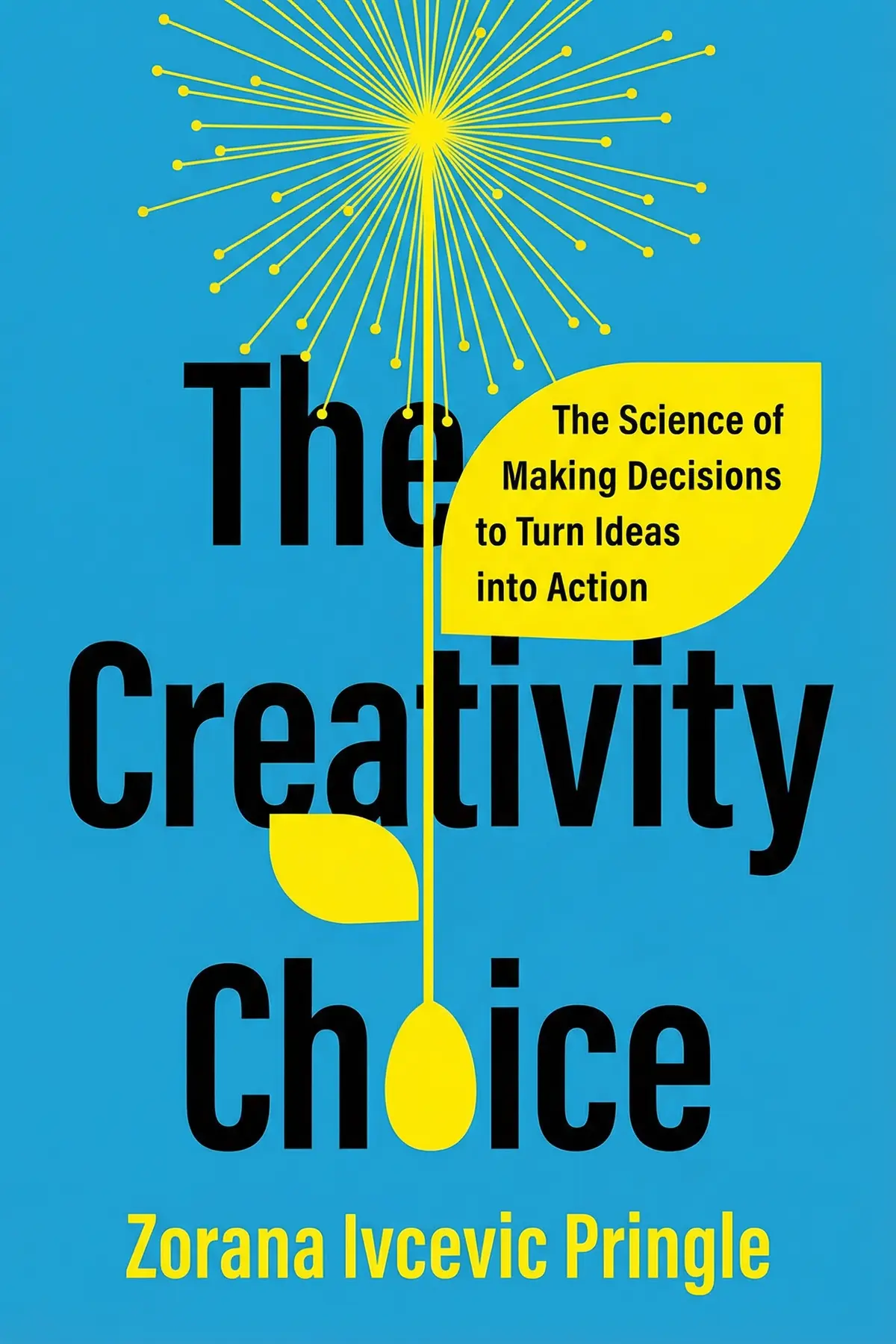
Table of Content
1. Introduction
2 min 01 sec
When we think about creativity, we often conjure up images of a lightning strike—a sudden, unbidden flash of insight that transforms the world. We imagine the painter standing before a canvas, waiting for the muse to whisper, or the scientist shouting ‘eureka’ in an empty lab. But what if this view of creativity is actually a barrier? What if the most creative people in the world aren’t just the ones who get hit by lightning more often, but the ones who choose to stand out in the rain?
This is the central premise of the work by Zorana Ivcevic Pringle. In this exploration of the creative mind, we shift the focus away from ‘genius’ and toward the concept of the ‘choice.’ Creativity, as it turns out, is much less about an inherent trait you are born with and much more about a series of intentional, deliberate decisions you make every single day. It is the decision to look at a problem differently, the decision to stay with a difficult task, and the decision to act on a thought that others might dismiss.
Throughout this summary, we will explore the landscape of the creative process as a journey defined by these choices. We will look at why we often shy away from our own creative potential and how we can consciously pivot toward a more innovative life. By understanding that creativity is a path we choose to walk rather than a destination we happen upon, we gain the agency to improve our professional output, our personal satisfaction, and our overall problem-solving abilities.
We’ll see how emotional intelligence plays a massive role in this process. Since creativity is inherently risky and often frustrating, being able to manage our inner state is part of the ‘choice.’ We aren’t just choosing to have an idea; we are choosing to handle the emotions that come with that idea. So, as we move through these insights, think about the areas in your own life where you’ve been waiting for inspiration to strike. It’s time to stop waiting and start deciding. Let’s dive into the mechanics of making the creativity choice.
2. The Foundational Decision to Start
2 min 37 sec
Discover why the first step toward innovation is not finding an idea, but deciding to be the kind of person who actively seeks one out.
3. Managing the Emotional Rollercoaster
2 min 34 sec
Learn how your feelings are not obstacles to creativity, but essential data points that you must choose to navigate effectively.
4. The Choice to Persevere through the Messy Middle
2 min 13 sec
Understand why sticking with an idea is often more important than having the idea itself, and how to make the choice to keep going.
5. Designing Your Environment for Innovation
2 min 26 sec
Explore how the spaces we inhabit and the people we surround ourselves with are choices that can either stifle or spark our creativity.
6. Creativity as a Life Strategy
2 min 19 sec
See how applying creative choices to everyday problems can transform your personal growth and professional success.
7. Conclusion
1 min 52 sec
As we wrap up our journey through the insights of Zorana Ivcevic Pringle, the main takeaway is clear: creativity is within your reach, but it requires you to reach for it. It is not a passive experience or a stroke of luck. It is a deliberate, intentional sequence of decisions that start with a ‘yes’ and continue through the hard work of execution and emotional regulation.
We’ve seen that the first step is simply deciding to start—to step out of the comfort of the known and into the possibility of the unknown. We’ve explored how our emotions, rather than being roadblocks, are essential tools that we must choose to manage and utilize. We’ve acknowledged that the middle of any creative project will be messy, and that the choice to persevere and remain flexible is what ultimately brings a vision to life. And we’ve learned that our environment and our overall life strategy are also products of the choices we make.
So, where do you go from here? The beauty of the ‘creativity choice’ is that you can start right now. You don’t need a special studio, a massive budget, or a high-IQ score. You simply need to identify one area in your life—maybe a small task at work or a recurring challenge at home—and choose to approach it creatively. Ask a new question. Try a different method. Allow yourself to feel the frustration of the process without letting it stop you.
Remember, every great innovation in human history began with someone deciding that the current way wasn’t the only way. By making the creativity choice today, you are joining that long lineage of thinkers, builders, and dreamers. Your potential is not a fixed amount; it is a landscape that expands every time you choose to explore it. So, stop waiting for the muse, and start making the choice. The world is waiting for your unique contribution, and it all begins with your next decision.
About this book
What is this book about?
The Creativity Choice challenges the common misconception that creative genius is an innate, uncontrollable spark that only a few possess. Instead, Zorana Ivcevic Pringle presents a compelling argument that creativity is a skill built through a sequence of intentional decisions. By viewing innovation as a choice rather than a chance occurrence, individuals can learn to navigate the emotional and practical hurdles that often stand in the way of new ideas. This summary delves into the research-backed strategies for nurturing creative potential across all areas of life. From the initial decision to pursue a fledgling thought to the grit required to see it through to completion, the book provides a roadmap for harnessing your inner innovator. It emphasizes the critical role of emotional intelligence in the creative process, offering insights into how we can manage our feelings to fuel our best work. Ultimately, the book promises to help you move from passive inspiration to active, impactful creation in both your career and your personal life.
Book Information
About the Author
Zorana Ivcevic Pringle
Zorana Ivcevic Pringle is a senior research scientist at the Yale Center for Emotional Intelligence. Her professional life is dedicated to exploring the intersection of psychology, education, and the arts, with a specific focus on how creative ideas are brought to life. As a Fellow of the American Psychological Association, her work has gained significant recognition, appearing in prominent publications like Harvard Business Review and Psychology Today. Her research bridges the gap between understanding human emotions and the practical steps needed to foster innovation.
Ratings & Reviews
Ratings at a glance
What people think
Listeners find this book highly useful and skillfully composed, providing meaningful perspectives that combine clinical research with accessible illustrations. They value the way the author explores the impact of emotional states on creative output, and one listener highlights how effectively it integrates various scientific inquiries. The text includes captivating anecdotes from the real world, and though listeners describe the content as clear, one points out that it doesn't always offer simple solutions.
Top reviews
Joshua
Dr. Zorana Ivcevic Pringle has written a definitive guide for anyone who feels paralyzed by the myth of the 'creative genius.' This book fundamentally shifts the perspective from creativity being an elusive, innate gift to a series of deliberate, daily choices. I was particularly struck by the Yale researcher’s ability to ground high-level psychological concepts in the gritty reality of entrepreneurs and YouTubers. It isn't just about having a spark; it’s about the grit required to bridge the gap between a vague inspiration and a finished product. The emphasis on managing emotional barriers like doubt and failure felt incredibly validating for someone like me who often quits when things get messy. While it is deeply rooted in academic research, the prose remains accessible and engaging throughout. This is easily one of the most practical books on the creative process I’ve encountered in years.
Show moreSirirat
I picked this up thinking it would be another airy-fairy self-help book about finding your muse. Instead, I got a rigorous look at how creativity actually functions in the real world. The truth is, most of us don't lack ideas; we lack the courage to act on them despite the inevitable uncertainty. Pringle’s insight that confidence emerges through action, rather than preceding it, completely changed how I approach my morning routine. I loved the stories of real-world leaders who use constraints to drive originality. It’s a grounded, honest acknowledgment that the process is supposed to be hard and that discomfort is just a sign of growth. If you are tired of waiting for inspiration to strike, read this and start choosing to be creative instead. It’s a groundbreaking correction to the talent myth.
Show moreKanokporn
Finally, a researcher who understands that non-fiction writing and everyday problem-solving count as creative work! Dr. Z reveals over and over that there are countless decision points between a concept and a result. I always thought of myself as a 'logical' person rather than a 'creative' one, but this book debunked that binary for me. The section on broadening inputs by engaging with diverse thinkers was particularly helpful for my current project. It makes the whole process feel less daunting when you realize it’s just a practice you can renew daily. The tone is encouraging without being saccharine, and the scientific studies are woven in seamlessly. This book helped my process immensely by teaching me to accept ambiguity as part of the job description.
Show moreOwen
The chapter on managing external pressures alone is worth the price of admission. We often blame our lack of creativity on deadlines or 'the system,' but this book teaches you how to recognize those constraints and adjust your environment. I loved the emphasis on intentionality. Pringle makes it clear that creating a better, more just world requires us to make these choices every single day in our communities and families. It’s a very holistic view of what it means to live a full life. The writing is clear, the real-life examples are relatable, and the emotional intelligence on display is top-notch. It’s rare to find a book that is both scientifically rigorous and deeply inspiring on a human level.
Show moreNong
As a manager who oversees a team of designers, I found the frameworks here incredibly useful for leading people through the slog of problem-solving. Pringle does a fantastic job of collating disparate principles—things we often feel intuitively but can't name—and tying them to hard science. I especially appreciated the sections on how to manage external pressures and environmental constraints. To be fair, the book doesn't dive deeply into the complexities of corporate performance reviews or HR metrics, which can sometimes be the biggest hurdle to creativity in an office setting. However, that’s a minor gripe for a book that succeeds so well at making creativity feel like a manageable skill rather than a mystery. It complements the more abstract works of Mihaly Csikszentmihalyi by providing actionable levers for the business world. Definitely worth a spot on your professional development shelf.
Show moreBella
Ever wonder why you have a thousand half-finished projects gathering dust? This book offers some pretty stinging but necessary answers to that question. Pringle argues that creativity is a journey of constant adaptation and implicit decision-making. I really appreciated the specific tips for when you feel 'stuck,' like changing the playing field or engaging with tactile materials. It’s not just about thinking differently; it’s about doing differently. My only real criticism is that the narrative can feel a bit repetitive in the middle chapters as it hammers home the 'choice' theme. Still, the message that we should treat editing as a core creative skill was a total lightbulb moment for me. It’s a solid, research-backed read that stays focused on solving meaningful problems.
Show moreLaor
After hearing an interview with the author on a podcast, I was curious to see if her 'creativity choice' could actually work for my workflow. The book is a great, accessible read that focuses on the reality that creativity is a skill, not a fixed trait. I found the advice on reducing fear through frequent feedback to be a game-changer for my social media content. Often, we hide our work because we're afraid it isn't perfect, but Pringle shows how that actually kills the creative spark. The book encourages you to let curiosity and playfulness drive you rather than external rewards. While some of the advice on 'broadening perspective' felt like things I’d heard before, the way she ties everything back to Yale-level research makes it much more convincing.
Show moreDarius
Not what I expected, but in the best way possible. I thought this would be about 'brainstorming' techniques, but it’s actually more about the psychology of perseverance. Pringle focuses on the 'ugly' parts of creativity—the doubt, the editing, the failed attempts, and the constant need to redefine the problem. The insight about asking 'what am I really trying to solve?' has already helped me pivot on a project that was going nowhere. I appreciated that she didn't shy away from the fact that this work is difficult. My only minor issue was that some of the business examples felt a bit standard, but the overarching framework is incredibly strong. It’s a refreshing take on how to bridge the gap between inspiration and achievement.
Show moreNongnuch
Look, we’ve all heard the cliché that creativity is a journey, but Pringle actually maps out the terrain for us. Her research into the emotional challenges of the process is genuinely validating. I’ve always felt like my anxiety during a project was a sign that I wasn't 'meant' to be doing it, but she reframes that discomfort as a sign of growth. The strategies for when you are stuck—like using tactile materials or adding constraints—are very practical. It’s a straightforward read that doesn’t overpromise, but it delivers a very solid foundation for anyone looking to improve their output. I would recommend this to anyone in a leadership role or anyone struggling to get their ideas off the ground. A very intentional and thoughtful piece of work.
Show moreLuckana
To be fair, the psychological research presented here is incredibly robust and well-documented. Dr. Pringle clearly knows her field, and I respect the academic weight she brings to a topic that is often handled poorly. However, I struggled with how long it took to get to the 'actionable' parts. If you’re looking for a quick step-by-step manual with easy answers, you might find this frustrating. It’s more of a high-level framework than a checklist. I liked the focus on social-emotional lives and structural change, but at times the prose felt a little too dense for a casual Sunday read. It’s a good book with valuable insights on managing fear and seeking early feedback, but it requires a lot of patience to digest the scientific data before you get to the practical applications.
Show moreReaders also enjoyed
AUDIO SUMMARY AVAILABLE
Listen to The Creativity Choice in 15 minutes
Get the key ideas from The Creativity Choice by Zorana Ivcevic Pringle, plus 5,000+ more titles in English and Thai.
- 5,000+ titles
- Listen as much as you want
- 7-day free trial
- Cancel anytime







