
22 min 14 sec
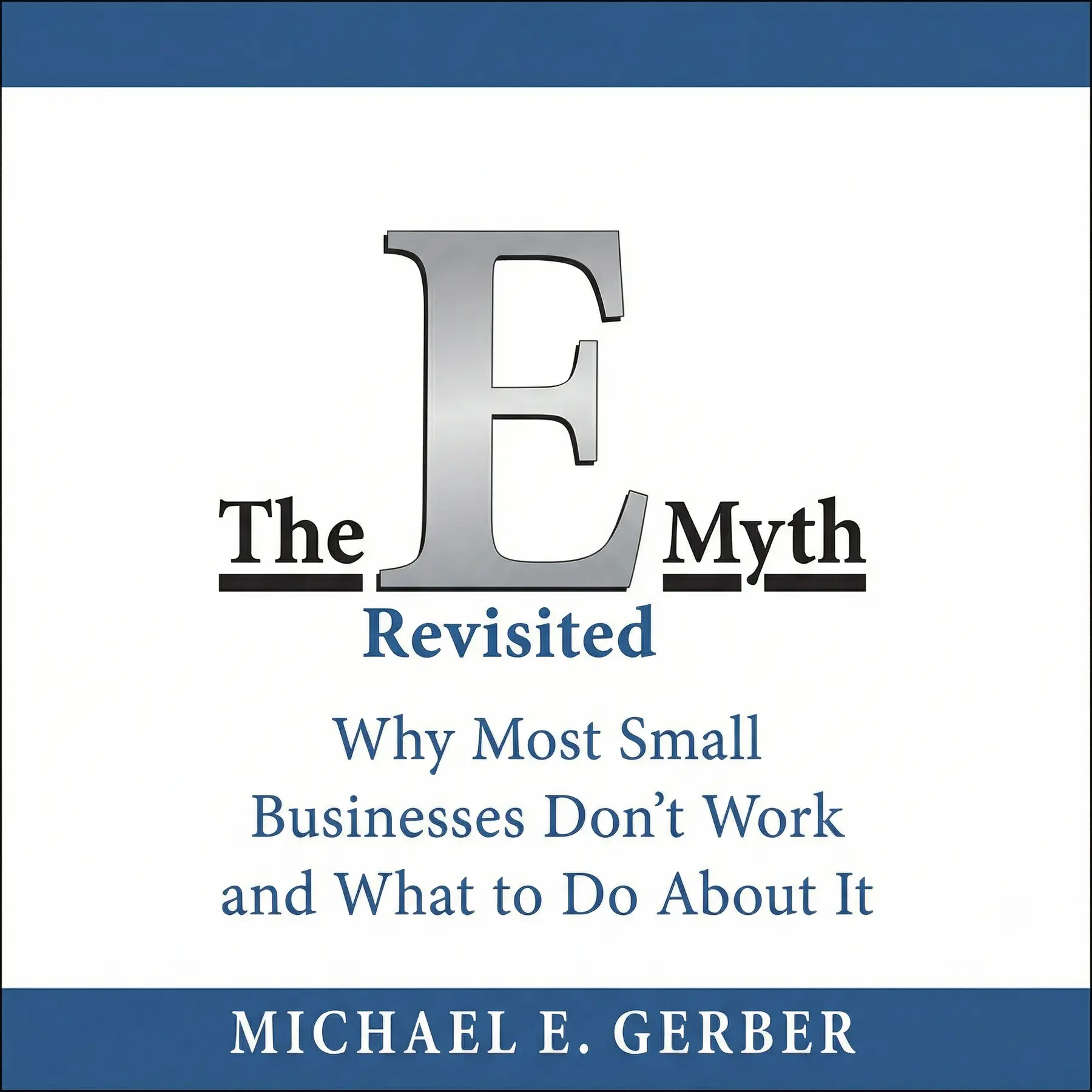
The E-Myth Revisited: Why Most Small Businesses Don’t Work and What to Do About It
This guide dismantles the myth that technical experts make the best business owners. It reveals how to build a scalable, systems-driven company that operates efficiently without requiring the founder’s constant intervention.
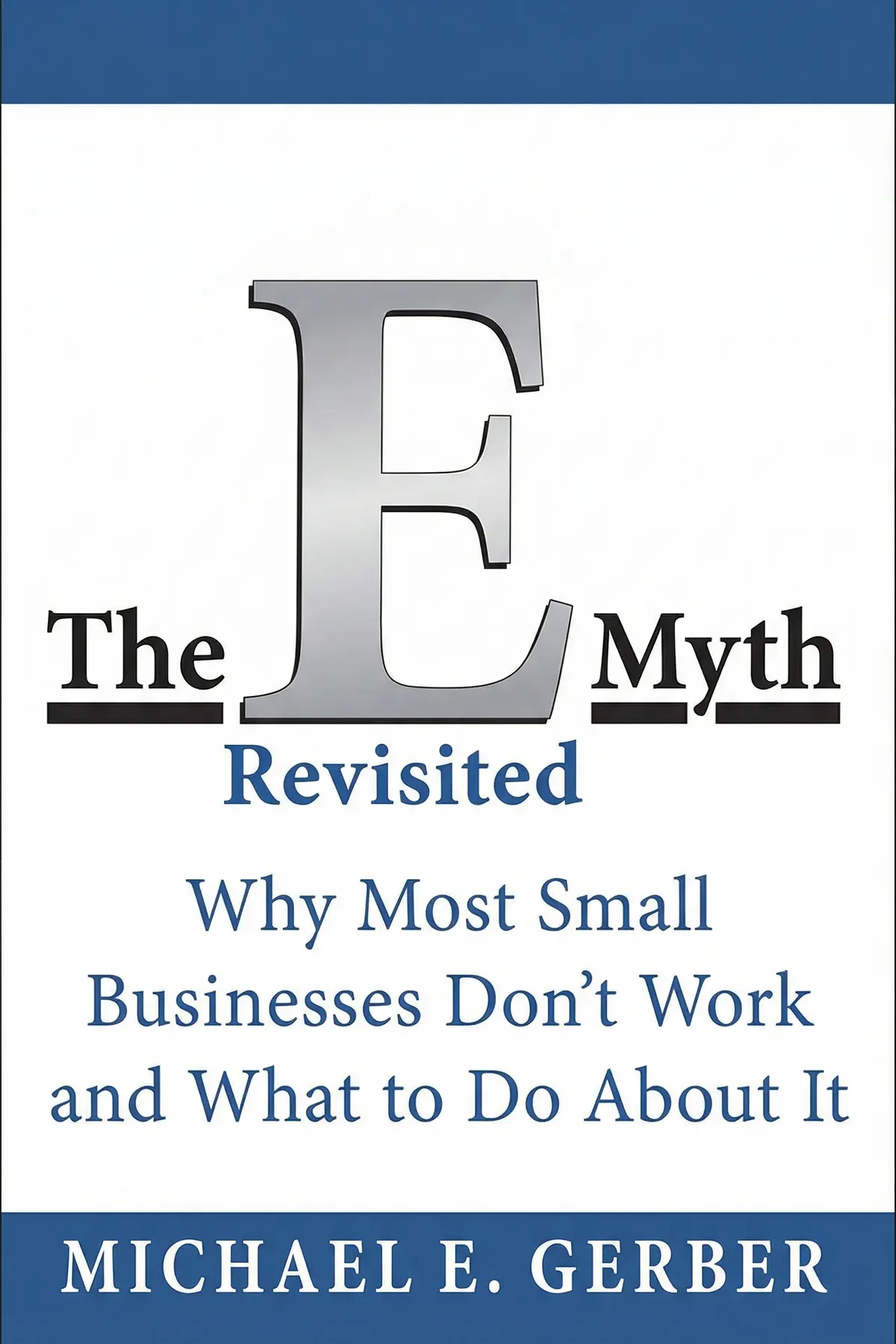
Table of Content
1. Introduction
1 min 29 sec
Every year, millions of optimistic individuals take the plunge into the world of business ownership. They are fueled by passion, a great idea, and a desire for independence. Yet, the statistics tell a sobering story. The vast majority of these ventures vanish within just a few years. Why is the failure rate so staggeringly high? The answer lies in a fundamental misunderstanding of what it actually takes to run a successful company. Most people don’t actually start a business; they simply create a new, more demanding job for themselves.
This exploration is about breaking that cycle. It is about understanding that the very skills that make you a great technician—the person who does the work—might actually be the biggest hurdle to your success as a business owner. We are going to look at the internal conflict that happens within every founder and the predictable stages every business goes through, from the excitement of the early days to the messy middle ground where most companies collapse.
Over the course of this summary, we will move beyond the common myths of entrepreneurship. We’ll look at a revolutionary way to structure a business so that it doesn’t depend on your constant presence or your personal heroics to survive. You will learn why the most successful companies in the world operate like well-oiled machines and how you can apply those same principles to your own venture. The goal is to move you from working in your business to working on it, creating something that provides you with both financial reward and personal freedom. Let’s dive into the blueprint for building a business that actually works.
2. The Technical Trap
1 min 52 sec
Many people start businesses because they are good at a specific craft, but they soon find that technical skill is very different from business management.
3. The Three-Way Internal Struggle
2 min 10 sec
Every business owner must balance three competing personalities: the visionary entrepreneur, the orderly manager, and the hardworking technician.
4. The Lifecycle of a Growing Company
2 min 11 sec
Businesses move through stages of development, and most fail during the transition from a one-person shop to a managed organization.
5. The Power of the Franchise Prototype
1 min 52 sec
The most effective way to build a business is to treat it as if it were a franchise that needs to be perfectly replicated.
6. Designing Your Life First
1 min 44 sec
Your business should be a vehicle for achieving your personal life goals, not an end in itself that consumes your identity.
7. Establishing the Strategic Standards
1 min 49 sec
A successful business requires clear, measurable objectives that define how it will appear to the world and meet its financial targets.
8. The Blueprint of Responsibility
1 min 47 sec
An organizational strategy provides a clear map of roles and responsibilities, ensuring accountability even in a small company.
9. Managing Through Systems, Not Personalities
1 min 46 sec
Great management is not about finding superstar employees; it’s about creating a system that allows ordinary people to produce extraordinary results.
10. The Psychology of the Sale
2 min 01 sec
Marketing is not about your product; it’s about understanding and responding to the deep-seated emotional needs of your customers.
11. The Continuous Evolution of Success
1 min 57 sec
A thriving business is never finished; it requires a constant cycle of innovation, measurement, and implementation to stay relevant.
12. Conclusion
1 min 36 sec
Building a business that truly works is not about working harder or having more natural talent than the next person. It is about a fundamental shift in perspective. It is about moving away from the role of the overworked technician and embracing the role of the strategic designer. We’ve seen that the key to escaping the ‘E-Myth’ is to view your business as a product in itself—a systems-driven machine that is designed to provide a predictable result for the customer and a life of freedom for you.
As we’ve explored, this process starts with your internal psychology and the balance between the entrepreneur, manager, and technician. It continues through the lifecycle of your company as you navigate the challenges of growth and maturity. By applying the principles of the franchise prototype, you can create a model that is scalable, accountable, and independent of your constant intervention. Whether it’s through your organizational strategy, your management systems, or your scientific approach to marketing, the goal is always the same: to create a business that serves your life rather than consumes it.
Now, the path forward is clear. It begins with a simple but profound question: What kind of life do you want to live? Once you have that answer, you can begin the work of building a business that makes that life possible. Don’t let yourself be a slave to the technical work. Stop working in your business and start working on it today. If you commit to the process of continuous innovation and systemization, you can join the small percentage of business owners who not only survive but thrive for years to come. Your business has the potential to be a source of pride, profit, and purpose—provided you have the courage to build it the right way.
About this book
What is this book about?
The E-Myth Revisited addresses the fundamental misunderstanding that kills most small businesses: the belief that technical skill translates into business success. Michael E. Gerber explains that most founders aren't true entrepreneurs but technical experts who have had a sudden urge to work for themselves. This common trap leads to a grueling cycle of overwork, burnout, and eventual failure because the owner becomes a slave to the tasks they once loved. The book provides a clear roadmap for moving past this entrepreneurial myth. It teaches readers how to view their business as a separate entity—a franchise prototype—that can function predictably and successfully without their constant physical presence. By shifting the focus from working in the business to working on it, owners can create a scalable enterprise. The book promises to transform your perspective, moving you from a struggling technician to a visionary leader who builds a company capable of growing and thriving on its own terms.
Book Information
About the Author
Michael E. Gerber
Michael E. Gerber is a legendary figure in the world of entrepreneurship. He co-founded and chairs Michael E. Gerber Companies, a firm dedicated to empowering business owners across all sectors. With a career spanning decades, he has authored over a dozen influential books focused on helping small businesses achieve sustainable success through systematic growth and organizational excellence.
Ratings & Reviews
Ratings at a glance
What people think
Listeners find this business guide to be a swift and accessible read that delivers functional guidance alongside significant life lessons. They also value its instructions on constructing and operating a company, with one listener highlighting how it helps define their business structure. Furthermore, listeners characterize the work as an eye-opening experience that restores their drive and ambition, concluding that it is a worthwhile investment.
Top reviews
Benjamin
After hearing dozens of mentors recommend this, I finally understood why it’s considered the 'small business bible' for founders. Gerber's breakdown of the Technician, the Manager, and the Entrepreneur hit me like a ton of bricks because I realized I was just a glorified technician with a very stressful job. The way he uses Sarah and her pie shop might feel a bit dated to some, but the core lesson about building a system rather than just doing the work is timeless. It shifted my perspective from working in my business to working on it, which is a distinction that every struggling owner needs to grasp immediately. Truth is, the text can be a bit repetitive, yet that repetition is exactly what hammers home the necessity of standardization. If you want to stop being a slave to your own company, this is the foundational roadmap you’ve been looking for.
Show moreGung
Wow, I didn't expect a business manual to feel this much like a personal intervention. I’ve spent years grinding away at my desk, thinking that my 'talent' was the only thing keeping the lights on, only to realize I was building a cage for myself. The chapter on the 'Primary Aim' actually made me stop and re-evaluate what I wanted out of my life, not just my bank account. Gerber’s focus on the McDonald’s model—building a machine that ordinary people can operate—is an eye-opener for those of us who have been trying to find rockstar employees. Not gonna lie, the writing style is a bit hippie-dippie at times, but the practical advice on systematizing everything from sales calls to cleaning is invaluable. It’s an investment in your sanity that pays off every single day.
Show moreChatchai
Finally got around to reading this classic, and it rejuvenated my ambition just when I was starting to feel the weight of burnout. The way it differentiates between what you do and the business that does it is a crucial mental shift for any small owner. I particularly loved the section on the 'Primary Aim,' which forces you to think about your funeral and what you want your legacy to actually be. It’s a holistic approach that acknowledges that a business should serve your life, not the other way around. While some people complain about the 'pie shop' examples, I found them to be helpful illustrations of how these abstract systems apply to a real-world scenario. It provides a stable structure that allows for growth without the usual accompanying chaos.
Show moreTar
Just finished this and my brain is buzzing with new ways to systematize my daily operations to reclaim my freedom. It’s an absolute must-read for any founder who feels like they are drowning in the 'Technician' role and can't find time to actually lead. The advice about building a 'Franchise Prototype' is brilliant, even if you never intend to open a second location. It simply means creating a business that is so well-defined it could run without your constant supervision. Got to say, the writing style is a bit old-school, but the wisdom is evergreen and incredibly practical for today’s market. It’s an eye-opener that helps you build something that actually has market value beyond your own labor. Don't let the wordiness scare you off; the meat of the book is life-changing.
Show moreOrawan
This book provides a much-needed wake-up call for anyone who thinks being good at a craft is enough to run a successful enterprise. Gerber argues that most small businesses fail because the owner is a 'technician having an entrepreneurial seizure,' and frankly, he’s absolutely right. While I found the fictional dialogues with the baker a bit cloying and self-congratulatory, the underlying 'Franchise Prototype' concept is pure gold for long-term scalability. You learn how to create a business that functions independently of your physical presence, which is the ultimate goal of any true entrepreneur. My only gripe is that it could have been roughly half as long without losing any of the actual substance. Despite the wordiness, the strategic objectives and organizational charts outlined here offer a structural clarity that most MBA programs fail to deliver.
Show moreNoi
Ever wonder why some mediocre businesses grow into massive chains while brilliant artisans struggle to pay rent? The answer lies in the systems-dependent versus people-dependent debate that Gerber explores with such fervor throughout this text. He makes a compelling case that your business is actually your product, and the widgets you sell are just a byproduct of a well-oiled machine. Personally, I think the infant, adolescent, and mature stages of business growth are perfectly described here, capturing the chaotic energy of a startup. However, the tone can be a bit condescending, as if the author is the only one who has ever understood the secret to commerce. If you can look past the ego, you'll find a structural blueprint that can transform a struggling shop into a scalable legacy.
Show morePear
Picked this up on a whim after a friend mentioned it helped him delegate more effectively, and the results have been immediate. The most significant takeaway for me was the organizational strategy: creating an org chart for the future and filling it with functions rather than personalities. It’s a simple concept, but seeing it laid out as a 'Business Development Program' makes the daunting task of scaling feel manageable. Look, the book is definitely a product of its time, and the sales scripts he suggests are definitely too cheesy for modern consumers. That said, the logic of the 'Franchise Prototype' remains the most robust way to ensure consistency and quality as you grow. It’s a quick read if you’re good at skimming the fluff, and the life lessons included are worth the price of admission.
Show morePhimwan
The chapter on the Organizational Strategy was worth the price of the book alone, even if the rest of it felt a bit long-winded. Most of us start our companies by wearing every hat, but Gerber shows you how to strategically replace yourself in each role so the business can eventually breathe. I'll admit the tone is occasionally repetitive, and the author seems to love the sound of his own voice in those scripted dialogues. But if you focus on the 'Strategic Objective' and the 'Systems Strategy,' you’ll have a roadmap that most of your competitors are completely lacking. It’s about creating a predictable experience for the customer, which is the only way to build true brand loyalty in a crowded market. This is a solid blueprint for anyone tired of being the only person who knows how to fix things.
Show morePop
As someone who has spent a decade in corporate management, I found the core philosophy here sound but the delivery incredibly frustrating. Gerber has about three great ideas—the three personalities, working on vs. in the business, and the power of systems—but he stretches them over 250 pages. The fictionalized conversations with Sarah the pie-maker felt forced and served mostly to let Gerber pat himself on the back for his own brilliance. To be fair, the distinction between a job and a business is an essential lesson that most solopreneurs never learn until they burn out. But the idea that you can just hire 'low-skilled' people and force them into a rigid script feels a bit dismissive of human agency. It's a foundational text for a reason, but it really needs a modern edit to remove the bloat.
Show moreElias
Not what I expected from a 'must-read' business book, as it felt more like a long-form advertisement for the author’s consulting services than a practical guide. The writing is incredibly repetitive, often spending twenty pages explaining a concept that could have been a single bullet point on a slide. I also struggled with the 'technician' vs 'entrepreneur' binary, as many modern creative businesses actually require high-level talent that can't be replaced by a manual. Gerber’s obsession with the McDonald's model assumes everyone wants to build a generic franchise, which isn't the case for many specialized service providers. While there are a few kernels of wisdom regarding delegation, they are buried under a mountain of sappy, pseudo-philosophical prose and annoying dialogues. Honestly, you could probably just read a summary online and save yourself eight hours of eye-rolling.
Show moreReaders also enjoyed
7 Powers: The Foundations of Business Strategy
Hamilton Helmer
Alibaba: The House That Jack Ma Built
Duncan Clark

Be Obsessed or Be Average
Grant Cardone
Being Boss: Take Control of Your Work and Live Life on Your
Kathleen Shannon
Better and Faster: The Proven Path to Unstoppable Ideas
Jeremy Gutsche
AUDIO SUMMARY AVAILABLE
Listen to The E-Myth Revisited in 15 minutes
Get the key ideas from The E-Myth Revisited by Michael E. Gerber, plus 5,000+ more titles in English and Thai.
- 5,000+ titles
- Listen as much as you want
- 7-day free trial
- Cancel anytime







