
7 Powers: The Foundations of Business Strategy
Hamilton Helmer
A comprehensive walkthrough of modern human resources, offering practical tools for recruitment, legal compliance, and employee development to help managers and HR professionals build a thriving, productive workplace culture.
1 min 22 sec
In the modern business landscape, the heartbeat of any organization isn’t its product or its marketing strategy—it’s the people who show up every day to do the work. Yet, managing those people effectively is often one of the most daunting challenges a professional can face. This is where the world of human resources comes into play, serving as the bridge between high-level company goals and the individual needs of every staff member. Whether you are a seasoned HR executive or an entrepreneur trying to manage your first few hires, the complexity of workplace dynamics can feel overwhelming.
This summary explores the foundational pillars of effective people management, offering a roadmap through the entire employee lifecycle. We aren’t just talking about filling out forms and managing payroll. We are looking at how to build a culture of excellence, how to protect the organization from legal pitfalls, and how to ensure that every person in the building feels empowered to contribute their best work.
The central throughline here is that great HR is proactive, not reactive. It is about setting clear expectations before a hire even walks through the door and maintaining a consistent, fair environment that fosters growth. Over the next several sections, we will break down the essential strategies for recruitment, the nuances of performance management, and the critical importance of legal compliance. By the end, you’ll see how these different pieces fit together to create a cohesive, thriving workplace that is prepared for the challenges of tomorrow.
1 min 44 sec
Discover why the hiring process starts long before the first interview and how to create a blueprint for the ideal candidate.
1 min 29 sec
Learn how to move beyond gut feelings and use behavioral interviewing techniques to find the best fit for your team.
1 min 27 sec
First impressions are lasting; find out how to turn a new hire’s first ninety days into a launchpad for success.
1 min 24 sec
Shift your perspective from annual critiques to a culture of continuous feedback and collaborative growth.
1 min 31 sec
Go beyond the paycheck to understand how a total rewards strategy can attract and retain top talent.
1 min 22 sec
Explore why the most successful companies are those that treat learning as a continuous journey rather than a one-time event.
1 min 39 sec
Stay ahead of the curve by understanding the critical labor laws and safety regulations that protect both the employee and the employer.
1 min 31 sec
Learn the professional and compassionate way to handle exits, ensuring a smooth transition for the individual and the team.
1 min 18 sec
The world of human resources is often simplified into checklists and policies, but as we’ve seen, it is truly the art of managing human potential. Throughout this summary, we have traced the employee journey from the very first spark of a job description to the final transition out of the company. We’ve explored how strategic recruitment sets the stage, how continuous feedback fuels performance, and how a commitment to legal compliance and fair compensation builds a foundation of trust.
The throughline of all these strategies is the recognition that when you treat employees as your most valuable asset, the entire organization benefits. Effective HR isn’t just about avoiding problems; it’s about creating an environment where people feel safe, valued, and challenged. It’s about building a culture that attracts top talent and keeps them engaged for the long haul.
As you move forward, remember that the best HR practices are those that are applied consistently and fairly. Whether you are revising your onboarding process or navigating a difficult legal issue, keep the ‘human’ in human resources at the forefront of your decisions. By being proactive, transparent, and empathetic, you can transform the way your organization operates and build a workplace that is not only productive but truly exceptional.
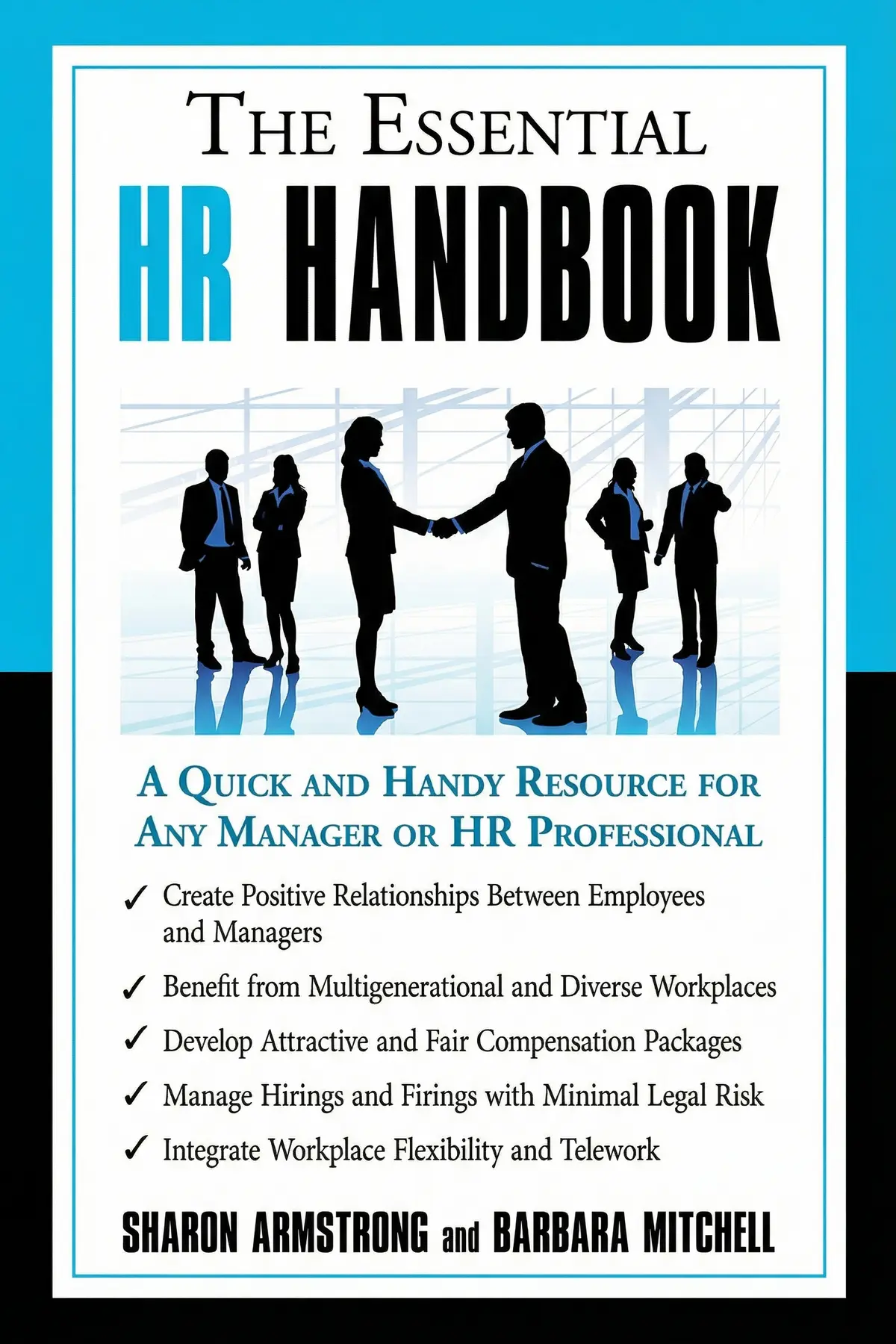
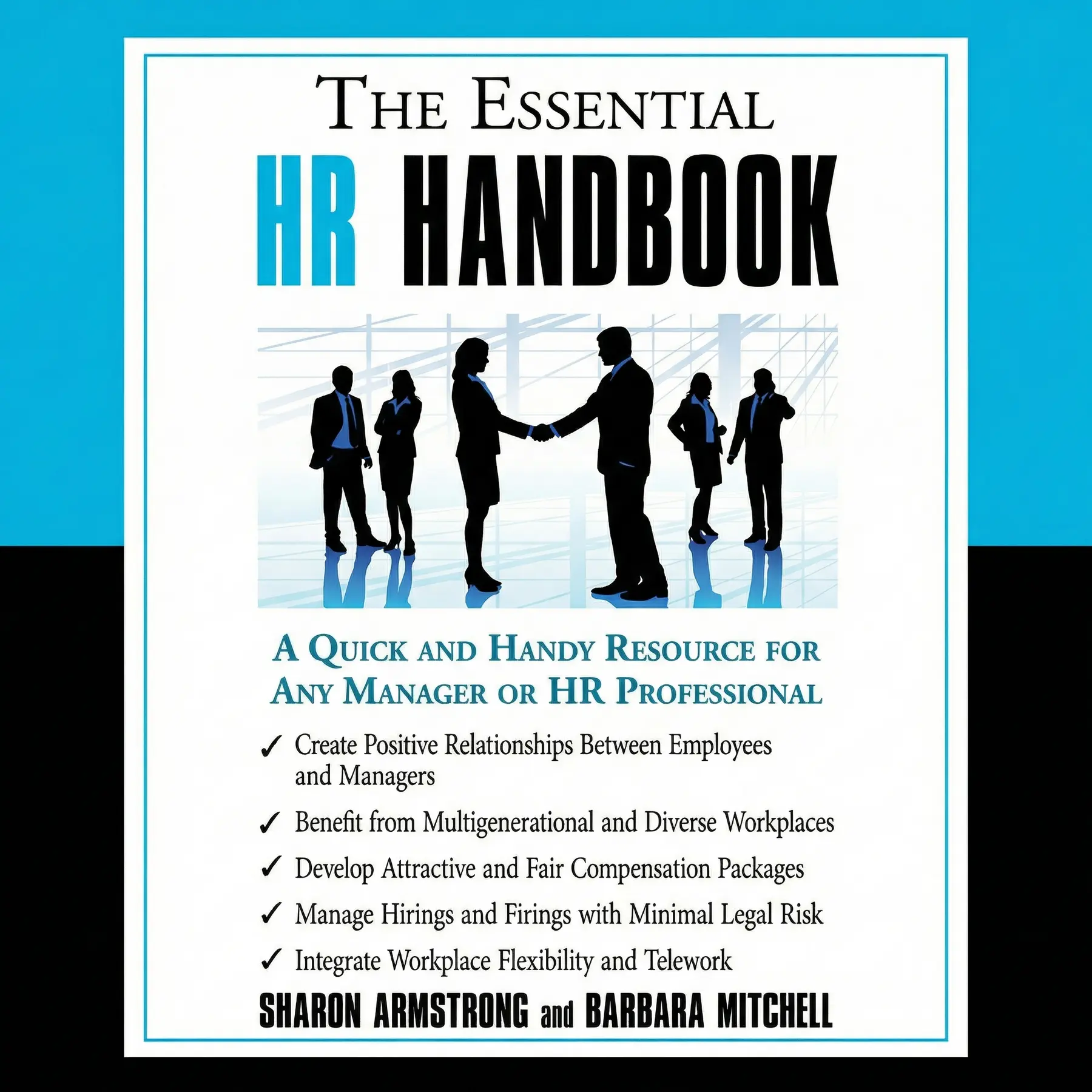
The Essential HR Handbook serves as an all-encompassing guide for anyone responsible for managing people. It moves beyond administrative tasks to explore the strategic heart of human resources, addressing the complexities of finding, keeping, and growing talent in a competitive market. The book promises to demystify the often-intimidating world of labor laws, performance reviews, and organizational culture. By following this roadmap, readers learn how to navigate the delicate balance between business needs and employee well-being. From the first interview to the final exit strategy, the authors provide a framework for creating a compliant, efficient, and supportive work environment. It is designed to empower both dedicated HR specialists and small business owners who wear multiple hats.
Sharon Armstrong is the founder of the consulting firm Sharon Armstrong and Associates, where she serves as a human resources consultant and trainer. She is the co-author of two successful business books and the light-hearted Healing the Canine Within. Barbara Mitchell is an expert in organizational development and human resources. She is a managing partner at The Mitchell Group and previously spent a significant portion of her career as an HR specialist at Marriott International.
Listeners consider this HR guide an essential tool, and one listener points out that it offers thorough instructions for managing human resources departments. The material is accessible and simple to navigate, while one listener emphasizes its all-encompassing treatment of human resources subjects. The useful layout is well-received, and one listener remarks on how relevant the content is for diverse management positions.
Finally got around to reading this handbook and it serves as a remarkably comprehensive guide for anyone tasked with people operations. The book is easy to follow and doesn't get bogged down in unnecessary jargon, which is a breath of fresh air in this field. It covers everything from hiring the best talent in a competitive market to the unfortunate necessity of handling terminations fairly. While it is definitely geared toward the American legal landscape, the general principles of leadership and empathy remain universal. For a small business owner like myself, having all these templates and checklists in one place is an absolute lifesaver.
Show moreIn my experience, finding a book that balances theory with actual templates is rare, so this was a pleasant surprise. The final third of the book is essentially a toolkit of forms that any organization could adapt to their specific needs. It’s a very practical resource that I’ve already used to update our employee handbook and performance evaluation criteria. The writing is clear and the layout makes it easy to flip to exactly what you need without reading cover-to-cover. Frankly, it’s one of the few business books I’ve bought recently that actually feels like it will get regular use on my desk.
Show moreThe chapter on performance reviews alone makes this worth the price of admission for any frustrated manager. Let’s face it, most of us dread that time of year, but Armstrong and Mitchell provide a practical framework that actually makes sense. I especially liked the inclusion of sample forms toward the back of the book because they provide a concrete starting point for building a department from scratch. My only real gripe is that the legal section felt a bit dry compared to the more engaging chapters on talent acquisition and culture. It’s a solid resource that stays in my office for quick reference when I need to double-check a process.
Show moreAfter hearing so much about HR compliance, I decided to pick this up to demystify labor laws for my small team. This handbook helped remove much of my ignorance regarding unlawful terminations and the nuances of various paid time off options. The tone is encouraging and professional, making it much easier to digest than a standard law textbook. Personally, I think the authors did a great job of explaining the 'why' behind certain policies rather than just listing rules. I did notice some of the tech advice felt a bit behind the curve, but the core human elements are handled with great care and expertise.
Show moreEver wonder what actually happens behind the scenes in a modern HR department? This book pulls back the curtain and provides a very structured look at how organizations manage their most valuable assets—the people. The first half is packed with leadership insights that apply to any manager, regardless of whether they officially work in human resources. I found the questions and structures provided to be very helpful for my weekly team meetings. Even though it is a bit US-centric in its legal definitions, the advice on attracting top-tier talent in a buyer's market is incredibly relevant today.
Show moreAs someone stepping into a management role without a formal background in human resources, I found this to be a helpful starting point. The book is well-organized and the sections on navigating employee boundaries and rights are particularly enlightening for those of us trying to avoid common pitfalls. However, I can't shake the feeling that some of the technological suggestions are stuck in a previous decade. Truth is, while the fundamentals of managing people don't change, the tools we use certainly do. It’s a decent enough primer if you can find it on sale, but don't expect it to replace a proper certification or advanced degree.
Show moreLook, this is a decent jumping-off point if you’re completely new to employee relations or just started an HR internship. It offers a broad overview of the field, but it lacks the granular detail required for more complex workplace scenarios. I found the section on employee records useful for getting organized, though the writing can feel a bit repetitive in the middle chapters. It’s a safe bet for a 'Human Resources 101' type of vibe, yet seasoned professionals will likely find themselves skimming most of it. It’s not a bad book by any means, but it doesn't quite live up to the 'essential' title for everyone.
Show moreGotta say, the content is solid but the pricing feels a bit steep for the depth provided in the early chapters. It’s definitely a beginner’s guide, and while it covers a lot of ground, it doesn’t always go deep enough into the 'how-to' of modern HR tech. The examples are almost exclusively based on US organizations, which might be a dealbreaker for some international readers looking for global perspectives. Still, it’s a well-organized read that can help clarify the boundaries and expectations between employers and co-workers. It serves its purpose as an introductory text, but don’t expect it to be the only HR book you’ll ever need.
Show moreTo be frank, I was disappointed by how dated some of the advice felt regarding modern digital workplaces. While the authors clearly know their stuff, the heavy focus on US-specific labor laws makes it a frustrating read for anyone working in an international context. It attempts to be a one-stop-shop for everything, but by trying to touch on every single topic, it occasionally skims the surface of complex issues. If you are looking for a deep dive into strategic HR, you might find this a bit too elementary for your needs. That said, the layout is clean and the writing style is accessible for those who aren't fans of dense academic prose. It just didn't quite hit the mark for me as a seasoned professional.
Show moreThis book tries to cover way too much ground in a limited space and ends up feeling quite shallow as a result. While I appreciate the broad scope, many chapters leave you wanting more specific instructions on how to handle real-world conflict. It feels a bit like a collection of blog posts rather than a definitive manual for the modern workplace. Not gonna lie, I was expecting something a bit more revolutionary given the positive buzz I had heard about the authors. If you are already working in the field, there isn’t much here that you haven't already learned through basic on-the-job experience.
Show moreHamilton Helmer

Margaret Heffernan

Joseph A. Maciariello
AUDIO SUMMARY AVAILABLE
Get the key ideas from The Essential HR Handbook by Sharon Armstrong, plus 5,000+ more titles in English and Thai.







