
4 min 56 sec
The First Rule of Mastery: Stop Worrying about What People Think of You
Psychologist Michael Gervais explores how the fear of other people's opinions, or FOPO, restricts our potential. He offers a framework for building an internal compass and achieving high-performance mastery through authenticity.
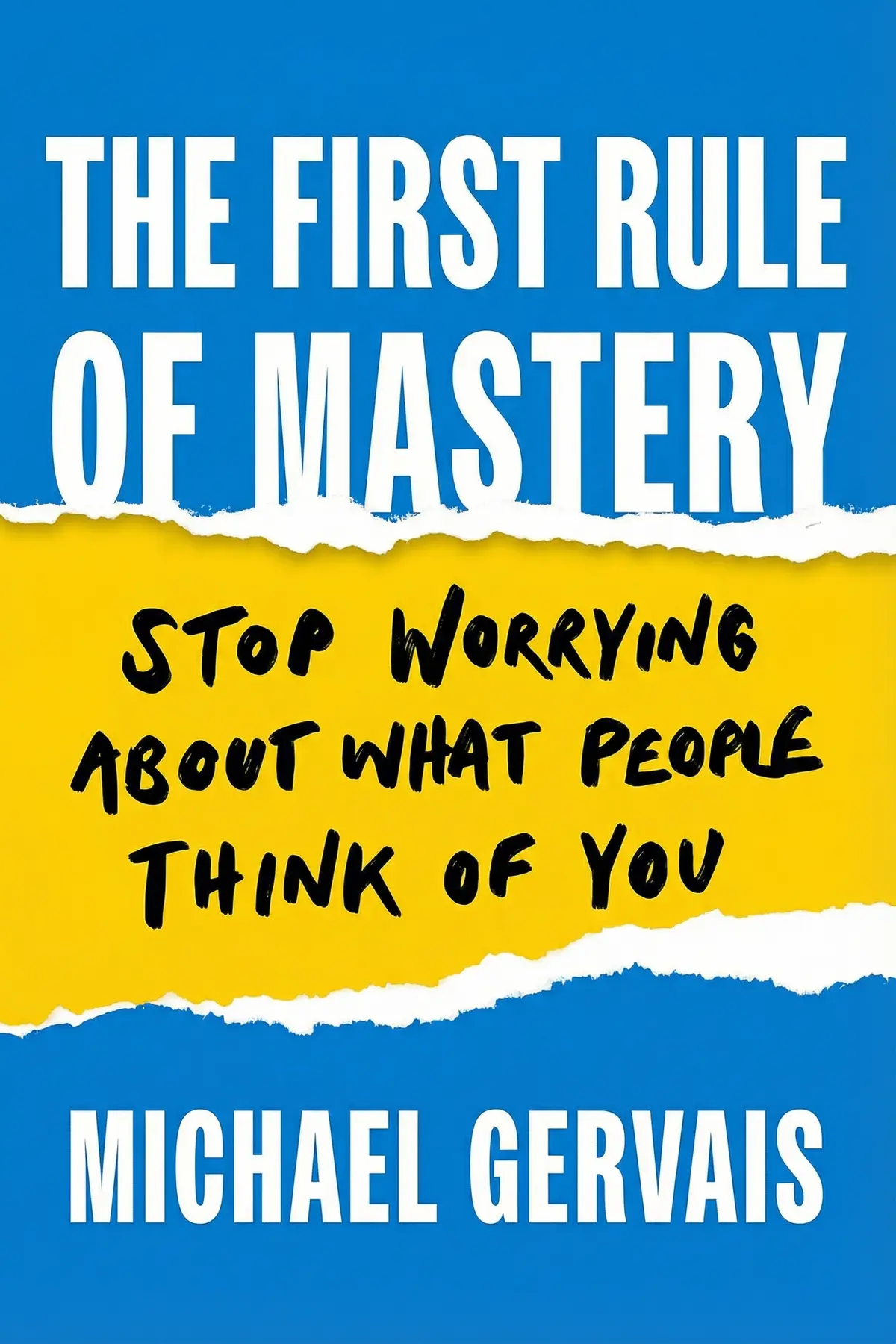
Table of Content
1. Introduction
48 sec
In the world of high performance, we often look at the visible metrics: the score on the board, the year-end bonus, or the public accolades. But Michael Gervais argues that the true battle for excellence happens internally. There is a hidden obstacle that traps even the most talented individuals, preventing them from taking the risks necessary for true growth. That obstacle is our deep-seated concern with what everyone else thinks of us.
In this summary, we will explore why we are so susceptible to external judgment and how that sensitivity creates a glass ceiling for our potential. We’ll look at the psychological mechanics of what Gervais calls FOPO and, more importantly, we will outline the steps needed to break free. By the end, you’ll see that the path to mastery isn’t about becoming better than everyone else—it’s about becoming more aligned with yourself.
2. The Invisible Ceiling of FOPO
1 min 03 sec
Discover why the fear of judgment is more than just a social anxiety—it is a direct threat to your creativity and your ability to innovate.
3. The Illusion of a Fixed Identity
1 min 04 sec
You believe you’ve become who you’ll always be. What if the opposite is true—and that realization is the key to fearlessly pursuing mastery?
4. Cultivating an Internal Compass
1 min 19 sec
Learn how to turn criticism into a tool for self-discovery and use your personal values as a shield against external pressure.
5. Conclusion
42 sec
Mastery is not a destination marked by a trophy; it is the process of living authentically. By identifying and confronting the fear of other people’s opinions, you remove the primary barrier to your own growth. The throughline here is a shift from an external focus to an internal one. When you stop defining yourself through the eyes of others and start living by your own compass, you unlock a level of focus and freedom that few ever reach.
As you move forward, remember to treat your identity as an evolving journey. Face criticism with curiosity rather than fear, and let your core values be the ultimate judge of your success. In doing so, you don’t just perform better—you live better.
About this book
What is this book about?
Have you ever held back a great idea because you were worried about how your colleagues might react? Many of us live in a state of constant, subtle anxiety regarding the judgments of others. This book addresses this universal struggle, identifying it as FOPO—the fear of other people’s opinions. This psychological barrier doesn't just make us nervous; it actively stifles our creativity and keeps us from reaching our highest potential. Michael Gervais provides a roadmap to move past this performance-based identity. Instead of measuring your worth by your latest win or the approval of those around you, the promise of this book is to help you develop a sturdy inner compass. By aligning your actions with personal values rather than external expectations, you can achieve a level of mastery that is both sustainable and authentic. It is a guide for anyone looking to reclaim their focus and live a life driven by purpose rather than social pressure.
Book Information
About the Author
Michael Gervais
Michael Gervais is a renowned high-performance psychologist. He is widely recognized for his expertise in helping teams and individuals excel in high-stakes environments. Throughout his career, his guidance has been sought by a diverse range of elite performers, including Olympic athletes, NFL teams, and leaders at Fortune 100 companies.
Ratings & Reviews
Ratings at a glance
What people think
Listeners consider this work a highly useful resource for self-improvement, offering reachable and life-changing practical observations and lessons. It is thoroughly documented, blending narrative accounts with scientific data, and includes captivating anecdotes about prominent athletes and figures from history. Listeners value the concrete strategies included in the text, and one listener highlights how it helps bridge the gap between abstract concepts and actual application.
Top reviews
Eleni
Picked this up during a particularly rough patch at work where I felt paralyzed by social anxiety and the constant need for validation. Dr. Michael Gervais hits the nail on the head regarding FOPO, or the fear of other people's opinions, which I realized was draining my creative energy. The book is an incredibly valuable guide for anyone looking to transition from theoretical knowledge to actual daily practice. I especially appreciated the actionable steps at the end of each chapter, which felt much more grounded than your typical self-help fluff. While some might find the neuroscience elements a bit heavy, the storytelling involving elite athletes kept me fully engaged throughout. It’s a transformative read if you are willing to do the internal work required to find your authentic voice. Personally, I found the section on mindfulness and clarifying personal values to be the most impactful part of the entire experience. This isn't just a book you read; it's a manual you use to rebuild your confidence from the ground up.
Show moreSavannah
As someone who has struggled with perfectionism for years, I found this book to be an absolute revelation. Gervais and Lake have created a masterpiece that strikes a perfect balance between psychological evidence and pure readability. Not gonna lie, I expected a dry textbook, but what I got was a fast-paced, engaging narrative that felt like a conversation with a mentor. The focus on FOPO is brilliant because it identifies the specific 'noise' that prevents us from reaching our full potential in high-stakes environments. I’ve already started implementing the mindfulness techniques mentioned, and the shift in my focus has been immediate and profound. The authors don't just tell you to stop caring; they explain the biological 'why' behind our fears and provide the tools to rewire those responses. This is a must-read for any overachiever who feels like they are constantly jumping through hoops to satisfy everyone else. I’ve recommended it to my entire management team because the lessons on authenticity are universal.
Show moreDek
Finally got around to reading this after seeing it everywhere on LinkedIn, and the hype is largely justified for anyone in a leadership role. Gervais expertly dismantles the idea that we need external validation to be successful, showing instead that true mastery comes from an internal locus of control. The stories about athletes and artists are not just fluff; they serve as concrete examples of how to apply high-performance psychology in real-world scenarios. I found the tone to be incredibly empathetic, which is a nice change from the rigid, 'hustle-culture' vibe of most business books. The authors provide a clear roadmap for identifying your core values and using them as a shield against the 'noise' of social pressure. Truly, this book facilitates the transition from theory to practice in a way that feels sustainable and authentic. It’s the kind of read that makes you want to put your phone down and actually go do something difficult. Highly recommended for anyone ready to take responsibility for their own happiness.
Show moreAmelia
Wow, this was exactly the mental reset I needed to stop living for the approval of people I don't even particularly like or respect. Michael Gervais has a gift for making elite performance psychology feel applicable to the average person’s daily life and struggles. I paired this read with 'Bending Reality' as some other reviewers suggested, and the combination was absolutely life-changing for my perspective on career goals. The book is well-researched, blending scientific studies with emotional narratives that really drive the points home. I loved the emphasis on building a 'mastery' mindset rather than just a 'success' mindset, as it shifts the focus back to the process and our own values. It’s a quick read but one that packs a whole lot of punch in every single chapter. If you feel like your potential is being throttled by the weight of 'what will they think,' you need to read this immediately. This is easily one of the most accessible and helpful books on the topic of mental toughness I've ever encountered.
Show moreWittaya
Ever wonder why you're more afraid of a boardroom presentation than actually failing at the project itself? Michael Gervais explores this phenomenon with a blend of professional expertise and warm, accessible storytelling that makes the science of performance feel deeply personal. I loved how he integrated stories of athletes and historical figures to show that even the most successful people battle crippling self-doubt and external pressure. The concept of living in congruence with your own values rather than social expectations isn't necessarily new, but the way it’s framed here is exceptionally practical. Some of the author’s personal anecdotes felt a bit self-indulgent, and the pace slows down in the middle chapters. However, the strategies for building resilience and 'bending reality' are worth the price of admission alone. It’s a solid four-star read that offers a clear map for anyone feeling stuck in the cycle of people-pleasing. If you want to stop playing it safe and start living boldly, this is a great place to start.
Show moreDao
The chapter on Cognitive Behavioral Therapy for elite athletes really shifted my perspective on how even top-tier performers struggle with the same basic fears as the rest of us. Michael Gervais brings a high level of credibility to the table, and you can tell he’s spent years in the trenches with people who have everything on the line. I found the distinction between 'healthy' caring and 'paralyzing' FOPO to be a very helpful nuance that most self-help books miss. The writing style is warm and accessible, making complex psychological concepts easy to digest during a morning commute. My only real gripe is that some sections felt a bit repetitive, hammering the same point home multiple times with different sports metaphors. Still, the practical takeaways are transformative if you actually apply them to your daily routine. It’s an excellent guide for personal growth that feels both well-researched and deeply human. I’ll be keeping my highlights close by for those days when I feel the weight of judgment creeping back in.
Show moreChokdee
Gotta say, the exercises at the end of each chapter are what actually make this book worth the purchase price for me. Instead of just nodding along to the theory, you’re forced to reflect on your own tendencies to people-please and where those behaviors originated. Dr. Gervais writes with a lot of authority, but he also shares his own struggles, which makes the advice feel much more attainable. The concept of FOPO is a great framework for understanding why we play small in our lives, even when we have the skills to succeed. While some of the 'neuro-science' feels a bit like marketing speak, the underlying psychological principles are solid and well-supported. It’s an engaging read that doesn’t drag on forever, which I appreciate in a world of 400-page business books that could have been emails. If you’re an overachiever who is tired of feeling burnt out by expectations, give this a shot. It might just give you the permission you need to be yourself.
Show moreEli
This book is essentially a deep dive into a single acronym, FOPO, and at times it feels like a padded-out Harvard Business Review article. To be fair, Gervais has some excellent insights into performance psychology, but the writing often veers into what some might call 'neurobollocks.' He uses scientific jargon to explain things that feel like common sense, and the constant references to 'thought leaders' like Brené Brown felt a bit derivative. The anecdote about the Cy Young winner and CBT was interesting, yet it didn't quite convince me that disregarding everyone's opinion is the ultimate key to mastery. Caring what others think is a survival mechanism, and the book's dismissal of that reality felt a bit like oversimplified bootstrap blather. It’s an okay introduction to mental toughness, but if you’ve already read the Stoics or books on Flow, you might find this a bit redundant. I’d recommend it for beginners in the self-growth space, but seasoned readers might find it lacking in original depth.
Show moreDaranee
Look, the core message of this book is right there on the front cover, and it doesn't get much deeper than that despite the 200+ pages. It’s a fine read if you need a reminder to stop living for others, but it lacks the 'punch' I was expecting from a high-performance psychologist. The personal anecdotes are hit-or-miss; some are inspiring, while others feel like filler to bridge the gap between scientific studies. I did appreciate the focus on how 'perfectionism' is often just a mask for the fear of being judged by our peers. However, the strategies provided—like mindfulness and journaling—are things you can find in almost any other wellness book on the market today. It’s a quick read that packs some helpful nuggets, but it’s not the definitive guide to mastery it claims to be. If you're new to Dr. Gervais's work, you'll probably enjoy it more than those who already follow his podcast regularly.
Show moreMattanee
Not what I expected, and frankly, I’m disappointed by the lack of original philosophical depth in these pages. It feels like a watered-down version of Stoicism mixed with some trendy buzzwords and a few anecdotes about professional baseball players. The author spends a lot of time talking about his own past worries, which eventually starts to feel more like a therapy session than a guide to mastery. While the focus on FOPO is a decent hook, the advice boils down to 'just stop caring,' which is much easier said than done. The book relies heavily on citing other researchers rather than providing groundbreaking new insights into the human psyche. If you are looking for a rigorous psychological study, look elsewhere, because this is mostly business-book blather aimed at people who want a quick fix. It’s definitely a book, but it’s not one that I’ll be keeping on my shelf for a re-read. There are far more direct guides on mental fitness that don't hide behind scientific-sounding filler.
Show moreReaders also enjoyed
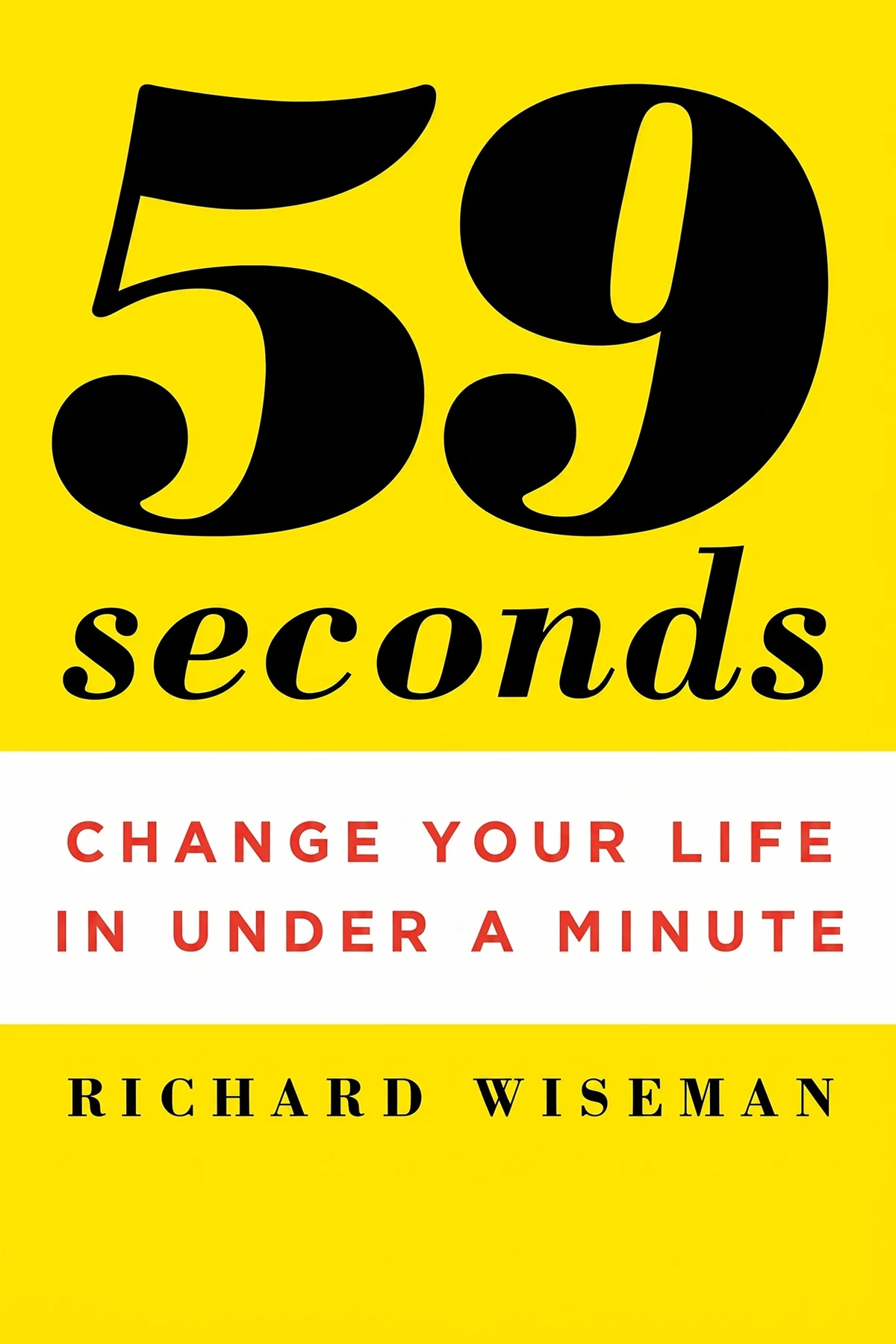
59 Seconds: Change Your Life in Under a Minute
Richard Wiseman

A Guide to the Good Life: The Ancient Art of Stoic Joy
William B. Irvine
A High-Performing Mind: Strengthen Your Mind and Live Your Best Life
Andrew D. Thompson
AUDIO SUMMARY AVAILABLE
Listen to The First Rule of Mastery in 15 minutes
Get the key ideas from The First Rule of Mastery by Michael Gervais, plus 5,000+ more titles in English and Thai.
- 5,000+ titles
- Listen as much as you want
- 7-day free trial
- Cancel anytime







