


A Bigger Prize: How We Can Do Better Than the Competition
Margaret Heffernan
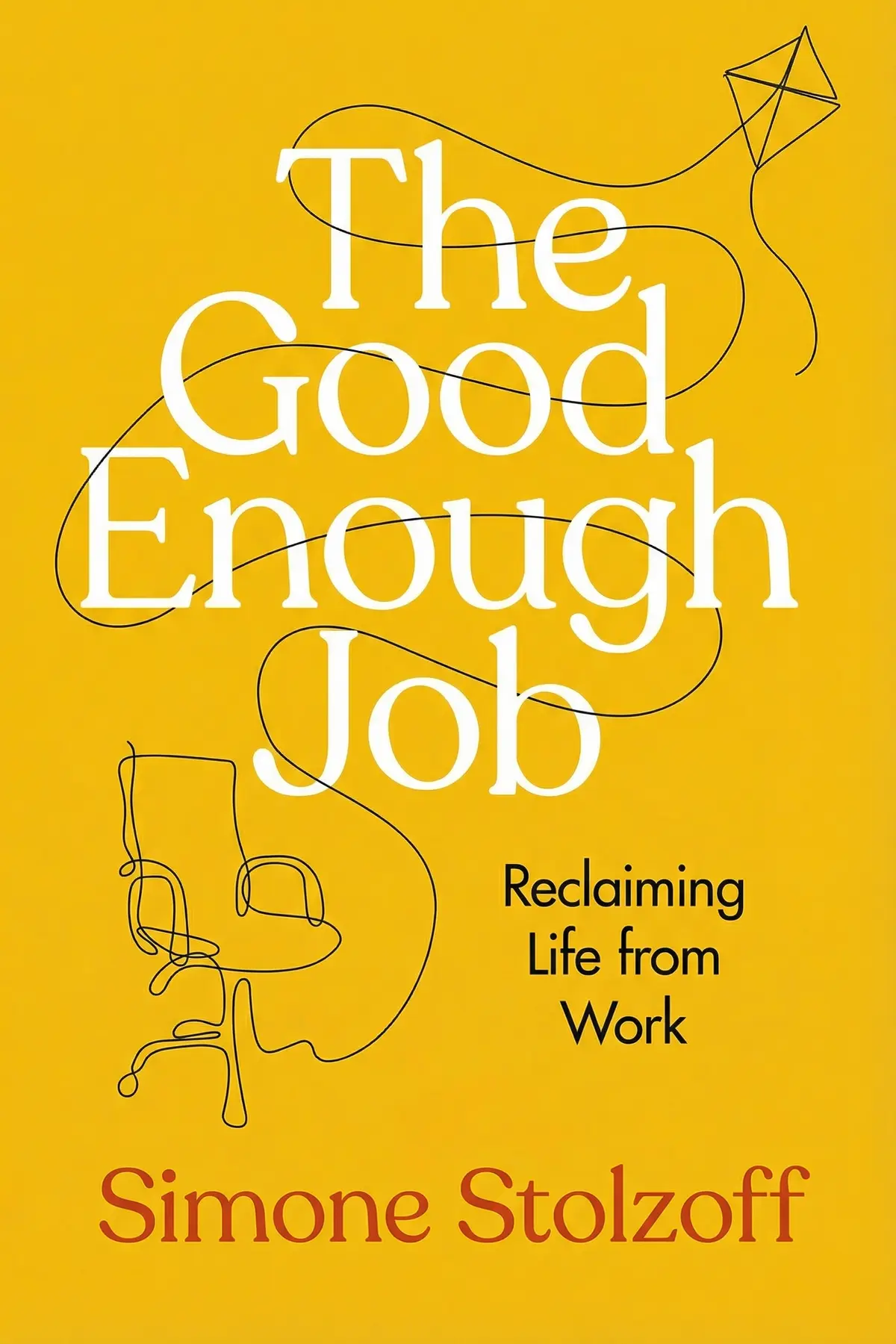
The Good Enough Job examines the modern obsession with finding identity through work. It offers a blueprint for reclaiming your personal life by decoupling self-worth from professional achievement and corporate loyalty.
2 min 07 sec
Nearly a century ago, the famous economist John Maynard Keynes looked into the future and made a bold prediction. He believed that by the year 2030, technological progress would be so advanced that the human race would only need to work about fifteen hours a week. In his eyes, the greatest challenge of the future wouldn’t be poverty or labor, but rather how to fill all our abundant leisure time. He envisioned a world where free time was the ultimate status symbol, a sign that we had finally mastered the art of living.
Fast forward to today, and the reality looks remarkably different. Instead of trading our wealth for more leisure, we have done the exact opposite. We are working longer hours than ever before. In the United States, for instance, the average worker puts in significantly more time than their counterparts in Germany, France, and even Japan—a country long known for its intense corporate culture. Somewhere along the line, our perspective shifted. Work stopped being a chore we performed so we could enjoy our real lives, and it started becoming our entire identity.
This cultural obsession is what we might call workism. It is the idea that our jobs aren’t just a way to pay the bills, but a mandatory mission to find soul-deep meaning and personal fulfillment. While seeking purpose is noble, this all-consuming focus on our careers often leaves us exhausted, lonely, and prone to burnout. This is where the concept of the good enough job comes in. Borrowing from the psychological theory of good enough parenting—which suggests that being a perfect parent is impossible and that aim for adequacy is actually healthier for the child—this philosophy suggests that a job doesn’t have to be your everything.
In this summary, we will explore why we have become so tethered to our desks and how we can begin to untangle our self-worth from our salary. We will look at the traps of professional ambition, the way work has replaced traditional community, and why the idea of a corporate family is often a hollow promise. By the end, you’ll see that reclaiming your life isn’t about working less hard, but about making sure that work is just one part of a much larger, more colorful story.
2 min 12 sec
Explore how even a dream career can lead to a crisis of self-worth when professional boundaries vanish and personal identity becomes inseparable from a job title.
2 min 11 sec
Discover why modern workers are turning to their jobs for the sense of community once provided by religious institutions, and the risks of this shift.
2 min 22 sec
Uncover the origins of workism in our early lives and learn how to create ‘time sanctuaries’ to protect your inner self from the pressure to produce.
2 min 13 sec
Learn why viewing your workplace as a ‘family’ can be a dangerous trap and how to set healthy boundaries to protect your integrity and well-being.
1 min 16 sec
As we have seen throughout these stories and insights, the path to a fulfilling life doesn’t necessarily run through the corner office or a viral professional achievement. The cult of workism has convinced us that we are what we do, but that is a narrow and fragile way to live. When we define ourselves solely by our jobs, we become vulnerable to the whims of the market, the moods of our bosses, and the inevitable exhaustion of the productivity treadmill.
The philosophy of the good enough job offers a way out. It is a reminder that adequacy in your professional life is not a sign of laziness; it is a strategic choice to preserve your energy for the things that make life worth living. It means recognizing that you are more than your output. You are a neighbor, a friend, a creator, and an explorer of your own interests.
To reclaim your life, start by looking for small ways to disentangle your identity from your desk. Build a time sanctuary where work is never mentioned. Reconnect with a community that doesn’t care about your job title. Most importantly, remember that work is just one chapter in the vast book of your life. It is up to you to write the rest of the chapters with the relationships, hobbies, and moments of quiet joy that actually define who you are. By choosing a job that is good enough, you create the space to build a life that is truly great.
The Good Enough Job explores the phenomenon of workism, the pervasive belief that our careers should be the primary source of our identity and meaning. Author Simone Stolzoff argues that this cultural shift has led to record levels of burnout and social isolation. By examining real-world examples from the tech industry to the culinary arts, the book reveals how the pressure to find a dream job can actually diminish our quality of life. The promise of the book is a path toward a healthier relationship with labor. It introduces the concept of a job that is simply good enough—one that supports your life without consuming it. Through these pages, listeners learn to set boundaries, diversify their sources of fulfillment, and understand that their value as a human being is not tied to their productivity or their job title. It is a call to move away from the corporate family myth and back toward community and personal joy.
Simone Stolzoff is a seasoned writer and journalist with a passion for exploring the intersection of culture, work, and personal well-being. His articles on topics ranging from work-life balance to organizational dynamics have been featured in prominent publications like the New York Times and Forbes.
Listeners find this book both stimulating and a pleasure to read, highlighting its extensive research and the personal narratives gathered from interviews with diverse professionals. The prose is captivating, and listeners value the insights into our connection with employment, with one listener observing that it offers a necessary contrast to the busyness trap. The guidance provided is well-received, and one listener specifically suggests the work for self-prescribed workaholics.
Stolzoff delivers a much-needed reality check for a generation raised on the toxic 'hustle culture' gospel. We have been told for years that our jobs should be our primary passions, but this book argues that work is ultimately an economic transaction. By framing a career as a 'good enough' part of life rather than our entire identity, the author provides a blueprint for reclaiming our time. The interviews with various professionals were enlightening, even if some of their financial situations felt a bit out of reach for the average reader. Still, the core message about decoupling self-worth from productivity is vital for anyone feeling burnt out. I found myself highlighting passages on almost every page, especially the sections regarding how we answer the 'what do you do' question. It’s a compelling read that challenges the American workaholic mindset without being overly preachy. If you feel like your soul is being slowly crushed by your 9-to-5, pick this up immediately.
Show moreWow, this book hit home in a way I didn't expect. I have spent the last decade making my job my entire personality, and reading this felt like someone finally giving me permission to stop. The author explores the idea that 'good enough' isn't about settling for mediocrity; it's about creating boundaries so that the rest of your life can flourish. I loved the variety of voices in the interviews, from those in tech to those in the arts. Look, we all know that work is an exchange of labor for money, but we rarely live like we believe it. This book is an excellent reminder that while we need to work to support ourselves, work is only one aspect of a meaningful existence. The prose is clear and the advice is actionable if you're willing to do the internal work of dismantling your beliefs about productivity. I'll be recommending this to all my friends who can't seem to stop checking their emails on the weekend.
Show moreWork is a transaction, period. That’s the core message here, and not gonna lie, it’s one that more people need to hear in our obsessed culture. Simone Stolzoff does a fantastic job of breaking down why we’ve allowed our careers to swallow our entire identities. I loved the way the book uses interviews to show how high-performers eventually crashed and had to rebuild their lives from scratch. It's not just a collection of advice; it's a series of cautionary tales that feel incredibly relevant in the current economic climate. Personally, I found the section on finding worth outside of work to be the most moving part of the book. Even though some of the people profiled had a lot more money to fall back on than I do, the underlying philosophy remains solid. If you’re tired of the constant pressure to 'crush it' and want to find a version of success that doesn't involve burnout, this is for you. Snappy writing and a very timely message.
Show moreAfter finishing this on maternity leave, I feel like I have a completely different perspective on going back to work. I’ve always been a self-prescribed workaholic, but reading about the 'good enough' job has shifted my priorities significantly. The quotes in this book are so thought-provoking—I found myself stopping to think about the 'economic contract' of labor every time I looked at my baby. It is a great reminder that work is only one aspect of our lives, and we shouldn't give it the best of ourselves while bringing only leftovers home to our families. The author’s writing is engaging and the personal stories told through interviews make the concepts feel very real. Even though I'm not a millionaire like some of the people in the book, the message about prioritising life over professional identity resonates deeply. This was easily one of my favorite reads of the year. It’s a must-read for anyone at a crossroads in their life or career.
Show moreFinally got around to reading this, and I was pleasantly surprised by how much research went into what could have been a simple self-help trope. The author uses a series of interviews to explore how different people have navigated the 'busyness trap' and come out the other side. Some critics say this reads like a long-form blog post, but I found the pacing to be perfect for the subject matter. To be fair, the examples are weighted toward those in high-earning positions, which is a valid criticism. However, the psychological insights into why we over-identify with our titles are universal. The writing style is engaging and the chapters move quickly. I particularly appreciated the section on how our workplaces have become our primary source of community, for better or worse. It’s a great counterpoint to the 'do what you love' narrative that has led so many of us toward exhaustion. Definitely a 4-star read for its cultural analysis.
Show moreThe chapter on D.W. Winnicott’s 'good enough parent' ideology was the highlight of this book for me. Applying that psychological concept to our careers is a brilliant move. It suggests that just as a parent doesn't need to be perfect to be successful, a job doesn't need to be your 'calling' to be valid. This perspective is a refreshing take on parenting and professional life alike. Stolzoff does a great job of blending these academic concepts with personal narratives from his interviews. My only gripe is that the tone can occasionally skew a bit too optimistic regarding how easy it is to set boundaries in certain industries. In my experience, some corporate cultures will actively penalize you for the 'good enough' approach. Despite that, the book is an excellent resource for anyone looking to develop a healthier relationship with their office. It’s thorough, well-researched, and provides a much-needed pushback against the 'if, then' hustle culture mindset that plagues our society today.
Show moreAs someone who has struggled with burnout for years, I found this to be a very grounding read. Stolzoff doesn't just tell you to quit your job; he asks you to re-evaluate the space your career occupies in your brain. The book is an enjoyably written exploration of how we got to this point of work-obsession. I appreciated the advice on stack-ranking work in our lives alongside things like family, community, and personal interests. While I agree with other reviewers that the examples can feel a bit elitist—lots of ex-Google and banking types—the core principles are applicable to anyone. To be fair, the author is a journalist, so the storytelling is top-notch and the research feels very credible. It provides a great counterpoint to the busyness trap that many of us fall into without even realizing it. I walked away with a lot of notes and a much clearer sense of how I want to handle my next career move. A solid 4 stars.
Show moreEver wonder why we feel so guilty for taking a lunch break or leaving the office at 5 PM? Stolzoff digs into the cultural roots of this anxiety and offers a refreshing counterpoint to the modern obsession with career-as-identity. The book is structured around personal stories, making it feel more like a long-form journalistic piece than a dry self-help manual. I particularly enjoyed how the author rephrased the concept of success to include things like community involvement and personal hobbies that don't need to be monetized. While some of the examples are admittedly high-earners with significant safety nets, the underlying philosophy is applicable to anyone who feels like their job is taking up too much 'internal real estate.' The prose is snappy, and the research into the history of work is thorough without being overwhelming. It’s definitely worth a read if you’re looking to re-evaluate your relationship with your career. Not perfect, but definitely 'good enough' and then some!
Show moreWhile I appreciate the sentiment behind the book, the execution left me feeling a bit alienated as a mid-level employee. Truth is, most of the case studies involve high-flying executives or tech workers with massive safety nets. It’s easy to 'detach' and find hobbies when you have six months of savings and a Google pedigree on your resume. For those of us living paycheck to paycheck, the advice to just treat work as a transaction feels slightly tone-deaf to the realities of survival. However, Stolzoff is a gifted writer, and his research into the history of 'workism' is genuinely fascinating. I liked the exploration of how we’ve replaced religion with professional achievement in the modern era. It’s a thought-provoking book that raises important questions about our culture, even if it doesn't provide all the practical answers for the working class. Definitely a solid starting point for a conversation, but I wanted more stories about 'average' people making these changes.
Show moreIs this book written for everyone or just the top 1%? Frankly, it was exhausting to read about millionaires who 'reclaimed their lives' by taking self-funded sabbaticals or turning their expensive hobbies into boutique businesses. That isn't a reality for the vast majority of people who are just trying to keep the lights on and pay rent. The author talks about work as a transaction, yet provides examples that are anything but transactional for the average person. Where are the stories of the teachers, the retail workers, or the nurses who can't just 'detach' because people literally depend on them? The writing style is engaging, sure, but the lack of socioeconomic diversity makes the advice feel like it belongs in a luxury lifestyle magazine. If you’re a C-suite executive looking for permission to chill, you’ll love it. For the rest of us, it’s just another reminder of the gap between the haves and the have-nots. Total disappointment in that regard.
Show moreMargaret Heffernan
Robin Ryan
Marianne Cantwell
William Vanderbloemen
AUDIO SUMMARY AVAILABLE
Get the key ideas from The Good Enough Job by Simone Stolzoff, plus 5,000+ more titles in English and Thai.







