
A Bigger Prize: How We Can Do Better Than the Competition
Margaret Heffernan
The Grid introduces a holistic framework for business decision-making. By balancing desirability, profitability, and longevity across nine interconnected elements, leaders can navigate complex markets and ensure sustainable, long-term success.
1 min 57 sec
Every morning, business leaders wake up to a barrage of questions that feel both urgent and unique. An entrepreneur might wonder if their latest startup concept has the legs to actually survive its first year. A middle manager might be weighing the pros and cons of a structural change in their department, worried about how a shift in one team might inadvertently break a process in another. A CEO might be looking at declining margins and wondering why increased sales aren’t translating to higher profits.
Often, the instinct in these moments is to look for a specific, narrow answer. We seek out experts in marketing, or finance, or operations, hoping for a surgical fix. But as Matt Watkinson points out, the reality of business is far more interconnected than most of us realize. He compares the modern enterprise to the human body—a complex system where a pain in the foot might actually be caused by a problem in the shoulder.
This is where the concept of the Grid comes in. It is a mental model designed to help you step back and see the entire landscape of your business at once. It’s not just about solving one problem; it’s about understanding how every lever you pull affects every other part of the machine. In this summary, we are going to explore a framework built around three universal goals: making sure people actually want what you’re selling, ensuring you can make money while doing it, and creating a structure that can survive the test of time.
We will move through the nine essential elements that govern these goals, looking at why some companies soar while others, despite having great products, vanish into obscurity. By the end of this journey, you’ll have a new lens through which to view your professional world—one that moves beyond guesswork and into a holistic, systemic understanding of success. We’ll see how small changes in pricing can have massive impacts on the bottom line, why being the ‘best’ product isn’t always enough to win, and how to stop treating symptoms so you can finally start curing the underlying causes of business friction.
2 min 05 sec
Explore why isolating problems often leads to failure and how a sports injury revealed a fundamental truth about diagnosing organizational health through a wider lens.
2 min 04 sec
Uncover the universal objectives shared by every profitable enterprise and why focusing on desirability alone can lead to a quick and painful collapse.
2 min 08 sec
Learn to view your business like a ship at sea, constantly reacting to the shifting winds of customer needs, market trends, and organizational evolution.
2 min 05 sec
How deep-seated beliefs and external rivals shape what people want, and why a clever naming campaign can be more powerful than a product redesign.
2 min 15 sec
Discover why raising prices is often better than selling more units and how protecting your reputation can save your bargaining power.
2 min 06 sec
Quality isn’t enough for survival; learn why the most famous product often beats the best one and how trade secrets can be superior to patents.
1 min 55 sec
Watch how a seemingly smart cost-saving move like outsourcing can accidentally hand your entire business over to a future competitor.
2 min 04 sec
Discover the ‘fresh eyes’ approach to diagnostics and why the most expensive marketing isn’t always the answer to a revenue slump.
1 min 40 sec
As we reach the end of this exploration of the Grid, the most important takeaway is that successful business leadership is about balance, not just intensity. It is tempting to pick one metric—be it revenue, user growth, or cost-cutting—and pursue it with everything you’ve got. But as we have seen, a business is a delicate ecosystem. Like the human body, you cannot optimize one organ at the expense of the others and expect to remain healthy for long.
The nine elements of the Grid—from understanding the deep values of your customers to the ruthless discipline of cost control and the strategic protection of trade secrets—provide a comprehensive map for navigating the complexities of the modern marketplace. By keeping the three goals of desirability, profitability, and longevity at the forefront of every decision, you move from reactive firefighting to proactive, systemic strategy.
One final, actionable piece of advice to carry with you: stop basing your prices solely on your costs. Your customers do not care how much you spent on your office or your materials; they only care about the value your product brings to their lives. If you set your prices based on that value rather than your internal expenses, you open the door to much higher profit margins and a more desirable brand.
In the end, the Grid is more than just a tool; it’s a mindset. It encourages you to be curious, to look for connections, and to always ask how the small choices you make today will ripple into the future of your company. Whether you are leading a massive corporation or a tiny startup, the principles remain the same. Look at the whole picture, respect the interconnections, and you will build a business that doesn’t just survive, but truly prospers.
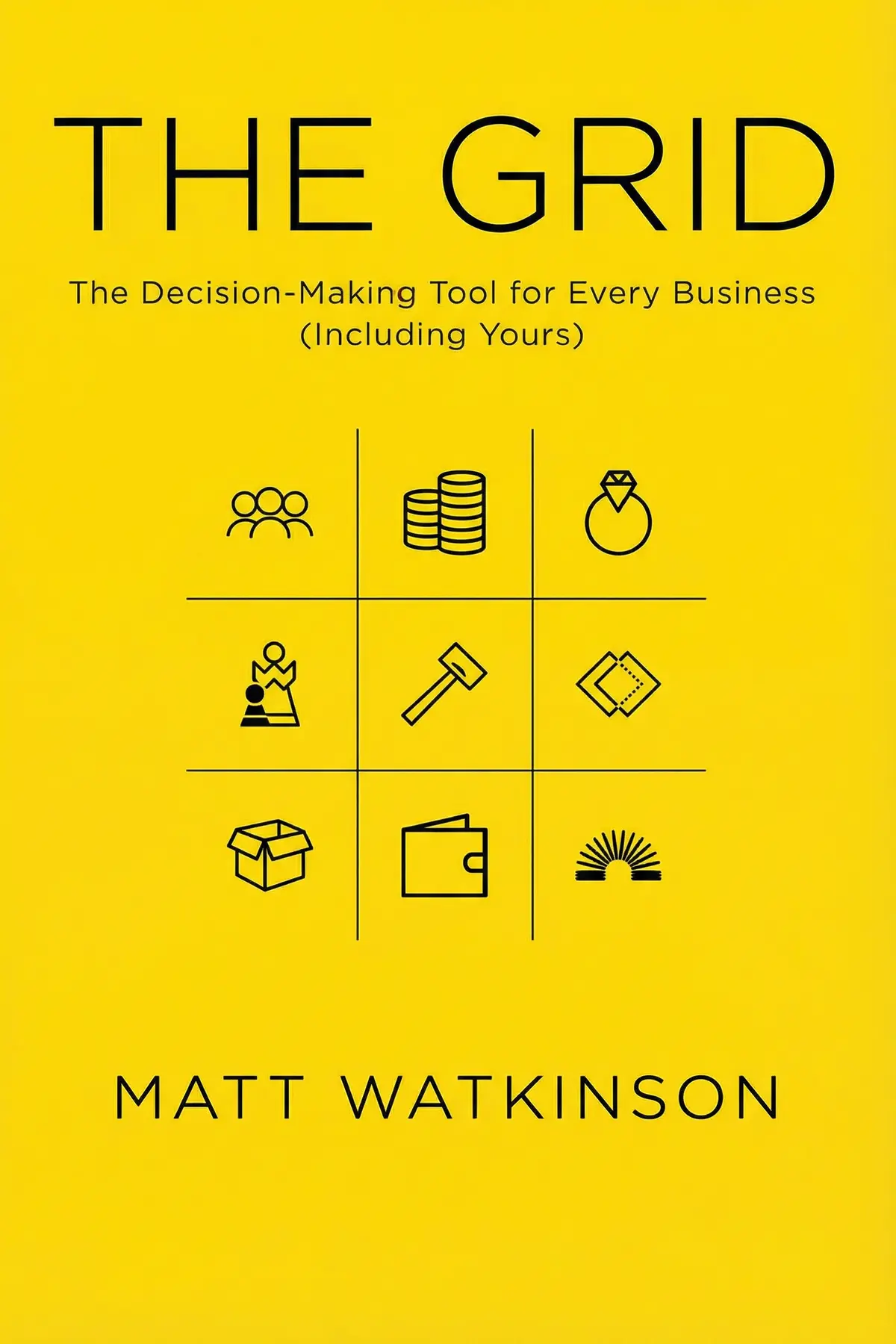
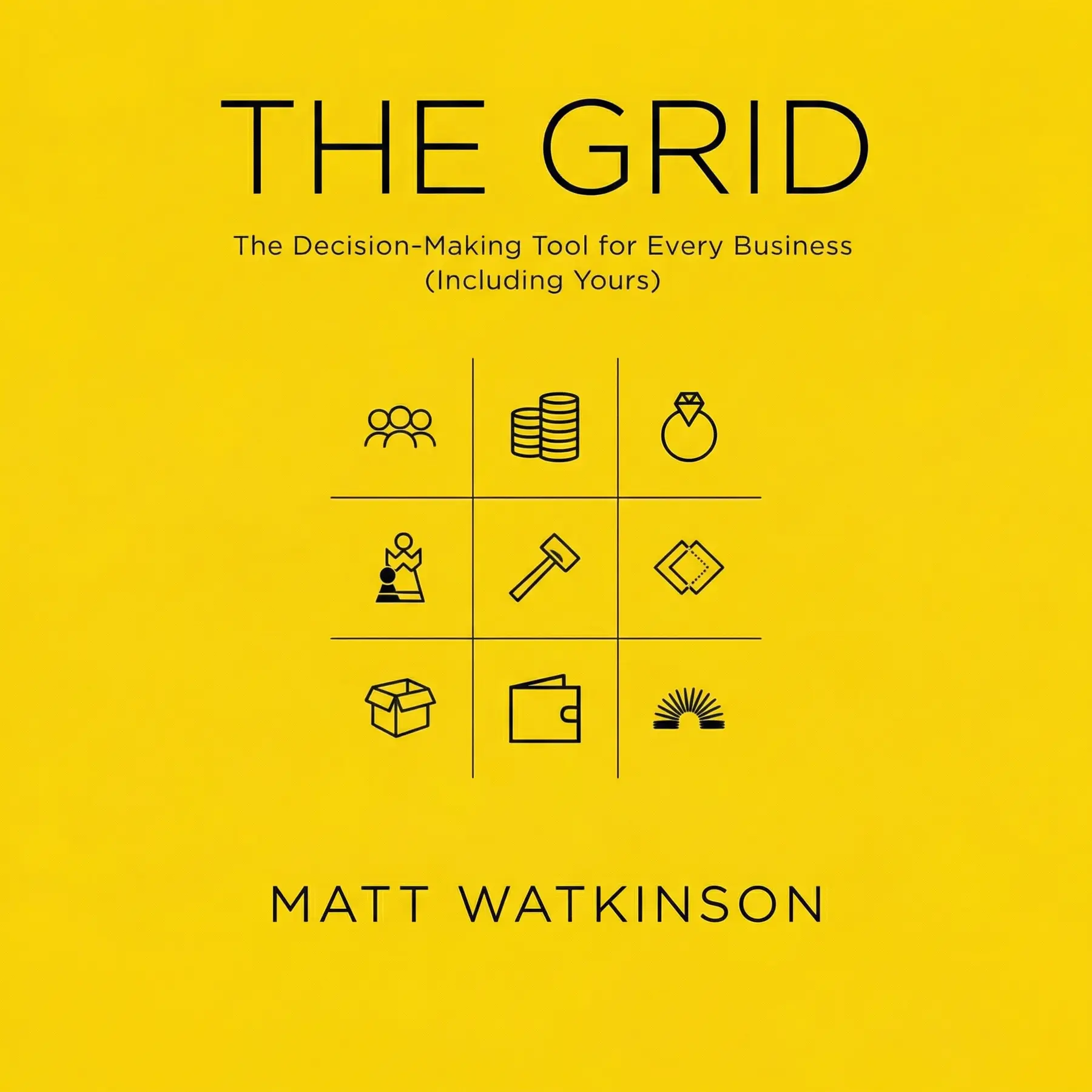
The Grid challenges the traditional, siloed approach to business strategy. Instead of focusing on isolated departments or singular metrics, author Matt Watkinson proposes a unified system that mimics the interconnected nature of the human body. He argues that every decision ripples through the entire organization, affecting everything from customer perception to long-term viability. Readers are introduced to a three-by-three matrix comprising the core goals of any enterprise—desirability, profitability, and longevity—and the shifting factors of customers, markets, and the organization itself. By exploring real-world examples ranging from the diamond industry to aerospace engineering, the book promises a diagnostic tool that helps leaders identify hidden friction points, capitalize on overlooked opportunities, and build a business that is as resilient as it is profitable.
Matt Watkinson is an internationally renowned business consultant. His first book, The Ten Principles Behind Great Customer Experiences, won the 2014 Chartered Management Institute’s Management Book of the Year Award.
Listeners find this work highly perceptive, with one listener mentioning that it offers a practical foundation for managing business operations. They value its utility for making decisions and regard it as one of the most thorough business guides currently on the market.
This book provides a masterclass in mental scaffolding for anyone trying to navigate the messy reality of modern business. Watkinson moves beyond the standard siloed thinking by presenting a grid of nine interconnected areas that influence every decision. To be fair, most business books focus on one lever, like marketing or operations, but this framework forces you to see the whole system at once. I found the sections on tradeoffs particularly enlightening because they ground abstract strategy into tangible choice points. While some might find the breadth daunting, the suggested reading list at the end is a goldmine for deeper dives. It’s a complete package for entrepreneurs.
Show morePicked this up on a whim after a colleague mentioned it, and I’m genuinely impressed by how grounded it is. Most strategy books are filled with ivory-tower nonsense that doesn't translate to the real world, but this is different. It offers a practical framework that identifies nine crucial areas where things usually go wrong. The chapter on organizational cycles was a standout for me. Look, if you’re tired of "magic bullet" solutions, this is the book you need. It won't give you all the answers, but it will definitely help you ask much better questions about your own business and how it functions as a whole.
Show moreWow, finally a business book that doesn't treat strategy like a separate department. Watkinson understands that every small change ripples through the entire company. The mental scaffolding provided here is worth the price of admission alone. I especially loved the section on power dynamics—it was spectacular and gave me a fresh perspective on why certain projects stall. Personally, I think every entrepreneur should keep this on their desk. It provides a clear path through complexity. It is easily one of the most complete business books I've encountered in recent years. Highly recommended for those who want a grounded framework.
Show moreThe chapter on organizational cycles alone is worth the price of this book. It's spectacular. While some reviewers complain about a lack of depth in certain areas, they’re missing the point—this is about synthesis, not specialization. Watkinson gives you the map; it’s up to you to explore the terrain. It’s a gem. If you want a grounded, practical framework for approaching business processes, look no further. This is a five-star resource that I will be coming back to again and again as my company grows and the decisions get harder. A must-read for anyone serious about business.
Show moreEver wonder why a great product still fails despite a perfect launch? The Grid argues that it’s because we ignore the hidden interdependencies between different parts of the organization. Think of it like a human body; if one organ fails, the whole system struggles. Frankly, Watkinson's writing style is incredibly accessible and practical, making this a solid decision-making tool for daily use. My only minor gripe is that he skims over complex topics like pricing and cost structures without much depth. However, the overarching hypothesis is spectacular enough to overlook those gaps. It’s a grounded framework that actually works for real-world problems.
Show moreAs someone who has spent years in management, I appreciate how this book echoes the systems thinking of legends like Peter Drucker or Gary Hamel. It’s not necessarily reinventing the wheel, but it organizes the wheel in a way that is actually usable for a modern team. The interconnectivity between departments is the core message here. In my experience, most failures happen in the gaps between teams, and Watkinson bridges those gaps brilliantly. I would have liked more on the concept of immitability, though. It remains a very helpful guide for high-stakes decision-making and should be on every manager's shelf.
Show moreAfter hearing Rory Sutherland mention this in a podcast, I had high hopes. The good news is that it mostly delivers on its premise of synthesis. Watkinson recognizes that businesses are interdependent ecosystems, and his 9-area grid is a fantastic way to visualize those links. Gotta say, the tone is professional yet punchy, which keeps the pages turning even during the denser sections. My only criticism is that the pricing section felt a bit thin. You’ll definitely need to use the suggested reading list for that part. Still, as a holistic tool for making tradeoffs, it's incredibly valuable for any leadership team today.
Show moreFinally got around to reading this and I’m glad I did. It’s a very helpful and practical guide for anyone who needs guidance on handling crucial decisions under pressure. The author’s hypothesis is that synthesis is better than isolation, and he proves it well throughout the text. To be fair, it’s not a perfect book—some of the revenue models could have been fleshed out more effectively—but the overall impact is undeniable. It feels like a joining up of ideas that usually live in different silos. A solid, worthwhile read for the modern professional who values holistic strategy over quick fixes.
Show moreNot what I expected based on the hype surrounding Sutherland’s endorsement. While the premise of a holistic business view is solid, the execution feels like a glorified checklist rather than a deep strategic manual. Truth is, the book reflects on great themes, but it often does exactly what it warns against—getting bogged down in details that don't always add up to a coherent whole. Some chapters, especially on revenue models, felt rushed and lacked the necessary "meat" to be truly transformative. It’s a decent introductory read for a beginner. Experienced leaders might find it a bit too surface-level for their needs.
Show moreI was hoping for more depth, but this felt like a poor attempt at rebranding common sense. It tries to sell a revolutionary way of thinking, yet it ends up being a disjointed collection of themes that never quite join up for me. The "Grid" itself feels more like a forced metaphor than a natural framework for analysis. Not gonna lie, I was looking for a deep dive into organizational power and strategy, yet I received a shallow overview of nine different topics. I'd recommend sticking to the classics if you want real strategic depth. It just didn't live up to the promise for me.
Show moreMargaret Heffernan
Joseph A. Maciariello
Deborah Gruenfeld
Mike Michalowicz
AUDIO SUMMARY AVAILABLE
Get the key ideas from The Grid by Matt Watkinson, plus 5,000+ more titles in English and Thai.







