

A Biography of Loneliness: The History of an Emotion
Fay Bound Alberti
Discover the incredible life of Eddie Jaku, a Holocaust survivor who endured the horrors of Auschwitz and Buchenwald, only to emerge with a profound message: happiness is a choice anyone can make.
1 min 48 sec
When you meet a man who has lived for a century, you expect him to have stories. But when that man carries a serial number tattooed on his arm from the gates of Auschwitz, you expect those stories to be draped in shadows. Yet, Eddie Jaku defied every expectation. Known to many as the man who decided to be the happiest person on the planet, his life was a testament to the idea that our environment does not have to dictate our internal world. In this summary, we are going to walk through the fire with Eddie, from the moment his world in Germany collapsed to his final decades of spreading joy in Australia.
We often look at the Holocaust as a distant, monolithic tragedy found in textbooks. But for Eddie, it was a series of personal betrayals, narrow escapes, and profound losses. He was a man who loved his country, believed in the power of education, and cherished his family above all else. When all of those things were stripped away, he was left with a choice: succumb to the darkness or find a way to carry the light. This isn’t just a story about surviving a war; it’s a masterclass in the resilience of the human soul.
Through his experiences, we’ll see how a simple screwdriver became a tool for freedom, how a friendship could be more nourishing than a crust of bread, and why the most powerful act of rebellion against hate is a life well-lived. Eddie’s journey teaches us that even when we are reduced to nothing, we still possess the capacity to give. As we dive into these key insights, prepare to see history not just as a record of what happened, but as a lesson in what we can become. Let’s explore the transformation of a prisoner into a philosopher of hope.
2 min 12 sec
Before the darkness of the Third Reich, Eddie Jaku considered himself a proud German above all else, only to realize how quickly a society can turn on its own.
2 min 17 sec
A spontaneous visit home for his parents’ anniversary led Eddie directly into the violence of Kristallnacht, forever altering his perception of his homeland.
2 min 08 sec
In the dehumanizing environment of Buchenwald, Eddie discovered that his technical expertise was his only currency for survival.
2 min 08 sec
A brief, bittersweet reunion with his family in a cramped Belgian attic reminded Eddie of what was worth fighting for.
1 min 56 sec
Amidst the calculated cruelty of Auschwitz, Eddie found a brother in his friend Kurt, proving that shared humanity is the ultimate form of resistance.
2 min 07 sec
As the war neared its end and the Nazis attempted to erase their crimes, Eddie made a desperate, final bid for freedom in the most unlikely of places.
1 min 51 sec
Emerging from the wreckage of the war, Eddie made a sacred vow to be a force for good, transforming his trauma into a philosophy of happiness.
2 min 00 sec
In his later years, Eddie realized that his survival carried a responsibility to speak for those who couldn’t, ensuring history would never repeat.
2 min 03 sec
As we reflect on the long and extraordinary life of Eddie Jaku, we are left with more than just a historical account of survival. We are left with a challenge. Eddie’s story forces us to look at our own lives and ask what we are doing with the freedom and the breath we have been granted. He didn’t survive the horrors of the twentieth century just to be a statistic; he survived to be a teacher. His journey from the ‘Walter Schleif’ identity to the serial number on his arm, and finally to the Order of Australia medal, is a journey of reclaiming one’s humanity through the power of choice.
The throughline of Eddie’s life is that happiness is not a lucky accident. It is a muscle that must be exercised, especially when it is most difficult to do so. He showed us that friendship can be a literal lifeline, that education and skills can provide a shield in times of chaos, and that family is the only true wealth we possess. Most importantly, he demonstrated that hatred is a burden that only the victim carries. By letting go of his anger toward the German people and focusing on the kindness he received even in the camps, he freed himself from his captors long after the barbed wire was torn down.
The actionable takeaway from Eddie Jaku is simple yet profound: don’t wait for a tragedy to appreciate the life you have. Savor your coffee, cherish your friends, and make a point to smile at a stranger. These small acts are the building blocks of a resilient soul. Eddie lived to be 101, and in those final years, he wasn’t looking back with regret. He was looking forward with a heart full of love for the world. He proved that no matter what the world takes from you, your capacity to be happy is yours alone to keep. Let his memory be a reminder that you, too, have the power to be a force for good in this world. Choose to be happy, not because life is easy, but because life is a precious, fleeting gift that deserves nothing less.
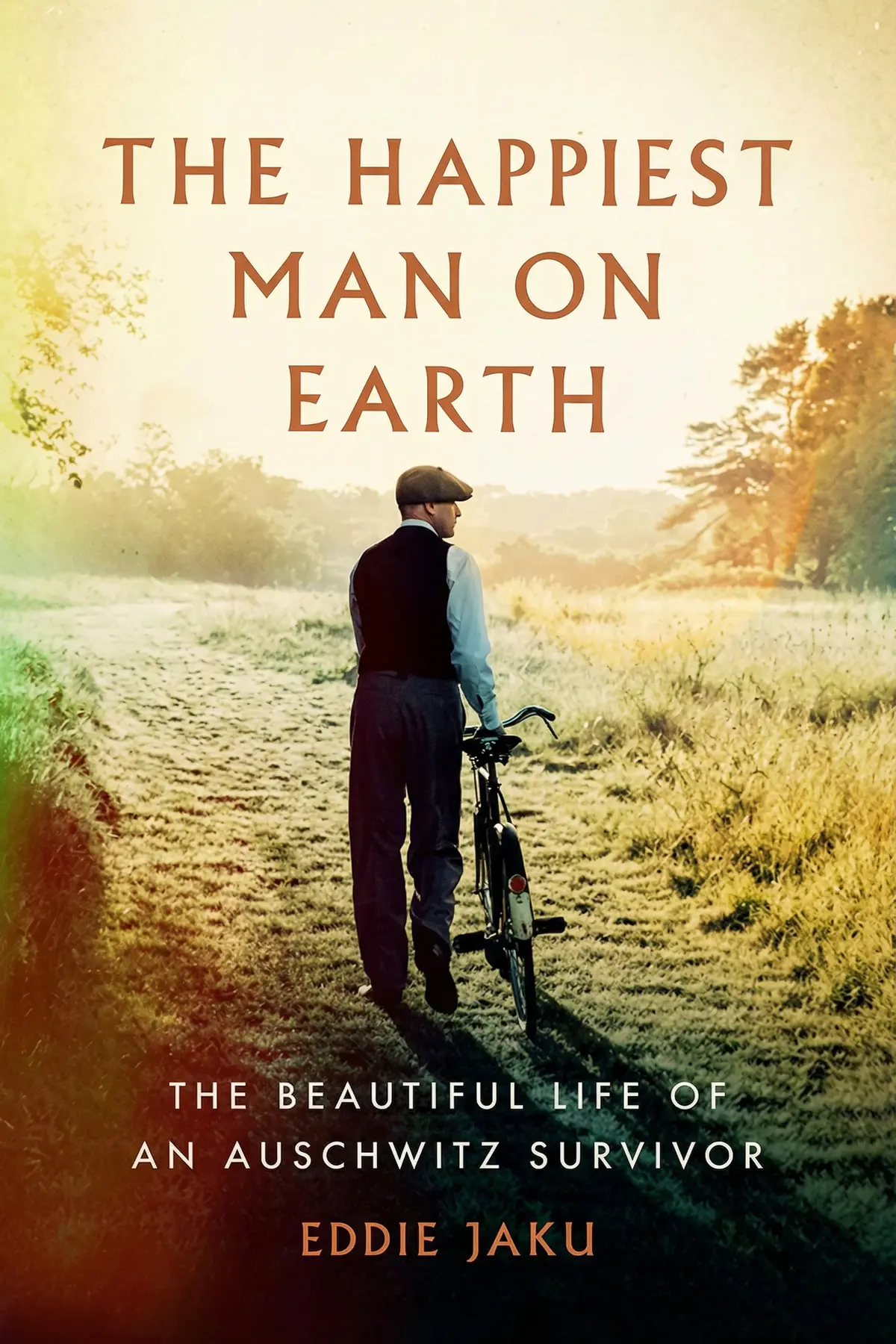
The Happiest Man on Earth is a deeply moving memoir that chronicles the life of Eddie Jaku, from his youth in pre-war Germany to the unimaginable depths of the Nazi concentration camps. It is a story of survival, not just of the body, but of the human spirit. Through the lenses of engineering, friendship, and family, Jaku explores how he managed to maintain a shred of humanity when the world around him had descended into madness. Beyond the historical account, the book serves as a philosophical guide for modern living. Jaku promises readers that no matter how dark the circumstances, it is possible to find light through gratitude, kindness, and the refusal to hate. By sharing the lessons he learned in the shadows of death, he offers a roadmap for resilience that emphasizes the power of love over the poison of bitterness.
Eddie Jaku was a German-born engineer who survived imprisonment in both the Buchenwald and Auschwitz concentration camps during World War II. Following the war, he and his family relocated to Australia in 1950. A dedicated advocate for history and peace, Eddie was a founding member of the Sydney Jewish Museum. In 2013, he was honored with the Order of Australia medal for his extensive service to the Jewish community. He became a renowned speaker, with a TEDx talk that reached hundreds of thousands of viewers worldwide.
Listeners find this book to be a swift and revelatory experience that delivers impactful wisdom for life. Narrated with a gentle touch, listeners characterize the story as both moving and heartening. They admire the author’s extraordinary journey of endurance and survival within Nazi death camps, while also valuing the book’s focus on compassion, specifically the significance of family and friendship. The quality of the prose earns praise, with one listener calling it a beautifully written story of hope.
Wow. I was not prepared for the emotional weight behind such a slim volume. Eddie Jaku addresses the reader as a "new friend" right from the start, and it immediately makes the horrors he endured feel intensely personal. Reading about his survival through Buchenwald and Auschwitz is harrowing, yet his perspective remains so stubbornly full of light. He argues that happiness is a choice we make every day, regardless of our circumstances. It’s a message that feels particularly urgent in our current divided climate. This isn't just a history book; it is a manual for how to be a decent, grateful human being. I finished it in one sitting and immediately wanted to call my parents just to say I love them.
Show moreAfter hearing Raphael Corkhill narrate this on the audiobook, I don’t think I could have experienced Eddie's story any other way. The narration captures the gentle, resilient spirit of a man who saw the worst of humanity and still chose to smile. At under four hours long, it’s a short listen, but I found myself pausing frequently just to digest his wisdom. His survival was a mix of luck and his father’s foresight in teaching him a trade. It’s fascinating how his skills as a precision engineer literally kept him alive in the camps. Eddie’s emphasis on kindness—real, tangible kindness toward fellow prisoners—is the heartbeat of this memoir. Every student should listen to this to understand what we must never let happen again.
Show moreHow can a man who survived the death march and multiple concentration camps call himself the "happiest man on earth"? That paradox is what drew me in, and Eddie’s explanation is life-changing. He doesn't ignore the trauma; he acknowledges the scars while refusing to let them dictate his capacity for joy. His bond with his friend Kurt is a beautiful testament to the idea that we cannot survive this world alone. It’s a story about the strength found in family and the obligation we have to be kind to one another. The photos included in the book really bring the history to life, making the tragedy of his losses feel so much more visceral. Frankly, it’s impossible to walk away from this book without feeling a renewed sense of gratitude for the simple freedoms we often take for granted.
Show morePicked this up during a particularly dark week, and it was exactly the balm my soul needed. Eddie Jaku survived the unthinkable, yet he writes with a total lack of bitterness that is honestly staggering. He reminds us that hate is a disease that destroys the hater first. His journey from Leipzig to the horrors of the Nazi camps, and eventually to a life of purpose in Sydney, is a masterclass in resilience. The way he credits his engineering education with saving his life is a great reminder that knowledge is the one thing no one can take from you. It’s a slim book, but it contains more wisdom than most 800-page philosophical tomes. I’ve already bought three extra copies to give to friends who are struggling right now.
Show moreEver wonder what it takes to keep your humanity when the world is trying to strip it away? Eddie Jaku provides the answer through his incredible life story. The chapter on his father’s secret preparations for him was particularly moving, showing how much parental love can anchor a person during a storm. His survival through Buchenwald and Auschwitz wasn't just about luck; it was about his refusal to let his spirit be broken. He talks about friendship as the best balm for the soul, and his relationship with Kurt is the perfect example of that. This isn't just another war story; it’s a celebration of life. I felt like I was losing a friend when I turned the final page. Absolutely essential reading for everyone.
Show moreFrankly, I wasn't prepared for how much I would sob while reading these 200 pages. Eddie Jaku’s voice is so clear and fatherly that you feel like he’s speaking directly to you from across a table. His description of the 35% chance of survival he was given upon liberation is a chilling reminder of how close we came to losing this wonderful man and his story. The way he transformed his pain into a mission to teach others not to hate is the ultimate victory over the Nazis. It’s a quick read, but the impact stays with you for days. If you're feeling cynical about the state of the world, please read this. It will restore your faith in the human spirit and remind you that every breath is a gift.
Show moreAs someone who has read a dozen memoirs on the Holocaust, this one stands out for its sheer lack of malice. Eddie Jaku focuses on the light rather than the darkness, which is a remarkable feat considering he was naming himself the "Happiest Man" after losing so much. His story is a powerful testament to the idea that education and hard work can be your greatest assets in a crisis. The book is written in a very accessible, casual style that makes it perfect for younger readers as well as adults. It serves as a vital bridge between the horrors of the past and our responsibility for the future. We must protect our democratic societies and stand up for human rights, just as Eddie pleads. Thank you, Eddie, for sharing your light with us.
Show moreTruth is, the writing style here is incredibly simple, almost like a grandfather sitting you down for a chat on his porch. For some, the lack of flowery prose might be a drawback, but I found it added to the authenticity of Eddie’s voice. He admits that words aren't his strong suit, yet his story of engineering his way through the darkest years of the 20th century is nothing short of miraculous. My only minor complaint is that some sections felt a bit rushed; I would have loved more detail on his transition to life in Australia. Still, the core message about the power of friendship and the importance of education as a lifesaver is something I won’t soon forget. It’s a quick, punchy read that packs a massive moral wallop.
Show moreIn my experience, Holocaust memoirs can be so heavy that they are difficult to finish, but Eddie’s tone is surprisingly gentle. He doesn't shy away from the reality of the gas chambers or the starvation, but he always brings the focus back to a small act of kindness or a moment of hope. To be fair, the book is quite short, and some might find the life lessons a bit repetitive toward the end. However, the sincerity behind his words is undeniable. He lived to be 101, and you can feel that century of experience in every sentence. It’s a beautiful reminder that while we can’t control what happens to us, we can control how we respond to it. A very solid, touching read for anyone needing a perspective shift.
Show moreLook, I have nothing but absolute respect for Eddie Jaku and the unimaginable trials he survived, but as a piece of literature, I found this a bit underwhelming. The narrative moves at a breakneck speed, often skimming over major life events in just a few paragraphs. I felt like I was reading a summary of a life rather than a deep, immersive memoir. It reminds me a bit of The Tattooist of Auschwitz in its simplistic delivery, which occasionally stripped the more nuanced moments of their impact. To be fair, the themes of hope and friendship are beautiful and much-needed. If you want a quick, uplifting overview of a remarkable life, you’ll enjoy it. However, if you’re looking for a dense historical account with deep psychological exploration, this might feel a bit too brief.
Show moreFay Bound Alberti

James Shapiro

Michael Axworthy

Ben Macintyre
AUDIO SUMMARY AVAILABLE
Get the key ideas from The Happiest Man on Earth by Eddie Jaku, plus 5,000+ more titles in English and Thai.







