
23 min 04 sec
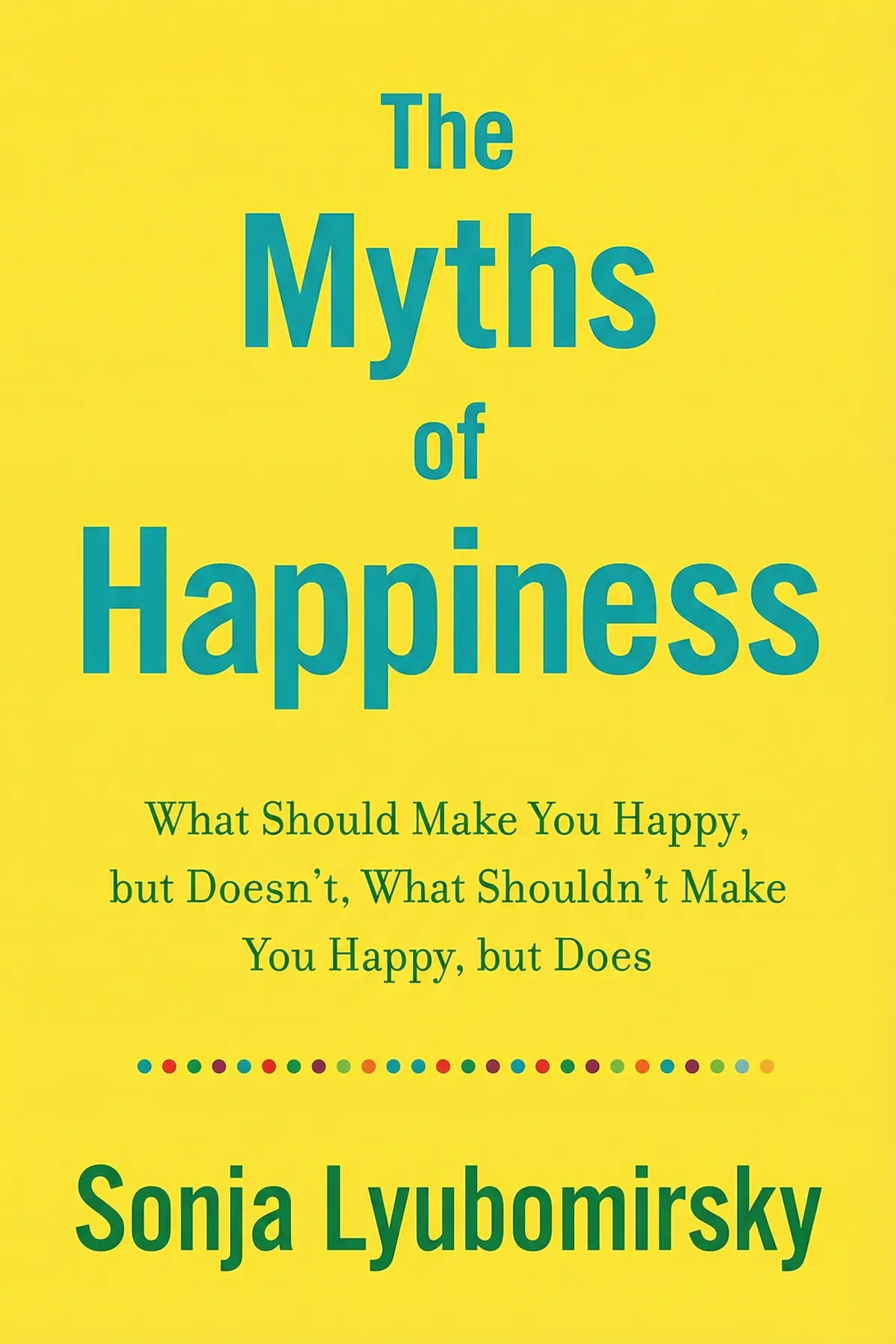
The How of Happiness: A New Approach to Getting the Life You Want
Discover a research-driven guide to lasting well-being. This summary explores how intentional habits, rather than external circumstances or DNA, hold the key to boosting your baseline happiness through scientifically validated strategies.
Table of Content
1. Introduction
2 min 00 sec
In a world saturated with self-help advice, it can be incredibly difficult to separate genuine wisdom from well-meaning but baseless speculation. We are constantly bombarded with messages telling us how to live, what to buy, and who to be in order to find true satisfaction. However, much of this advice stems from personal anecdotes or loosely interpreted trends rather than rigorous proof. This is where a more disciplined, scientific perspective becomes essential. Instead of relying on the charismatic claims of self-appointed experts, we can look to the field of social psychology to find concrete data on what actually moves the needle on human well-being.
The journey toward a more fulfilling life doesn’t have to be a guessing game. Over the last several years, researchers have moved beyond merely studying mental illness to exploring the mechanics of mental flourishing. They have begun to quantify why some people seem naturally radiant while others struggle, and more importantly, they have identified the specific actions that can help anyone climb higher on their own happiness scale. The throughline of this exploration is the idea that happiness is not a destination we reach or a lucky break we receive; it is a skill we can cultivate through intentional practice.
As we dive into this research-backed framework, we will dismantle some of the most persistent myths about what makes us happy. We will see why the things we chase most fervently—like wealth, beauty, or a perfect job—often deliver far less satisfaction than we anticipate. We will also explore the fascinating interplay between our biological heritage and our daily choices. You will discover that while you might be born with a certain emotional temperament, you are far from being a prisoner of your DNA. By understanding the percentages of what constitutes our well-being, we can stop focusing on the variables we cannot change and start mastering the forty percent of our happiness that is entirely within our control. This is a roadmap for those who want a life of deeper meaning, built on the solid ground of evidence-based psychological insights.
2. The Mirage of Changing Circumstances
2 min 29 sec
We often believe that a better job or more money is the secret to joy, but research reveals these external factors matter far less than we assume.
3. The Role of the Genetic Set Point
2 min 31 sec
Our biological makeup provides a baseline for our moods, similar to a thermostat, yet it is not the final word on our potential for joy.
4. Harnessing the Forty Percent
2 min 15 sec
The remaining portion of our happiness is entirely dependent on our daily choices and thoughts, offering a powerful opportunity for growth.
5. The Power of Controlled Intervention
2 min 14 sec
Scientists use specific studies to prove which activities actually boost happiness, separating proven methods from mere popular myths.
6. Finding the Right Frequency
2 min 24 sec
More is not always better; finding the ‘sweet spot’ for your positive habits is essential for avoiding boredom and maintaining joy.
7. The Necessity of Variety and Habit
2 min 19 sec
To keep happiness growing, we must mix up our routines and commit to them for the long haul, much like a physical fitness plan.
8. Selecting Your Person-Activity Fit
2 min 13 sec
Not every happiness strategy works for every person; identifying the activities that align with your personality is the secret to success.
9. Strategies for Mental and Social Resilience
2 min 40 sec
Beyond gratitude and kindness, mastering your thought patterns and social bonds provides a robust defense against unhappiness.
10. Conclusion
1 min 59 sec
We began this journey by asking if the world really needed another guide to happiness. Through the lens of social psychology, the answer is a resounding yes—but only if that guide is rooted in evidence rather than empty promises. We have seen that the external world, for all its noise and glitter, only provides about ten percent of our emotional baseline. We have acknowledged that our biological heritage sets a starting point that accounts for fifty percent. But the most vital takeaway is the remaining forty percent. This is the realm of the intentional, where our daily thoughts and behaviors become the primary drivers of our well-being.
True happiness is not a stroke of luck; it is a result of consistent, varied, and personalized effort. It requires us to move past the ‘if-only’ mirage and take responsibility for our internal landscape. By practicing gratitude with the right frequency, performing acts of kindness with enough concentration to make them feel significant, and choosing activities that align with our unique personalities, we can actually change the way our brains process the world. We can fight off the urge to ruminate on the past or compare ourselves to others, and instead, focus on the ‘Best Possible Self’ we are capable of becoming.
The final lesson is one of empowerment. You are not a victim of your circumstances or a slave to your genes. You have at your disposal a set of scientifically validated tools that can elevate your life. The path forward is simple but demanding: pick one or two strategies that resonate with you today. Commit to them. Vary them to keep them fresh. And remember that happiness is a lifelong practice, not a one-time achievement. As you take these small, intentional steps, you will find that the ‘how’ of happiness is not a mystery—it is a choice you make every single day.
About this book
What is this book about?
This book challenges the common assumption that happiness is something we find or achieve through external success. Instead, it presents a scientific framework for understanding that a significant portion of our emotional baseline is within our control. By examining the roles of genetics and environment, it reveals a specific "forty percent" window where intentional activities can make a lasting difference. It provides readers with research-backed strategies to elevate their mood and sustain long-term satisfaction. From practicing gratitude to cultivating social bonds, the text explores why certain habits work and how to implement them effectively. It promises a roadmap for personal transformation that is grounded in rigorous data rather than vague self-help tropes, helping individuals build a more fulfilling life through small, consistent changes.
Book Information
About the Author
Sonja Lyubomirsky
Sonja Lyubomirsky is a psychology professor at the University of California, Riverside. She serves as an associate editor for the Journal of Positive Psychology. Throughout her career, she has received numerous academic honors and grants, including a significant one-million-dollar award from the National Institute of Mental Health, which supported the foundational research for her work on well-being.
Ratings & Reviews
Ratings at a glance
What people think
Listeners find this work to be a pleasant, research-backed exploration that examines key studies and offers helpful, hands-on techniques. The content aids in viewing happiness from a broad perspective while outlining precise methods for improvement, all within a simple structure and clear prose. Listeners share that it has transformed their worldview and is highly deserving of their time.
Top reviews
Sing
Finally got around to reading Lyubomirsky’s work, and it’s genuinely a breath of fresh air compared to the usual 'manifest your destiny' fluff. As a researcher herself, she brings a level of credibility that is often missing in the self-help aisle. I found the distinction between our genetic set point and 'intentional activity'—that famous 40%—to be incredibly empowering. Truth is, many books make big claims without a shred of data, but she cites study after study. While some of the advice on gratitude or savoring might seem like common sense, seeing the empirical evidence behind why they work made a huge difference for me. It’s a dense read, and you can't just skim it if you want to actually apply the strategies. Personally, I appreciated that she didn't promise an overnight fix. Instead, she provides a toolkit for a long-term shift in outlook. It’s worth the investment of time and mental energy.
Show moreDuang
Picked this up during a particularly low month, hoping for something more substantial than inspirational quotes on Instagram. This book delivered exactly that by treating happiness as a skill rather than a destination. I love how she organizes the 'happiness activities' so you can pick the ones that actually fit your personality. Not everyone wants to meditate or join a religious group, and she acknowledges that one size doesn’t fit all. To be fair, some of the sections on 'savoring' felt a bit repetitive, but the big picture is life-changing. I’ve started a gratitude journal and noticed a significant shift in my daily mood. It’s rare to find a book that manages to be both scientifically rigorous and deeply compassionate. The writing style is accessible enough for anyone, even if you aren't into psychology. This is easily the most useful book I’ve read this year.
Show moreKom
What a refreshing change of pace. I’ve read so many books that tell you to 'just think positive,' but this one actually explains how to do it. The How of Happiness provides a big-picture view of what actually contributes to a long-term sense of well-being. The strategies are practical, and because they are research-based, I felt more motivated to actually try them. I’ve been practicing the 'Five Gratitudes' exercise and it has genuinely changed my daily outlook on life. It’s an investment in yourself that pays off if you take the time to work through the chapters slowly. The format is clear and the tone is encouraging without being saccharine. I've already recommended this to several friends who are struggling with feeling stuck in their routines. It’s the rare self-help book that actually feels like it has some substance behind the promises.
Show moreThongchai
The chapter on the 40% solution is probably the most famous part of this book, but the real value lies in the diagnostic tests at the beginning. It helped me realize that I was focusing on the wrong areas of my life to find fulfillment. Lyubomirsky is a professor with a serious academic pedigree, and that rigor shines through the text. However, I’ve got to say, the section on religion felt a little thin compared to the rest of the research. It seemed to gloss over the complexities of why people are happy in those communities, focusing purely on self-reporting. That minor gripe aside, the book provides a fantastic framework for anyone wanting to take an active role in their mental well-being. It’s much more than a collection of tips; it’s a systematic approach to changing your habitual thought patterns. If you're tired of the 'just be positive' mantra and want the 'how' behind the 'what,' this is your book.
Show moreAnawin
Does science actually have the answer to being happy? Lyubomirsky certainly thinks so, and she makes a compelling case. I enjoyed the research-oriented approach because it felt less like being lectured and more like being invited into a lab. The writing style is surprisingly breezy for something so data-heavy. My favorite part was the discussion on 'hedonic adaptation'—the idea that we just get used to good things like new cars or raises. It explains so much about why chasing external stuff never works for long. Frankly, I found the book a bit long-winded in the middle sections, and some of the anecdotes felt a little 'Desperate Housewives,' as another reviewer mentioned. But the core message is solid and the strategies are actually doable. It’s a great resource for anyone who wants a big-picture understanding of their own psychology without having to go get a PhD.
Show moreAnong
After hearing about the 'science of happiness' for years, I finally decided to go straight to the source. Sonja Lyubomirsky has created something that feels like a textbook but reads like a conversation. She thoroughly discusses relevant studies, which gives the advice a weight that most self-help books lack. I particularly liked the focus on 'intentional activities.' It’s a bit of a dense read, and I found myself needing to take breaks to process the information. Look, it’s not a magic wand. You have to actually do the work she suggests, which is harder than it sounds. My only real complaint is that it leans heavily into an American, somewhat materialistic worldview at times. Still, the practical strategies for social connection and coping with stress are gold. It is definitely worth the investment if you are serious about personal growth and want a guide that values evidence over anecdotes.
Show moreIsaiah
As someone with a background in social sciences, I’m usually the first person to roll my eyes at the self-help section. This book, however, managed to keep me engaged by leading with data. The way it breaks down the components of happiness—genetics, circumstances, and behavior—is a helpful mental model. Not gonna lie, some of the statistics felt a bit oversimplified, especially the claim that circumstances only account for 10% of our variance. That felt a bit dismissive of people in truly difficult systemic situations. But if you take the book as a guide for individual agency, it’s brilliant. The detailed steps for things like 'practicing optimism' are more than just platitudes; they are cognitive exercises. I noticed a shift in my own outlook on life after just two weeks of applying the 'savoring' techniques. It's a solid four-star read that bridges the gap between the ivory tower and the real world.
Show moreEli
Wait, so is this a science book or a manual for life? It tries to be both, and that’s where it lost me a little bit. On one hand, the citations are impressive and Lyubomirsky clearly knows her stuff. On the other hand, a lot of the 'discoveries' feel like common sense dressed up in academic jargon. Do we really need a double-blind study to tell us that being kind to people or having a hobby makes us feel better? Personally, I found the book annoyingly repetitive toward the end. The author makes a point and then spends three more chapters hammering it home with similar examples. To be fair, the 'Person-Activity Fit' diagnostic was quite helpful for narrowing down what to focus on. I don’t think it’s a bad book, but it’s definitely oversold as a revolutionary scientific breakthrough. It’s a decent collection of healthy habits with some footnotes attached.
Show moreYongyut
Social comparison is a thief of joy, but so is a book that takes 300 pages to say 'be grateful.' I really wanted to love this because the 'science' angle sounded so promising. While the writing style is easy-to-follow, the book just has too much information to digest comfortably. It felt a bit like being back in a Psych 101 lecture. Some of the activities, like the ones involving religion or forgiveness, felt a bit 'icky' to me personally. She mentions that only 6% of people never pray, which seems like a very odd statistic depending on where you live. Not everyone is looking for a spiritual solution. Gotta say, the audio version was much better for getting through the dense parts, but you miss out on the worksheets. It’s an okay read if you’re new to positive psychology, but if you’ve read any other book in this genre, you’ve probably heard most of this before.
Show moreSaengdao
Honestly, the 'science' here feels more like a marketing gimmick than actual rigorous inquiry. As a person with a scientific background, I found the way she interprets population statistics—like the 10% variance for life circumstances—to be incredibly misleading. You can't just take a population heritability estimate and apply it to an individual's potential for change. It’s sloppy. Beyond that, the book is filled with the same clichés you find in any supermarket magazine, just prefixed with 'studies show.' The author ignores basic things like Maslow’s hierarchy; how can you tell someone to just 'savor' their life when they don't even have basic personal safety? The whole thing felt very geared toward a privileged, American audience who are bored with their suburban lives. It pisses me off when 'scientific' books disregard the real systemic issues that make people unhappy. I stopped reading halfway through.
Show moreReaders also enjoyed
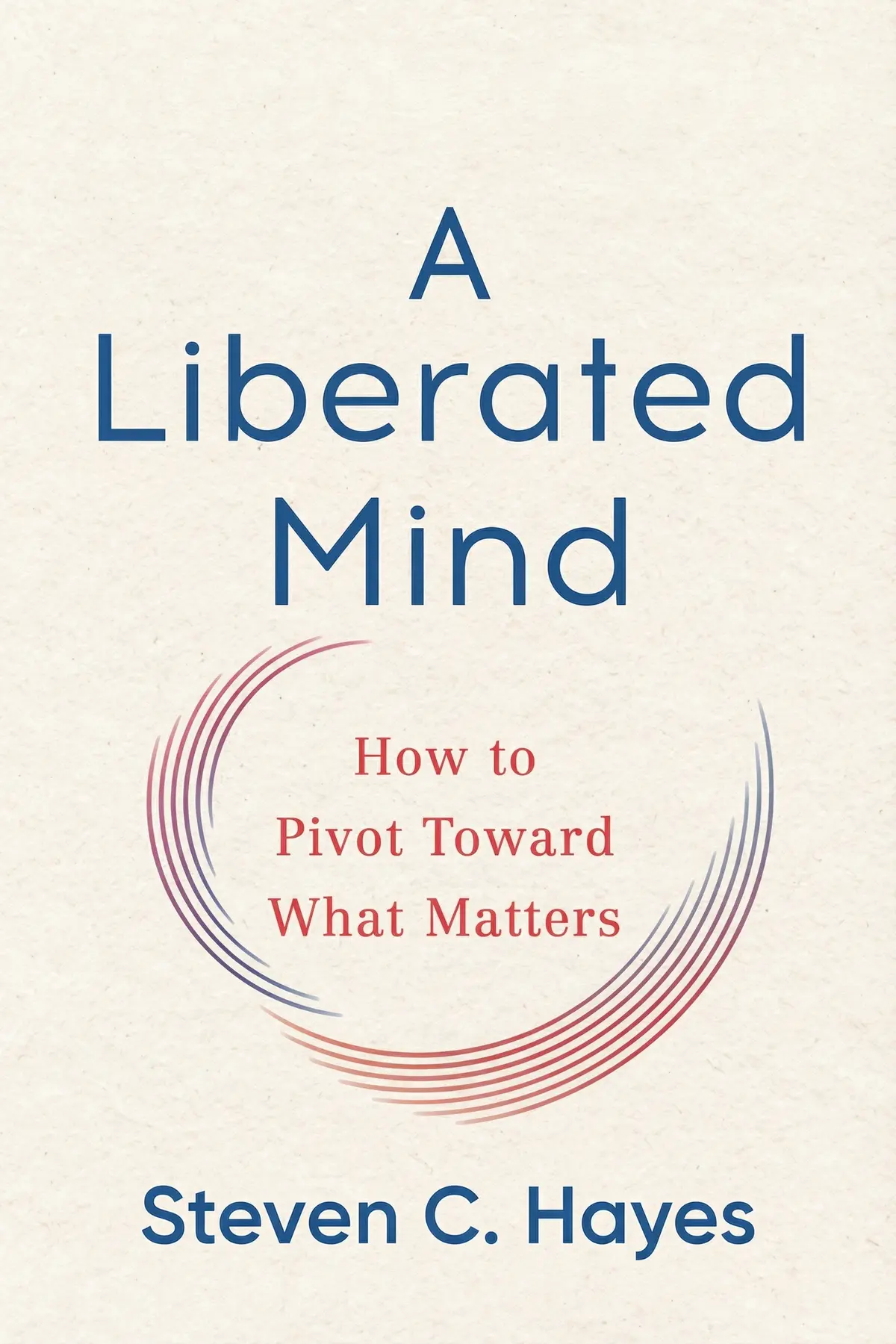
A Liberated Mind: How to Pivot Toward What Matters
Steven C. Hayes

Acting with Power: Why We Are More Powerful Than We Believe
Deborah Gruenfeld

Age of Propaganda: The Everyday Use and Abuse of Persuasion
Anthony Pratkanis
AUDIO SUMMARY AVAILABLE
Listen to The How of Happiness in 15 minutes
Get the key ideas from The How of Happiness by Sonja Lyubomirsky, plus 5,000+ more titles in English and Thai.
- 5,000+ titles
- Listen as much as you want
- 7-day free trial
- Cancel anytime







