
60 Seconds & You’re Hired!
Robin Ryan
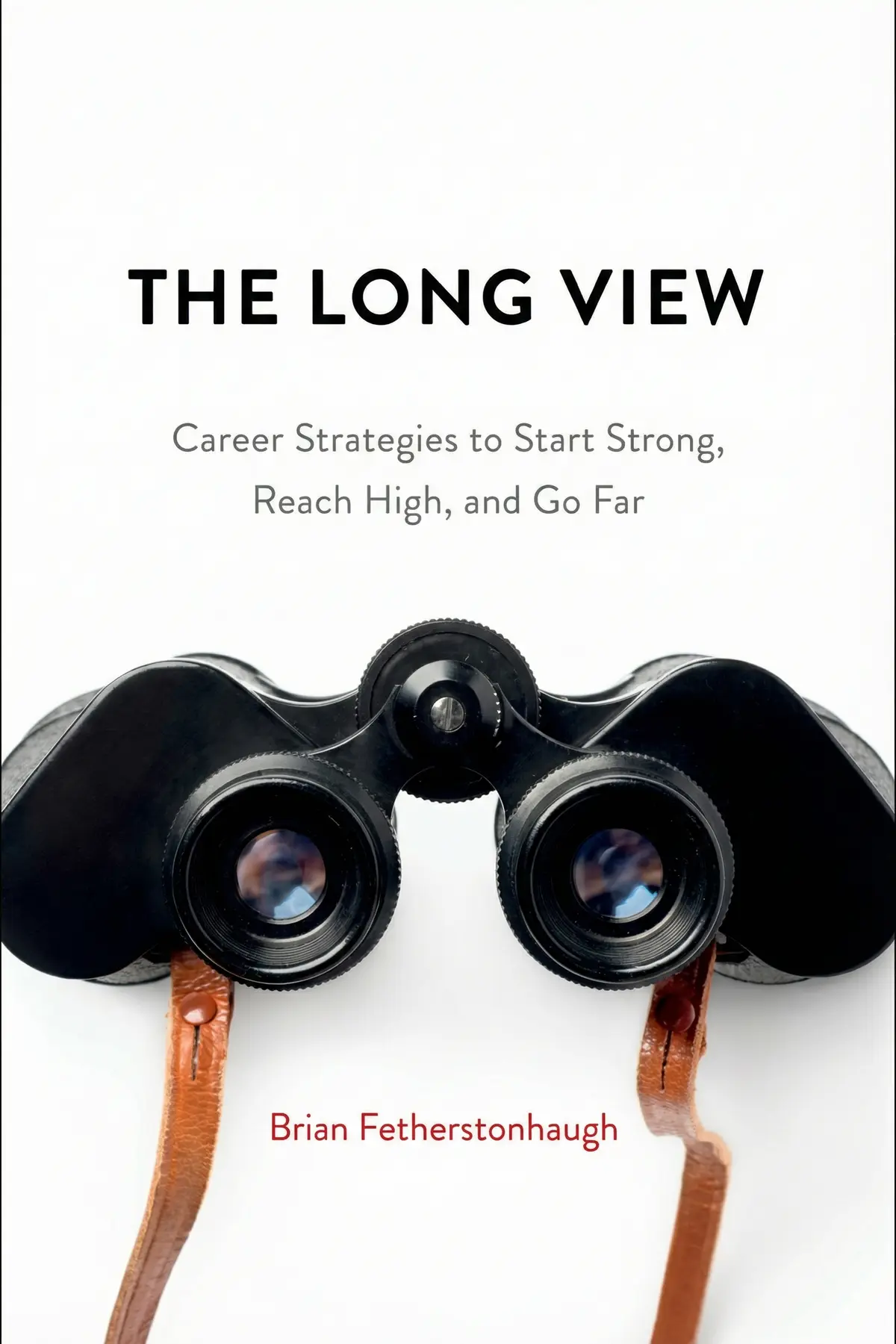
A strategic guide to treating your professional life as a forty-five-year marathon, focusing on long-term sustainability, transferable skills, and building a powerful support network to ensure lasting success and personal fulfillment.
1 min 44 sec
Think about the last time you saw a marathon. The runners who successfully cross the finish line aren’t usually the ones who sprinted the first mile as fast as they possibly could. Instead, the winners are the ones who understood the scale of the challenge. They paced themselves, they understood when to conserve energy, and they knew exactly when to push for the finish.
In our professional lives, we often do the exact opposite. We treat our careers like a series of frantic sprints, obsessing over the next promotion or the immediate paycheck, often at the expense of our long-term health and happiness. But what if we started looking at our work life through a different lens? What if we realized that a typical career is actually a forty-five-year journey?
This shift in perspective is what we call the long view. It is about realizing that your career is likely the longest thing you will ever do. You will spend more than one hundred thousand hours at work—more time than you will spend sleeping or being with your family. Yet, most of us spend more time planning a two-week vacation than we do planning the next forty years of our professional existence.
In this exploration, we are going to look at why our current expectations for work are changing and how we can adapt. We will break the career journey down into three major fifteen-year blocks, identifying the unique goals of each phase. We will also dive into the ‘career fuel’ you need to keep going: the skills, experiences, and relationships that act as the engine for your success.
By the end of this journey, you’ll understand why the majority of your wealth is actually built after you turn forty, why your weaknesses don’t matter as much in the second half of your career, and how you can ensure that your professional impact continues long after you’ve officially retired. It’s time to stop sprinting and start planning for the long haul.
1 min 52 sec
Traditional career paths are dissolving, replaced by a demand for flexibility and personal happiness that prioritizes long-term fulfillment over immediate financial gains.
2 min 14 sec
Success isn’t just about hard work; it requires a strategic accumulation of transferable skills, diverse experiences, and lasting professional relationships.
2 min 04 sec
Networking isn’t about collecting business cards; it’s about building a structured hierarchy of connections that provide different types of value.
1 min 40 sec
The first fifteen years of your career are a time for exploration, building a foundational skill set, and discovering your unique professional identity.
1 min 43 sec
In the middle years of your career, the focus shifts to leveraging your strengths, building specialized expertise, and leading effective teams.
1 min 59 sec
The final phase of your professional journey is about passing on your wisdom, ensuring a smooth transition, and staying curious in a changing world.
1 min 52 sec
As we reach the end of this journey, the biggest takeaway is clear: your career is not a sprint, and it certainly isn’t a series of accidents. It is a long, deliberate marathon that requires a strategic approach to every mile. By adopting the long view, you move away from the anxiety of short-term results and toward a sense of mastery over your own professional destiny.
We’ve seen how the career is divided into three crucial stages. The first is for exploration and building fuel. The second is for mastery and finding your sweet spot. The third is for legacy and passing the torch. Throughout all these stages, the fuel that keeps you going remains the same: the skills you can take anywhere, the experiences that give you perspective, and the relationships that support you.
Remember the striking statistic about wealth: the vast majority of your financial accumulation—somewhere between eighty-five and ninety percent—likely won’t materialize until you’ve crossed the threshold of forty. This should give you the permission to be patient in your early years. It should encourage you to focus on growth and learning rather than just chasing a title.
Now, here is something you can do today. Take a moment to look at your current role and your current network. Ask your colleagues and your superiors for honest feedback. If your company doesn’t have a formal review process, initiate one. Find out where your strengths lie and where your blind spots are. This isn’t just about doing a better job this week; it’s about collecting the data you need to navigate the next twenty years.
A successful career is one that doesn’t just end with a retirement party, but one that feels fulfilling every step of the way. It’s about balance, resilience, and a constant curiosity. By shifting your gaze from the ground at your feet to the horizon ahead, you can turn the marathon of your career into your greatest achievement.
This summary explores the framework for a resilient and impactful career, moving away from short-term gains toward a vision that spans several decades. It breaks down the professional journey into three distinct fifteen-year stages, each requiring a different focus and strategy. You will learn about the three essential pillars of career fuel: transferable skills, meaningful experiences, and enduring relationships. The guide provides a roadmap for navigating the early years of exploration, the middle years of mastery, and the final years of legacy and mentorship. By shifting your perspective, you can build a career that balances financial achievement with personal happiness and longevity.
Brian Fetherstonhaugh is CEO of OgilvyOne Worldwide, a successful marketing agency that has been helping big businesses since 1983. Over the years, he’s counseled and mentored thousands of people while giving lectures on career strategy at universities such as Yale, Harvard and Columbia.
Listeners find this guide to career management practical and organized, with one individual noting its relevance across all life and professional stages. The content is easy to follow, captivating, and motivating, while one listener shared that the book helped them achieve greater mental clarity.
Finally got around to reading this after a mentor suggested it, and it really shifted my perspective on the next few decades. Fetherstonhaugh argues that we treat careers like sprints when they are actually 45-year marathons, which is a stressful but necessary realization for someone in their early thirties. The 'career math' section was eye-opening because it forces you to look at the social currency you’ve built rather than just your bank balance. I loved the breakdown of the three stages, though I suspect the advice for Stage 3 might be a bit idealistic for most workers. Still, the concept of 'career fuel'—skills, experiences, and relationships—is something I will be thinking about for a long time. It’s a well-structured guide that avoids most of the typical self-help fluff. Highly recommended if you feel stuck in the day-to-day grind.
Show moreEver wonder why you feel so burnt out despite having a 'good' job? Fetherstonhaugh suggests it’s because we are pacing ourselves poorly for the marathon that is our professional life. I found the 100-hour test to be a brutal but necessary reality check on how I actually spend my time versus where I want to go. The idea of building a 'talent ledger' of people you’ve mentored is a beautiful way to think about one's legacy. This isn't just about making money; it's about the intersection of impact, learning, fun, and reward. To be fair, you have to be willing to do the exercises to get the most out of it. It’s a very engaging read that helped clarify many of my messy thoughts about my future direction. This is the kind of career advice I wish I’d received back in college.
Show moreWow. I didn't realize how much I needed a book that looks at the big picture until I sat down with this one. The Long View isn't about landing your next job; it's about building a life that is fulfilling and sustainable over many decades. Fetherstonhaugh writes with a lot of wisdom, emphasizing that social currency and emotional intelligence are just as vital as technical skills. I loved the part about 'succession planning' in Stage 3, as it’s something people rarely talk about in career guides. The tone is encouraging and the math exercises are actually quite fun once you get into them. Honestly, it’s one of the few books that helped me feel optimistic about aging in a fast-paced economy. If you are feeling short-sighted or overwhelmed by your current workload, this will give you the perspective you need to breathe.
Show moreAs someone who has pivoted industries twice, I found the emphasis on transportable skills incredibly validating and practical. The book is essentially a blueprint for building a resilient professional life that can survive market shifts and personal changes. Fetherstonhaugh’s tone is encouraging yet realistic, emphasizing that we accumulate most of our wealth after age forty. I particularly appreciated the 'Career Inventory' exercise, which helped me identify gaps in my current ecosystem that I hadn't noticed. My only gripe is that some of the corporate examples feel a little dated in the age of remote work and the gig economy. However, the core principles regarding enduring relationships remain timeless and essential for anyone looking to scale greater heights. It’s a solid, no-frills reference book that I’ll likely revisit as I enter my next fifteen-year stage.
Show morePicked this up on a whim and was pleasantly surprised by how much the 'Career Path Navigator' helped me visualize my trajectory. The author breaks down the journey into manageable 15-year blocks, which makes the daunting idea of a lifelong career feel much more attainable. I especially liked the focus on 'meaningful experiences,' like working abroad or in e-commerce, to diversify your professional portfolio. The writing is simple to understand and engaging, though it does lean heavily on corporate terminology that might annoy some. Look, it’s a practical guide that focuses on long-term sustainability rather than quick hacks or overnight success. I’ve already started asking for more direct feedback from my colleagues as suggested in the actionable advice sections. It’s a very solid four-star read for anyone feeling like they are just drifting from job to job.
Show moreAfter hearing about the 'three stages' concept from a friend, I decided to give the full book a try to see if it lived up to the promise. The breakdown of 15-year cycles is a great mental model that helps reduce the anxiety of needing to 'arrive' by age thirty. I found the section on 'career fuel' to be the most valuable part, specifically the focus on enduring relationships over simple networking. Gotta say, the author’s perspective on personal brand management is a bit aggressive, but it’s probably necessary in today’s competitive market. The book is well-structured for the most part, even if some sections on 'career math' feel a little gimmicky. It’s an inspiring read that pushed me to take a harder look at my volunteer work and how it fits into my overall ecosystem. Definitely a useful tool for those who want to be more deliberate about their professional growth.
Show moreThis book offers some decent perspective on playing the long game, but I found the discussion a bit shallow in certain chapters. While the three-stage framework is a helpful way to organize a forty-five-year journey, the actual advice for mid-career professionals felt somewhat repetitive. Truth be told, it feels like it’s written primarily for high-level executives at major firms rather than the average person. I enjoyed the section on becoming a 'talent magnet' and the importance of storytelling, yet the organization of the tools felt a bit scattered at times. It’s not a bad read by any means, but it didn't provide the 'eureka' moment I was hoping for based on the rave reviews. If you are just starting out, you might get more value from the 'Stage 1' advice than I did at my current level.
Show moreThe chapter on transportable skills was the highlight for me, as it provided a clear list of what actually matters across different industries. However, I have to say that the rest of the book felt a bit like it was skimming the surface of much deeper topics. Brian Fetherstonhaugh is clearly an expert, but the advice is so general that it’s hard to apply to specific, niche career paths. I appreciated the '100-hour test' for time management, but I'm not sure how helpful the suggestions for Stage 3 are for anyone not in a board-level position. In my experience, the book works best as a high-level conceptual framework rather than a step-by-step manual. It’s a scrupulous account of career creation, but the no-frills style can be a bit dry at times. It’s worth a skim for the career math, but don't expect a life-changing revelation.
Show moreFrankly, I have mixed feelings about this one because while the 'career fuel' framework is solid, the execution is a bit hit-or-miss. On one hand, the emphasis on persuasive communication and storytelling as transportable skills is spot on for the modern era. On the other hand, the book can feel a bit repetitive, and some of the 'meaningful experiences' suggested are clearly tailored for a specific type of white-collar professional. The truth is, it’s a bit shadow in some areas where I wanted more depth, especially regarding the transition between the stages. I did find the 'Career Inventory' questions useful for reflecting on my current job's impact and fun levels. It’s a decent reference for creating a springboard for your career, but it’s not without its flaws. I’d recommend it as a secondary resource rather than your primary career bible.
Show moreNot what I expected given the hype, and frankly, it felt like an updated version of a speech I've heard a dozen times before. The premise that we need constant retraining and multiple jobs is a bit of a cliché in the 21st century. I found the 'Career Math' section to be overly simplistic, and the advice for Stage 1 felt incredibly basic for anyone who has already entered the workforce. It’s somehow simultaneously brand new in its branding and totally obsolete in its actual content. While there are a few interesting tips about public speaking and EQ, they are buried under layers of corporate-speak. I struggled to stay engaged because the structure felt poorly organized and the tone was a bit too 'executive' for my taste. You might be better off reading a few blog posts on the same topics. Skip this one unless you really love Ogilvy-style corporate philosophy.
Show moreRobin Ryan
William Vanderbloemen
AUDIO SUMMARY AVAILABLE
Get the key ideas from The Long View by Brian Fetherstonhaugh, plus 5,000+ more titles in English and Thai.







