
16 min 56 sec
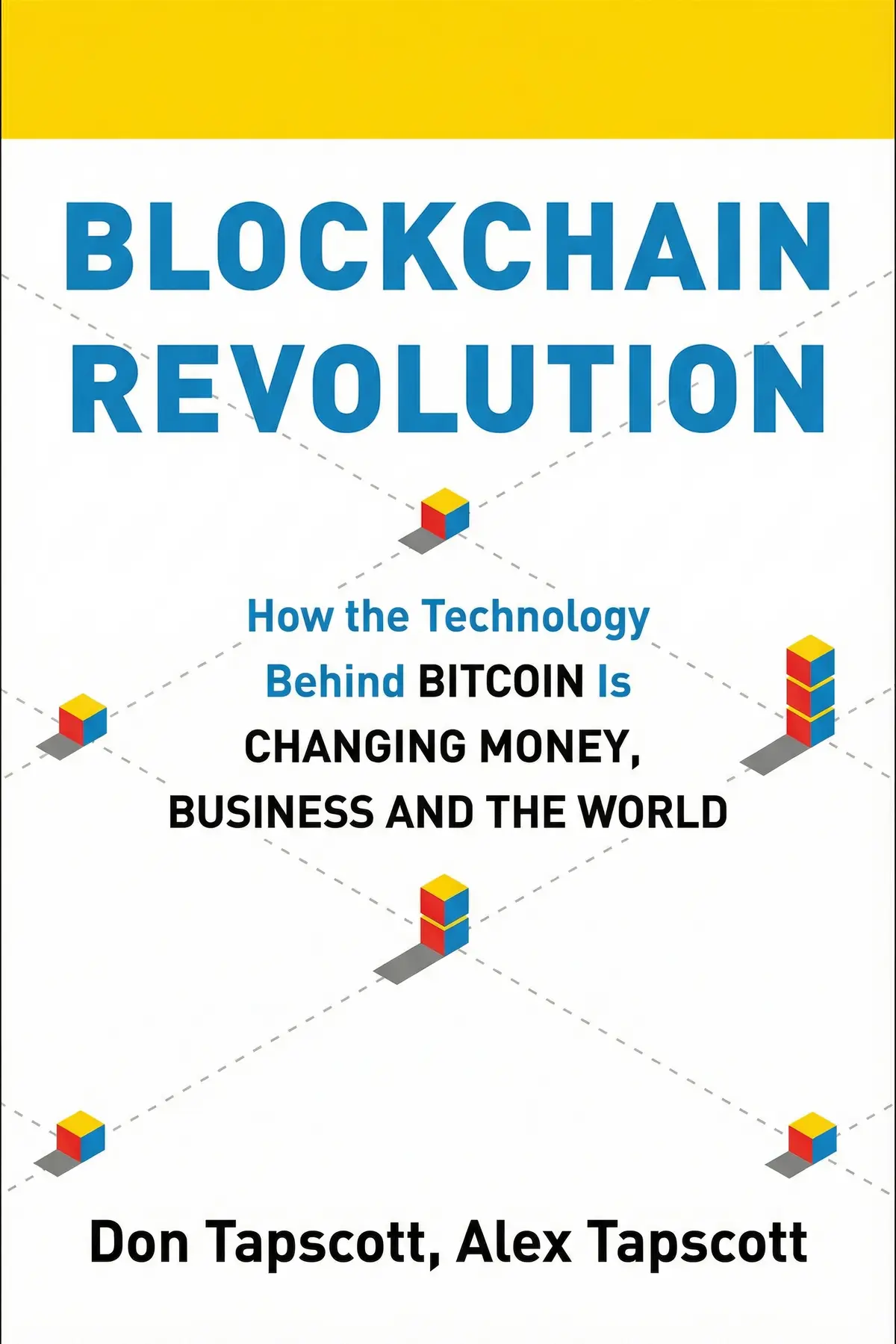
The Mysterious Mr. Nakamoto: A Fifteen-Year Quest to Unmask the Secret Genius Behind Crypto
Explore the high-stakes investigative journey to uncover Satoshi Nakamoto, the enigmatic creator of Bitcoin. This summary examines the candidates, the ideological roots of cryptocurrency, and the enduring power of a digital ghost.
Table of Content
1. Introduction
1 min 46 sec
In the early months of 2011, a figure who had already changed the course of financial history simply walked away. Satoshi Nakamoto, the pseudonymous creator of Bitcoin, sent his final emails and disappeared from the digital world he had helped build. Behind him, he left a revolutionary protocol, a growing community of enthusiasts, and a cache of over a million bitcoins that remains untouched to this day. At current valuations, that wallet represents one of the largest fortunes on the planet, yet its owner has never moved a single coin. This silence created a vacuum that has been filled for over a decade by theorists, journalists, and opportunists all asking the same question: Who is the real Mr. Nakamoto?
In this exploration of Benjamin Wallace’s investigative journey, we step into the shoes of those trying to unmask a ghost. The search isn’t just a hunt for a name; it’s a journey into the heart of what money is and what it could become. We will look at how a nine-page document published in the wake of the 2008 financial crisis sparked a global phenomenon and why the creator’s decision to remain anonymous might be his most important contribution of all.
The throughline of our story is the tension between the human desire for credit and the decentralized ideal of a system that needs no leader. We’ll follow the trail through the early days of the cypherpunk movement, meet the man Satoshi chose as his successor, and examine the three primary candidates who have found themselves in the crosshairs of global scrutiny. Each suspect offers a different window into why Bitcoin was created and what it reveals about our modern world. Whether Nakamoto is a single genius, a group of developers, or a man hiding in plain sight, the story of the search is as fascinating as the technology itself. Prepare to dive into a world of cryptographic puzzles, high-stakes drama, and the ultimate game of digital hide-and-seek.
2. A Revolutionary Solution to an Ancient Digital Problem
2 min 27 sec
Discover how a mysterious white paper solved the core challenge of digital cash, allowing for a financial system that operates without the need for central banks or trust.
3. The Ideological Origins of Crypto-Anarchy
2 min 05 sec
Travel back to the 1990s to meet the cypherpunks, a group of radical technologists who believed that encryption was the key to preserving human freedom.
4. The Coronation and Disappearance of a Successor
2 min 15 sec
Witness the unusual partnership between the world’s most private genius and a suburban father on a unicycle who would eventually inherit the keys to the kingdom.
5. The Scholar and the Linguistic Trail
2 min 15 sec
Investigate the case for Nick Szabo, the man whose bit gold project mirrored Bitcoin so closely that many believe he is the only logical candidate.
6. The Dramatic Performance of Craig Wright
2 min 09 sec
Follow the bizarre saga of the Australian academic who claimed to be Satoshi, leading to a public confrontation that divided the crypto community.
7. The Reclusive Resident of the Coast
2 min 10 sec
Travel to a secluded home in Australia to meet James Donald, a suspect whose obscure coding habits and radical views make him a dark horse in the race.
8. Conclusion
1 min 49 sec
The hunt for Satoshi Nakamoto is one of the great detective stories of the twenty-first century, but as Benjamin Wallace’s investigation reveals, the answer might not be a name, but a realization. Over fifteen years since the first block of the Bitcoin blockchain was created, the system has grown into a global powerhouse, yet the ghost at its center remains silent. Whether the creator is Nick Szabo, James Donald, a group of people, or someone whose name has never even been mentioned in a forum, the result is the same. By disappearing, Nakamoto ensured that Bitcoin would never have a single point of failure. There is no leader to arrest, no CEO to subpoena, and no human ego to get in the way of the protocol’s function.
This anonymity is perhaps the most radical part of the Bitcoin experiment. In an age of celebrity and constant self-promotion, Nakamoto’s choice to leave a multibillion-dollar fortune untouched is an act of discipline that borders on the superhuman. It reinforces the idea that the technology is ‘trustless’—you don’t need to believe in the creator to believe in the math. The featureless statue of Satoshi in Budapest serves as a perfect metaphor: he can be anyone, which means he is everyone who participates in the network.
Ultimately, the takeaway of this journey is that while we may never know the person behind the pseudonym, their legacy is written in the immutable ledger of the blockchain. The mystery of Mr. Nakamoto serves a vital purpose; it keeps the focus on the innovation rather than the inventor. As you reflect on the candidates and the controversies we’ve explored, consider how the world changes when an idea is powerful enough to stand on its own, without a face to represent it. The search continues, but the genius of Bitcoin remains its ability to function perfectly even if the search never ends. Nakamoto’s disappearance wasn’t an escape; it was the final, necessary step in making Bitcoin truly decentralized.
About this book
What is this book about?
This narrative investigation takes readers deep into the labyrinthine world of cryptocurrency to solve its greatest mystery: who is Satoshi Nakamoto? After releasing a revolutionary white paper in 2008 and launching a trillion-dollar financial movement, Bitcoin’s creator vanished, leaving behind a massive fortune and a global community of amateur detectives. Benjamin Wallace traces the history of the cypherpunk movement, the technical breakthroughs required to solve the double-spending problem, and the lives of the primary suspects. From the intellectual depth of Nick Szabo to the controversial claims of Craig Wright and the reclusive life of James Donald, the book explores how the search for a person became a search for the soul of decentralized finance. It promises a gripping look at how anonymity and code changed the world.
Book Information
About the Author
Benjamin Wallace
Benjamin Wallace is a New York Times bestselling author known for his investigative journalism and narrative non-fiction writing. He has written for New York magazine and served as contributing editor at Vanity Fair, gaining widespread recognition for his book The Billionaire's Vinegar.
Ratings & Reviews
Ratings at a glance
What people think
Listeners find the book very readable, and one listener mentions that it is a pleasure to follow. The writing earns praise for its twists, with one listener describing the work as a real-world mystery story that explores the intentionally enigmatic world of cryptopunks.
Top reviews
Elena
Ever wonder how one person could create a $40 billion fortune and then simply walk away? This is the definitive resource for anyone obsessed with the identity of Satoshi Nakamoto. Wallace has done the work, spending fifteen years sorting through theories and confronting suspects in person. The detail is incredible, from the linguistic stylometry to the deep-seated political motivations of the cypherpunks. I found the meditation on what the mystery means for our society to be the most profound part of the book. It’s a 10 out of 10 for anyone who loves a complex, real-world puzzle. Even though the mystery endures, the book provides a clearer picture of the 'secret genius' than anything else out there. It’s a brilliant, haunting, and expertly told story that I couldn't put down.
Show moreRose
As someone who barely understands blockchain, I found this remarkably easy to follow and surprisingly pleasurable. Wallace turns a technical subject into a real-world mystery story that reads like a thriller. The chapters on Hal Finney were particularly moving, highlighting the human cost and the tragic irony of a man dying of ALS while potentially sitting on a fortune. Even though we don't get a final unmasking, the twists and turns regarding Craig Wright and his legal dramas were fascinating. The book captures the idealistic, almost obsessive energy of the early Bitcoin days perfectly. To be fair, some of the technical deep-dives into coding quirks could be a bit dry for a casual reader. However, the journalistic sleuthing kept me turning pages late into the night. It is a fantastic portrait of a subculture that changed the world while trying to remain invisible.
Show moreIsabella
Think of this as a technological 'Deep Throat' investigation for the digital age. Wallace explores the monkish capacity of someone to renounce a multi-billion dollar fortune, which is the most baffling part of the whole saga. The profiles of the dodgy figures surrounding the movement are well-written and keep the narrative moving even when the search stalls. I was particularly gripped by the sections on the 1990s mailing lists and the rationalist philosophy that birthed crypto. Not gonna lie, I was hoping for a smoking gun, but the lack of one doesn't diminish the quality of the reportage. It's an engrossing look at how a pseudonym can become more powerful than any real person. The mystery endures, and maybe that’s for the best.
Show moreAndrew
This book functions best as a secret history of the 1990s cypherpunk movement. It’s fascinating to see how the seeds of Bitcoin were planted by a group of activists and coders long before 2008. Wallace does a great job of humanizing people like Adam Back and Nick Szabo, who are often just names on a screen to most people. The prose is elegant and the author’s involvement feels just right—not too much 'look at me' journalism. I enjoyed the twists, even if they led to dead ends, because they revealed so much about the culture of anonymity. In my experience, most books on crypto are either too technical or too fawning, but this strikes a perfect balance. It’s a readable, intelligent exploration of a mystery that defines our era. Highly recommended for fans of investigative non-fiction.
Show moreChon
Wallace captures the sheer madness of trying to unmask a ghost. The book is a portrait of near-obsession, following a 15-year rabbit hole that spans continents and decades of code. I loved the focus on the 'monkish' qualities of Satoshi and the philosophical questions the mystery raises. Why stay hidden when you are one of the richest people on Earth? The author’s skepticism regarding some of the more bombastic claimants like Craig Wright is refreshing and necessary. Gotta say, the narrative can be a bit scattered in the middle, but the sheer weirdness of the characters kept me engaged. It’s a fascinating whodunit that reminds us why privacy matters in an age of total surveillance. Even without a name, the journey is worth the price of admission.
Show moreA
Wallace's previous work on vintage wine was a masterpiece, but this felt like he was fulfilling a contractual obligation. While the character sketches of people like Nick Szabo are vivid, the core mystery remains frustratingly opaque. The book does a decent job explaining the cypherpunk ideology, yet it never quite bridges the gap between the suspects and the creator. It’s a readable journey through the world of digital privacy, but the lack of a compelling new theory is a letdown. To be fair, unmasking Satoshi is likely impossible, but I expected more journalistic sleuthing than what we got here. It’s a solid 3 stars for the history, but don’t expect a breakthrough.
Show moreDylan
Picked this up because I’ve been following the Satoshi mystery since 2011. The book provides a great overview of the various candidates like Hal Finney and Craig Wright, though it doesn't offer much for those already familiar with the story. Look, the writing is sharp and the pacing is generally good, but the ending feels rushed. It almost feels like the publisher grew tired of waiting for a resolution that was never coming. I appreciated the deep dive into the 'hosed' linguistic clues and the confrontation in Australia, but it felt more like a travelogue than a discovery. It’s an okay primer for newcomers, but veteran crypto watchers might find it a bit repetitive.
Show moreGun
After hearing the author on a podcast, I expected a definitive unmasking. While I enjoyed the narrative twists, the ending leaves a lot to be desired. It’s a journey without a destination, which is probably the only honest way to write this story, but it’s still frustrating as a reader. Personally, I found the technical details about C++ and mailing list headers a bit tedious after a while. The book is definitely well-researched, and Wallace is a gifted writer, but the material feels stretched thin in places. It’s a decent enough read if you want to know about the people who *might* have been Satoshi, but don’t expect to feel satisfied when you close the back cover. A respectable effort that just couldn't crack the code.
Show morePierre
The author clearly spent way too long on this investigation to have it end with a shrug. The 15-year quest feels like a cycle of bad guesses and tedious interviews with people who enjoy telling him he’s wrong. Frankly, it’s a bit exhausting to follow a trail that leads to a dead end every few chapters. The data set used for the search felt narrow, almost like Wallace was looking in the wrong place from the start. We get name after name thrown at us, from James A. Donald to Adam Back, but none of it sticks. If you are looking for a definitive answer, you won’t find it here. It’s essentially a history of the cypherpunk movement disguised as a thriller. The prose is fine, but the lack of a real climax makes the whole experience feel hollow. I wanted to love this, but I ended up just feeling sorry for the time the author wasted.
Show moreWoramet
Not what I expected from a supposedly high-stakes investigation. This book could easily have been titled 'A History of Cypherpunks' because it spends way too much time on background and not enough on actual discovery. It’s a collection of interviews where people basically tell the author he’s got it wrong. The 15-year timeline is impressive, but it yielded almost nothing new. It felt like the publisher just pushed this out because the contract was too old to ignore. Truth is, listening to name after name of dodgy figures gets tedious after the first hundred pages. There’s a lot of confirmation bias at play, and Wallace even admits he almost fell into it himself. The search for James Donald in Australia was built up as a climax, but it was ultimately unilluminating. It’s a lot of build-up for a very small, unsatisfying payoff.
Show moreReaders also enjoyed
Digital Gold: The Untold Story of Bitcoin
Nathaniel Popper
Going Infinite: The Rise and Fall of a New Tycoon
Michael Lewis

AUDIO SUMMARY AVAILABLE
Listen to The Mysterious Mr. Nakamoto in 15 minutes
Get the key ideas from The Mysterious Mr. Nakamoto by Benjamin Wallace, plus 5,000+ more titles in English and Thai.
- 5,000+ titles
- Listen as much as you want
- 7-day free trial
- Cancel anytime







