
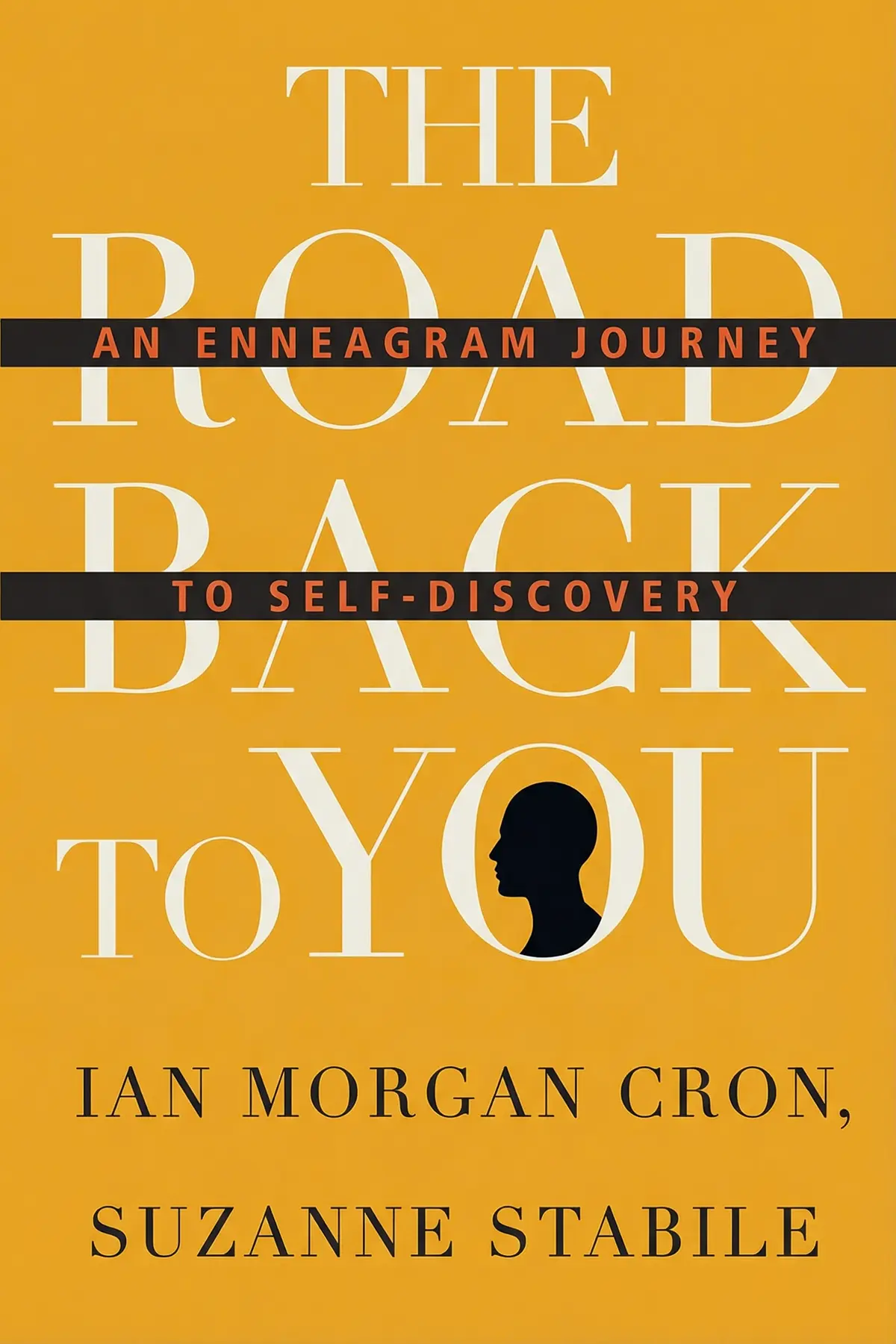
The Road Back to You: An Enneagram Journey to Self-Discovery
Ian Morgan Cron
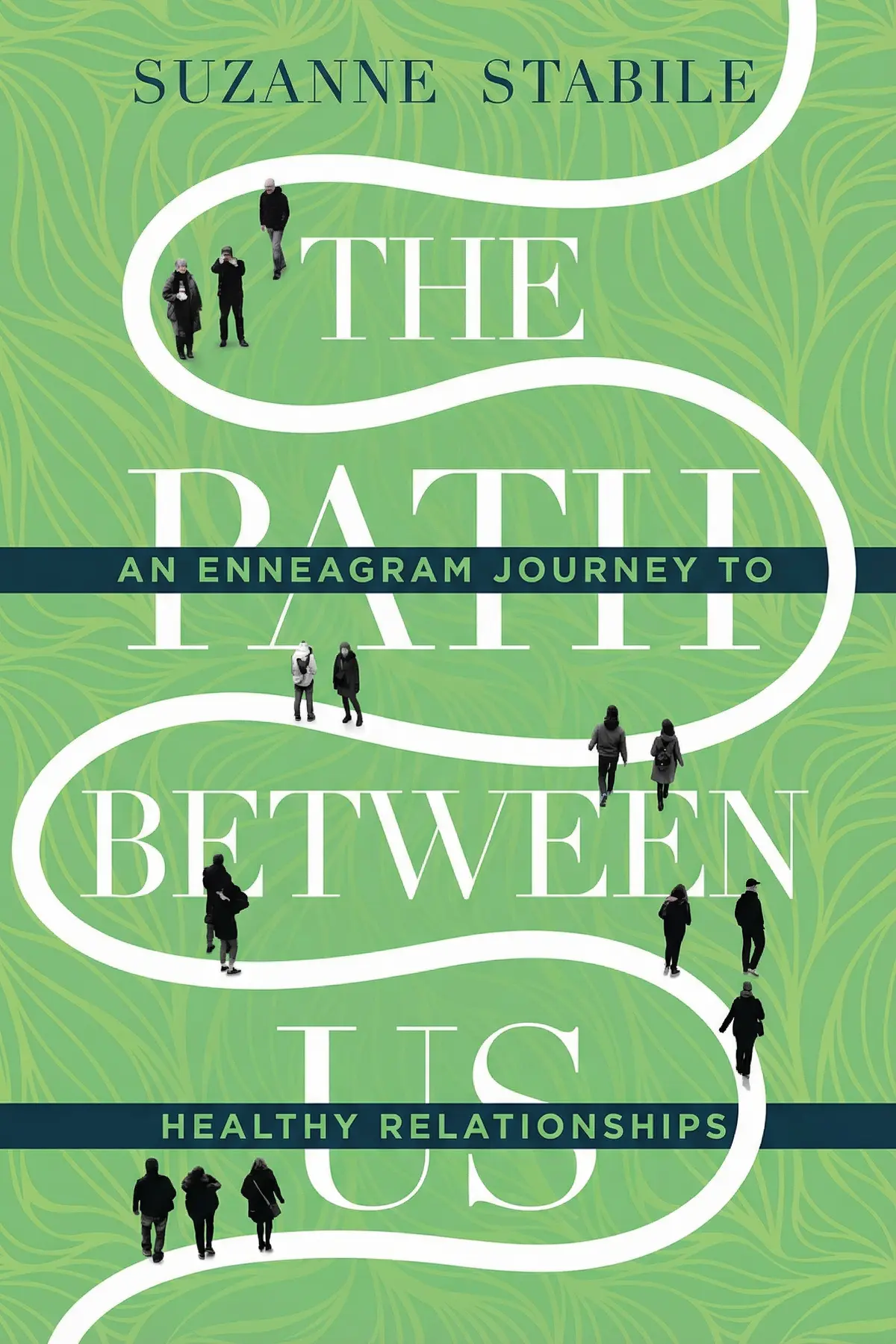
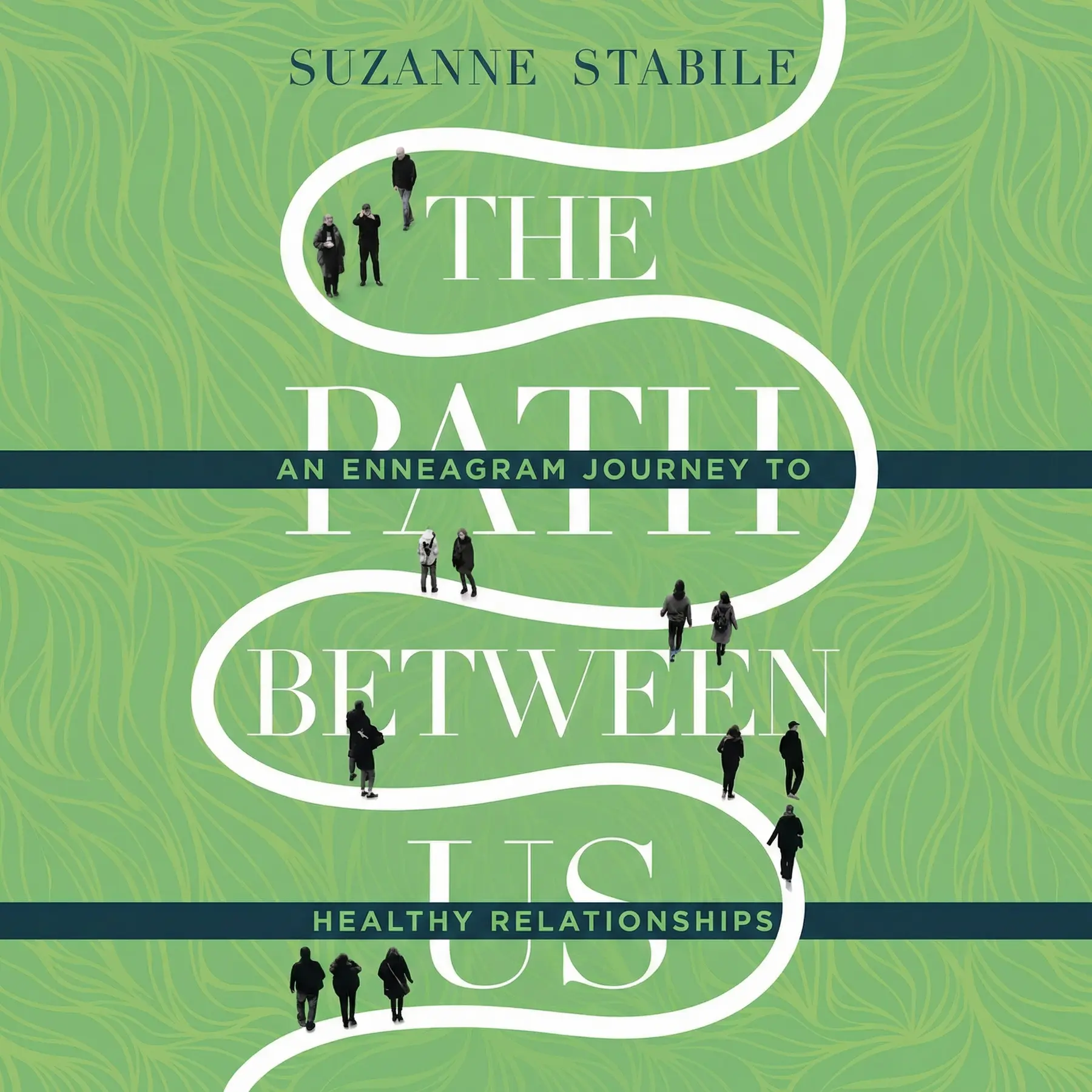
The Path Between Us explores how the nine Enneagram personality types interact. Suzanne Stabile provides a roadmap for understanding personal behavior patterns and others' perspectives to foster healthier, more compassionate relationships.
1 min 47 sec
Have you ever paused in the middle of a heated argument and wondered why the person across from you seems to be living in an entirely different reality? It is a common human experience to believe that the way we see the world is the standard, objective truth. We assume our reactions are the logical ones and that others should naturally share our emotional landscape. However, the reality of human connection is far more varied and complex. We are not all operating from the same internal blueprint, and many of our relational struggles stem from this simple lack of awareness.
This is where the Enneagram comes in. More than just a personality test, the Enneagram is an ancient model of the human psyche that identifies nine distinct ways of seeing and experiencing the world. Each of these nine types has its own set of core motivations, deep-seated fears, and unique ways of relating to others. When we learn to identify these types, the seemingly random behaviors of the people in our lives start to make sense. We begin to see the underlying needs that drive their actions, and more importantly, we start to see our own patterns with fresh eyes.
The throughline of this journey is empathy through understanding. By exploring the ‘path between us,’ we can move away from the frustration of misunderstanding and toward the grace of connection. This isn’t about putting people in boxes; it’s about opening the boxes we’ve already put them in and seeing the person inside. Throughout this discussion, we will walk through each of the nine types, uncovering what makes them tick and how they navigate the delicate world of relationships. Whether you are looking to save a struggling partnership, deepen a friendship, or simply understand yourself a little better, these insights provide a transformative way to look at the people you love. Let’s begin by uncovering the inner world of the nine numbers and seeing where you—and those close to you—might fit into this fascinating map of human behavior.
1 min 57 sec
Explore the inner world of the One, where a relentless drive for perfection and a critical inner voice shape every interaction and expectation.
1 min 46 sec
Discover the Two, who builds their identity through serving others, and learn how their generous nature can sometimes lead to relational imbalance.
1 min 46 sec
Uncover why the Three is so focused on achievement and how their drive for success can sometimes overshadow their emotional depth.
1 min 44 sec
Step into the emotional intensity of the Four, whose quest for authenticity and sense of being different defines their relational world.
1 min 44 sec
Learn how the Five’s need for self-sufficiency and information creates a unique set of boundaries in their personal connections.
1 min 54 sec
Examine the Six’s worldview, where a focus on security and ‘worst-case’ planning shapes their dedicated but cautious approach to people.
1 min 54 sec
Step into the high-energy world of the Seven, where a desire for new experiences and the avoidance of pain can complicate long-term commitment.
1 min 48 sec
Investigate the Eight, whose directness and desire for control often hide a vulnerable heart that values strength and justice.
1 min 54 sec
Explore the world of the Nine, the Peacemaker, who prioritizes harmony and calm, sometimes at the cost of their own voice and desires.
1 min 58 sec
As we come to the end of this exploration of the nine personality types, it’s important to circle back to the central theme: the goal is not to categorize people, but to connect with them. Each of the numbers we’ve discussed represents a different strategy for navigating the world, and none is better or worse than the others. We all have our strengths, and we all have our ‘blind spots’ that can make relationships difficult. The Enneagram serves as a map that helps us navigate these differences with more grace and less judgment.
The most powerful takeaway from this journey is the realization that most relational friction isn’t personal—it’s structural. When a One criticizes you, they are usually fighting their own inner critic. When a Five withdraws, they are trying to manage their energy, not push you away. When an Eight is confrontational, they are seeking honesty and safety. Once we understand these underlying motivations, we can stop reacting to the surface-level behavior and start responding to the human being underneath.
So, what is the first step toward healthier relationships? It starts with the relationship you have with yourself. Take some time to reflect on which of these patterns resonates most with you. Be honest about your own fears and how they drive your interactions with others. The more self-aware you become, the less you will be a slave to your own automatic patterns. From there, you can begin to look at the people in your life through this new lens of empathy.
Remember that change doesn’t happen overnight. It takes practice to catch yourself in an old habit or to pause before reacting to someone else’s behavior. But every time you choose understanding over judgment, you are strengthening the path between you. Start today by having one honest conversation, by offering one piece of specific reassurance, or by simply allowing someone the space to be exactly who they are. In doing so, you move closer to the healthy, vibrant, and resilient relationships we all long for.
The Path Between Us is an exploration of the Enneagram system specifically through the lens of interpersonal relationships. It moves beyond simple self-discovery to explain how our unique personality numbers clash, complement, and communicate with others. By examining the distinct motivations, fears, and desires of all nine types, the book provides a framework for reducing conflict and increasing intimacy. The promise of this work is a shift from judgment to empathy. Readers are invited to see the world through the eyes of their partners, friends, and colleagues, recognizing that what often looks like intentional friction is usually just a different way of processing reality. It offers practical guidance for navigating the complex 'paths' between people, leading to more resilient and authentic connections.
Suzanne Stabile is an author, speaker, and Enneagram master teacher. Stabile is the coauthor of the bestselling book The Road Back to You, as well as cofounder of the nonprofit Life in the Trinity Ministry – a center for spiritual growth.
Ian Morgan Cron
Listeners find this to be a superb Enneagram guide, providing functional advice for improving self-knowledge and sustaining healthy interpersonal bonds. The content is approachable and simple to follow, featuring anecdotes that ensure the material remains captivating. Listeners value the book's flow, with one remarking that it has been a complete game changer for their family.
Suzanne Stabile has a way of cutting right through the surface-level personality traits to get to the heart of how we actually connect. Truthfully, I found the breakdown of the Stress and Security numbers to be the most enlightening part of this entire read. It’s one thing to know your own number, but understanding why a Five suddenly acts like a Seven when they feel safe is a total revelation for my marriage. The anecdotal stories are incredibly relatable and help flesh out the academic concepts without feeling too dry or clinical. I did notice that the pacing slows down a bit if you aren't familiar with the 'Stances' mentioned early on, so keep that in mind. Overall, this is an excellent tool for anyone who wants to move past navel-gazing and actually start loving people better.
Show moreFinally got around to reading this sequel, and it has honestly been a total game changer for how I interact with my spouse and kids. Stabile is a wise and gracious guide who manages to explain the 'Path Together' for each number without ever making one type seem better or worse than the others. I loved the focus on interdependence over independence, which is a lesson I desperately needed to learn this year. The chapter on the Heart Triad (2s, 3s, and 4s) helped me see why I often feel so misunderstood when I’m communicating my feelings to my more analytical friends. It’s a complete resource that manages to be both academic and deeply personal at the same time. I’ve already bought three copies to give to my family members for Christmas because I want everyone on the same page.
Show moreThe chapter on Type Ones hit me like a ton of bricks, much like Suzanne's previous work did, but this time with a focus on how I project my inner critic onto others. I appreciate that she doesn't just leave you with the heavy stuff; she provides a path forward that feels achievable and grounded in grace. The way she describes the 'Aggressive' vs. 'Dependent' stances helped me see why certain coworkers rub me the wrong way. It’s not a personality clash; it’s just a difference in how we process our orientation to time and people. Frankly, this should be required reading for anyone in leadership or counseling roles. It’s a beautiful, compassionate look at the human condition that goes far beyond simple labels. I finished it feeling much more equipped to walk beside the people I love with loads of respect.
Show moreFrankly, this is the most accessible resource I’ve found for actually applying Enneagram theory to the messy reality of daily life. I’ve read other books that get bogged down in the history or the math of the symbol, but Stabile stays focused on the people. Her approach is refreshing because she treats every type with equal dignity, even when describing our most annoying traits. I learned that as a Five, I’m not always great at picking up on indirect communication, which explained a lot of my recent workplace frustrations. The idea that we should use our energy to work on ourselves rather than 'fixing' others is a message the world needs right now. It is a brilliant follow-up to her first book and manages to stand on its own as a masterclass in relational wisdom. Highly recommended for any Enneagram enthusiasts out there.
Show morePicked this up after getting a bit obsessed with the Enneagram last year, and it feels like the logical next step for anyone wanting to move beyond just self-discovery. To be fair, this isn't really a book for beginners, as it assumes you’ve already done the hard work of identifying your own number. I really appreciated how Stabile emphasizes that we shouldn't use our types as an excuse for bad behavior or as a way to pigeonhole our friends. The 'My Fences Have Gates' section for Type Fives was particularly moving and helped me understand my husband’s need for privacy much more clearly. My only real gripe is that it can feel a bit repetitive if you read it straight through. It is much better as a reference guide to keep on the shelf for specific relational hurdles.
Show moreAs someone who struggles to maintain healthy boundaries, the chapters on the Gut Triad were incredibly illuminating for my personal growth. The truth is, I never realized how much my 'stance' affected the way people perceive my requests or my silence in a group setting. Stabile does a fantastic job of illustrating these complex dynamics through stories that feel like they were pulled directly from my own life. I particularly liked the sidebar summaries at the end of each chapter that list what others need to keep in mind when relating to a specific type. It’s very practical, though I do wish there was more guidance for people who are still stuck between two different numbers. If you already know you're an Eight, Nine, or One, you’ll find plenty of meat here to chew on.
Show moreEver wonder why you and your partner keep having the same argument over and over again? This book might actually have the answer, provided you’re willing to do some uncomfortable self-reflection along the way. I found the focus on how each number relates under stress to be the most helpful part of the entire framework. It gave me a lot of compassion for my partner’s 'withdrawing' tendencies, which I used to take as a personal rejection. Stabile’s writing is very accessible, though I did find some of the transitions between the academic content and the personal stories to be a little jarring. Still, the practical advice for maintaining healthy relationships is top-notch and far more useful than most personality books I've read. It's a solid 4-star read that I'll likely revisit whenever I'm feeling disconnected from my inner circle.
Show moreAfter hearing Suzanne speak on her podcast, I knew I needed to dive into the deeper relational mechanics she explores here. It’s not necessarily a manual for beginners, but if you are already familiar with your basic type, this deep dive into the 'path between' different numbers is invaluable. I found the sections on how types interact in security particularly helpful for identifying when my relationships are actually thriving. Some of the descriptions felt a bit heavily influenced by her own experiences as a Two, but that’s to be expected in a book so focused on narrative. The pacing is consistent, and the summaries at the end of each chapter make it easy to use as a quick reference guide. It’s a very solid addition to the Enneagram canon and has definitely improved my communication with my close friends.
Show moreWhile the anecdotal stories are definitely the highlight of the writing, I couldn't help but notice some personal bias leaking into the type descriptions. In my experience, describing Type Fives as organized planners is a bit of a stretch, especially if that person happens to be a 'P' on the MBTI scale. I suspect Stabile’s close relationships with specific Fives in her life heavily influenced her perspective here, leading to some inaccuracies for the rest of us. The book is still a very enjoyable and accessible read, but it lacks the objective distance I was hoping for in a 'Level 2' resource. I also felt her description of Type Twos—her own number—was a bit too specific to her own life rather than the type as a whole. It’s a helpful guide, but you should definitely take some of the more specific traits with a grain of salt.
Show moreNot what I expected after hearing so much hype, mostly because it feels a bit too unexceptional and vague in its broader generalizations. Look, I wanted to love this, but it felt more like reading a scientific version of a zodiac book rather than a deep psychological study. I found myself getting bored during the chapters that didn't apply to my specific number, which made the middle of the book a real slog to get through. The author photo gave me a bit of a stern school principal vibe, and unfortunately, the text didn't do much to dispel that feeling for me. It’s not that the advice is bad, but it’s just not the groundbreaking revelation I was promised by my friends. If you’re already deep into Enneagram theory, you might find a few nuggets, but otherwise, it’s a bit of a skip.
Show more
AUDIO SUMMARY AVAILABLE
Get the key ideas from The Path Between Us by Suzanne Stabile, plus 5,000+ more titles in English and Thai.







