
23 min 41 sec
The Robots Are Coming!: The Future of Jobs in the Age of Automation
Explore how automation is reshaping global labor markets. This insightful overview examines the shift toward robotics across major industries and the essential human skills needed to thrive in a future defined by machines.
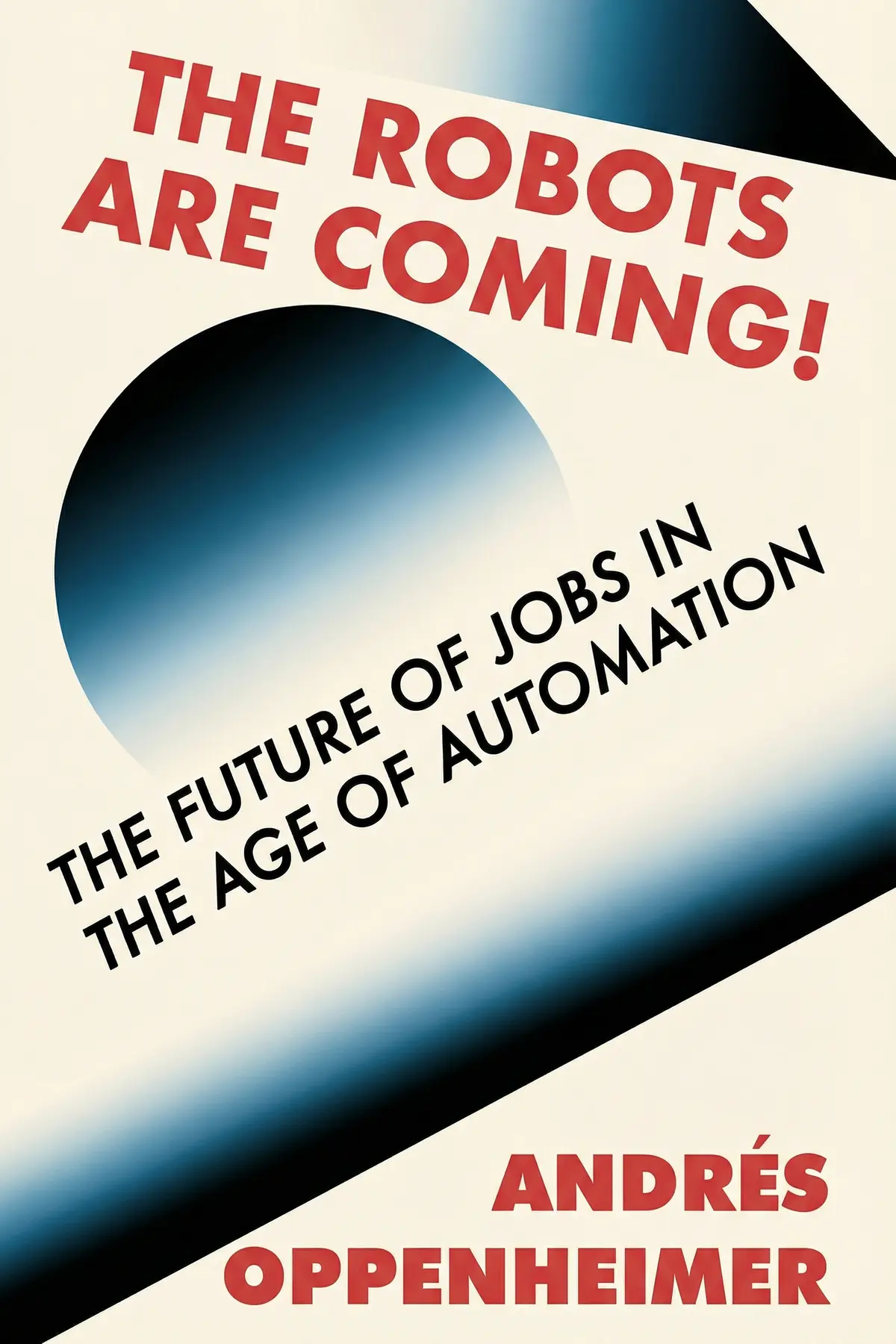
Table of Content
1. Introduction
1 min 57 sec
In the fall of 2013, a research paper from Oxford University sent shockwaves through the global economic community. Economists Carl Benedikt Frey and Michael A. Osborne released a study that offered a stark, numerical prediction for the near future: by the year 2033, nearly half of the jobs in the United States—roughly 47 percent—could be automated. This wasn’t just a warning about robots in car factories; it was a broad signal that software and machines were poised to step into roles as diverse as sports refereeing, insurance underwriting, and even catering.
When we hear the word automation, we often think of mechanical arms on an assembly line, but the modern reality is much more expansive. It refers to any process where human labor is replaced by software, sophisticated algorithms, or physical robotics. The throughline of our exploration today is that while the disruption is undeniable, it is not a signal of the end of human utility. Instead, we are entering a period of radical transformation. Almost every job that remains will be changed, and entirely new categories of work will emerge.
To understand this coming shift, we need to look beyond the headlines and examine the specific industries currently standing on the front lines of this change. From the way our goods are manufactured to the way our children are educated, the arrival of automated systems is no longer a science fiction scenario—it is the unfolding reality of the 21st century. Over the next several segments, we will dive into the sectors facing the most significant shifts, identifying which roles are at risk and how the human element will adapt to a world where the robots have finally arrived. This journey will take us through the factories of China, the hospitals of the West, and even the newsrooms and classrooms that define our cultural life, providing a comprehensive look at how to navigate the automated economy of tomorrow.
2. The Evolution of the Global Factory
2 min 26 sec
Industrial robotics are moving beyond mere hype to fundamentally restructure manufacturing, leading to a massive shift in how products are made in both the East and the West.
3. Autonomous Transport and the Driverless Future
2 min 00 sec
Self-driving technology is rapidly approaching a point of total reliability, threatening to displace millions of truck, taxi, and delivery drivers within a decade.
4. The Automation of Retail and Service
2 min 13 sec
Physical storefronts are fading as e-commerce and in-store robotics combine to reduce the need for human staff in the retail and restaurant sectors.
5. The Transformation of High-End Professions
2 min 02 sec
White-collar roles like law are not immune to automation, as algorithms begin to handle routine legal drafting and complex document research.
6. Banking and the Cashless Algorithmic Economy
1 min 43 sec
The traditional bank branch is becoming a relic as virtual platforms and financial algorithms take over everything from deposits to complex market analysis.
7. A New Frontier in Health and Diagnostics
1 min 53 sec
Healthcare is being decentralized through wearable sensors and AI diagnostics, allowing patients to monitor themselves and robots to perform complex surgeries.
8. The Human Role in a Support Capacity
1 min 59 sec
As automation handles the routine, many future careers will focus on providing human mediation and technical support for sophisticated automated systems.
9. Journalism and the Rise of AI Storytellers
1 min 43 sec
AI is already drafting routine news reports, freeing human journalists to focus on deep investigations and complex, long-form storytelling.
10. Education and the Cultivation of Soft Skills
1 min 43 sec
With information freely available via AI, the role of the teacher is shifting from a source of knowledge to a mentor who fosters uniquely human traits.
11. The Entertainment Economy and Virtual Reality
1 min 45 sec
As automation increases free time and potential unemployment, the demand for entertainment, culture, and virtual experiences is set to explode.
12. Conclusion
2 min 17 sec
As we look back at the various industries we have explored, a clear picture of the future begins to emerge. The arrival of the robots is not a single, catastrophic event, but a gradual and pervasive transition that will touch every corner of our lives. From the factory floors of China to the inner workings of our legal and medical systems, the message is the same: the routine, the repetitive, and the predictable are being handed over to the machines. This shift is driven by a powerful combination of falling technology costs, increasing machine precision, and an undeniable economic logic that favors efficiency.
However, the throughline of this transformation is one of hope and adaptation. While it is true that many current jobs will vanish, the very same technology that displaces a worker also creates new opportunities for those willing to adapt. We are moving toward an era where the ‘human touch’—our capacity for empathy, complex problem-solving, and creative expression—will be more valuable than ever. The key to surviving and thriving in this new landscape is a commitment to lifelong learning. We can no longer rely on a single set of skills to carry us through a multi-decade career. Instead, we must be prepared to constantly update our knowledge, pivot to new industries, and embrace the support roles that will emerge as we manage our new robotic counterparts.
Ultimately, the rise of automation offers a profound opportunity to rethink the nature of work itself. If robots can handle the drudgery and the dangerous tasks that have defined human labor for centuries, we are left with the freedom to pursue more meaningful endeavors. We may see a renaissance in the arts, a more personalized approach to healthcare and education, and a society that values culture and leisure as much as production. The challenge lies in the transition—navigating the turbulence of the next few decades with foresight and compassion. By understanding the trends today, we can ensure that when the robots finally arrive, we are not replaced by them, but liberated to focus on what truly makes us human. The future is not a choice between humans and machines, but a journey toward a partnership where technology amplifies our potential and opens doors to worlds we have only just begun to imagine.
About this book
What is this book about?
The Robots Are Coming! explores the profound and often unsettling transformation of the global economy as automation and artificial intelligence take center stage. Drawing on extensive research and real-world examples, it analyzes the sectors most vulnerable to technological disruption, from manufacturing and transportation to white-collar professions like law, banking, and medicine. Rather than presenting a purely dystopian vision, the book offers a roadmap for adaptation. It promises to show listeners which jobs are likely to vanish and which will evolve, emphasizing that the key to survival lies in lifelong learning and the cultivation of uniquely human attributes like empathy and creativity. By understanding these shifts now, individuals and societies can prepare for an era where free time increases and the nature of work is fundamentally redefined.
Book Information
About the Author
Andrés Oppenheimer
Andrés Oppenheimer is a highly distinguished journalist and the Latin American editor for the Miami Herald, where he also writes a syndicated column on foreign affairs. Beyond his print work, he serves as the anchor for Oppenheimer Presenta on CNN en Español and has authored seven books. His career is marked by prestigious accolades, including a Pulitzer Prize in 1987 for his role in uncovering the Iran-Contra Scandal. He has also been honored with the Inter-American Press Association Award twice and the National Association of Hispanic Journalists prize.
Ratings & Reviews
Ratings at a glance
What people think
Listeners perceive this book as a highly detailed and expertly researched investigation into automation’s role in reshaping various sectors, from medicine to the arts. Though attitudes toward the author’s positive socio-political predictions are mixed, listeners respect the extensive journalistic interviews he conducted with hundreds of global authorities. They also emphasize the practical benefits of the chapters on future job prospects; one listener specifically observes that the reasoning behind the list of expanding industries is notably logical and clear. Finally, they credit the author's readable narrative for blending emerging tech trends with a realistic evaluation of tomorrow's labor market.
Top reviews
Cherry
Andrés Oppenheimer has a knack for turning dense economic data into a genuine page-turner. This isn’t just another dry academic text about the future; it’s a living, breathing reportage that spans multiple continents and dozens of industries. I was particularly struck by how he dissects the transformation of the service sector and healthcare. While some might find his techno-optimism a bit much, the sheer volume of interviews with global experts makes the arguments hard to ignore. To be fair, some of the specific app examples feel slightly dated now, but the underlying logic remains incredibly sound. It’s a comprehensive guide for anyone trying to navigate the messy transition toward an automated economy. The writing is accessible, sharp, and keeps you engaged even when the topic gets a bit scary.
Show moreSai
After hearing about the Frey and Osborne study from 2013, I needed more context on how these job losses would actually play out in the real world. Oppenheimer delivers that context in spades. He manages to balance the 'apocalypse' headlines with a very grounded reality of how technology can augment human labor rather than just replacing it. The chapter on the service sector was eye-opening. Not gonna lie, the idea of a robot making my hotel reservation or cooking my burger is no longer science fiction. This book is masterfully researched and presents a comprehensive exploration of diverse industries. It’s the kind of book you end up highlighting on every other page because the insights are so densely packed.
Show moreNim
Wow, the level of research here is staggering. Oppenheimer doesn't just speculate; he goes to the source, interviewing the people actually building the algorithms that are changing our lives. The section focusing on future career paths is particularly solid. He doesn't just give you a list; he explains the logic behind why certain industries will blossom while others wither away. In my experience, most books on this topic are either too technical or too vague. This one hits the sweet spot. It’s a sobering look at the job market's future, but it’s written with such an accessible style that anyone can grasp the implications. I’ve already recommended it to three colleagues.
Show moreVilaiporn
Gotta say, the section regarding Latin America’s lack of preparation was a sobering reality check. While China is buying up robots to stay competitive, many other regions are sleeping through the revolution. Oppenheimer is fair, letting both the optimists and the cynics have their say, which makes the book feel balanced. The interviews with people like Kasparov add a layer of depth that you don't get from standard economic reports. I loved the practical value of the final chapters. It’s rare to find a book that educates and entertains simultaneously. If you are going to be in the workforce for the next twenty years, you need to read this and prepare your 'surfboard' for the technological wave.
Show moreSuthee
Ever wonder if your job will still exist in fifteen years? This book answers that question with brutal honesty and journalistic rigor. Oppenheimer covers everything from the Internet of Things to the rise of the contract worker. He makes a compelling case for why certain soft skills will become the new currency of the global economy. The logic behind his list of blossoming industries is incredibly insightful and helped me rethink my own career trajectory. It’s a comprehensive, masterfully researched work that feels even more relevant today than when it was first published. Do yourself a favor and pick this up before the robots actually do come for your desk.
Show moreSiriphen
As someone working in the tech sector, I found this deep dive into automation both terrifying and necessary. Oppenheimer doesn't just talk about robots in factories. He goes after the white-collar jobs too. From journalism to law and banking, no one is safe from the algorithm. Look, the book moves fast, which I appreciate, though it occasionally feels like it glosses over the systemic inequality issues. I really valued the section on how automation will actually expand our free time, leading to a boom in the entertainment and arts industries. It’s a sober look at the market, yet it leaves you with enough practical advice to feel like you have a fighting chance. Definitely worth a read for the career advice alone.
Show morePat
Picked this up on a whim at the airport and couldn't put it down until I reached my destination. The author’s journalistic background shines through in every chapter because he asks the exact questions a normal person would ask these Silicon Valley gurus. Personally, I found the chapter on the future of education to be the most insightful part of the whole journey. We aren't just looking at robots replacing teachers; we are looking at a total shift in how humans learn. My only gripe is that it feels very U.S.-centric at times, even when discussing global trends. Despite that, the prose is lean and the information is presented with a clarity that is rare in 'future of work' books.
Show moreGame
The chapter on education was a total eye-opener for me as a parent. Oppenheimer argues that we should be teaching our kids curiosity and empathy rather than rote memorization, which makes perfect sense in an age of instant information. To be honest, I was skeptical about how a journalist would handle such technical topics, but his interviews with over 200 experts provide a level of credibility that’s hard to find elsewhere. The book is well-organized and moves right along. It avoids the trap of being too 'doomsday' while still acknowledging that the transition will be cruel for many. It’s a must-read for anyone who wants to stay economically viable in the next decade.
Show moreMaksim
Not what I expected from a book about robots, as it focuses more on algorithms and AI than literal metal machines. While the information is rescatable and there are some truly interesting interviews, the pace can be quite slow and repetitive in the middle sections. In some chapters, I felt like I was reading the same 'adapt or die' message over and over again. To be fair, the data on the 47% job loss prediction is handled well. But the author’s tone can be a bit condescending toward those who might struggle with the transition. It’s an okay overview if you’re new to the topic, but seasoned tech followers might find it a bit basic.
Show moreChan
Truth be told, the author’s perspective feels a bit trapped in a corporate bubble that ignores the harsh realities of the working class. While the research into AI and robotics is clearly extensive, Oppenheimer’s solutions often lean too heavily on personal resilience rather than systemic change. I found the suggestion that displaced factory workers could simply become 'spiritual guides' or 'wellness coaches' to be a bit out of touch with reality. Frankly, it reads like a manifesto for the meritocracy-obsessed elite who believe mindfulness can solve structural unemployment. If you want a deep dive into the technical side of automation, there’s good info here. However, be prepared to wade through a lot of neoliberal optimism that doesn't quite sit right in today’s economy.
Show moreReaders also enjoyed

AUDIO SUMMARY AVAILABLE
Listen to The Robots Are Coming! in 15 minutes
Get the key ideas from The Robots Are Coming! by Andrés Oppenheimer, plus 5,000+ more titles in English and Thai.
- 5,000+ titles
- Listen as much as you want
- 7-day free trial
- Cancel anytime







