
19 min 42 sec
The Trading Game: A Confession
Explore the high-stakes world of Citibank’s trading floor through the eyes of Gary Stevenson, an outsider who mastered the market only to realize the system was fundamentally broken.
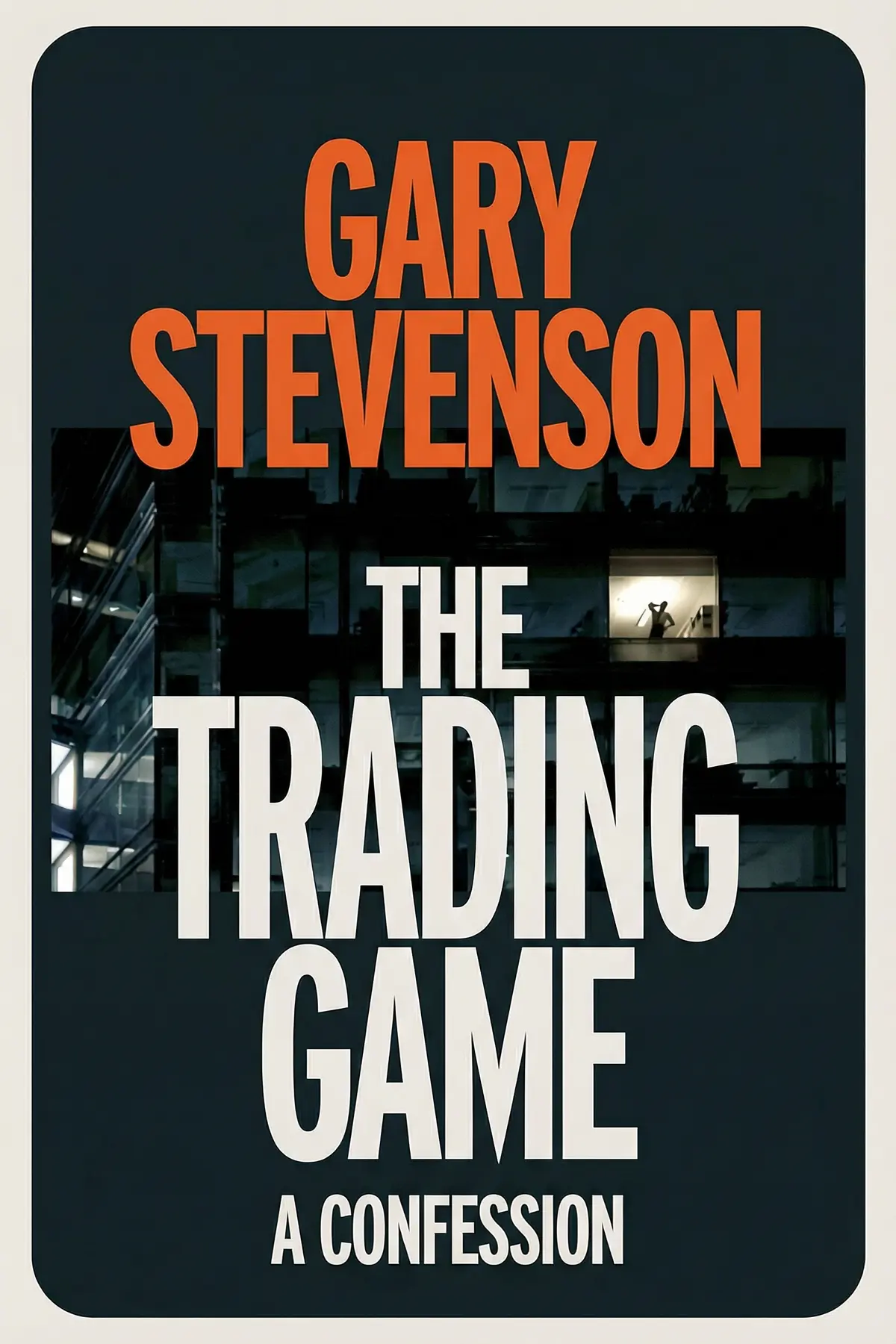
Table of Content
1. Introduction
1 min 45 sec
Imagine standing on a street corner in East London, the gray pavement beneath your feet and the smell of the city in the air. For Gary Stevenson, that corner wasn’t just a place to hang out; it was a vantage point. Looking between the rusted lamp posts that he and his friends used as makeshift goalposts, he could see the distant, shimmering towers of Canary Wharf. Those glass skyscrapers weren’t just buildings; they were a different world—a world of unimaginable wealth, power, and high-stakes gambling.
How does a kid from a working-class family in Ilford, the son of a postal worker, bridge the gap between those goalposts and the mahogany desks of global finance? This is the central journey of Gary Stevenson’s story. It is a tale of a mathematical prodigy who used his street-smart instincts to beat the world’s most sophisticated bankers at their own game. But more than that, it is a deep dive into the psychological and moral costs of winning in a system that seems rigged against the many.
In this exploration, we’ll follow Gary’s meteoric rise through the trading floor of Citibank, where he navigated the chaos of the 2008 financial crisis and realized that disaster for the world often meant a payday for him. We will look at the specific strategies he used to become the bank’s most profitable trader and the disturbing economic truth he discovered—a truth that compelled him to eventually risk everything just to escape. This isn’t just about the mechanics of the market; it’s about what happens to the human soul when it’s caught in the machinery of extreme wealth. Let’s step onto the trading floor and see how the game is really played.
2. The Education of an Outsider
2 min 23 sec
Discover how a working-class upbringing and a talent for street-level commerce prepared a young man to dominate the elite world of international banking.
3. The Culture of Chaos
2 min 32 sec
Step inside the high-pressure environment of the trading floor where the traditional rules of morality are replaced by a singular focus on profit.
4. The Strategy of Survival
2 min 24 sec
Understand the core principles that allowed Gary to recover from devastating losses and build a multi-million dollar fortune.
5. The Obsession with the Target
2 min 21 sec
Explore the psychological toll of pursuing a specific financial goal and how it began to erode Gary’s connections to the real world.
6. The Discovery of the Economic Trap
2 min 07 sec
Learn the controversial economic theory that made Gary a fortune: why the world is getting poorer and why the experts are wrong.
7. The Tokyo Purgatory
2 min 07 sec
Follow Gary to Japan, where a supposed break from the stress of London turned into a surreal battle for his sanity and his future.
8. The Final Battle for Freedom
2 min 13 sec
Witness the unconventional tactics Gary used to break free from the bank’s grip and secure the fortune he had worked so hard to earn.
9. Conclusion
1 min 50 sec
The story of Gary Stevenson is a powerful reminder that the financial world is often far removed from the everyday lives of the people it affects. Through his journey from the streets of East London to the top of the trading world, we see a system that rewards those who can detach themselves from the consequences of their actions. Gary’s success wasn’t just a result of his mathematical skill, but of his ability to recognize the structural inequality that is built into our modern economy. He realized that as long as wealth continues to flow upward, the traditional models of economic health will continue to fail.
Ultimately, Stevenson’s ‘confession’ is a call to look more closely at the ‘plumbing’ of our financial systems. He highlights the danger of a world where profit is decoupled from social good and where the most successful players are those who bet on the decline of the many. His decision to walk away—and his subsequent work as an economic campaigner—suggests that while the ‘trading game’ can be won, the real challenge is building an economy where the game isn’t rigged from the start.
As you reflect on Gary’s story, consider the ‘lamp posts’ in your own life—the perspectives and backgrounds that give you a unique view of the world. Gary’s edge came from being an outsider who refused to accept the status quo. His journey encourages us to question the experts, to look at the raw data of our own experiences, and to remember that true wealth isn’t just a number on a screen, but the freedom to live according to one’s own values. Whether you’re interested in the mechanics of finance or the resilience of the human spirit, ‘The Trading Game’ offers a startling and essential look at the hidden forces shaping our world today.
About this book
What is this book about?
The Trading Game is a raw, first-person account of a working-class math prodigy’s journey into the heart of global finance. Gary Stevenson didn’t just survive the cutthroat environment of Citibank; he became their most profitable trader by betting on the economic instability that followed the 2008 crash. The book promises an unfiltered look at how multi-million dollar bonuses are made and the psychological toll that comes with profiting from a world in crisis. Beyond the adrenaline of the trading floor, it offers a startling critique of modern economics. Stevenson reveals why common financial models fail and how he used his understanding of wealth inequality to outmaneuver the world’s biggest banks. It’s a story about the search for value in a world of numbers, and the eventual realization that some things—like one’s conscience and sanity—are worth more than any bonus check. It is both a confession and a warning about the widening gap between the ultra-rich and the rest of society.
Book Information
About the Author
Gary Stevenson
Gary Stevenson is a British economic commentator and former financial trader. He now runs the YouTube channel GarysEconomics where he explains economic concepts and campaigns against inequality, while regularly contributing to outlets including the Guardian and the BBC.
Ratings & Reviews
Ratings at a glance
What people think
Listeners find the narrative reads like a novel, with one review calling it a gripping rags-to-riches saga. Writing quality receives varied feedback, as some consider it brilliantly well written while others disagree. Furthermore, listeners value the information quality, with one noting it is written in simple terms for newbies, and the book's authority, with one review pointing out its insights into the currency world. They also prize the financial content, with one describing it as the best book on the subject.
Top reviews
Narongrit
Ever wonder what it’s actually like inside the belly of the beast? This book feels less like a dry finance lecture and more like a high-stakes thriller that you just can't put down. Stevenson manages to take complex economic concepts like FX swaps and boil them down into simple terms that anyone can understand, which is no small feat. I loved the rags-to-riches arc, watching him go from a working-class kid in East London to the top earner at Citibank. The writing is incredibly vivid, though at times I did find his descriptions of colleagues to be a bit over-the-top and cruel. It reads like a novel, and I mean that in the best way possible. You feel the adrenaline of the trading floor and the crushing weight of the lifestyle. It’s a fascinating look into a world that usually stays hidden behind glass towers in Canary Wharf.
Show moreChamp
This is hands down the most gripping finance memoir I have encountered in years. Stevenson doesn't just explain the markets; he makes you feel the physical and mental cost of chasing those eye-watering bonuses. I was struck by the descriptions of his deteriorating health—the loss of sleep, the hygiene issues, and the isolation from everyone who actually cared about him. It’s a brutal reminder that the 'dream job' is often a nightmare. Some reviewers call him arrogant, but I found his honesty about his own ambition and greed to be quite refreshing. He isn't pretending to be a saint. The book is written in very simple terms for newbies, making the world of currency trading feel accessible for the first time. Truly a brilliant account of a broken system.
Show morePierre
Finally got around to reading this and frankly, it’s a masterclass in storytelling. It’s rare to find a finance book that actually functions as a compelling narrative, but this one reads like a heist movie. Stevenson’s transition from a driven teenager to a disillusioned millionaire is handled with a lot of nuance, even if he doesn't always come across as likable. The technical details are never overwhelming, which I really appreciated as someone without a banking background. You get a real sense of why the rich keep getting richer while the rest of the world struggles. It’s a polarizing book, for sure, but that’s what makes it so interesting. It’s provocative, addictive, and deeply cynical. I couldn’t put it down.
Show moreEvelyn
Wow, what an absolute rollercoaster of a book. I went into this expecting a standard business memoir and came out feeling like I’d just watched a car crash in slow motion. Stevenson’s writing is sharp, funny, and brutally honest about the repulsive nature of the banking world. He doesn't sugarcoat how much of a 'dick' he had to be to survive, and that transparency is what makes the book work. It’s the best book on the subject I’ve read in years because it actually explains why the system is rigged. The sheer stress of the Citibank standoff kept me up way past my bedtime. Whether you love him or hate him, Gary has written something truly unique here. Highly recommended.
Show moreSing
Picked this up after seeing Gary’s YouTube channel and was surprised by how much of a page-turner it is. It’s a classic rags-to-riches saga, but with a dark, gritty edge that feels very authentic to London. Truth is, the finance industry often feels like a closed club, so seeing a 'math genius' from Ilford break in and beat them at their own game was deeply satisfying. The standoff with Citibank near the end was particularly tense, even if Stevenson does come off as a bit of a prick during the negotiations. The writing quality is solid, keeping a fast pace that mirrors the frantic nature of the trading floor. Some might find his tone a bit abrasive, but I think it fits the environment he was working in. It’s a compelling, if slightly depressing, look at what it takes to win the game.
Show moreSatit
After hearing about his 'math genius' reputation, I expected a dry textbook, but this is pure adrenaline. Stevenson captures the toxic, unhinged energy of the trading floor perfectly. Some of the characters he describes are so vile they have to be real; you couldn't make this stuff up. I listened to the audiobook, and while some people hate the accent, I thought it added a layer of grit to the story. The way he breaks down the 2008 crash and the subsequent interest rate moves is the best explanation I’ve ever read. My only gripe is that he can be incredibly callous toward his family, which made him hard to root for at times. Still, the credibility of his insights into the currency world is undeniable. It's a raw, unfiltered look at greed.
Show moreLincoln
As someone who usually finds economics boring, I was shocked at how Stevenson managed to make interest rate bets feel like a high-stakes heist. The book has incredible thriller vibes. He does a great job of demystifying the jargon, making the 'trading game' feel like something anyone could play if they had the stomach for it. I found the sections about his time in Tokyo especially vivid, even if his portrayal of the local traders was a bit questionable. The book is at its best when it focuses on the psychological toll of the job. You can see the mental breakdown coming from a mile away, yet you still feel for him. It’s a gripping rags-to-riches saga that doesn't shy away from the uglier parts of the journey.
Show moreSarawut
The first half is a brilliant, high-octane look at the world of FX swaps, but then it starts to drag. To be fair, Stevenson is a talented storyteller, and his journey from grammar school outcast to millionaire is genuinely fascinating. However, the constant reminders of how much better he is than everyone else at Citibank become exhausting by the 200-page mark. He portrays his colleagues as one-dimensional villains, which makes the narrative feel a bit staged or exaggerated at times. I appreciated the insight into how crisis becomes profitable for the 1%, but I wanted more depth on his transition to activism. It’s a good read, just be prepared for a heavy dose of ego alongside the economic theory. It’s worth it for the insider perspective, but it’s definitely a bit of a mixed bag.
Show morePhimwan
Not what I expected from a 'confession'—it felt more like a boast about how he beat the system. While I agree with many of his points on wealth inequality, the delivery is so embittered that it’s hard to swallow. He spends so much time calling everyone else a 'douchebag' or an 'idiot' that he fails to see how much he became exactly like them. The writing is punchy, I’ll give him that, and the pacing is excellent. But the lack of genuine self-reflection makes the moralizing at the end feel a bit hollow. Is he a hero or just a disgruntled ex-employee who got his payout? I'm still not sure. It’s a fascinating insight into the industry, but take his 'victim' narrative with a massive grain of salt. Three stars for the information quality.
Show moreUdom
Gary Stevenson comes across as such a massive narcissist that I found it hard to finish this. The 'confession' subtitle is a total misnomer because there is almost zero actual self-reflection or remorse for the lives impacted by his bets. Frankly, he seems more interested in proving he’s the smartest guy in the room than in actually exploring the ethics of his industry. The way he talks about his family and his 'inferior' colleagues made me cringe. While the finance content is accessible, the author’s victim complex and arrogance overshadow any valid points he makes about wealth inequality. If you’re looking for a serious economic critique, look elsewhere; this is just a 400-page ego trip. I’m giving it two stars only because the early chapters about his education were somewhat interesting, but the rest is just a car crash of a memoir.
Show moreReaders also enjoyed

A Different Kind of Power: A Memoir
Jacinda Ardern

Alexander Hamilton
Ron Chernow
A Higher Loyalty: Truth, Lies and Leadership
James Comey
Alexander the Great
Philip Freeman

Adults in The Room: My Battle With Europe’s Deep Establishment
Yanis Varoufakis


Ali: A Life
Jonathan Eig
AUDIO SUMMARY AVAILABLE
Listen to The Trading Game in 15 minutes
Get the key ideas from The Trading Game by Gary Stevenson, plus 5,000+ more titles in English and Thai.
- 5,000+ titles
- Listen as much as you want
- 7-day free trial
- Cancel anytime







