
22 min
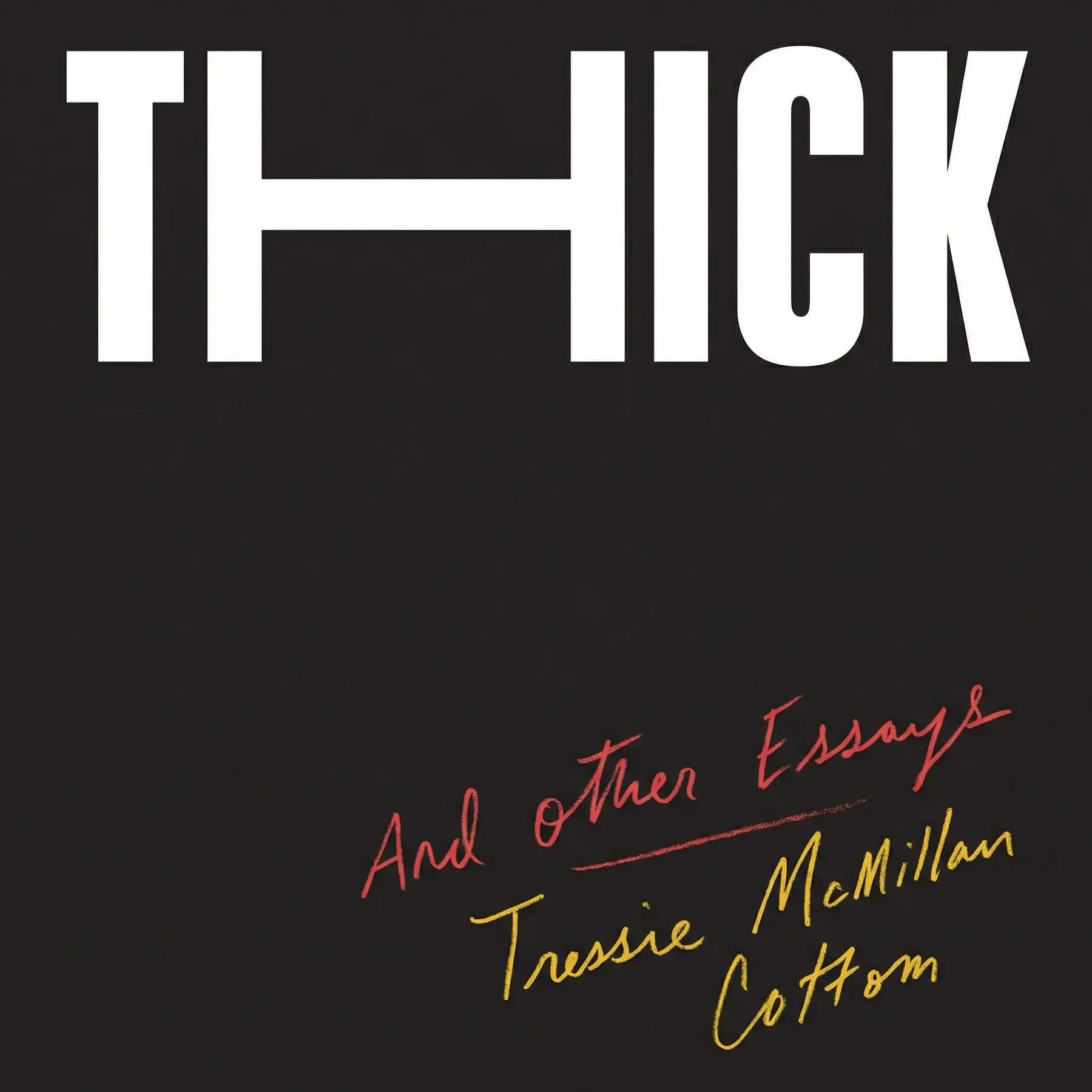
Thick: And Other Essays
A profound collection of essays exploring how race, gender, and class intersect in America. Tressie McMillan Cottom uses the concept of thickness to analyze beauty, politics, and the lived experience of Black womanhood.
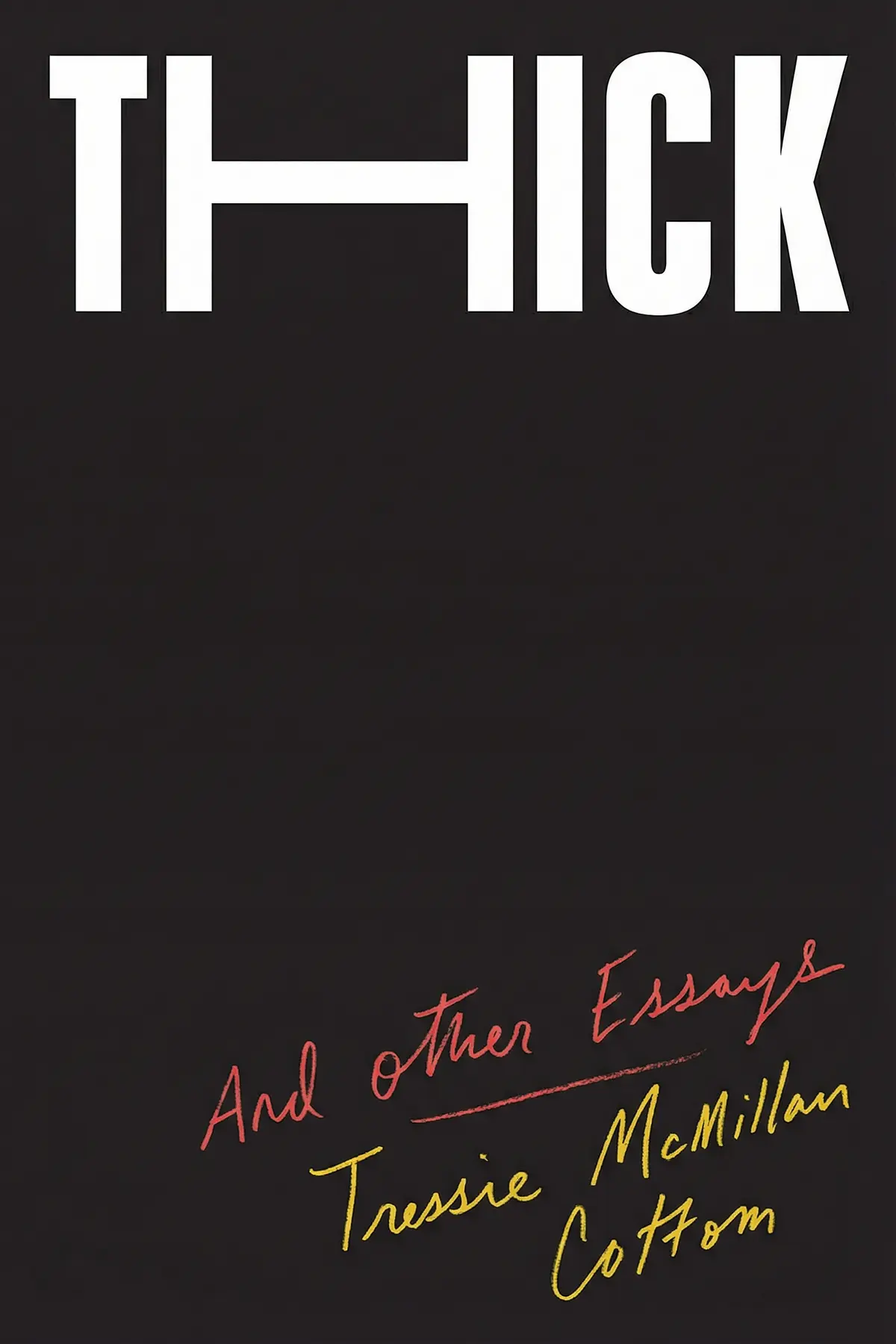
Table of Content
1. Introduction
2 min 18 sec
In our modern world, the term feminism has become a staple of pop culture. We see it emblazoned on t-shirts, celebrated on concert stages by global icons like Beyoncé, and discussed in corporate boardrooms under the banner of leaning in. From the viral momentum of the #MeToo movement to the mainstreaming of gender equality discussions, feminism is, in many ways, more visible than it has ever been. But there is a vital question we must ask ourselves as we consume this media: whose stories are actually being told?
Far too often, the feminism that finds its way into the spotlight is a version that primarily serves those who already hold significant social capital. It focuses on the experiences of the wealthy, the famous, or those whose white skin offers a layer of protection and visibility. When the narrative is this narrow, it misses the lived realities of millions of women whose struggles are not just about gender, but are also deeply tied to their race and their economic status. This is where the work of Tressie McMillan Cottom becomes essential. In her collection, Thick: And Other Essays, she offers a powerful counter-narrative, one that is rooted in her own experience as a Black woman from a working-class background.
Cottom’s work is a masterclass in intersectionality. This isn’t just an academic buzzword; it’s a necessary tool for understanding how different forms of oppression—like racism, sexism, and capitalism—don’t just exist side by side, but actually wrap around each other to create unique and often invisible barriers. To truly dismantle the patriarchy, Cottom argues, we cannot look at the plight of women in a vacuum. We must simultaneously confront the systems of racial and economic injustice that define our society.
Throughout this exploration, we will look at how the world perceives and often punishes Black women. We’ll delve into the ways that societal beauty standards are designed to exclude, how the medical system fails to listen to Black voices with tragic consequences, and why even the most successful Black individuals are often forced into categories that distance them from their own roots. By the end of this journey, the goal is to see the world through a lens of thickness—a way of thinking that embraces complexity and refuses to simplify the human experience. We are going to examine the world not as we wish it to be, but as it actually functions for those at the margins.
2. The Meaning of Thickness
2 min 37 sec
Discover how a single word—thick—can represent both a physical reality and a powerful sociological tool for understanding the complicated layers of human experience and social context.
3. Status Symbols as Survival
2 min 14 sec
Explore why the pursuit of expensive brand names is often a strategic move for survival rather than a sign of poor financial judgment for those living in poverty.
4. The Privilege of Being Average
2 min 05 sec
Consider the vast difference in how public platforms are allocated, where certain voices are granted space for mediocrity while others must be exceptional to be heard.
5. Incompetence as a Social Label
2 min 07 sec
Analyze the life-threatening consequences of how the medical and social systems reflexively label Black women as incompetent, even regarding their own health.
6. The Flexibility of White Privilege
2 min 16 sec
Examine how systemic advantages can adapt and persist through different political eras, from the historic election of a Black president to the rise of reactionary movements.
7. The Illusion of the Special Black
2 min 12 sec
Uncover the social pressure placed on high-achieving Black individuals to distance themselves from their community and the harmful concept of being ‘different’ from the rest.
8. The Vulnerability of Adultified Girls
2 min 01 sec
Understand the tragic reality of how Black girls are stripped of their childhood innocence by a society that views them as more mature and less in need of protection.
9. Beauty as an Instrument of Exclusion
2 min 11 sec
Delve into the way modern beauty standards function as a gatekeeping mechanism, using whiteness as a benchmark to maintain social hierarchies and power.
10. Conclusion
1 min 59 sec
As we come to the end of this exploration of Thick: And Other Essays, the central message is clear: our understanding of the world is only as good as our willingness to engage with its complexity. Tressie McMillan Cottom has shown us that thickness is not a flaw to be corrected, but a perspective to be cultivated. By looking at the intersection of race, gender, and class, we can see the invisible threads that hold our social structures together and, more importantly, the ones that pull them apart for the most vulnerable among us.
We’ve seen how the pursuit of status is often a necessary shield for those in poverty, how the healthcare system can fail when it refuses to see Black women as competent experts of their own lives, and how the very definition of beauty is used to guard the gates of power. These are not easy truths to sit with, but they are the foundational realities of the American experience. Cottom’s work challenges us to move beyond a feminism that only seeks to put a new face on the same old power structures. Instead, she calls for a movement that is truly inclusive, one that recognizes that racial justice and economic justice are inseparable from the fight for gender equality.
The throughline of this work is the power of the marginalized voice. When we listen to those who live at the intersections of multiple oppressions, we gain a much clearer picture of how our systems actually function. We learn where the cracks are and who is falling through them. The actionable path forward is one of active listening and intentional awareness.
As you move back into your daily life, take the challenge to seek out perspectives that are far removed from your own. Pay attention to whose voices are being amplified and whose are being silenced in the media you consume, the workplaces you inhabit, and the communities where you live. Recognize the privileges you may hold and look for ways to use that space to support those who have been pushed to the margins. By embracing the thickness of our social reality, we can begin to build a world that is not just a little better for some, but fundamentally more just for everyone.
About this book
What is this book about?
Thick: And Other Essays is a deep dive into the complex systems that define modern American life, specifically through the lens of a Black woman who refuses to be categorized or minimized. The book addresses a wide range of topics, from the performance of respectability and the politics of beauty to the failures of the healthcare system and the shifting landscape of white privilege. By weaving together personal narrative with sociological analysis, the author promises to reveal the hidden structures that marginalize Black women. It is a call to look at the world with a more nuanced, intersectional perspective, challenging the reader to move beyond surface-level feminism and engage with the difficult realities of capitalism and systemic racism.
Book Information
About the Author
Tressie McMillan Cottom
Tressie McMillan Cottom is an associate professor of sociology at Virginia Commonwealth University. She is the author of Lower Ed: The Troubling Rise of For-Profit Colleges in the New Economy, and her essays have appeared in the New York Times, the Atlantic, Slate, and the Washington Post, among others. In 2019, her book Thick: And Other Essays was a finalist for the National Book Award.
Ratings & Reviews
Ratings at a glance
What people think
Listeners find this essay collection absorbing and masterfully composed, full of notable insights and addressing vital subjects. The work is commended for its intense emotional resonance, with one listener explaining how it transformed their outlook on several topics, alongside its candid handling of complicated issues. Listeners also value the humor and lucidity, with one review emphasizing the book's efficient use of succinct phrasing.
Top reviews
Koi
Finally got around to reading Tressie McMillan Cottom, and my brain is still buzzing from the sheer intellectual force of these essays. She connects disparate threads of sociology and pop culture with a precision that makes you feel like you’re finally seeing the world in high definition. I specifically loved her ability to write 'the turn'—that moment in an essay where the argument shifts into something much deeper and more systemic. While the prose is dense and requires your full attention, it rewards the effort with profound insights into black womanhood and capitalist logic. It isn't just a book; it’s a masterclass in cultural criticism.
Show moreMind
Wow, 'Dying to be Competent' is an essay that will stay with me for the rest of my life. The way Cottom weaves her personal tragedy with a searing indictment of how medical systems fail black women is nothing short of devastating. To be fair, some of the more academic chapters took me a minute to parse because the language is so deliberate and thick with theory. However, the emotional weight and the clarity of her logic regarding beauty and worth are undeniable. She doesn't cater to a white audience or try to make her truths more palatable, which is exactly why this collection feels so vital and urgent right now.
Show morePrayoon
After hearing so much buzz about this being a National Book Award finalist, I had high expectations, and Cottom absolutely delivered. She has this incredible way of deconstructing the neoliberal idea of beauty, forcing the reader to look at who actually profits from these standards rather than just 'feeling pretty.' It’s a dense read—I actually had to go back and reread several paragraphs to make sure I caught every nuance—but the wit keeps it from feeling like a dry textbook. Fans of Brittney Cooper or Roxane Gay will find a lot to love here. It’s easily one of the most challenging and rewarding books I’ve picked up this year.
Show moreCooper
Ever wonder why certain voices are elevated in prestige publications while others are sidelined? Cottom’s final essay rants—in the best way possible—about the gatekeeping in media and the absurdity of who we consider 'experts.' I found her take on Thomas Friedman and his taxi driver anecdotes to be particularly hilarious and spot-on. While I didn't agree with every single conclusion she drew, her perspective is so grounded in sociological expertise that you have to respect the hustle. Some parts are a bit repetitive, and the density can be overwhelming, but the overall impact of the collection is powerful.
Show moreErn
Tressie McMillan Cottom is a force of nature. This book is thick with intelligence, wit, and a refreshing lack of apologies for existing as a black woman in a society that tries to shrink her. I loved how she tackled the election of Trump and the concept of 'whiteness' as a form of capital. Her voice is so distinct and authoritative that you can almost hear her speaking the words off the page. It’s not an easy read, and you shouldn’t expect it to be, but it is deeply rewarding if you’re willing to sit with the discomfort her analysis often provides. Highly recommended for anyone who wants a serious intellectual challenge.
Show moreZoe
Picked this up on a whim and ended up finishing it in two sittings because I couldn't stop thinking about her arguments. McMillan Cottom has this way of exposing the 'hidden' rules of society that make you question everything you thought you knew about meritocracy and agency. The way she handles the topic of black women's worth in a capitalist society is both analytical and deeply personal. It’s a provocative read that might rub some people the wrong way, but that’s exactly what good social criticism is supposed to do. She doesn't just write essays; she constructs arguments that demand a response from the reader.
Show moreGame
The chapter on Miley Cyrus and the Grammys was a total eye-opener for me. Cottom uses pop culture as a Trojan horse to discuss much larger, more systemic issues regarding the vulnerability of black girls and the construction of whiteness. I’ll admit that her writing style is unapologetically academic, which might be a turn-off if you’re looking for a light beach read. Truth is, she demands that you meet her on her level, and I appreciated that she didn't simplify her arguments for the sake of accessibility. It’s a brilliant, sharp, and often funny exploration of what it means to be a black woman in America today.
Show moreSuthee
As someone who rarely reads sociology, I found this collection both intimidating and deeply moving. The balance between personal memoir and structural analysis is handled with such skill, especially in the essays concerning class mobility and the 'capitalist logic' of beauty. Not gonna lie, I had to look up a few terms, but that’s part of the appeal of reading someone this brilliant. She challenges you to think about how power operates in the most mundane aspects of our lives. My only minor gripe is that some essays felt a bit dated in their specific political references, but the underlying theories are still incredibly relevant and sharp.
Show moreHassan
This collection is undeniably smart, but I struggled with the tone at times. Cottom makes it very clear that she isn't interested in persuading anyone who doesn't already share her foundational worldview, which can make the reading experience feel a bit like being lectured rather than being invited into a dialogue. Her critique of David Brooks and the 'deli meat' metaphor was funny, though it felt a bit like punching down given her obvious intellectual superiority. Look, if you’re looking for a comfortable read, this isn’t it. It’s provocative and often dismissive of outside critics, yet the core observations about classism and whiteness are too sharp to ignore entirely.
Show moreTippawan
Not what I expected based on the glowing reviews. I found the writing to be incredibly impenetrable and so dense that my eyes started glazing over by the second essay. I appreciate that she’s a sociology professor, but the academic jargon felt like a barrier rather than a bridge to her ideas. Frankly, I think I’m just too frivolous for this kind of work, as I struggled to stay engaged with the theoretical frameworks she uses to explain everyday experiences. It’s clearly a smart book written by a very smart person, but it felt more like a series of lectures than a cohesive collection of essays for a general reader.
Show moreReaders also enjoyed

A Biography of Loneliness: The History of an Emotion
Fay Bound Alberti

A Force for Good: The Dalai Lama's Vision for Our World
Daniel Goleman
A Room of One’s Own
Virginia Woolf

Abolish Rent: How Tenants Can End the Housing Crisis
Tracy Rosenthal
Abortion: Our Bodies, Their Lies, and the Truths We Use to
Jessica Valenti
Afropean: Notes From Black Europe
Johny Pitts
AUDIO SUMMARY AVAILABLE
Listen to Thick in 15 minutes
Get the key ideas from Thick by Tressie McMillan Cottom, plus 5,000+ more titles in English and Thai.
- 5,000+ titles
- Listen as much as you want
- 7-day free trial
- Cancel anytime







