
22 min 13 sec
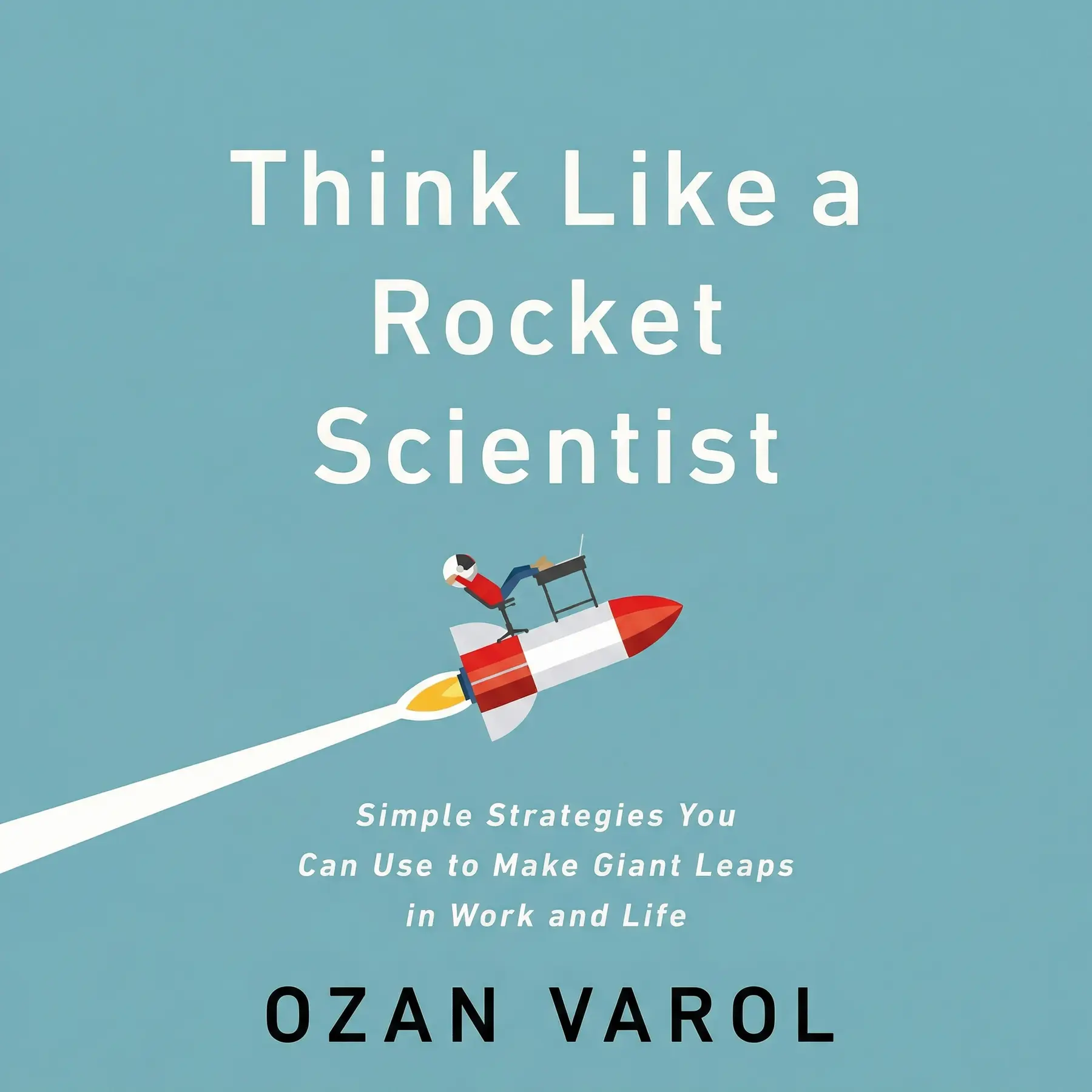
Think Like a Rocket Scientist: Simple Strategies You Can Use to Make Giant Leaps in Work and Life
By Ozan Varol
Learn to navigate complex problems and achieve breakthroughs by adopting the mental frameworks of rocket scientists. This guide explains how to leverage uncertainty, challenge assumptions, and foster original creativity in everyday life.
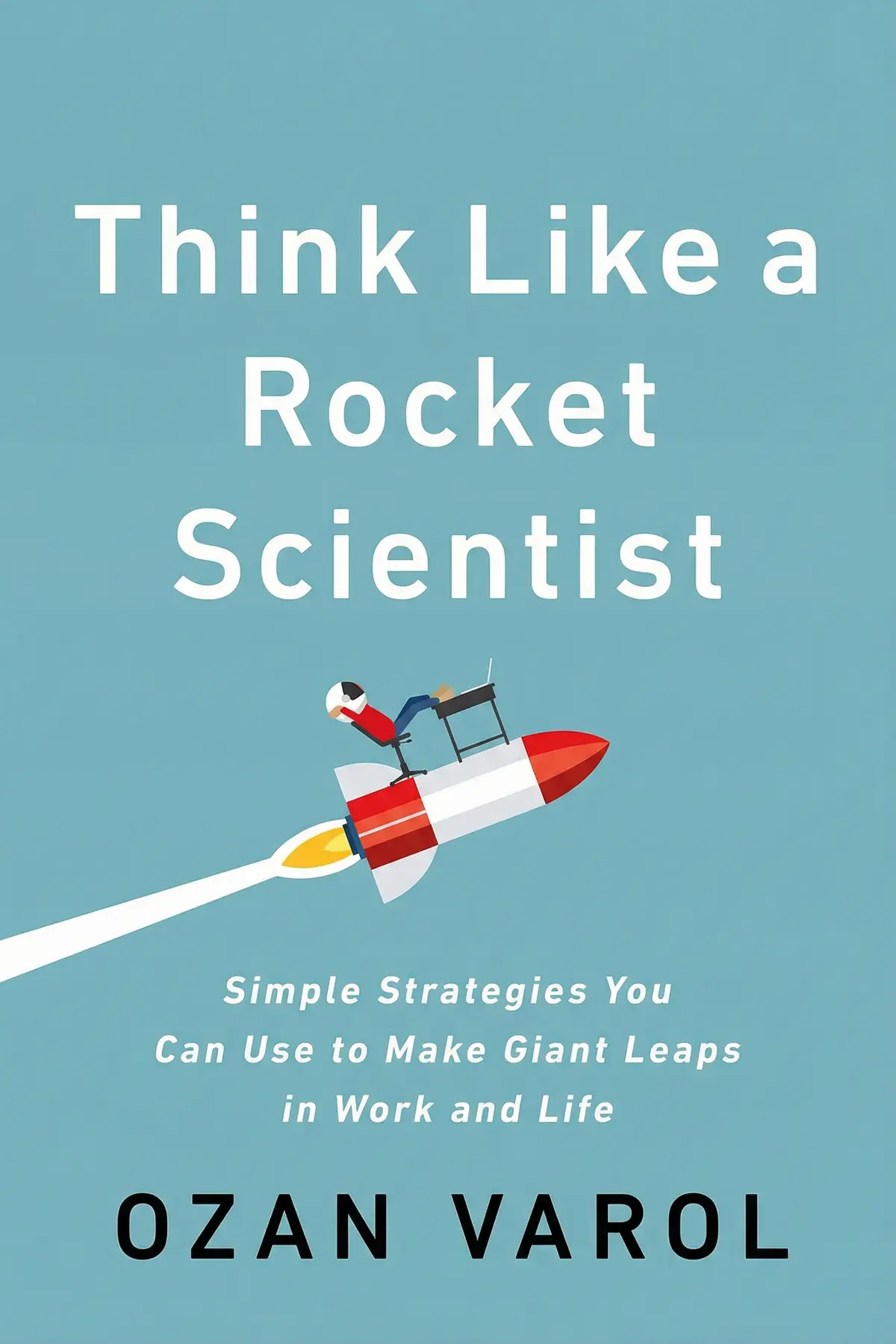
Table of Content
1. Introduction
1 min 53 sec
Have you ever looked at the massive, seemingly insurmountable goals in your life and felt they were simply out of reach? Perhaps you’ve convinced yourself that extraordinary success is a club reserved for the intellectual elite or those born with a silver spoon. We often settle for a life of quiet mediocrity, believing that the ‘giant leaps’ we dream of are nothing more than pipe dreams. We stay in the safe lanes, avoid the shadows of the unknown, and repeat the same routines, wondering why the big breakthrough never comes. We lower our bars, not because we lack potential, but because we lack the mental architecture to support our most ambitious blueprints.
But what if the difference between a stalled career and a launched dream wasn’t about the size of your bank account or the number of degrees on your wall, but rather about the framework of your mind? The truth is that everyone possesses the latent capacity for innovation. Whether you’re trying to launch a startup, master a complex new skill, or pivot your life in a bold new direction, the strategies used to put rovers on Mars are remarkably applicable to the challenges you face on Earth.
Thinking like a rocket scientist isn’t about mastering calculus or understanding orbital mechanics; it’s about a fundamental shift in how you engage with the world. It’s about learning to look at a problem and see not just a wall, but a series of questions waiting to be answered. It’s about moving from a state of passive observation to a state of active discovery. In this exploration, we’re going to dismantle the myths of genius and replace them with practical, unconventional strategies that anyone can use to propel themselves forward. We will explore how to turn fear into fuel, how to strip problems down to their most basic truths, and why the most productive thing you can do for your career might be to spend an afternoon doing absolutely nothing. By the end of this journey, the throughline will be clear: to change your life, you must first change the way you think.
2. Reframing Uncertainty as a Catalyst for Discovery
2 min 38 sec
Discover why even elite scientists rely on curious rituals and learn how to transform your paralyzing fear of the unknown into an invigorating drive for new possibilities.
3. The Power of First Principles Thinking
2 min 24 sec
Learn how stripping away assumptions can lead to radical innovation, using the same mental process that allowed for the birth of private space exploration.
4. Cultivating Creativity Through Boredom
2 min 26 sec
Explore why our modern obsession with constant productivity is the ultimate killer of original thought and how to reclaim your creative spark.
5. Overcoming Mental Barriers with Divergent Thinking
2 min 15 sec
Uncover how the myths we tell ourselves limit our potential and learn a brainstorming technique that bypasses your internal critic.
6. Asking the Right Questions: Strategy vs. Tactics
2 min 11 sec
Learn why most problem-solving efforts fail by focusing on the wrong goals and how a simple shift in questioning can lead to revolutionary results.
7. Dismantling Blind Spots and Confirmation Bias
2 min 12 sec
See how a tiny unit of measurement destroyed a $193 million spacecraft and learn how to proactively audit your own opinions to find hidden flaws.
8. Rigorous Testing and the Breaking Point
2 min 10 sec
Understand why your practice sessions might be setting you up for failure and how to use ‘stress testing’ to ensure success in high-stakes moments.
9. Learning from Success and the Trap of Complacency
2 min 15 sec
Discover why success can be more dangerous than failure and how to analyze your wins to prevent future catastrophes.
10. Conclusion
1 min 49 sec
Adopting the mindset of a rocket scientist is not about acquiring a set of technical skills; it is about reclaiming your cognitive freedom. It requires a willingness to stand in the dark room of uncertainty until your eyes adjust to the light of discovery. It demands that you strip away the layers of ‘how we’ve always done it’ to find the raw truths that lie beneath. By making space for boredom, asking better questions, and rigorously testing your ideas, you transform yourself from a passive observer of your life into an active explorer of your potential.
As we’ve seen, the barriers to our ‘giant leaps’ are rarely as solid as they appear. They are often made of the same psychological ‘wax’ as Icarus’s wings—fragile assumptions and fears that melt when subjected to the heat of focused, first-principles inquiry. Whether you are navigating the complexities of a multi-billion dollar business or the quiet challenges of your personal growth, the throughline remains: the quality of your outcomes depends on the quality of your thinking. If you stop settling for the safe and the known, and start looking for the breaking points and the hidden truths, you will find that the sky is not a limit, but a starting point.
As you step back into your world, take one immediate, actionable step: Take your most pressing question for a walk. Don’t take your phone, don’t take a notepad. Just walk. Movement has a way of loosening the mental cogs that get stuck during our stationary ‘productive’ hours. History’s greatest minds, from Darwin to Tesla, used this simple physical act to catalyze their most profound breakthroughs. Follow in their footsteps. Let your body move and let your mind drift. In that space between the steps, you might just find the spark for your own next giant leap.
About this book
What is this book about?
Think Like a Rocket Scientist explores the psychological and practical toolkits used by the world’s most innovative minds to solve seemingly impossible challenges. It moves beyond the technicalities of aerospace engineering to reveal a universal mindset applicable to business, personal growth, and creative endeavors. The book’s primary promise is that anyone can achieve 'giant leaps' by changing how they process information and approach obstacles. By examining how scientists handle extreme uncertainty, utilize first principles thinking, and learn from both failure and success, the narrative provides a roadmap for breaking free from status quo thinking. It challenges the reader to embrace boredom for creativity, ask better questions to find better solutions, and test ideas rigorously before they are launched into the real world. Ultimately, it is a manual for intellectual liberation and transformative problem-solving.
Book Information
About the Author
Ozan Varol
Ozan Varol’s diverse career spans rocket science, law, and authoring nonfiction books. A former member of the 2003 Mars Exploration Rovers team, Varol penned Think Like a Rocket Scientist to help non-scientists reach their full potential. His award-winning articles are taught in colleges and graduate schools, and his work has featured widely in US and international media.
Ratings & Reviews
Ratings at a glance
What people think
Listeners find this book both gripping and enjoyable, offering excellent perspectives on problem-solving and thought processes. They value its practical application in daily life, as one listener points out how it can be applied to both business and personal growth. The writing is excellent and packed with fascinating anecdotes, and listeners find the work highly inspiring; one review highlights how it encourages setting and achieving big goals.
Top reviews
Tom
Ozan Varol manages to demystify complex aeronautical decision-making processes and translate them into actionable life strategies. I particularly resonated with the "Launch" phase of the book, where he discusses the beauty of divergent thinking and the necessity of befriending uncertainty. Instead of the usual corporate fluff, you get these vivid historical vignettes—like the nuances of the Mars Exploration Rover project—that actually serve a purpose. The concept of "backcasting" was a total revelation for me, shifting my perspective from passive forecasting to active planning. It's rare to find a book that feels both intellectually rigorous and genuinely inspiring for personal growth. If you’re looking to break out of conventional mental ruts, this is your roadmap.
Show moreSupatra
Wow. This book completely reframed how I view failure and the "unknown." Varol argues that uncertainty isn't a foe to be conquered but a friend to be embraced, and that hit home for me. I loved the three-part structure—Launch, Accelerate, Achieve—as it gave a clear narrative arc to the mental shift he’s proposing. The specific advice on "adversarial thought experiments" has already helped me troubleshoot a major bottleneck in my creative process. It's captivating, fun, and quite moving in its call to reclaim our childhood sense of wonder and curiosity. I’ve already recommended it to three colleagues who are struggling with professional burnout.
Show morePla
Ever wonder why some people seem to solve impossible problems while others get stuck in the mud? This book provides the answer by breaking down the specific cognitive tools used by rocket scientists to navigate the cosmos. I was particularly impressed by the discussion on "anomalies" and why we shouldn't just brush off data points that don't fit our preconceived notions. As a data analyst, this part spoke directly to my daily work challenges. The book is well-researched, engagingly written, and full of stories that stick with you long after you close the cover. It’s the kind of book you’ll want to keep on your desk for frequent reference.
Show morePranee
This book is a masterclass in how to think more clearly in an increasingly complex world. Varol takes us behind the scenes of NASA's most famous triumphs and tragedies to show that the biggest obstacles aren't usually technical, but psychological. I loved the breakdown of convergent versus divergent thinking and how we often shut down the most creative parts of our brains too early in the process. The writing is elegant and the pacing is excellent, moving quickly between historical facts and modern applications. It’s a rare nonfiction book that I actually enjoyed reading for the prose as much as the content. Highly recommended for anyone wanting to make giant leaps in their life.
Show moreChee
As a project manager who deals with high-stakes deadlines, I found the "Accelerate" section of this book incredibly grounded and practical. Varol uses his background to explain why we should focus on the process rather than just the outcome, which is a hard pill to swallow in today's results-driven culture. While some of the anecdotes about Steve Jobs or Elon Musk felt a bit recycled from other popular psychology books, the way he ties them back to "first principles" thinking is unique. The writing is punchy and accessible, making it an easy read over a weekend. My only minor gripe is that some of the science metaphors feel a bit stretched to fit the self-help mold. Still, it’s a solid resource for anyone wanting to sharpen their problem-solving skills.
Show moreMingkwan
Finally got around to reading this after seeing it all over LinkedIn, and I have to say the hype is mostly justified. Ozan Varol has a gift for taking the high-level logic used by NASA engineers and applying it to everyday dilemmas like choosing a career path or launching a business. I found the section on "test as you fly" to be particularly useful for my own startup experiments. To be fair, there are a few moments where the prose gets a little too close to "hustle culture" jargon, but the core insights are robust. The author's personal story about his time on the Mars Rover project adds a nice touch of authenticity, even if his tenure there was brief.
Show moreOm
The chapter on "first principles" was worth the price of the book alone. Most of us operate on autopilot, using "the way it’s always been done" as our primary guide, but Varol shows why that's a recipe for stagnation. He uses the development of SpaceX rockets as a compelling example of how questioning every constraint can lead to massive breakthroughs. The tone is encouraging without being overly saccharine, and the short, punchy chapters keep the momentum going. I did feel that the middle section dragged a bit with redundant examples, but the "Achieve" section brought it home with some great tips on handling success and staying humble.
Show moreSarocha
After hearing Ozan on a podcast, I was curious to see if his book lived up to his articulate speaking style, and it definitely does. He manages to bridge the gap between hard science and human psychology in a way that feels natural and useful. I found the accompanying exercise book on his website to be a fantastic bonus that helped me apply the concepts of "backcasting" and "pre-mortems" to my own life. While some chapters are definitely stronger than others, the overall package is a great toolkit for anyone looking to upgrade their brain’s operating system. It’s fun, insightful, and surprisingly humble for someone with such an impressive resume.
Show moreNan
Not what I expected given the title, as this is much more of a "mental models" survey than a deep dive into rocket science. Truth is, if you’ve read a lot of Adam Grant or Malcolm Gladwell, many of these concepts will feel like familiar territory. For instance, the discussion on the Challenger disaster and the O-ring issues is a classic case study that has been covered extensively in other books like David Epstein’s Range. I appreciated the author's writing style, but I found myself skimming through the parts that felt like a collection of generic platitudes. It’s a decent entry point for newcomers to the genre, but seasoned readers might find the content a bit derivative.
Show moreKai
Frankly, I found the "rocket scientist" framing to be a bit of a disingenuous hook for what is essentially a standard self-help book. The author worked a short internship at NASA nearly twenty years ago and uses that fleeting experience to justify a title that suggests deep technical expertise. The content relies far too heavily on anecdotal evidence without addressing survivorship bias, which is ironic for a book about scientific thinking. Many of the strategies are just rehashed versions of things I've read in Chip and Dan Heath's work. The constant use of nonsensical hooks and cliches made it a struggle to get through. If you want a rigorous look at decision-making, you're better off reading Daniel Kahneman or Philip Tetlock.
Show moreReaders also enjoyed

A Guide to the Good Life: The Ancient Art of Stoic Joy
William B. Irvine
A High-Performing Mind: Strengthen Your Mind and Live Your Best Life
Andrew D. Thompson


Abundance: The Inner Path to Wealth
Deepak Chopra
AUDIO SUMMARY AVAILABLE
Listen to Think Like a Rocket Scientist in 15 minutes
Get the key ideas from Think Like a Rocket Scientist by Ozan Varol, plus 5,000+ more titles in English and Thai.
- 5,000+ titles
- Listen as much as you want
- 7-day free trial
- Cancel anytime







