
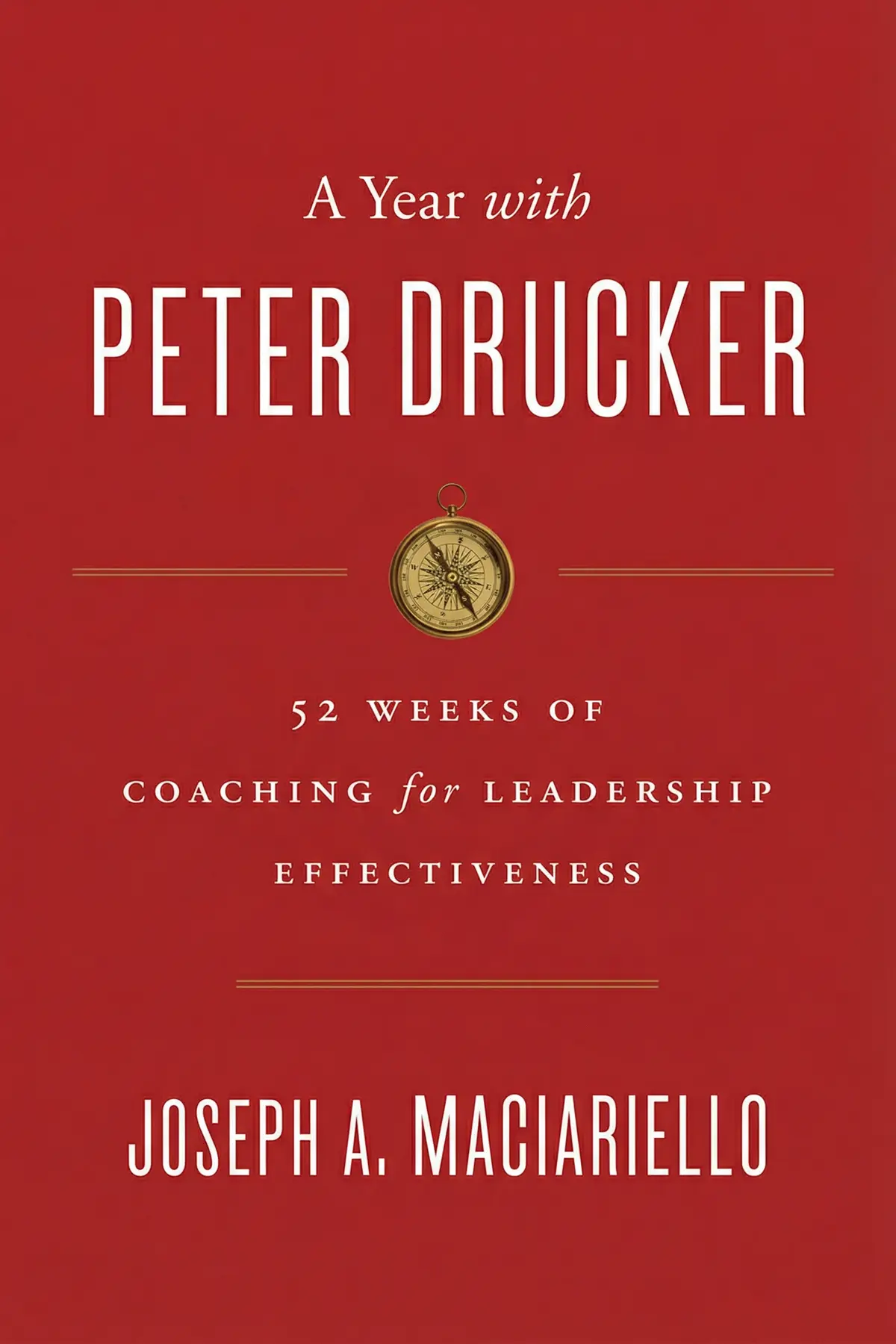
A Year with Peter Drucker: 52 Weeks of Coaching for Leadership Effectiveness
Joseph A. Maciariello
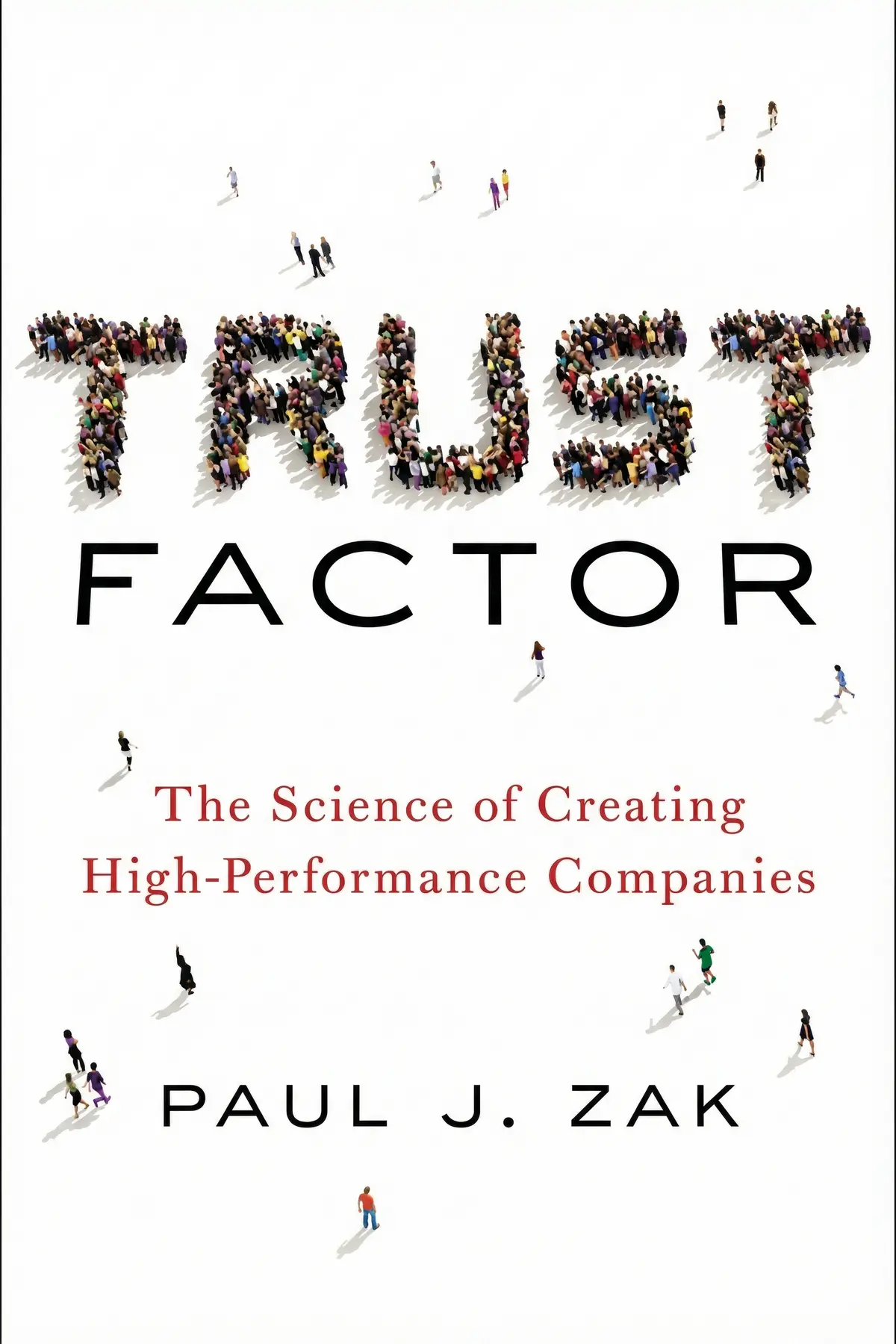
Trust Factor explores the biological roots of high-performance cultures. Neuroscientist Paul Zak reveals how oxytocin drives collaboration and provides a practical framework for leaders to build trust and increase productivity.
1 min 34 sec
Have you ever wondered why some teams seem to operate with an almost psychic level of coordination while others struggle with basic communication? We often attribute these differences to vague concepts like “company culture” or “vibe,” but the reality is much more concrete—and it’s happening inside your skull. In this summary, we’re looking at the hidden biological driver of organizational success. We aren’t talking about better software or more efficient spreadsheets; we’re talking about the fundamental neurochemistry of trust.
For decades, management theory has focused on systems and incentives. The assumption was that if you gave people the right rewards and monitored them closely enough, they would perform. However, neuroscientist Paul Zak discovered that this traditional approach often achieves the exact opposite of its intended goal. By focusing on control, leaders accidentally trigger stress responses that shut down the very parts of the brain responsible for creativity and teamwork.
Through years of field research and laboratory study, Zak identified a direct link between the hormone oxytocin and the level of trust within a group. This isn’t just about being “nice” to employees; it’s about understanding a biological imperative that determines whether a person will lean into their work or pull away from it. By the time we finish this journey, you’ll understand the OXYTOCIN framework—a science-backed roadmap for building a workplace that doesn’t just work harder, but works better because it’s aligned with how our brains are naturally wired to connect and collaborate. Let’s dive into the science of why trust is the ultimate performance enhancer.
2 min 09 sec
Discover how a single hormone acts as the biological switch for teamwork and why stress is the ultimate enemy of organizational productivity.
1 min 55 sec
Learn why generic employee awards often fail and how the ‘Ovation’ strategy uses targeted recognition to rewire team motivation.
1 min 51 sec
Explore why a fear of failure kills creativity and how ‘eXperimentation’ allows teams to find breakthroughs through safe struggle.
1 min 38 sec
See why focusing on personal development—not just job skills—creates a deeper sense of loyalty and commitment within your workforce.
1 min 45 sec
Learn the neurological benefits of giving up control and how ‘Transferring’ decision power empowers teams to act with more agility.
2 min 00 sec
Find out why keeping secrets causes brain stress and how ‘Openness’ and ‘Caring’ create a culture of safety and shared purpose.
1 min 59 sec
Discover why the best leaders are lifelong learners and how ‘Natural’ authenticity is the key to building lasting, credible trust.
1 min 47 sec
Trust isn’t just a feeling—it’s a metric. Learn how to track your progress and keep the neurochemical engine of your company running smoothly.
1 min 18 sec
As we wrap up this look into the science of the Trust Factor, the throughline is clear: our brains are designed for connection, and when we honor that design in our workplaces, everyone wins. We’ve seen how trust isn’t just a ‘nice’ cultural trait, but a biological state driven by oxytocin that directly influences how well a team can think, create, and execute.
By applying the OXYTOCIN framework—Ovation, eXperimentation, You (growth), Transfer, Openness, Caring, Invest, and Natural—you have a practical toolkit to transform your organization’s neurochemistry. It starts with the small things: being more transparent, celebrating specific wins, and being willing to admit when you don’t have all the answers.
The shift from a high-stress, low-trust environment to a high-performance, high-trust one doesn’t happen overnight, but the results are measurable and profound. Higher engagement, lower turnover, and a culture of genuine innovation are all within reach when you stop managing for control and start managing for trust. Take one piece of this framework today—perhaps it’s giving a team member more authority or sharing a bit more of the company’s ‘why’—and watch how the biology of your team begins to change. When trust becomes the foundation, performance follows naturally.
Why do some companies thrive while others struggle with disengaged employees? The answer isn't in better perks or tighter control; it's in the brain. Trust Factor bridges the gap between hard science and management practice, showing that trust is a biological necessity for high performance. Paul Zak demonstrates that when people feel trusted, their brains release oxytocin, a chemical that promotes cooperation and reduces stress. This book provides the OXYTOCIN framework—a set of eight actionable strategies designed to trigger this neurochemical response. By focusing on elements like peer recognition, transparent communication, and personal growth, leaders can move away from traditional command-and-control models. The promise is a workplace where innovation happens naturally, burnout decreases, and the bottom line improves. It’s a roadmap for any leader looking to leverage neuroscience to build a more resilient and successful organization.
Paul J. Zak is a renowned neuroeconomist and a professor at Claremont Graduate University. As the founding director of the Center for Neuroeconomics Studies, his groundbreaking research on oxytocin led to his reputation as the scientist who identified the neurochemical foundations of trust. He has authored several influential books, including The Moral Molecule, and his expertise is frequently utilized by global entities such as the World Bank, the Pentagon, and the World Economic Forum.
Listeners find the work exceptionally readable and value its knack for making complex concepts easy to understand. The book is packed with significant observations, with one listener emphasizing its neurochemical basis of great leadership principles and another remarking on its power to evolve workplace culture. Additionally, listeners applaud the concentration on developing trust—one listener points out how high-trust cultures outperform others—and they appreciate the wealth of knowledge provided through real-world examples in the text. The quality of the prose is also highly regarded, with one listener describing it as well-written.
Finally got around to reading Zak's work on organizational culture. It provides a fascinating deep dive into how our brains are literally wired to respond to high-trust environments through the release of oxytocin. While some of the terminology gets a bit heavy, the OXYTOCIN acronym serves as a helpful framework for improving workplace dynamics. I particularly appreciated the case studies from companies like Starbucks and Google, which prove these aren't just theoretical concepts. This is essential reading for leaders who want to move beyond rigid hierarchies and foster genuine engagement. The writing is incredibly clear for such a technical subject, making the complex neurobiology accessible to the average manager. I highly recommend it for anyone looking to build a more human workplace.
Show moreWow, Zak really nailed the intersection of neuroscience and leadership in this phenomenal book. He takes complex ideas about brain networks and turns them into a blueprint for building a joyful, profitable organization. I loved how he broke down the eight building blocks of trust, even if the acronym is a little bit of a stretch at times. The stories about real-world companies making these shifts are both inspiring and instructional. Frankly, it’s rare to find a business book that is backed by this much hard science while remaining so readable. It completely changed the way I think about my role as a leader and how I interact with my colleagues. This should be required reading in every MBA program across the country.
Show moreThe 'Monday Morning Lists' alone are worth the price of admission for any busy executive. This book provides a brilliant neurochemical basis for leadership principles that we often only understand on an intuitive level. Zak shows that when people feel trusted, they are more engaged, more productive, and much more likely to stay with their employer. The real-life examples throughout the text help to illustrate how these theories look in practice at major corporations. It’s well-written, deeply researched, and provides a clear path forward for those stuck in low-trust environments. I found the sections on 'Natural' leadership and vulnerability particularly moving and relevant to today’s workforce. This is a must-have for your professional library if you care about your team's well-being.
Show moreEver wonder why some companies feel like a family while others feel like a prison? Paul Zak uses his background as a neuroscientist to explain that the difference lies in our fundamental brain chemistry. By focusing on the release of oxytocin, he shows how leaders can cultivate an environment where employees feel safe and empowered. The book is packed with real-life examples from successful organizations that have abandoned the old-school command-and-control model for something better. It’s an eye-opening look at how 'soft' skills like caring actually lead to very hard financial results for the company. I finished this feeling incredibly inspired to change how I interact with my own team every single day. Truly a game-changer for modern management.
Show moreAs a manager struggling with remote team engagement, this book felt like a breath of fresh air. The author explains that trust is not just a moral choice but a biological necessity for high-performing groups. I found the 'Monday Morning Lists' at the end of each chapter to be the most valuable part of the text. They offer concrete, actionable steps that you can implement immediately without needing a PhD in neuroscience. Truth is, some of the jargon felt a bit redundant after the first hundred pages, but the core message remains powerful. It’s a great tool for transforming a stagnant company culture into one that thrives on transparency and mutual respect. I’ll definitely be keeping this on my desk for reference.
Show moreThe core thesis here is simple: trust is a biological imperative, not just a nice-to-have HR policy. Zak uses his extensive research to show how high-trust cultures consistently outperform their competitors in terms of both productivity and employee happiness. I was particularly struck by the examples of companies like Zappos that have successfully implemented these neuroscientific principles. Not gonna lie, some of the chapters felt a bit longer than necessary to make a single point. However, the data-driven approach is a welcome change from the usual fluff found in the business section. It provides a sturdy foundation for anyone looking to argue for a more empathetic leadership style. Definitely worth the time for the insights on brain chemistry alone.
Show moreAfter hearing Paul Zak on a podcast, I wanted to see if the full text lived up to the hype. The book is an encyclopedic resource for anyone interested in how culture impacts the bottom line of a business. He makes a compelling case that trust is reciprocal; when you show trust to an employee, their brain responds in kind. This creates a virtuous cycle that leads to better performance and reduced stress across the board. To be fair, the writing style can be a bit dry during the heavy science sections, but the practical tips keep it grounded. I especially liked the focus on 'vulnerability' as a strength for modern leaders. It's a solid 4-star read for anyone interested in the future of work.
Show moreIs it a science textbook or a management manual? Zak tries to bridge the gap but the results are mixed for me personally. The OXYTOCIN acronym feels incredibly forced, especially when he uses 'eXpectation' just to make the letters work. Furthermore, I found some of the statistical claims a bit murky, as several percentages mentioned didn't seem to sum to a logical total. Despite these gripes, the 'Monday Morning Lists' provide some solid, actionable takeaways that any manager could use immediately. It's a decent read, but I’d recommend it with some reservations about the technical terminology. If you’ve already read a lot of modern leadership books, you might find some of the advice a bit familiar.
Show moreTo be fair, much of the management advice here can be found in other bestsellers like Daniel Coyle's work. Zak’s unique contribution is the biological 'why' behind these successful strategies, though the science can feel a bit repetitive after a while. I found the chapter on 'Transfer'—or delegating autonomy—to be the most impactful part of the entire book for my own career. However, some of the corporate case studies felt a bit like cherry-picked success stories rather than balanced, objective analyses. It is still a solid resource for anyone who hasn't spent much time studying organizational psychology or brain chemistry. Just be prepared to wade through some thick academic terminology and names that aren't always intuitive. It’s a good starting point for new managers.
Show moreFrankly, I struggled to get past the inconsistent data and forced acronyms that permeate this text. While the neuroscience foundation is intriguing, the author’s examples often seem to contradict his own stated principles. For instance, he praises corporate gifts that feel impersonal and generic, which directly clashes with his emphasis on individual recognition and 'Caring.' The jargon becomes exhausting after a few chapters, making it difficult to maintain focus on the actual management strategy. Look, if you are searching for a clear, concise guide to building trust, you might be better off looking elsewhere. There are some good points buried here, but the delivery makes them hard to extract from the clutter. It just didn't work for me as a practical guide.
Show moreJoseph A. Maciariello

Deborah Gruenfeld
Mike Michalowicz
Hamilton Helmer
AUDIO SUMMARY AVAILABLE
Get the key ideas from Trust Factor by Paul Zak, plus 5,000+ more titles in English and Thai.







