
23 min 30 sec
Trust First: A True Story About the Power of Giving People Second Chances
By Bruce Deel, Sara Grace
Trust First explores the radical idea that unconditional trust can transform marginalized communities. Bruce Deel shares his journey from a suburban pastor to the founder of a massive, holistic nonprofit in Atlanta.
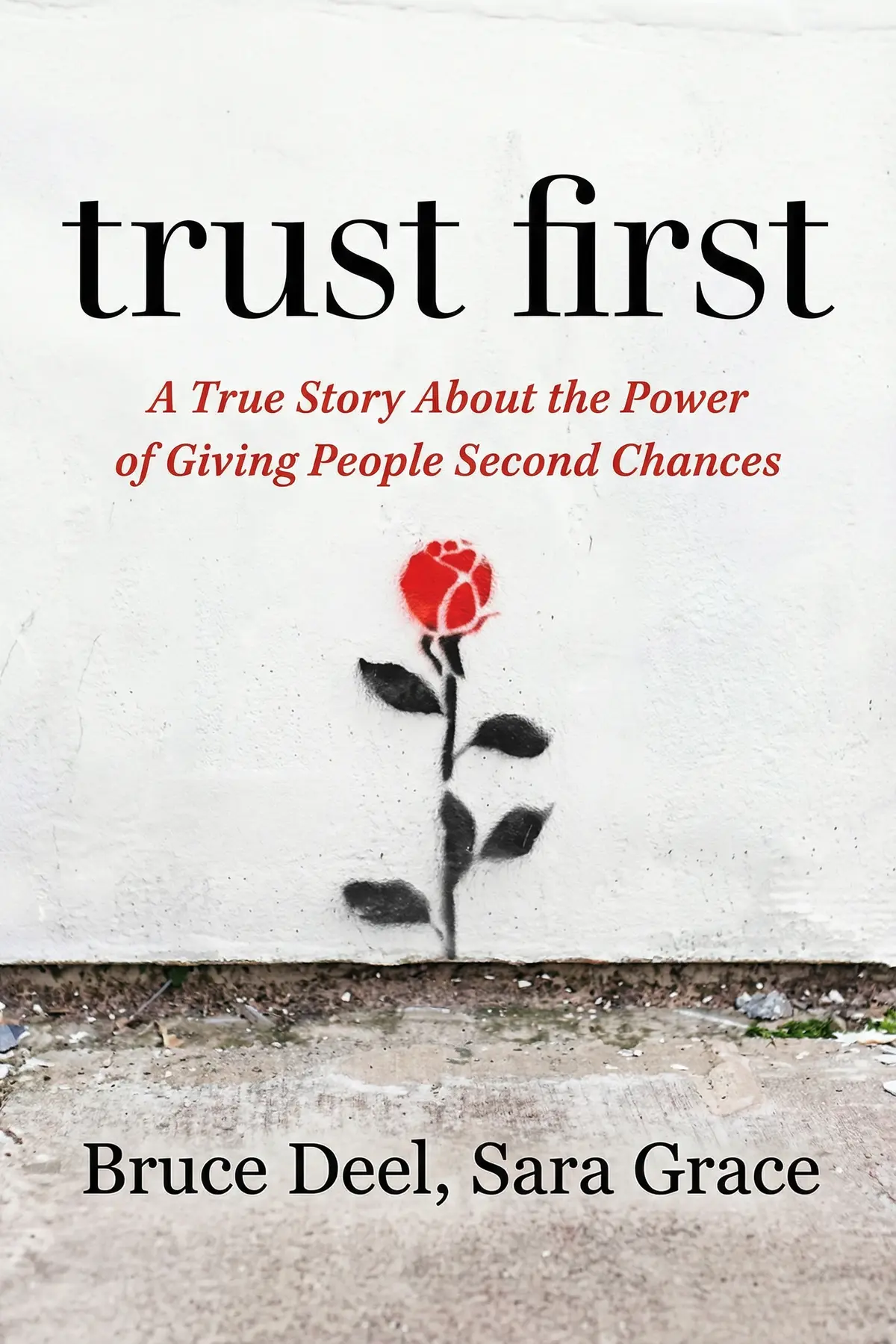
Table of Content
1. Introduction
2 min 01 sec
Imagine standing in the middle of a neighborhood that the rest of the world has largely forgotten. For many, Atlanta’s Westside was a place defined only by its statistics: high crime, deep poverty, and a history of systemic neglect. But for Pastor Bruce Deel, it became the site of a profound personal and social experiment. In the narrative of Trust First, we are invited to follow a journey that began with a six-month visiting pastorship and turned into a twenty-year mission to redefine how we help people in crisis.
The central throughline of this story is a radical departure from the way most of us are taught to view charity and social justice. We often think that trust is something that must be earned—a prize at the end of a long road of proven good behavior. Deel turns this concept on its head. He argues that if we wait for people to prove they are worthy of our trust before we help them, we will often be waiting forever. Instead, he proposes a model where we lead with trust, offering it as a gift that creates the very conditions necessary for growth.
Throughout this summary, we will explore the evolution of the City of Refuge, an organization that started in a drafty warehouse and grew into a world-class model for holistic support. We will look at how Deel had to dismantle his own prejudices about poverty and replace them with a deep understanding of what he calls opportunity injustice. We’ll see how a single gunfight taught him more about human nature than any textbook could, and why Hurricane Katrina became the unexpected catalyst for proving his vision to the world.
This isn’t just a story about a successful nonprofit; it’s a manual for human connection. It challenges us to look at the ‘untrustworthy’ people in our own lives and ask what might happen if we were the ones to take the first step. By the end of this journey, you’ll see that trust isn’t just a nice sentiment—it’s a powerful, infectious force that has the capacity to rebuild broken lives and revitalize entire neighborhoods. Let’s dive into the experiences that shaped this philosophy and see how the power of a second chance can change everything.
2. A Lesson in a Liquor Store Parking Lot
2 min 07 sec
An unexpected act of violence provides the ultimate test of faith and the birth of a new philosophy of social engagement.
3. Dismantling the Myth of Moral Failure
2 min 06 sec
Discover how a shift in perspective reveals the hidden structures that keep poverty in place, moving from judgment to understanding.
4. The Power of Radical Proximity
1 min 58 sec
To truly change a community, you must become part of it, trading the comfort of the suburbs for the reality of the streets.
5. When Crisis Management Falls Short
2 min 00 sec
A terrifying personal encounter reveals the limitations of short-term aid and the desperate need for a holistic approach to care.
6. The Warehouse of Broken Dreams and Big Visions
1 min 55 sec
A rat-infested building becomes the unlikely home for a grand experiment in social transformation, despite the skepticism of donors.
7. Proving the Model in the Wake of a Storm
1 min 49 sec
Hurricane Katrina provides the ultimate stress test, transforming a local nonprofit into a vital engine of regional relief.
8. Scaling Up: From Shelter to City
1 min 56 sec
How a small ministry evolved into a professional powerhouse, building housing complexes and specialized clinics for those in need.
9. Redefining Success Through Small Victories
1 min 58 sec
Learn why true transformation is measured in incremental steps rather than overnight changes, embracing the messiness of real recovery.
10. The Contagious Nature of Unconditional Trust
1 min 58 sec
Explore the ripple effect that occurs when we lead with trust, inspiring both the served and the servers to take a leap of faith.
11. The Practicality of Dignity: The Sandwich Lesson
2 min 04 sec
A simple meal provides a profound lesson in how the quality of what we give reflects our true opinion of the recipient.
12. Conclusion
1 min 38 sec
In the decades since Bruce Deel first stepped into that liquor store parking lot, the City of Refuge has grown into a beacon of hope that has touched tens of thousands of lives. But the most important takeaway from his journey isn’t the number of beds they’ve built or the amount of money they’ve raised. It’s the fundamental shift in how we choose to see our neighbors. Deel’s story proves that when we replace our moralistic judgments with an understanding of opportunity injustice, we stop seeing ‘broken people’ and start seeing ‘blocked potential.’
The philosophy of leading with trust is a challenge to the standard operating procedures of our world. It asks us to be the first to reach out, the first to believe, and the first to offer a second chance—even when it isn’t earned. It reminds us that consistency is the language of love in a community that has been abandoned, and that dignity is the most powerful tool for recovery. Whether it’s through the quality of a meal or the lack of barriers to a shelter, every action we take should reinforce the inherent worth of the individual.
As you move forward, consider the ‘sandwich lesson’ in your own life. Look for ways to offer the best of what you have, rather than just what you have left over. Reflect on where you might be holding back trust and what might happen if you decided to give it first. Bruce Deel showed us that trust is a leap of faith that pays dividends in transformed lives. By choosing to trust first, we don’t just help someone else; we participate in a contagious movement of grace that has the power to heal our communities and ourselves.
About this book
What is this book about?
This book tells the inspiring true story of Bruce Deel and the founding of City of Refuge, a nonprofit organization that has helped over 20,000 people in Atlanta’s Westside. It begins with a single, dangerous encounter in a liquor store parking lot and evolves into a revolutionary model for social work. Deel challenges the traditional view of poverty as a moral failing, introducing the concept of opportunity injustice to explain the systemic hurdles that keep people trapped in cycles of trauma and addiction. The core promise of the book is that by leading with trust—even when it feels risky or unearned—we can break down the walls of isolation and shame that prevent real change. Through stories of resilience and redemption, Deel demonstrates how providing a one-stop shop for housing, healthcare, and education can create a foundation for lasting transformation. It is a call to action for anyone looking to make a meaningful difference, showing that second chances are not just a luxury but a necessity for human flourishing.
Book Information
About the Author
Bruce Deel
Bruce Deel is the visionary founder and CEO of City of Refuge, a highly impactful nonprofit organization that has provided critical services like housing, education, and healthcare to more than 20,000 individuals. Beyond his leadership in the nonprofit sector, Deel serves as the Senior Pastor of The Mission Church. His expertise in community transformation has made him a sought-after consultant for various NGOs across the United States. He co-authored this narrative with Sara Grace to share the lessons learned from decades of on-the-ground service.
Ratings & Reviews
Ratings at a glance
What people think
Listeners find this work highly motivating, with one listener describing the narrative as a moving tale of empathy. Additionally, the book earns praise for its clear writing style and high level of readability. They value the central message concerning love, as one listener points out that every person possesses a fundamental need to feel wanted and cared for.
Top reviews
Penelope
This book offers a radical, almost uncomfortable look at what happens when you choose to trust the 'untrustworthy.' Bruce Deel, often called the Ghetto Rev, doesn't just talk about charity from a safe distance; he lived it in the heart of Atlanta. I was moved by the philosophy that providing inferior resources—like bad food or crumbling housing—is an insult to human dignity. If you wouldn't eat it, don't serve it. While some of the storytelling feels a bit voyeuristic at times, the core message about the City of Refuge is undeniably powerful. It’s a compelling argument for moving away from government-style red tape toward a community-first approach. We need more people willing to risk their own safety to restore the dignity of others. It's a heavy read but an essential one for anyone in social work or ministry.
Show moreLuckana
As someone who has seen a lot of 'savior' narratives, I was skeptical of this at first, but Deel addresses those complexities head-on. The way he describes treating addicts and sex trafficking victims with immediate, unearned trust is revolutionary. One specific anecdote about celebrating a person choosing a soda over drugs really stuck with me because it highlights the importance of 'baby steps.' It’s about meeting people exactly where they are without judgment. The writing is punchy and moves fast, keeping you engaged even when the subject matter gets dark. I loved the emphasis on providing high-quality medical services and job training rather than just a temporary handout. This isn't just about Atlanta; it’s a blueprint for any city struggling with systemic poverty. Truly, a five-star read that will change how you view the person standing on the street corner.
Show moreTawee
The chapter on stopping sex trafficking was absolutely gut-wrenching but so necessary to read. Bruce Deel doesn't just want to provide a bed; he wants to provide a future, and that requires a level of patience most of us don't possess. I was struck by the concept that if someone doubts your trust, the work isn't a failure—it just isn't finished yet. That kind of relentless hope is rare. The book is well-written and flows smoothly, making it easy to finish in a weekend despite the heavy themes. It’s an emotional rollercoaster that moves from gun violence to miraculous transformations in the blink of an eye. If you need a reminder that there is still genuine good being done in the world, this is it. It’s practical, it’s raw, and it’s deeply rooted in the idea of human dignity. Five stars all the way.
Show moreKenji
Frankly, this should be required reading for anyone in a leadership position, not just those in ministry or nonprofits. The idea that you should never give someone something you wouldn't be happy to receive yourself is so simple, yet so ignored. Deel’s radical approach to trust has turned lives around that society had completely written off as lost causes. He writes with a sense of urgency that makes you want to get up and do something productive immediately. The stories of ex-cons and addicts finding their way back to a life of dignity are handled with grace and realism. It isn't all sunshine and rainbows; there is a lot of pain and failure documented here too. That honesty is what makes the book so authentic and believable. It’s a powerful testament to the impact one person can have when they refuse to give up on their neighbors.
Show morePhimwan
Truth is, I didn't expect a book by a pastor to be this gritty and realistic about the challenges of inner-city ministry. Bruce Deel shows that real change requires more than just good intentions; it requires a willingness to get your hands dirty and stay in the fight for the long haul. The success of the City of Refuge is a shining example of what happens when you stop judging and start listening. I especially loved the sections on providing job training and housing, showing a holistic approach to poverty. This book is a beautiful story of compassion and a reminder that everyone deserves a second (or third, or fourth) chance. It’s readable, engaging, and deeply moving. It left me feeling inspired and more hopeful about the world. A must-read for anyone who cares about social justice.
Show moreValentina
Ever wonder what actually happens when a pastor moves his entire family into a dangerous neighborhood to help the marginalized? Trust First answers that question with grit and surprising honesty, detailing the rise of the City of Refuge from a small feeding program into a massive engine for change. Deel’s writing style is accessible, though the Southern colloquialisms occasionally make the pacing feel a bit folksy. I appreciated how he grappled with his own background as the son of an itinerant preacher and how that shaped his worldview. He doesn't shy away from the failures, which makes the successes feel much more earned. Sometimes it feels like he’s trying to do too much in one book—part memoir, part manual—but the emotional resonance stays high throughout. It’s a beautiful story of compassion that doesn't feel like a lecture.
Show morePakpoom
Picked this up for a book club and found myself surprisingly engaged by the 'Ghetto Rev' and his journey. Deel makes a great point that 'deviant' behavior is often just a rational survival strategy for people living in the ghetto. By treating these individuals with respect rather than suspicion, he created a transformative environment that actually works. The focus on capacity building within the community is the real highlight here. I did find the author's voice a bit overwhelming at times, and the structure is slightly disorganized. However, the message of love and the necessity of feeling 'needed' is universal and deeply touching. It’s a solid 4-star read that provides a lot of food for thought regarding social justice and faith-based initiatives. Definitely a conversation starter for any group.
Show morePhichai
After hearing so much about City of Refuge, I wanted to see the philosophy behind it, and this book delivered. It’s a fascinating look at how trust can be used as a tool for rehabilitation rather than just a moral ideal. Deel’s voice is clear and passionate, even if the 'white savior' element pops up occasionally (though he does try to navigate it). To be fair, the results speak for themselves, and the organization’s growth is nothing short of miraculous. The book is a great DIY guide for living a moral life in a cynical world. I wish there was a bit more focus on the logistical side of things, but the human stories are what drive the narrative. It’s a quick read that leaves you feeling like you should be doing more for your own community. Highly recommended for those who want to see 'charity' in its truest form.
Show moreJack
Finally got around to reading this and I'm impressed by the level of commitment shown by the Deel family. Moving into the ghetto to live among the people you serve is the ultimate 'walk the talk' move. The book does a great job of explaining that people need to feel loved and needed to thrive, which is a message our society often forgets. My only gripe is that the prose can be a bit repetitive, and some of the dialogue feels a little polished for the setting. Still, the core message of 'Trust First' is a vital one. It challenges the reader to look past the surface and see the inherent value in every person, regardless of their past mistakes. It’s a solid, inspirational memoir that balances faith and practical action quite well. I’m glad I took the time to read it.
Show moreYongyut
Not what I expected, as the book felt more like a collection of anecdotes that could have been condensed into a long-form article. While I give Pastor Bruce five stars for his incredible heart and the work he’s done in Atlanta, the book itself dragged in the middle. There were moments where the narrative felt a bit repetitive, hammering the same points about trust without offering much new insight after the first few chapters. Also, some of the descriptions of his family living in the facility made me a bit uneasy regarding the safety of his children. To be fair, his passion is infectious and the 'Trust First' mantra is a great takeaway for any leader. It’s an inspiring story, but I found myself skimming through the later sections once the main point was established. Worth a read for the inspiration, but it isn’t a literary masterpiece.
Show moreReaders also enjoyed
Abolish Rent: How Tenants Can End the Housing Crisis
Tracy Rosenthal

Agent Sonya: The Spy Next Door
Ben Macintyre
Abortion: Our Bodies, Their Lies, and the Truths We Use to
Jessica Valenti
A Different Kind of Power: A Memoir
Jacinda Ardern

Alexander Hamilton
Ron Chernow
Afropean: Notes From Black Europe
Johny Pitts
A Higher Loyalty: Truth, Lies and Leadership
James Comey
AUDIO SUMMARY AVAILABLE
Listen to Trust First in 15 minutes
Get the key ideas from Trust First by Bruce Deel, plus 5,000+ more titles in English and Thai.
- 5,000+ titles
- Listen as much as you want
- 7-day free trial
- Cancel anytime







