
59 Seconds: Change Your Life in Under a Minute
Richard Wiseman
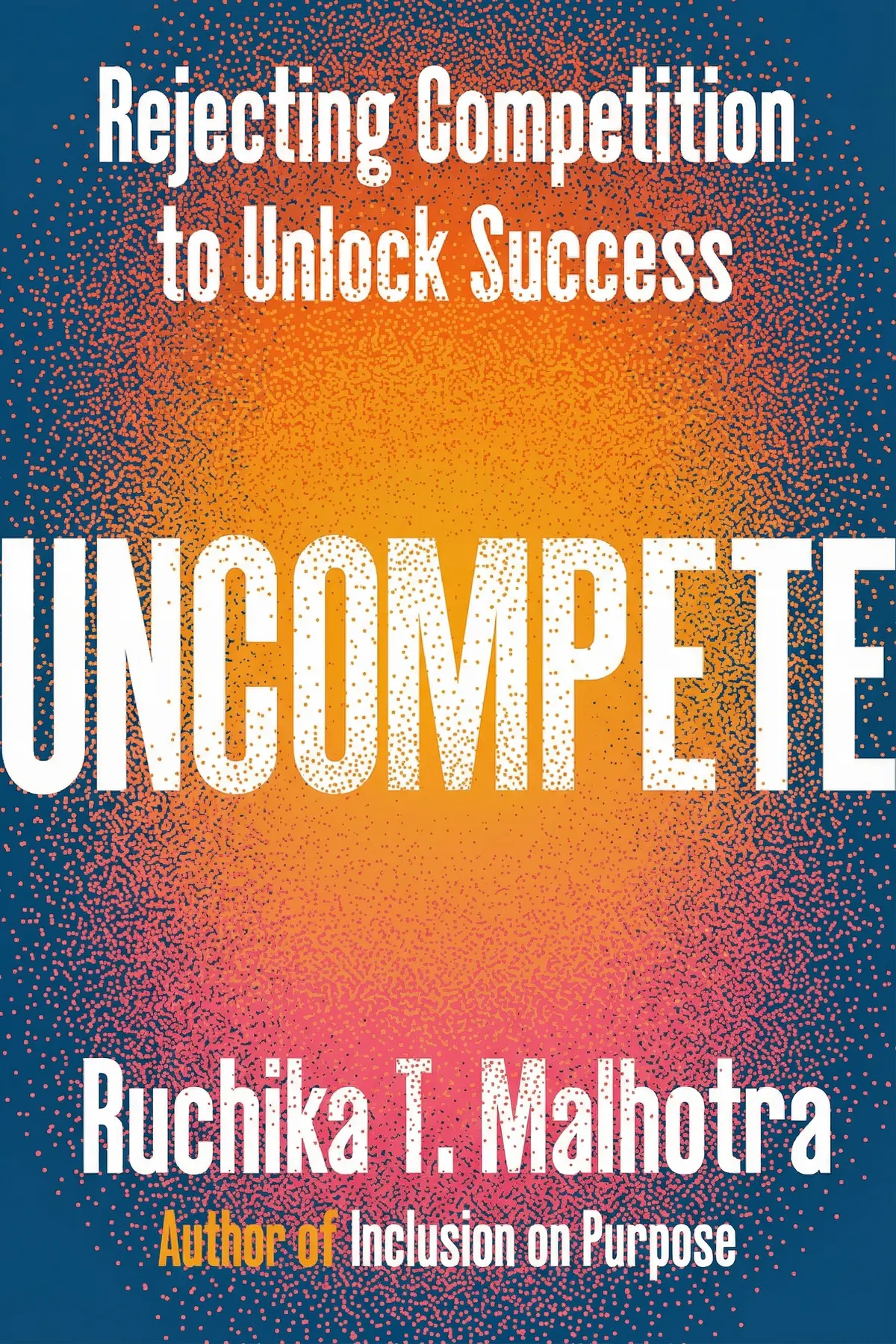
Uncompete challenges the modern obsession with rivalry and hustle. It offers a roadmap for replacing constant comparison with collaboration, helping you achieve sustainable fulfillment by prioritizing community, rest, and authentic personal success.
1 min 24 sec
We live in a culture that treats life like a giant scoreboard. From the moment we enter the classroom to the day we climb the corporate ladder, we are told that our value is relative—that for us to win, someone else has to lose. This constant pressure to outperform our peers doesn’t just make us tired; it fundamentally reshapes how we see ourselves and the world around us. It creates a lens of scarcity, where we believe there are only so many seats at the table, so much recognition to go around, and so many opportunities for happiness.
But what if this entire framework is a lie? What if the very competitive drive we’ve been told is essential for success is actually the primary obstacle to our fulfillment? This is the core provocation of our journey today. We are going to look at how the competitive trap was set for us long ago and how it continues to be reinforced by social media, corporate structures, and even our own internal monologues.
Throughout this summary, we will explore the throughline of uncompeting. This isn’t about being passive or losing your drive; it’s about shifting that drive away from rivalry and toward collaboration. We will look at how to protect your physical health from the ravages of hustle culture, how to genuinely celebrate the success of others, and how to define achievement on your own terms. By the end, you’ll see that the most radical thing you can do in a competitive world is to refuse to play the game and instead start building a community where everyone can thrive together.
2 min 17 sec
Uncover how your early life experiences and modern digital habits have quietly trained you to view life as a zero-sum game of comparison.
2 min 12 sec
Explore why the idea of ‘survival of the fittest’ is often misunderstood and how nature actually prizes cooperation over conflict.
2 min 11 sec
Learn how to transform negative comparison into genuine connection by changing your relationship with success and social media.
2 min 22 sec
Discover how setting boundaries and prioritizing mentorship can create a community where everyone wins together.
2 min 16 sec
Break free from hustle culture by prioritizing holistic rest and crafting a personal vision of achievement that doesn’t lead to burnout.
1 min 34 sec
The journey from competition to collaboration is both an internal revolution and a community-wide transformation. We have seen how the competitive structures we take for granted are not biological imperatives, but learned behaviors that take a staggering toll on our health, our relationships, and our sense of self. By understanding the roots of our conditioning and the myths of ‘survival of the fittest,’ we can begin to see a different path forward—one defined by the abundance of the natural world rather than the scarcity of the corporate world.
As you move forward from this summary, the invitation is to start small but think big. Begin by noticing that flash of envy and turning it into a moment of curiosity. Practice the art of the ‘gentle no’ to protect your boundaries, and look for opportunities to lift someone else up without asking what’s in it for you. Most importantly, give yourself permission to rest. Reject the idea that you must be in a state of constant motion to be valuable.
When we choose to uncompete, we aren’t just making our own lives better; we are helping to build a more inclusive and compassionate world. We are creating spaces where success isn’t a zero-sum game, but a shared experience. By defining success for yourself and honoring your own pace, you provide a powerful example for everyone around you. You prove that it is possible to be ambitious without being aggressive, and successful without being solitary. The race is only real if you keep running it. Today, you have the permission to stop, step off the track, and start walking toward a life of true, collaborative fulfillment.
In a world that constantly asks how you measure up against your peers, Uncompete offers a radical alternative. This exploration into our cultural obsession with winning reveals that the competitive drive we view as natural is actually a learned behavior that leads to burnout, isolation, and systemic exclusion. By dissecting the roots of our competitive conditioning—from childhood rankings to corporate stack-rating—this summary provides the tools to break free from the scarcity mindset. The promise of the book is a life defined by collaboration rather than conflict. It teaches readers how to transform malignant envy into genuine joy for others' achievements and how to build supportive communities that prioritize collective flourishing. Beyond just a professional guide, it addresses the physical toll of hustle culture, advocating for a holistic approach to rest and self-care. Ultimately, it’s about reclaiming your time and energy to live a life that reflects your true values, proving that success doesn't have to come at someone else's expense.
Ruchika T. Malhotra is a prominent voice in global inclusion and leadership strategy. As the founder of Candour, she works with organizations worldwide to foster more equitable environments. Her expertise is frequently featured in major publications like Harvard Business Review and The New York Times. Malhotra is the acclaimed author of Inclusion on Purpose, which earned the distinction of being MIT Press’s top-selling title in 2022. Her influence in the field of modern thought has been recognized by the Thinkers50 Radar list and by her designation as a LinkedIn Top Voice for Gender Equality.
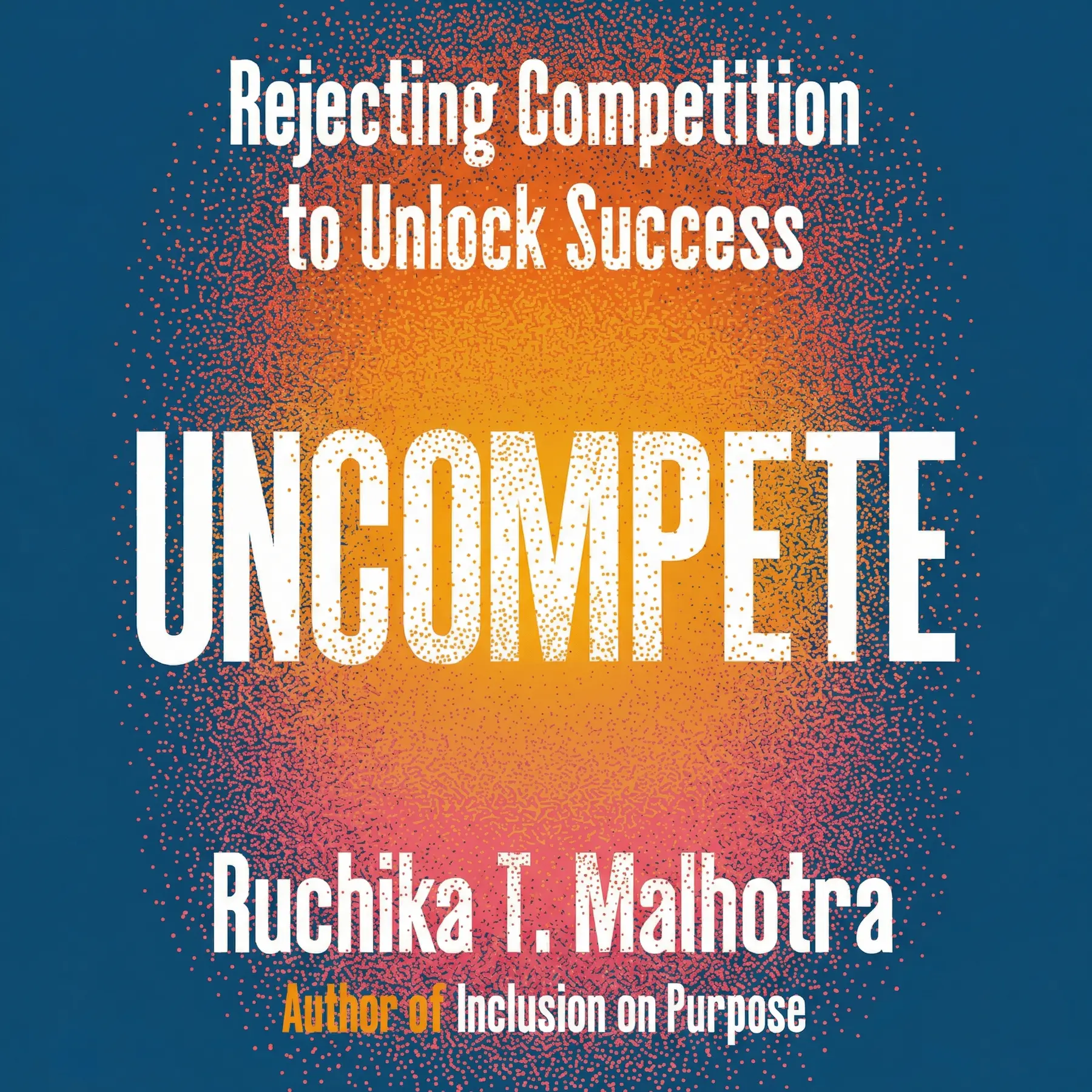
Listeners value how this work rethinks conventional rivalry, presenting an inspiring model centered on abundance and partnership rather than endless competition. While some listeners consider the methodology somewhat idealistic for intense corporate climates, they also point out that the text offers useful techniques for lowering burnout and finding personal happiness again. Furthermore, many are touched by the author’s relatable stories and the emphasis on "amplification," with one listener remarking that the idea of sponsoring others without expectation is "powerful stuff." The practices for uncompeting are viewed as compassionate and timely, helping listeners redefine success on their own terms.
Picked up Uncompete while I was drowning in a sea of KPIs and comparison, and it provided an immediate lifeline. Ruchika T. Malhotra doesn't just tell you to 'relax'; she explains why our brains are literally wired for this exhausting race. The concept of moving from a scarcity mindset to one of abundance felt revolutionary, even if it’s hard to practice daily. I’ve started catching myself whenever I feel that familiar twinge of envy when a colleague gets a win. Instead of spiraling, I’m trying to use her 'amplification' technique to lift others up alongside me. It’s not an overnight fix, but the book offers a roadmap that feels both sustainable and deeply humane. If you're tired of the hustle culture that treats rest as a sin, you need this on your nightstand. It is a powerful reminder that our worth isn't a rank.
Show moreWow. As an immigrant woman, I found the chapters on how colonization and systemic pressure shape our need to over-perform to be absolutely transformative. Ruchika T. Malhotra articulates feelings I’ve had for decades but could never quite put into words. We are taught that there is only one seat at the table, so we fight each other for it instead of building a larger table for everyone. The idea of 'uncompeting' isn't about being lazy or lacking ambition; it’s about redirecting that energy toward collective thriving. I particularly loved the section on sponsorship—moving beyond just mentorship to actually using your privilege to boost others. It’s a powerful call to action that makes you realize your success doesn’t have to come at anyone else’s expense. This is easily one of the most impactful books I’ve read this year. It changed my perspective on everything.
Show moreUncompete is the manifesto for the modern worker that we didn't know we desperately needed until now. Malhotra argues that this 'arrival fallacy' is a direct result of measuring our worth against others rather than our own internal values. The book is packed with actionable tools for reimagining success, focusing on community and rest as essential components rather than rewards. I found the chapter on social media particularly convicting; I didn't realize how much my digital habits were fueling my scarcity thinking. By setting boundaries and focusing on amplification, I’ve already felt a shift in my daily stress levels. It’s a compassionate guide that asks us to stop running a race we never signed up for. Truly a must-read for anyone feeling the weight of the endless 'more, more, more' culture that defines our current era.
Show moreAfter hearing the author speak on a podcast, I had to dive into the full text, and the chapter on amplification changed my networking strategy. Ruchika T. Malhotra provides a masterclass on how to use your influence to sponsor others without expecting anything in return. This concept of abundance—that there is enough room for everyone to succeed—is the exact opposite of what we’re usually told. In my experience, shifting from a mindset of rivalry to one of coalition building makes the work itself much more rewarding. The book is written with a lot of grace, acknowledging that this shift is difficult and goes against most of our training. It’s a very practical guide for anyone looking to lead with more empathy and less ego. I’m already seeing the ripple effects of these ideas in my own professional circle.
Show moreNot what I expected at all—in a good way! I thought this would be another 'be nice' self-help book, but it’s actually a sharp critique of the systems that profit from our anxiety. Malhotra shows how the 'winner takes all' mentality is a choice, not a biological necessity. The writing is punchy and the sentence structures kept me engaged throughout the entire reading experience. I particularly appreciated the focus on how competition erodes our physical health over time through constant cortisol spikes. It’s a sobering look at what we sacrifice when we prioritize ranking over relationship. To be fair, some sections on rest felt a little long, but the core message is too vital to ignore. This book will definitely stay with me for a long time, and I’ve already started recommending it to my colleagues.
Show moreThis book provides a necessary framework for surviving the modern workforce without losing your soul. Malhotra is brilliant at deconstructing the 'survival of the fittest' narrative that we’ve been fed since elementary school. She proves that cooperation is actually just as natural as competition, which was a huge relief to read. The author’s points about systemic inequality and how competition favors those already in power were incredibly sharp. I appreciated the blend of social critique and personal anecdotes that made the theory feel much more grounded. It's a refreshing take that forces you to look at your professional relationships through a lens of solidarity rather than rivalry. We need more voices like Ruchika's in the business world to challenge the destructive norms we've accepted as default.
Show moreFinally got around to reading this, and the timing couldn't have been better for my mental health. As someone who has always struggled with 'imposter syndrome,' Malhotra’s perspective was incredibly eye-opening. She suggests that what we call imposter syndrome is often just a rational response to being in environments that weren't built for us. By 'uncompeting,' we stop trying to fit into these narrow, exclusionary definitions of success. It’s a compassionate, well-researched, and deeply necessary read for anyone tired of the constant pressure to perform. The distinction between harmful envy and growth-oriented observation was a total game-changer for me personally. It’s time we all stopped measuring our worth by who we’ve managed to leave behind and started focusing on how many people we can bring along.
Show moreEver wonder why we’re so quick to see someone else’s success as our own failure? Malhotra tackles this head-on by exploring the roots of envy and the ways our institutions reward division. The book is a beautiful blend of lived experience and social analysis, making it feel both personal and professional. I was especially struck by her discussion on how competitive systems penalize caregivers and people with disabilities. It’s not just about personal mindset; it’s about recognizing the structural injustices that competition often hides. While the tone is mostly encouraging, it doesn't shy away from the hard work of unlearning decades of conditioning. My only minor gripe is that I wanted even more case studies on collaborative business models. Overall, it’s a brilliant rejection of the status quo that left me feeling much less alone.
Show moreGotta say, I didn’t realize how much of my identity was tied to being 'better than' until I read Malhotra’s breakdown of childhood conditioning. The book is timely and necessary, guiding you away from competition back to what we were built to do—collaboration! It will help you understand your scarcity, your envy, and leave you with actionable tools for reimagining abundance. Personally, I found the specific advice on digital boundaries to be the most helpful part of the text. While some of the corporate applications felt a bit optimistic for my current workplace, the internal shift in my mindset has been undeniable. This book challenges the traditional view of competition and offers a refreshing framework for reclaimining personal joy. It's a solid 4 stars that I'll likely revisit whenever I feel that urge to compare myself again.
Show moreTruth is, I have mixed feelings about this one despite really wanting to love it completely. The writing is compassionate and the research on how stress hormones affect our decision-making is fascinating. I can see how rejecting a competitive mindset would lead to better mental health and more joy. But looking at it from my position in a high-pressure sales environment, some of these concepts felt like they belonged in a different world. It’s hard to 'uncompete' when your mortgage depends on outperforming the person in the next cubicle. That said, the author’s critique of hustle culture is spot on and made me question why I’ve accepted this level of anxiety for so long. It’s a thought-provoking read, even if the practical application feels a bit out of reach for certain cutthroat industries right now.
Show moreRichard Wiseman
Margaret Heffernan
William B. Irvine
AUDIO SUMMARY AVAILABLE
Get the key ideas from Uncompete by Ruchika T. Malhotra, plus 5,000+ more titles in English and Thai.







