
18 min 41 sec
Unrequited: The Thinking Woman’s Guide to Romantic Obsession
Unrequited examines the psychological and biological roots of one-sided romantic obsession. Lisa A. Phillips blends personal narrative and scientific research to explore how rejection impacts the brain and how it can fuel creativity.
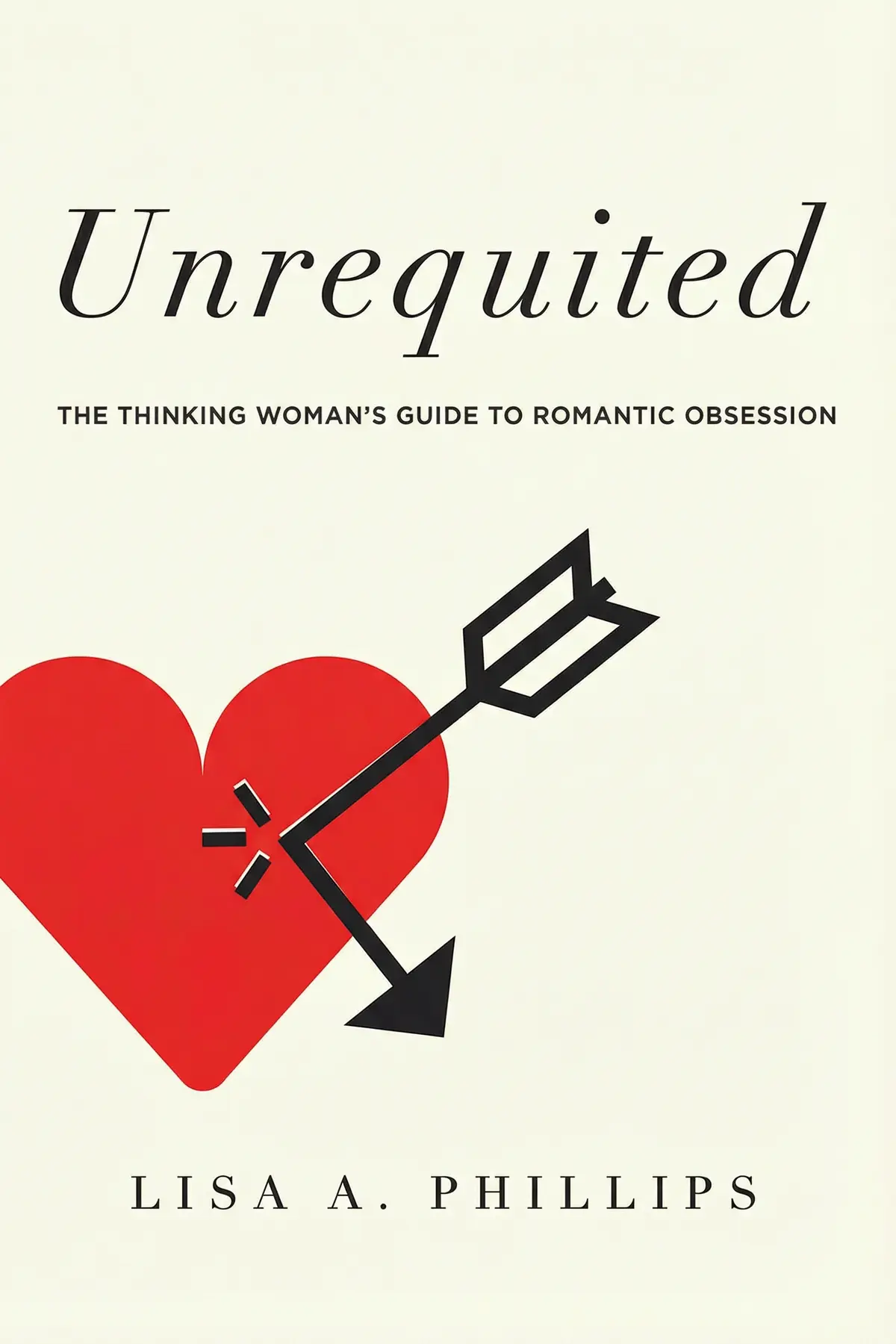
Table of Content
1. Introduction
1 min 45 sec
Imagine the scenario: you meet someone who seems to be your perfect match. Every conversation feels electric, every shared glance feels meaningful, and you are certain that you have found your soulmate. There is just one devastating problem—the other person doesn’t see it. They remain indifferent, or perhaps they have explicitly rejected your advances. This experience is more than just a minor disappointment; for many, it becomes a soul-crushing weight that dictates their every thought and action.
It is a universal human experience. Research suggests that a staggering ninety-three percent of us have felt the sting of rejection from a person we deeply loved. Most of us eventually lick our wounds and find a way to move forward. However, for a specific subset of people, rejection doesn’t lead to a slow healing process. Instead, it triggers an intense, agonizing obsession that can border on the self-destructive. What separates these individuals from the rest? Why does one-sided love drive some to the heights of artistic brilliance and others to the depths of despair?
This exploration into the mechanics of romantic obsession aims to peel back the layers of the human heart and brain. We will look at how society treats the pursuer based on their gender and how history has pathologized the state of being “lovesick.” We will also uncover the startling biological reality that being in love affects the brain in ways that are remarkably similar to addictive substances. This isn’t just a story of heartbreak; it is a throughline that connects our biology, our history, and our creative potential. By understanding the roots of this obsession, we can begin to see unrequited love as a profound, if painful, teacher about our own deepest needs and desires.
2. Societal Double Standards and the Gender of Pursuit
2 min 29 sec
Explore why society celebrates the persistent man as a hero while labeling the pursuing woman as desperate, and how fiction alters our perception of these roles.
3. The Evolution of Lovesickness as a Medical Condition
2 min 31 sec
Discover the long history of romantic obsession being treated as a physical illness and how the diagnosis changed from a mark of nobility to a sign of weakness.
4. The Addictive Chemistry of the Obsessed Brain
2 min 25 sec
Learn why the brain of a person in love looks startlingly similar to the brain of a drug addict, and why rejection only fuels the fire of desire.
5. Universal Biology and the Impact of Attachment Styles
2 min 27 sec
Break down the myths of gendered behavior in love and explore how childhood experiences shape the way we handle romantic rejection as adults.
6. When Infatuation Becomes a Descent into Madness
2 min 42 sec
Analyze the dark transition from romantic pining to stalking and learn how a loss of empathy can turn love into a narcissistic delusion.
7. The Creative Potential of the Lovelorn Soul
2 min 34 sec
Uncover the silver lining of rejection and see how the energy of unrequited passion can be transformed into profound artistic achievement.
8. Conclusion
1 min 48 sec
The journey through the landscape of unrequited love is one of the most difficult paths a person can walk. It is a territory filled with social stigma, biological addiction, and deep-seated psychological wounds. However, as we have seen, it is also a place where we can learn profound truths about ourselves. The obsession we feel for another is often a mirror, reflecting our own needs for validation, safety, and self-worth. By understanding that our brains are simply reacting to a potent chemical cocktail and that our history is shaping our present reactions, we can begin to take the first steps toward healing.
If you find yourself caught in the web of romantic obsession, remember that the intensity of your feelings is a testament to your capacity for passion and commitment. That energy belongs to you, not to the person who rejected you. You have the power to reclaim that focus and use it for your own growth. Whether through therapeutic techniques like cognitive-behavioral therapy or through the catharsis of creative work, you can move from a state of dependency to one of independence.
A practical first step in this process is to find a safe outlet for the things you desperately want to say. Instead of reaching for the phone to call the person who isn’t there for you, try writing a letter. Pour out every ounce of your longing, your anger, and your hope onto the page. Say everything you’ve been dying to say—but do not send it. This simple act of ‘getting it out’ can help break the cycle of intrusive thoughts and provide a sense of closure that you don’t need another person’s permission to achieve. Unrequited love may be a part of your story, but it doesn’t have to be the end of it. By looking inward, you can turn a source of suffering into a foundation for a stronger, more creative self.
About this book
What is this book about?
Have you ever found yourself consumed by thoughts of someone who simply doesn't feel the same way? In Unrequited, Lisa A. Phillips explores the complex and often painful world of one-sided love. This exploration goes beyond mere heartbreak, diving into the neurological and historical reasons why some people become romantically obsessed while others move on easily. Phillips investigates the double standards society imposes on women who pursue love, the chemical similarities between infatuation and drug addiction, and the ways in which our childhood attachments shape our adult relationships. The book promises a deeper understanding of the "lovesick" mind, offering a path from debilitating obsession toward self-discovery. It frames unrequited passion not just as a source of shame, but as a potent force that can be channeled into artistic expression and personal growth. By blending scientific data with historical anecdotes and contemporary interviews, the summary provides a comprehensive look at why we love those who don't love us back and how to reclaim our lives when obsession takes hold.
Book Information
About the Author
Lisa A. Phillips
Lisa A. Phillips is an accomplished journalist and author known for her book Public Radio: Behind the Voices. Her work has appeared in prestigious publications such as The New York Times, Psychology Today, and Cosmopolitan. A recipient of multiple awards for her reporting, Phillips also serves as a journalism professor at the State University of New York at New Paltz.
Ratings & Reviews
Ratings at a glance
What people think
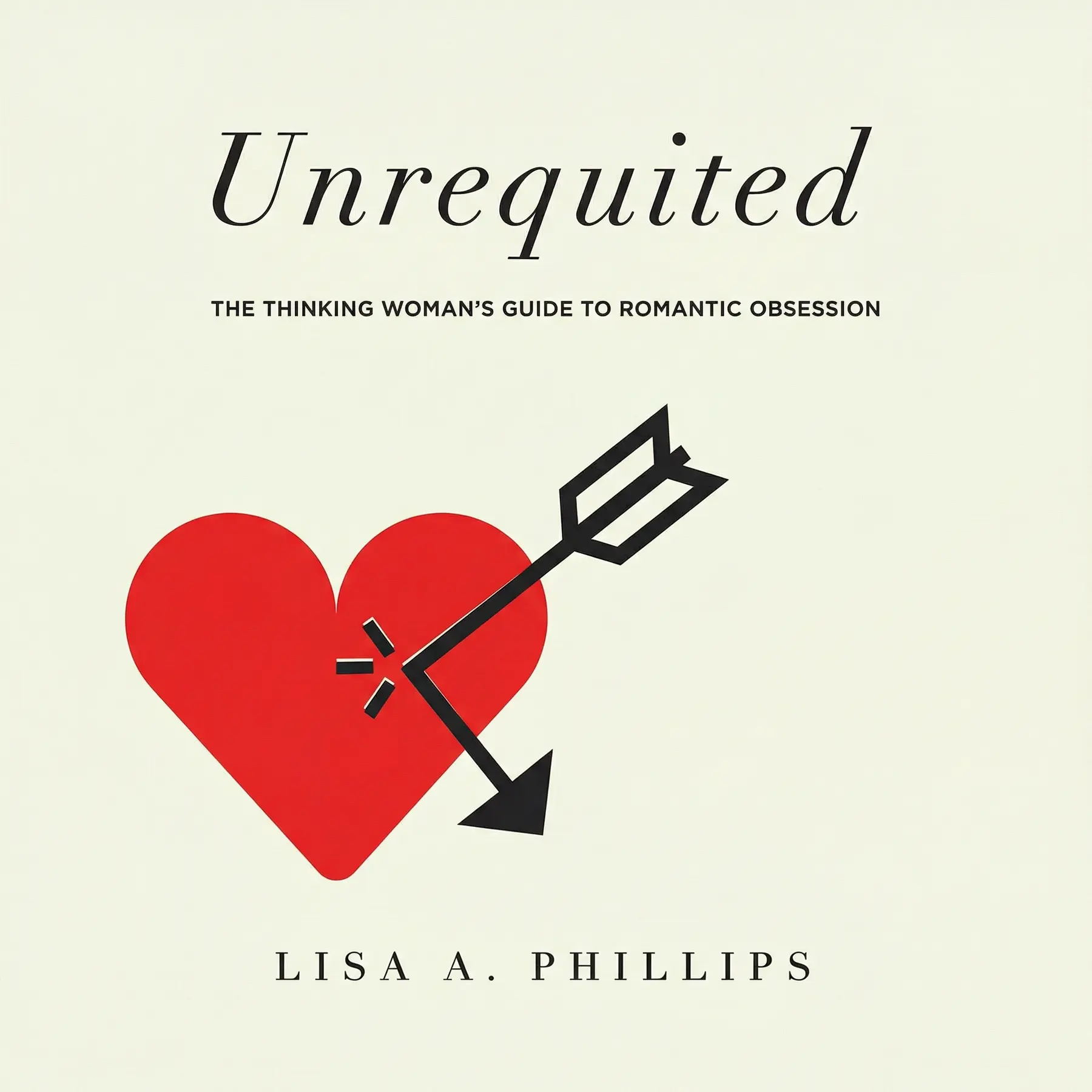
Listeners describe this work as thoroughly documented and skillfully composed, valuing its multi-dimensional look at unrequited love. They find it beneficial, with one listener stating it was especially valuable following a recent separation, and another noting how it clarified their own past. The title earns praise for its clear prose and relatable narratives, including one account that emphasizes the private details of an individual obsession.
Top reviews
Finn
This book offers a strikingly raw look at the psychology of obsession that many academic texts fail to capture. Phillips manages to weave her own history as a 'reformed stalker' into a broader tapestry of sociological research and historical analysis. I found the sections on the neuroscience of romantic addiction particularly enlightening because they explain that 'wired' feeling we get when love goes south. While some might find the heavy focus on literary examples a bit academic, I felt it added a necessary layer of cultural context. It’s a brave, well-researched exploration of a taboo subject that usually stays hidden in the shadows of shame.
Show moreSangduan
As someone who recently went through a messy split, reading this was like having a very smart friend explain exactly why my brain was betraying me. Phillips uses a multi-disciplinary approach that blends pop culture with hard research, making the concept of 'lovesickness' feel tangible and manageable. Not gonna lie, some of the stories about women stalking men were genuinely shocking and challenged my preconceived notions about gender roles in harassment. The writing is intimate and incredibly well-paced, preventing the data-heavy sections from becoming dry or overly academic. I’ve already recommended this to several friends who are struggling to let go of people who don't want them back.
Show moreLily
Phillips has crafted a masterpiece of vulnerability and intellectual curiosity that everyone should read immediately. By blending her own harrowing experiences with exhaustive research into narcissism and OCD, she provides a roadmap for understanding the darkest corners of romantic desire. I was particularly struck by the way she reframes the 'astro-nut' narrative, forcing the reader to feel genuine pity for someone the media turned into a joke. The book is incredibly well-written, striking a perfect balance between a college-level seminar and a late-night confession. It’s one of those rare books that manages to be both intellectually stimulating and deeply, painfully human.
Show moreJonathan
Picked this up on a whim after seeing it mentioned by the Crazy Ex-Girlfriend team, and it’s certainly an eye-opener. The most compelling part for me was the detailed look at the Lisa Marie Nowak case; it humanized a story I had previously only known through late-night comedy punchlines. Phillips writes with a clarity that makes complex psychological concepts accessible without feeling like she’s dumbing them down for a general audience. Not every chapter hit home, and I felt some of the heterosexual assumptions were a bit dated, but the core message is vital. It’s a fascinating, albeit uncomfortable, journey into the human heart's capacity for delusion.
Show moreDome
Finally got around to this after hearing so much buzz about its 'startling insights' into relationship dynamics. It’s a really smart take on how society perceives female obsession differently than male stalking, often dismissing it as mere 'heartbreak.' The author’s willingness to be the villain of her own story is admirable and adds a layer of authenticity that you don't get in typical psychology books. I appreciated the focus on how the brain treats romantic rejection like a physical withdrawal, which explains a lot of the 'pathetic' behaviors described. It’s well-studied and offers a lot to chew on, even if the case studies eventually start to blend together.
Show moreYongyut
Truth is, I wasn't prepared for how much this book would make me rethink my own past relationships. Phillips explores obsession as a twisted sort of reward system in the brain, which is both terrifying and oddly comforting to understand. The book is meticulously researched, drawing on everything from neuroscience to classic literature to explain why we chase the things that hurt us. It’s a very readable blend of personal narrative and clinical observation that kept me hooked from the first page. While it could have used more diversity in the types of couples featured, the psychological core of the book remains incredibly strong and relevant.
Show moreWoravit
Ever wonder where the line is between a normal breakup and actual stalking? This title dives deep into that grey area, though I’ll be honest, it gets a bit repetitive by the halfway mark. Phillips presents case after case of 'Person A' pursuing 'Person B' until it feels like we are just reading the same story with different names. To be fair, her insights into the historical differences between how men and women experience unrequited love are quite sharp. I just wish there was a bit more deep-dive into the psychological 'why' rather than just a catalog of desperate behaviors.
Show moreNew
The chapter on Greek and Roman mythology was a surprising highlight in what I thought would be a standard self-help book. Phillips maps ancient narratives onto modern-day obsession, showing that our collective struggle with unrequited feelings isn't a new phenomenon at all. However, I did find that the book stayed a bit too much on the surface when it came to the actual interviews with the targets of this obsession. It’s heavy on the 'pursuer' perspective, which is interesting, but it leaves the victims' experiences feeling like footnotes in someone else's drama. Still, the research is meticulous and the prose is consistently engaging throughout.
Show moreNaomi
Look, this is a solid read if you're interested in the intersection of love and mental health, but don't expect a definitive scientific text. It feels more like a very long, very well-cited essay than a breakthrough in criminological study. The personal anecdotes are the strongest part, providing a 'boots on the ground' view of what it’s like to lose your grip on reality over a person. It can be a bit repetitive, and I found myself skimming through some of the later examples that didn't add much new information. It’s definitely helpful for anyone currently experiencing these feelings, but for a casual reader, it might feel a bit like overkill.
Show morePacharapol
Not what I expected, and frankly, I found the author's own admissions more disturbing than insightful. While the book is marketed as a psychological study, it often felt like a justification for behaviors that are essentially criminal or at least deeply predatory. I struggled to connect with the 'reformed' narrative because the author never truly delves into the root causes of her obsession beyond surface-level explanations. It’s a passably interesting read if you like true crime or TVTropes-style analysis, but it lacks the clinical rigor I was hoping for. For me, it was more of a forgettable memoir than a groundbreaking piece of social science.
Show moreFeatured in
Readers also enjoyed
59 Seconds: Change Your Life in Under a Minute
Richard Wiseman
A Liberated Mind: How to Pivot Toward What Matters
Steven C. Hayes
Acting with Power: Why We Are More Powerful Than We Believe
Deborah Gruenfeld
All About Love: New Visions
bell hooks
AUDIO SUMMARY AVAILABLE
Listen to Unrequited in 15 minutes
Get the key ideas from Unrequited by Lisa A. Phillips, plus 5,000+ more titles in English and Thai.
- 5,000+ titles
- Listen as much as you want
- 7-day free trial
- Cancel anytime







