
21 min 39 sec
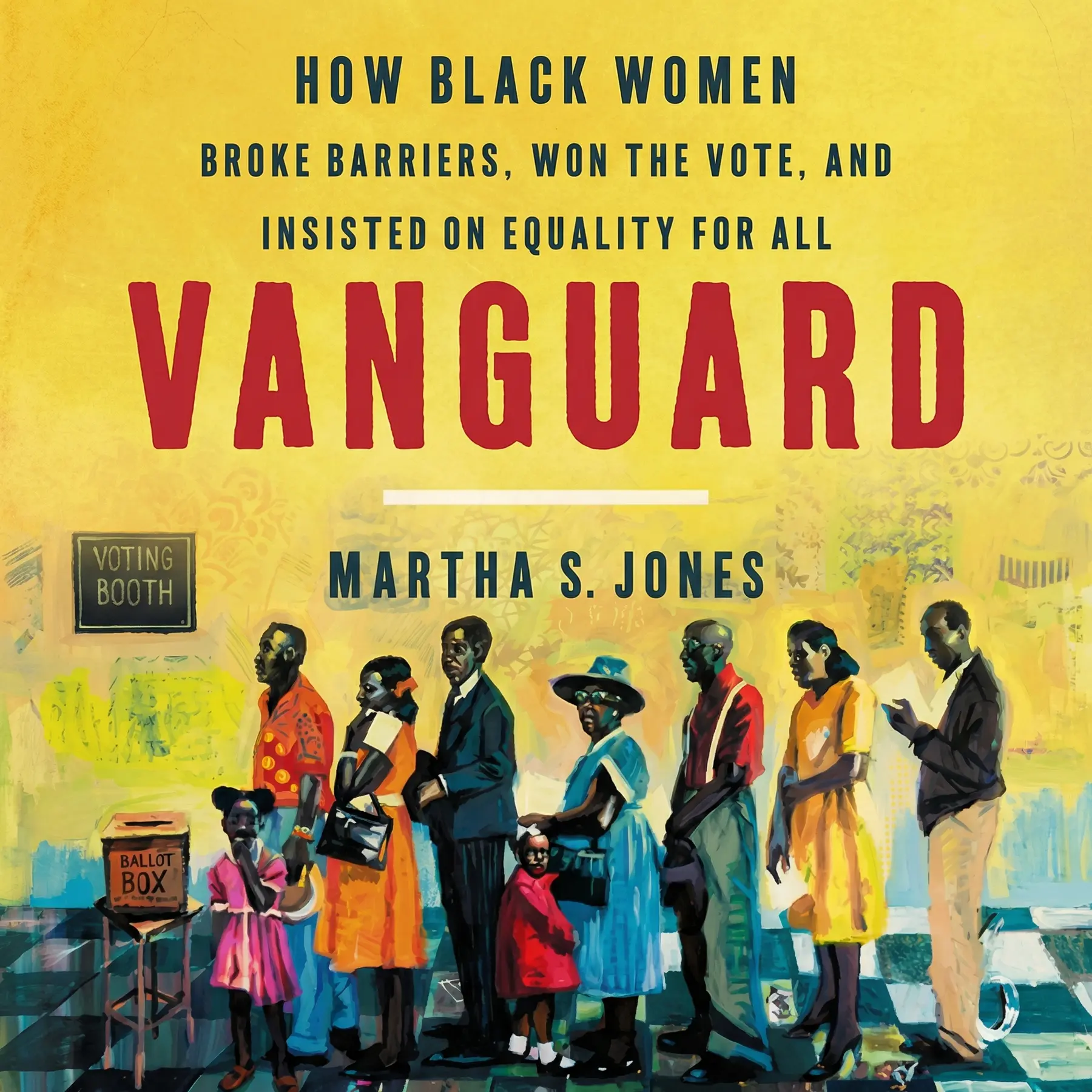
Vanguard: How Black Women Broke Barriers, Won the Vote, and Insisted on Equality for All
Vanguard traces the 200-year history of Black women as they spearheaded the fight for universal suffrage and equality, transforming American democracy by insisting that freedom must apply to everyone, regardless of race or sex.
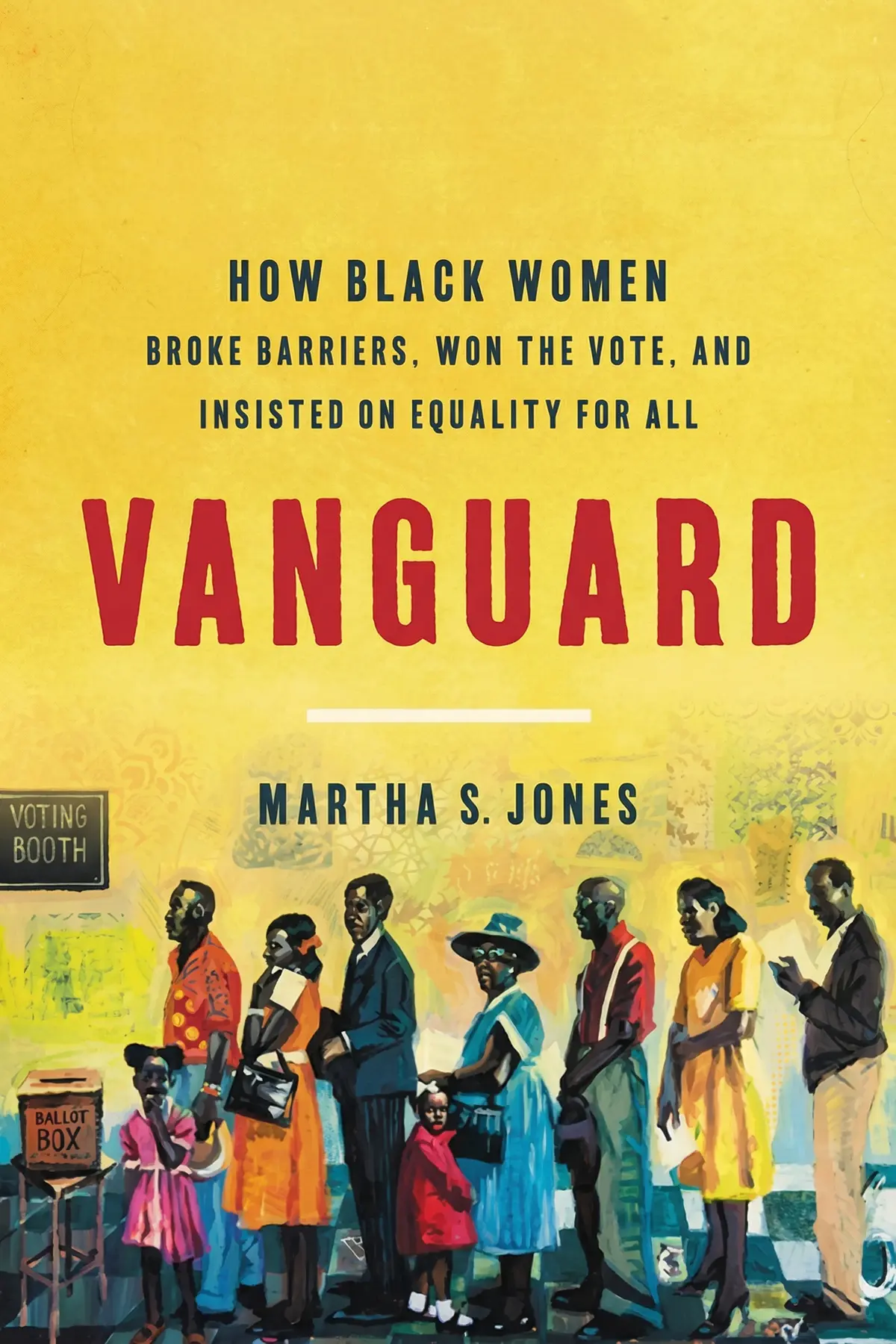
Table of Content
1. Introduction
1 min 57 sec
The American story is often told through its foundational documents, specifically the Declaration of Independence and the Constitution. These texts are frequently cited as the bedrock of modern liberty, famously proclaiming that all people are created equal and entitled to basic human rights. However, a closer look at the late eighteenth century reveals a stark contradiction. While the language was universal, the practical application of those rights was incredibly narrow. In the eyes of the early American political establishment, citizenship and the power to shape the nation’s future were primarily reserved for white men of property.
But the story of democracy didn’t end with those signatures in Philadelphia. Instead, it was the beginning of a long, arduous struggle to expand that definition of ‘we the people.’ At the very front of that struggle were Black women. They were not just participants in someone else’s movement; they were the vanguard. They recognized early on that the fight for freedom was incomplete if it only addressed race or only addressed gender. To them, these issues were inseparable.
Over the next few centuries, Black women organized, petitioned, and led campaigns to end slavery and secure the right to vote for everyone. They faced a unique double burden, fighting against the prejudices of white-led suffrage groups and the patriarchal restrictions within their own communities. Despite these barriers, they remained the most consistent voices for a truly inclusive democracy.
In this summary, we are going to trace that lineage of activism. We’ll meet women who escaped bondage to become preachers, entrepreneurs who funded the abolitionist cause, and organizers who took their fight all the way to the White House. We will see how their persistence eventually paved the way for the radical legislative changes that desegregated American life. This is not just a history of a single movement, but a chronicle of how Black women insisted on a version of America that actually lived up to its own rhetoric.
2. The Radical Shift of the Abolitionist Movement
2 min 16 sec
Early efforts to end slavery were slow and cautious, but a new wave of radicalism in the 1830s allowed women to find their voice and connect their own struggles for autonomy with the fight for liberation.
3. The Internal Barriers of Racial Exclusion
2 min 11 sec
Even within organizations dedicated to freedom, Black women often found themselves marginalized as leadership positions were reserved for white activists.
4. Creating Independent Paths to Authority
2 min 19 sec
Faced with exclusion from traditional power structures, Black women turned to the pulpit and literary societies to establish their own intellectual and spiritual autonomy.
5. The Inseparable Nature of Gender and Race
2 min 17 sec
The tragic case of Celia and the powerful witness of Sojourner Truth highlighted why the struggle against sexism and slavery had to be fought simultaneously.
6. The Promise and Betrayal of Reconstruction
2 min 31 sec
The end of the Civil War brought a flurry of constitutional amendments that seemed to promise a new era of equality, only for those gains to be systematically dismantled.
7. The Fight for Universal Suffrage
2 min 07 sec
As the mainstream suffrage movement began to compromise on racial equality, Black women founded the NACW to ensure that the demand for the vote remained truly universal.
8. Activism in the Heart of the Jim Crow South
2 min 01 sec
After the 1920 victory for women’s suffrage, Mary McLeod Bethune focused on the ground-level struggle to ensure that Black women could actually exercise their new rights in the face of violent opposition.
9. From the Grassroots to the Halls of Power
2 min 22 sec
By building strategic alliances and establishing a presence in Washington, Black women moved the needle on federal policy and laid the groundwork for the 1965 Voting Rights Act.
10. Conclusion
1 min 38 sec
The journey from the American Revolution to the mid-twentieth century reveals a consistent throughline: the unwavering leadership of Black women in the quest for a true democracy. We have seen how they navigated the complexities of the abolitionist movement, founded their own independent religious and intellectual spaces, and stood at the intersection of the most difficult legal battles of their time. They were often the first to recognize that justice is indivisible—that you cannot have racial equality without gender equality, and vice versa.
Their story is one of incredible resilience. When mainstream suffrage groups chose political expediency over racial justice, Black women stood firm on the principle of universal rights. When local laws and violent groups attempted to silence them in the Jim Crow South, they responded with education and organized defiance. And when the opportunity arose to influence the federal government, they took their seats at the table and helped reshape the very party that would eventually pass the landmark civil rights legislation of the 1960s.
The Voting Rights Act of 1965 was not an inevitable outcome of American history; it was a hard-won victory fueled by two centuries of activism from the vanguard. Their legacy reminds us that democracy is a process of constant expansion and that the most marginalized voices are often the ones with the clearest vision of what true freedom looks like. To honor this history, we can look at our own communities and ask: Who is being excluded today? And how can we apply that same steadfast commitment to universal rights in our own time? The work of the vanguard continues, and their history serves as a powerful map for the struggles that still lie ahead.
About this book
What is this book about?
Vanguard offers a sweeping historical narrative that centers the activism of Black women in the American story of liberty. While traditional histories often sideline their contributions or frame them as secondary to white-led movements, this summary explores how Black women were actually the leaders—the vanguard—who pushed the nation to live up to its founding promises. From the early abolitionist days of the 1830s to the landmark legislative victories of the mid-twentieth century, the book highlights the specific challenges these women faced at the intersection of racism and sexism. The promise of the book is a complete reframing of how we understand the civil rights and suffrage movements. It demonstrates that Black women did not just want the vote for themselves; they demanded a biracial democracy that ensured justice for all citizens. By looking at figures like Mary McLeod Bethune and Sojourner Truth, listeners will see how these pioneers built their own political structures and navigated complex alliances to dismantle slavery, challenge Jim Crow, and eventually secure the Voting Rights Act of 1965.
Book Information
About the Author
Martha S. Jones
Martha S. Jones is a distinguished professor of history at Johns Hopkins University in Baltimore. A respected voice in her field, she has served as the co-president of the Berkshire Conference of Women Historians, which is the oldest association of its kind in the United States. In addition to her academic leadership, she is a member of the executive board for the Society for American Historians. Jones is also an accomplished author of several books, including Birthright Citizens and All Bound Together, and she contributes frequently to major publications like the New York Times, the Atlantic, and the Washington Post.
Ratings & Reviews
Ratings at a glance
What people think
Listeners view this work as a vital and life-changing historical account that sheds light on the crucial contributions of Black women to the struggle for parity. Although views differ regarding the academic style and the survey-based organization, listeners value its function as a comprehensive "who’s who" of both well-known and hidden activists. Furthermore, they appreciate how the narrative fixes historical inaccuracies, as one listener pointed out that the research shows activism "started a full century sooner" than typically understood. They also suggest that the thorough descriptions of individuals such as Ida B. Wells and Maria Stewart render it an "important read" for grasping the roots of social reform. Additionally, listeners highlight how the writing effectively showcases the persistence of women who frequently stood at the "vanguard" of significant causes even when ignored by conventional history.
Top reviews
Rome
Jones has truly shifted my perspective on when the struggle for suffrage actually began. I always thought the movement started much later, but Vanguard proves that Black women were organizing in churches and clubs a full century earlier than common myths suggest. It’s an essential corrective that highlights figures like Mary Ann Shadd Cary alongside better-known names. While the academic tone can feel a bit dense in the middle sections, the sheer amount of research is breathtaking. These women weren’t just participants; they were the pioneers pushing this country toward its ideals even when those ideals didn't include them. I found myself frequently highlighting passages to share with friends. It’s not just a history book; it’s a manual on resilience and political strategy. If you think you know the story of women's rights in America, this book will prove you wrong in the best way possible.
Show moreSangduan
Wow, I was blown away by the sheer resilience of the women documented in this volume. Vanguard isn't just a title; it's a description of how these women were consistently at the front lines of progress. Jones highlights how activists like Sojourner Truth and Ida B. Wells navigated a world that tried to silence them at every turn. The book is dense, yes, but that’s because there is so much history to recover. I loved how it traced the movement all the way to modern figures like Stacey Abrams. It makes you realize that today’s political landscape didn't just happen by accident. Every gain was fought for by women whose names are rarely in textbooks. This is an essential read for anyone interested in social justice or American history. It’s a bit of a commitment to get through, but absolutely worth the effort.
Show morePing
The chapter on Maria Stewart was a revelation for me. I had never heard her name before, and now I can't believe she's not a household name like Susan B. Anthony. Jones has done a tremendous service by bringing these voices back into the light. The book is transformative because it changes the timeline we’ve all been taught. It proves that Black women have been the vanguard of democracy for centuries, insisting on equality for everyone, not just a select few. The writing is definitely on the academic side, but the passion Jones has for her subjects shines through. It’s a heavy read—both in terms of information and the themes of systemic oppression—but it’s one that every American should probably read at least once. It corrected so many of the myths I grew up believing.
Show moreFilm
Finally got around to reading this corrective to the standard American history curriculum. Vanguard is a masterpiece of research that highlights how Black women were often the most consistent defenders of democratic values in the US. I was struck by how many of the strategies used by 19th-century activists are still being used by organizers today. Jones connects the past to the present with incredible skill, showing the direct line from the pulpit to the modern ballot box. While it is a 'survey' style book, I think that's necessary to show the sheer scale of the movement. It’s not just about one or two extraordinary people; it’s about a massive, sustained effort by thousands of women across generations. This should be required reading in colleges across the country. Truly a groundbreaking work.
Show moreFord
Picked this up because I wanted to learn about more than just the usual historical figures we hear about every February. Martha S. Jones does an incredible job of unearthing the stories of women who fought on multiple fronts—against both racism and sexism—long before the 19th Amendment was even a glimmer in the eye of white suffragists. The focus on the pulpit and publishing as avenues for activism was particularly fascinating to me. I did find the structure a little loose, wandering through different decades and locations without many clear transitions. Sometimes it felt like I was reading a collection of mini-biographies rather than a single book. However, the information itself is so vital that I was willing to overlook the somewhat muddled organization. It really challenges the white-centered narrative of the suffrage movement.
Show moreKanchana
Ever wonder why our history books leave out so many of the women who actually built these movements? Jones answers that question by showing exactly who they were and what they did. From the early days of the AME church to the civil rights struggles of the 20th century, this book is a massive recovery project. I particularly enjoyed learning about the women’s clubs and how they organized for the vote. My only real gripe is that the author sometimes adds speculative 'feelings' or internal thoughts to the women she's profiling. It felt a little bit like she was trying to bridge the gap between history and fiction, which didn't always work for me. I prefer a more straightforward presentation of facts without the added 'talismans of good luck' and imaginary nerves. Still, the breadth of the work is undeniable.
Show moreTippawan
After hearing the audiobook narrated by Mella Lee, I have complicated feelings about the presentation. The narrator is very dramatic, which sometimes made the history feel more like a performance than a scholarly work. That being said, the content itself is top-notch. I had no idea that Black women's activism was so deeply rooted in the mid-1800s. Jones does a great job showing how they were often betrayed by white suffragists who prioritized their own rights over racial equality. It’s an eye-opening look at the intersectional nature of the struggle for the ballot. The book can be a bit overwhelming with the number of activists it introduces, so you might need to take it in small doses. If you're looking for a deep dive into one person, this isn't it, but for a broad understanding of a movement, it’s excellent.
Show moreYongyut
To be fair, I found the prose a bit too professorial and dry for my taste. I appreciate the massive undertaking of documenting so many unsung activists, but the book often feels like a 'who’s who' list rather than a cohesive narrative. It jumps from one person to another so quickly that it becomes hard to form an emotional connection with any individual. I wanted a deeper dive into figures like Fannie Lou Hamer, but instead, I got a broad survey that lacked connective tissue. The author clearly knows her stuff, and the historical rigor is impressive, yet the reading experience felt like a chore at times. It’s an important reference work, but don’t go into it expecting a fast-paced biography. It serves its purpose as a foundational text for those new to Black women's political history, though I wish it had a stronger, more focused thesis.
Show moreKiattisak
Frankly, the lack of a central thesis made this a difficult read for me to get through. While the information is undoubtedly important, it often feels like a long list of political activities without enough analysis linking them together. I kept waiting for a 'big picture' moment that never quite arrived. Instead, we get a quick survey of dozens of women, which left me wanting more depth on each of them. The paucity of recorded history for some of these pioneers is likely the reason for the brevity, but it still makes for a fragmented reading experience. It’s a good reference book to keep on your shelf if you need to look up a specific activist. However, as a cover-to-cover read, it lacked the narrative drive I usually look for in historical non-fiction.
Show moreBae
Not what I expected based on the blurbs, as it felt more like an encyclopedia than a narrative. The author tries to pack in so many names and dates that the 'greater arc' of the history gets completely lost in the weeds. I felt like I was reading a series of facts rather than a compelling story. There’s also a lot of academic jargon and catchwords that made the reading experience quite alienating for a layperson like myself. Truth is, I struggled to stay engaged because the writing style felt so clinical. I understand the need for rigor, but the lack of personal detail made it hard to retain anything I read. I stopped halfway through because I felt like I was just skimming names I wouldn’t remember ten minutes later. It might work well as a textbook, but as a general non-fiction read, it falls short of being engaging.
Show moreReaders also enjoyed
Alexander the Great
Philip Freeman
A History of Iran: Empire of the Mind
Michael Axworthy
Afropean: Notes From Black Europe
Johny Pitts
A History of the World in 6 Glasses
Tom Standage

A Long Way Gone: Memoirs of a Boy Soldier
Ishmael Beah
AUDIO SUMMARY AVAILABLE
Listen to Vanguard in 15 minutes
Get the key ideas from Vanguard by Martha S. Jones, plus 5,000+ more titles in English and Thai.
- 5,000+ titles
- Listen as much as you want
- 7-day free trial
- Cancel anytime







