
12 min 45 sec
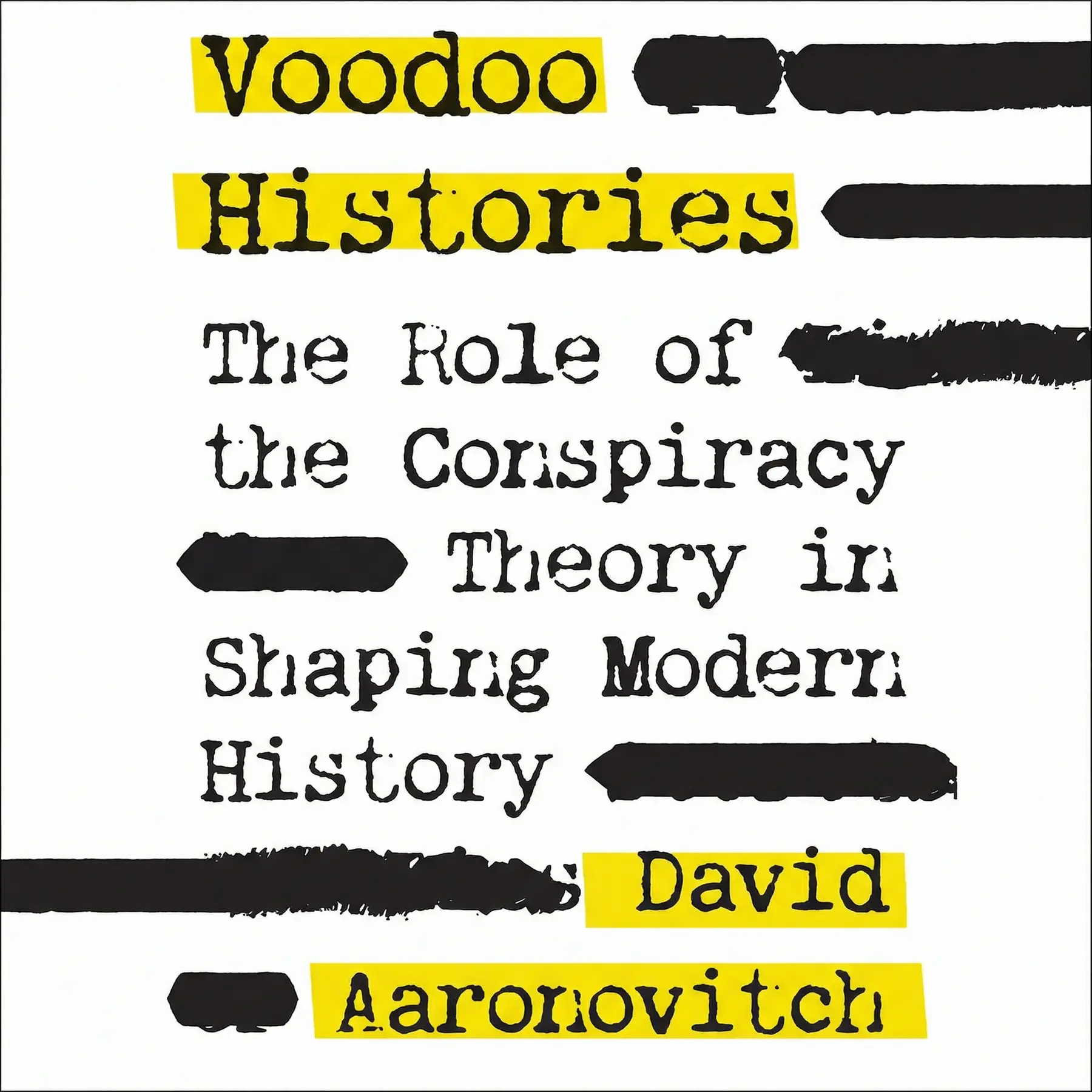
Voodoo Histories: The Role of the Conspiracy Theory in Shaping Modern History
Voodoo Histories investigates the enduring power of conspiracy theories. David Aaronovitch explores the psychological and political motivations behind these alternative narratives and why they often persist despite a complete lack of evidence.
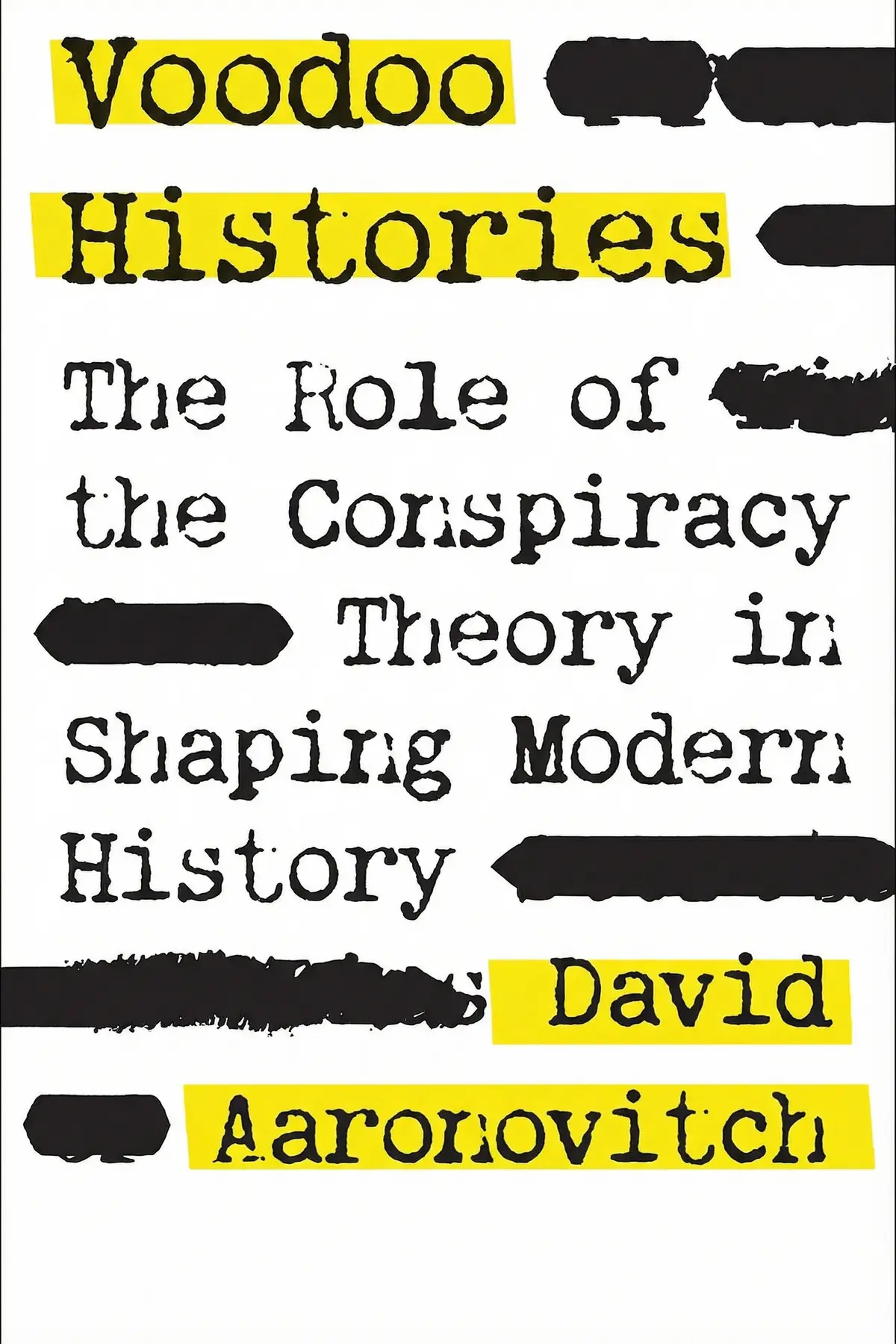
Table of Content
1. Introduction
1 min 31 sec
Imagine looking up at the sky and seeing the thin, white plumes trailing behind a jet engine. To most, these are simple contrails—water vapor freezing in the high altitude. But for a growing number of people, these are ‘chemtrails,’ a deliberate release of mind-altering chemicals by a shadowy government. At first glance, such ideas seem like the stuff of late-night science fiction. Yet, as we will see, these theories are far from fringe anomalies; they are a persistent feature of modern society.
In this exploration of Voodoo Histories, we are going to pull back the curtain on why these narratives are so incredibly sticky. Why do they survive even when the evidence against them is overwhelming? We often assume that conspiracy theorists are simply lacking information, but the reality is much more complex. It turns out that these stories satisfy a very deep, very human hunger for a world that makes sense.
We live in a world that can be frighteningly random. Tragedies happen without warning, and political shifts can leave us feeling powerless. In this environment, the idea that someone is in control—even if that ‘someone’ is a villainous cabal—can actually be more comforting than the idea that no one is in control at all. Over the next few sections, we will examine the mechanics of these theories, the psychological needs they meet, and the heavy price society pays when we choose ‘voodoo’ history over the messy, complicated truth.
2. Defining the Difference Between Plots and Theories
2 min 10 sec
Discover why an actual secret agreement is fundamentally different from a conspiracy theory and how a simple logical tool helps us tell them apart.
3. The Architecture of False Proof
1 min 54 sec
Explore how circular logic and the weaponization of minor doubts can create a powerful, yet entirely hollow, illusion of truth.
4. The Human Need for a Managed World
1 min 59 sec
Learn why we find comfort in the idea of a secret hand controlling the world, especially when our own lives feel chaotic or unfair.
5. The Seductive Power of the Secret Truth
1 min 59 sec
Examine our cultural obsession with celebrity tragedies and the thrill of feeling like an ‘insider’ who knows the real story.
6. When Reassurance Turns to Catastrophe
1 min 57 sec
Reflect on the dangerous consequences of trading facts for myths and how the quest for order can lead to real-world tragedy.
7. Conclusion
1 min 15 sec
As we have seen, the world of conspiracy theories is not just about ‘crazy’ ideas; it is a mirror reflecting our deepest human anxieties. From the need for order in a chaotic world to the desire for a more exciting narrative than the one provided by history books, these voodoo histories serve a purpose. They offer a simple answer to complex questions and a sense of belonging to those who feel left behind by the march of time.
However, the price of this comfort is the abandonment of truth. When we favor the complex plot over the simple fact, we lose our grip on reality. The most important lesson we can take from David Aaronovitch’s work is the value of intellectual humility. It is okay to admit that the world is sometimes random, that accidents happen, and that no one—not even a secret society—is fully in charge.
The next time you encounter a theory that seems too perfect to be true, or a secret that only a few ‘enlightened’ people know, remember the power of the simplest explanation. Use Occam’s razor to shave away the layers of speculative motive and circular logic. By choosing the messy truth over the polished myth, we protect ourselves from the dangerous allure of voodoo histories and remain grounded in the real world, however unpredictable it may be.
About this book
What is this book about?
Have you ever wondered why, in an age of unprecedented access to information, so many people still believe that the moon landing was a Hollywood production or that secret societies run the world? Voodoo Histories provides a deep dive into the architecture of the conspiracy theory. David Aaronovitch argues that these stories are not just eccentric hobbies but are deeply rooted in our human desire for order and meaning. Through various historical lenses—from the tragic death of Princess Diana to the dark origins of the Holocaust—this summary explores how we construct these 'voodoo' narratives to explain away the chaos of life. The book promises to equip you with the logical tools, like Occam’s Razor, to distinguish between actual clandestine plots and the elaborate myths we create to soothe our anxieties. It is an essential guide for anyone looking to understand the intersection of psychology, politics, and historical truth in a world increasingly filled with misinformation.
Book Information
About the Author
David Aaronovitch
Since the 1980s, David Aaronovitch has been an award-winning journalist for radio, TV and print. His first book, Paddling to Jerusalem, won the Madoc prize for travel literature in 2001, and his second, Voodoo Histories, was a Sunday Times top-ten best seller.
Ratings & Reviews
Ratings at a glance
What people think
Listeners find the work thoroughly researched, highlighting the extensive bibliography, and appreciate its readability as an engaging experience. The quality of the writing earns positive marks. Perspectives on the conspiracy theory content are varied; one listener describes the structure as solid, while others express differing views. The book's tempo also sees split opinions, with one listener experiencing it as fast-paced while another notes it drones on at a steady pace.
Top reviews
Mind
As someone who finds the psychology of belief fascinating, this was a deeply satisfying dive into the 'voodoo' of history. Aaronovitch isn’t just debunking; he’s analyzing why we crave these vast, interconnected narratives like the Protocols of the Elders of Zion. Frankly, the way he connects the dots between historical paranoia and modern-day skepticism is masterful. He uses Occam’s Razor like a machete to clear through the thicket of misinformation surrounding Pearl Harbor and Marilyn Monroe. It works. The pace moves at a steady clip, though some of the more obscure European theories might test your patience if you aren't a history buff. It’s an intellectual cold shower. You'll walk away feeling a lot more grounded in reality, even if reality is a bit more boring than a CIA plot.
Show moreWittaya
Aaronovitch presents a compelling and necessary defense of the 'official version' in an era where facts are increasingly treated as mere opinions. His exploration of the 'Elders of Zion' is a chilling reminder of how these lies can have devastating real-world consequences. The writing is incredibly polished, and he has a knack for finding the exact detail that makes a theory crumble under its own weight. I found the section on how modern media feeds these narratives to be the most relevant and terrifying part of the book. It’s a massive, ambitious project that largely succeeds in mapping out the dark shadow of our secular world. Despite some dense political passages, the overall impact is one of clarity and intellectual honesty. A must-read for anyone who cares about the truth in a world full of voodoo.
Show moreKevin
Finally got around to reading Aaronovitch's takedown of the world's most enduring myths, and it's quite the ride. He meticulously dismantles the 'what-ifs' surrounding Princess Diana and JFK with a sharp, almost surgical wit. To be fair, some sections feel a bit heavier on the British political history than I expected. However, the sheer volume of evidence he stacks against the 'truthers' is undeniably impressive. It’s an entertaining read that doesn't just call people crazy but explains the structural need for these stories. Ever find yourself scrolling through 9/11 forums at 3 AM? This is the perfect antidote for your brain. The writing quality remains consistently high, even when the subject matter gets dark or overly dense. A solid, enlightening piece of non-fiction that feels more relevant every day.
Show moreTalia
This book hits that sweet spot between academic rigor and breezy, conversational prose that makes non-fiction actually enjoyable. I was particularly struck by the chapter on the Da Vinci Code and how easily a hoax can morph into 'hidden history' for the masses. Truth is, the author’s sarcasm is a bit of an acquired taste, but it serves a purpose in highlighting the absurdity of some claims. The bibliography is extensive, proving that he did the legwork before firing off these critiques. While some might find the debunking a bit too dismissive, I found it refreshing to see logic applied so ruthlessly. My only real gripe is that the middle section regarding the Cold War feels a bit repetitive after a while. Still, it’s a comprehensive look at how a lack of full disclosure becomes fertile ground for the wildest imaginations.
Show moreBee
Picked this up after hearing a lot about it on various podcasts, and it mostly lived up to the hype. The way Aaronovitch handles the 'voodoo' of 9/11 and the Iraq war is especially timely and well-reasoned. He manages to make the mundane reality of incompetence seem far more plausible than the 'theatre' of a perfectly executed conspiracy. To be fair, the book does require a fair bit of concentration as the sentences can get quite long and descriptive. It’s not a light beach read, but it’s an essential one for anyone trying to navigate the modern information landscape. I liked how he used 'Cui Bono' to strip away the glamour of these dark stories. Even with the occasional dip in momentum, the quality of the insights makes it a worthwhile investment of time.
Show moreUdom
The chapter on the moon landing hoax was what drew me in, but the rest of the book kept me wavering between fascination and fatigue. Aaronovitch is clearly an expert, yet the book occasionally drones on at a steady pace that made my eyes glaze over during the longer political segments. It's well-researched, certainly, but the sheer density of names and dates can feel like a bit much for a casual reader. In my experience, the best parts are when he tackles the 'Cui Bono'—asking who actually benefits from these elaborate lies. While the writing is sharp, the structure feels a bit disjointed as he jumps from the 1920s to the 2000s and back again. It’s a decent enough read if you’re looking for facts, but don’t expect a fast-paced thriller. A middle-of-the-road experience that provides good information without ever truly gripping me.
Show moreTippawan
Ever wonder why your uncle thinks 9/11 was an inside job despite all evidence to the contrary? Aaronovitch attempts to answer that by looking at the 'godless malignancy' we project onto our leaders. Personally, I enjoyed the British perspective, especially the deep dive into the death of Princess Diana, which felt very thorough. However, the tone can be quite condescending at times, which might turn off anyone who isn't already a hardcore skeptic. To be fair, it’s hard to stay objective when dealing with people who believe in lizard royals, but a bit more empathy for the 'meaning-seeking' nature of humans would have been nice. The book is well-structured in terms of topics, but the energy fluctuates wildly between chapters. It’s a useful tool for arguing at dinner parties, but perhaps not the definitive psychological study I was hoping for.
Show moreThida
Look, I appreciate the effort that went into this comprehensive bibliography, but the overall reading experience was a bit of a mixed bag. The author spends a lot of time on the 'Protocols' and early 20th-century myths, which are important but felt slightly dry compared to modern conspiracies. I found the analysis of the 'Robin Hood syndrome' to be the most insightful part of the entire text. It explains why we want to believe the little guy is being crushed by a vast, evil machine. But the book's pace is a real issue; it feels like it could have been fifty pages shorter without losing much substance. It’s an important work, no doubt, but it lacks the 'pop' that makes other skeptical books so hard to put down. Good for reference, but a bit of a slog to get through from cover to cover.
Show moreElise
Not what I expected, to be honest, as I was looking for more of a psychological breakdown rather than a dense historical recount. The author’s relentless use of sarcasm makes it feel like he’s shouting at the reader for being gullible. While his dismantling of the JFK and RFK theories is factually sound, the delivery is so arrogant that it becomes hard to enjoy. Not gonna lie, I almost put it down during the second chapter because the prose felt so unnecessarily convoluted. It's a shame because the research is clearly there, and he makes some excellent points about the 'theater' of public inquiries. If you want a dry, academic debunking of every major event since 1900, this is your book. But if you’re looking for a balanced look at why people think this way, you might find this approach too one-sided.
Show morePan
Gotta say, the book's promise of being an 'entertaining read' didn't quite hold up for me during the later chapters. It started strong with a biting critique of the Da Vinci Code, but then it began to feel like a repetitive list of reasons why everyone else is wrong. While the bibliography is top-notch, the narrative voice is so dismissive that it almost feels like he's preaching to the choir. The pace is slow, and several sections on British scandals felt too niche for a general audience. It's well-researched, but I struggled to stay engaged when the tone felt so relentlessly cynical. It works better as a series of essays rather than a cohesive book. Not a total waste of time, but certainly not as enlightening as the premise suggests.
Show moreReaders also enjoyed
1491: New Revelations of the Americas Before Columbus
Charles C. Mann

A Year in the Life of William Shakespeare: 1599
James Shapiro
1929: Inside the Greatest Crash in Wall Street History--and How It
Andrew Ross Sorkin
Age of Anger: A History of the Present
Pankaj Mishra

A Biography of Loneliness: The History of an Emotion
Fay Bound Alberti
Agent Sonya: The Spy Next Door
Ben Macintyre
Alexander Hamilton
Ron Chernow
AUDIO SUMMARY AVAILABLE
Listen to Voodoo Histories in 15 minutes
Get the key ideas from Voodoo Histories by David Aaronovitch, plus 5,000+ more titles in English and Thai.
- 5,000+ titles
- Listen as much as you want
- 7-day free trial
- Cancel anytime







