
21 Lessons for the 21st Century
Yuval Noah Harari
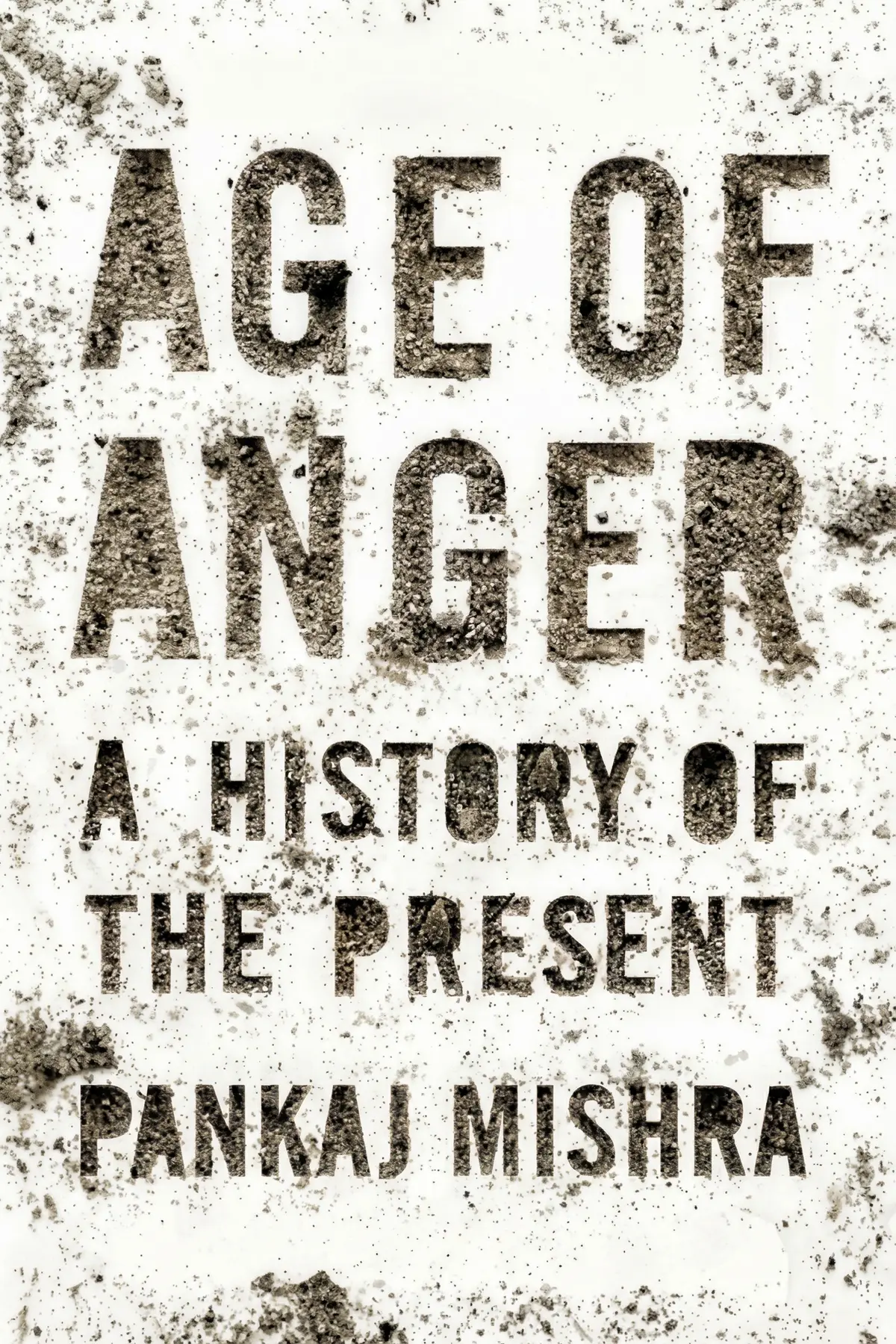
Age of Anger explores the historical and philosophical origins of modern global rage. Pankaj Mishra connects today's rise in authoritarianism and populism to the unmet promises of the Enlightenment and neoliberalism.
1 min 18 sec
In recent years, it has felt as though the world is spinning out of control. We witness sudden bursts of political upheaval, the rise of charismatic but divisive leaders, and an undercurrent of vitriol that seems to permeate every corner of the internet. For many of us, the natural reaction is one of total bewilderment. We find ourselves asking: how did we get here? Why does it feel like society is fracturing along lines we thought were long since healed? We often point to globalization as the culprit, but even then, the connection can feel vague and unsatisfying.
To truly understand the turmoil of the twenty-first century, we have to look much further back than the last election cycle or the invention of the smartphone. We need to go back to the very foundation of the modern world. Pankaj Mishra argues that our current ‘age of anger’ is actually the result of several centuries of mounting tension. It is a story about the promises made by the great thinkers of the Enlightenment—promises of equality, reason, and individual freedom—and the bitter disappointment that followed when those promises were only fulfilled for a select few. This journey into the past will show us how philosophical debates from the 1700s are still playing out in the hearts of angry citizens today, and why the systems we built to bring us together are currently tearing us apart.
1 min 46 sec
The modern world was built on a promise of universal equality and rational progress, but the reality of competitive individualism has left many behind.
1 min 59 sec
Internalized envy and a desperate need for social validation are fueling a collective backlash against the perceived elite.
1 min 47 sec
One of the most famous thinkers of the past actually foresaw how a focus on wealth and the loss of faith would destabilize the human soul.
1 min 50 sec
The erosion of traditional community ties has pushed many toward radicalism and a desperate search for belonging.
1 min 46 sec
The promise that hard work and consumerism lead to happiness has failed, leading to a worldwide surge in volatility.
1 min 40 sec
Blaming cultural or religious differences for modern violence is a dangerous distraction from the real systemic issues we face.
1 min 32 sec
As we have seen, the chaotic state of our current world is not a sudden accident, but the culmination of a long history of unmet expectations. The Enlightenment promised us a world of reason and equality, but it delivered a world of intense competition and profound alienation. We have moved from being members of stable communities to being anxious individuals performing for one another in a global marketplace. This shift has birthed a deep, universal sense of ressentiment—a rage against a system that claims to be fair but feels rigged.
Understanding this history is the first step toward changing our future. We must move past the simplistic narratives that blame religion or culture for our problems and instead look at the way our global economic and social structures fail to provide meaning and dignity for the majority of the population. The ‘age of anger’ is a warning sign. It tells us that the old way of doing things—relying on market logic and individual greed—is no longer sustainable.
The path forward requires a new kind of responsibility. It requires us to listen to the grievances of those who feel left behind and to build a society that values human connection over material status. If we can learn from the insights of thinkers like Rousseau and recognize the flaws in our modern dream, we might just be able to turn this era of resentment into an opportunity for genuine, collective renewal. Know the history of the present, and you will see that the power to change it starts with a more honest look at how we got here.
The world often feels like it is gripped by an inexplicable and sudden fever of hatred. From the rise of ultra-nationalism to the spread of extremist violence, the headlines are filled with a specific kind of modern fury. In Age of Anger, Pankaj Mishra argues that this chaos is not a random occurrence but the logical conclusion of a historical process that began centuries ago. He traces the roots of our current discontent back to the European Enlightenment and the subsequent birth of a globalized, individualistic world. Mishra promises a deep dive into the psychological and social costs of modernity. He explains how the shift away from traditional community structures toward a competitive, market-driven society has left millions feeling alienated and secondary. By examining the clash between philosophers like Voltaire and Rousseau, the book reveals why the promise of universal prosperity has failed to materialize for so many. Ultimately, it offers a sobering look at how the 'history of the present' is being written by those who feel betrayed by the modern dream.
Pankaj Mishra is a distinguished Indian author and essayist. He is well-known for his insightful work From the Ruins of Empire: The Revolt Against the West and the Remaking of Asia, a landmark text that earned him the Leipzig Book Award for European Understanding, making him the first non-Western writer to receive the honor. Mishra is a frequent contributor to major global outlets including the New York Times, the Guardian, and the New Yorker.
Listeners find the work crucial for insight and value its deep investigation and historical backdrop, specifically the examination of classical European movements. They characterize the text as well-crafted and evocative, with one listener mentioning how it bridges both Jewish and Islamist fundamentalists. Although the prose quality is highly regarded, some listeners find the vocabulary difficult to track. The narrative speed draws varied opinions, with one listener describing the experience as profoundly disturbing.
After hearing so much about the "global wave of populism," this book finally gave me the context I was missing. Mishra argues that the promise of equality in the modern world has collided with massive disparities in power and wealth, leading to a pervasive sense of resentment. He doesn't just look at the West; he brings in perspectives from Asia and the Middle East, showing how the "age of anger" is truly universal. The comparison between the young men joining ISIS and the 19th-century European anarchists was a total eye-opener for me. Look, it’s a heavy read and it’s definitely not "uplifting," but it’s incredibly thought-provoking. It challenges the idea that liberal democracy is some sort of inevitable end-state for humanity. If you want to understand why the world feels so combustible right now, start here.
Show moreFinally got around to reading this, and it’s easily one of the most important books of the decade. Mishra’s research is staggering, and his ability to weave together the lives of obscure anarchists, Russian novelists, and modern-day terrorists is nothing short of masterful. He perfectly captures the "aesthetic pleasure" some people find in destruction when they feel the system has failed them entirely. This isn't just a political critique; it’s a psychological profile of the modern world. In my experience, most books on this topic are either too dry or too partisan, but Mishra manages to stay objective while being deeply critical of our shared "fictions." It’s a tough, demanding read that will stay with you long after you close the cover. If you can handle the complexity of his academic style, you’ll find a wealth of insight here.
Show morePankaj Mishra has written a deeply unsettling but necessary book that attempts to trace the lineage of modern rage back to its European roots. By examining the clash between Voltaire’s elite Enlightenment and Rousseau’s outsider angst, he provides a framework for why so many people feel left behind by globalization today. It isn't just about the Middle East or Trump; it's a global phenomenon of "ressentiment" that has been brewing for centuries. While the prose can be a bit dense and academic at times, the way he connects historical movements like the French Revolution to contemporary nihilism is brilliant. To be fair, you might need a dictionary nearby for some of the more esoteric vocabulary, but the effort is rewarded with a much clearer understanding of our fractured world. It's a vital read for anyone trying to make sense of the news without falling into easy clichés.
Show morePicked this up on a recommendation, and wow, it really puts the current political climate into perspective. Mishra avoids the usual talking points and instead looks at the "existential deficiency" of our modern narratives. He explains how the collapse of traditional values left a vacuum that is now being filled by extremism and strongmen like Modi or Putin. I particularly liked the sections on how the "winners" of globalization—the Voltaires of the world—have become completely detached from the "losers." The book is definitely a bit of a slog in places because of the dense philosophical references, but the insights are worth the grind. It's a profoundly disturbing look at how we got here, but it feels more "authentic" than most political punditry. Not exactly a beach read, but definitely a necessary one for our times.
Show moreAs someone who usually avoids history books, I found this surprisingly relevant to what’s happening on my Twitter feed every day. Mishra connects the dots between 18th-century European writers and modern-day internet trolls in a way that is both terrifying and illuminating. He describes a world where the promise of material success has failed for most people, leading to a "rampant nihilism" that we see in everything from Brexit to religious fundamentalism. Gotta say, his analysis of "mimetic desire"—where we all want what everyone else has but can't get it—felt very spot on for the social media age. The book is definitely high-brow and requires some focus, but it’s one of the few things I’ve read lately that actually tries to explain the "why" behind the headlines. It’s a dense, challenging, and often dark journey through the modern psyche.
Show moreThis book isn't exactly an "easy" read, but it provides a much-needed historical context for our current era of discontent. I was particularly fascinated by the chapter on D'Annunzio and the occupation of Fiume—it was a part of history I knew nothing about, but it explains so much about the roots of modern fascism. Mishra’s prose is elegant, though he does have a tendency to ramble a bit when he gets into the weeds of 19th-century German thought. Not gonna lie, I had to reread several sections just to keep the various "isms" straight. But the core message about the "existential deficiency" of our current political narratives is powerful. It’s a sobering reminder that history doesn't just move in a straight line toward progress. A very solid, well-researched, and timely piece of work.
Show moreIs this book brilliant or just incredibly cynical? I’ve spent the last week wrestling with Mishra’s arguments about how the Enlightenment essentially paved the way for modern terrorism and nationalism. The truth is, he makes some very compelling points about Rousseau being the true father of the modern "angry man," but his dismissal of almost all progress as a "fiction" feels a bit much. The writing is top-notch, though occasionally he gets lost in his own erudition, making the pacing feel sluggish in the middle chapters. I appreciated the deep dive into Russian nihilism and how it mirrors today’s alt-right movements. However, I left the book feeling like I had a lot of historical trivia but no real solution or hope for the future. It’s a great intellectual exercise, but perhaps a bit too bleak to be fully convincing.
Show moreEver wonder why the world feels like it’s constantly on the brink of a nervous breakdown? Pankaj Mishra attempts to answer that by looking at the "inner life" of modernization. He argues that our current age of anger is the result of people being uprooted from their traditional lives and thrown into a global competition they can't win. It’s a fascinating take, especially the parts about how Germany and Japan tried to "catch up" with the West in the past. Truth is, though, the book is incredibly Eurocentric for a guy who is supposed to be an expert on the global south. He spends way more time on French and German philosophers than on anything else. It's an interesting intellectual history, but it feels a bit lopsided. Worth a read if you like philosophy.
Show moreI really wanted to like this, but I found the structure almost impossible to follow. The author jumps from the 18th century to modern-day India and then back to 19th-century Russia within a single page, making it feel like a chaotic intellectual fever dream. In my experience, the book comes across as a bit pedantic, with Mishra constantly name-dropping obscure philosophers and using "SAT-style" words that feel unnecessary for the point he's making. He spends so much time on the intellectual history of "anger" that he often ignores the material and economic realities that drive it. It’s a shame because the core thesis—that our current global crisis is rooted in the failures of the Enlightenment—is fascinating. Unfortunately, the execution is so disjointed and the tone so elitist that I struggled to finish it. It felt more like a lecture for PhD students than a book for the curious general reader.
Show moreThe premise is great, but the author seems more interested in showing off his library than in making a coherent point. I found the constant quoting of Walter Benjamin and Nietzsche to be more of a distraction than a help. Mishra tends to cherry-pick historical facts to suit his narrative of universal "ressentiment," often ignoring data that contradicts his thesis. Personally, I found the lack of a clear chronological structure very frustrating; it felt like he was throwing every intellectual idea he’s ever had into a blender. By the time I got to the end, I wasn't even sure what his final conclusion was, other than "everyone is angry and it’s the Enlightenment's fault." It’s a pretentious read that lacks the clarity needed for such a complex topic.
Show moreYuval Noah Harari

Jacinda Ardern
Anthony Pratkanis
Michael Axworthy
James Comey
Tom Standage

Ishmael Beah
AUDIO SUMMARY AVAILABLE
Get the key ideas from Age of Anger by Pankaj Mishra, plus 5,000+ more titles in English and Thai.







