
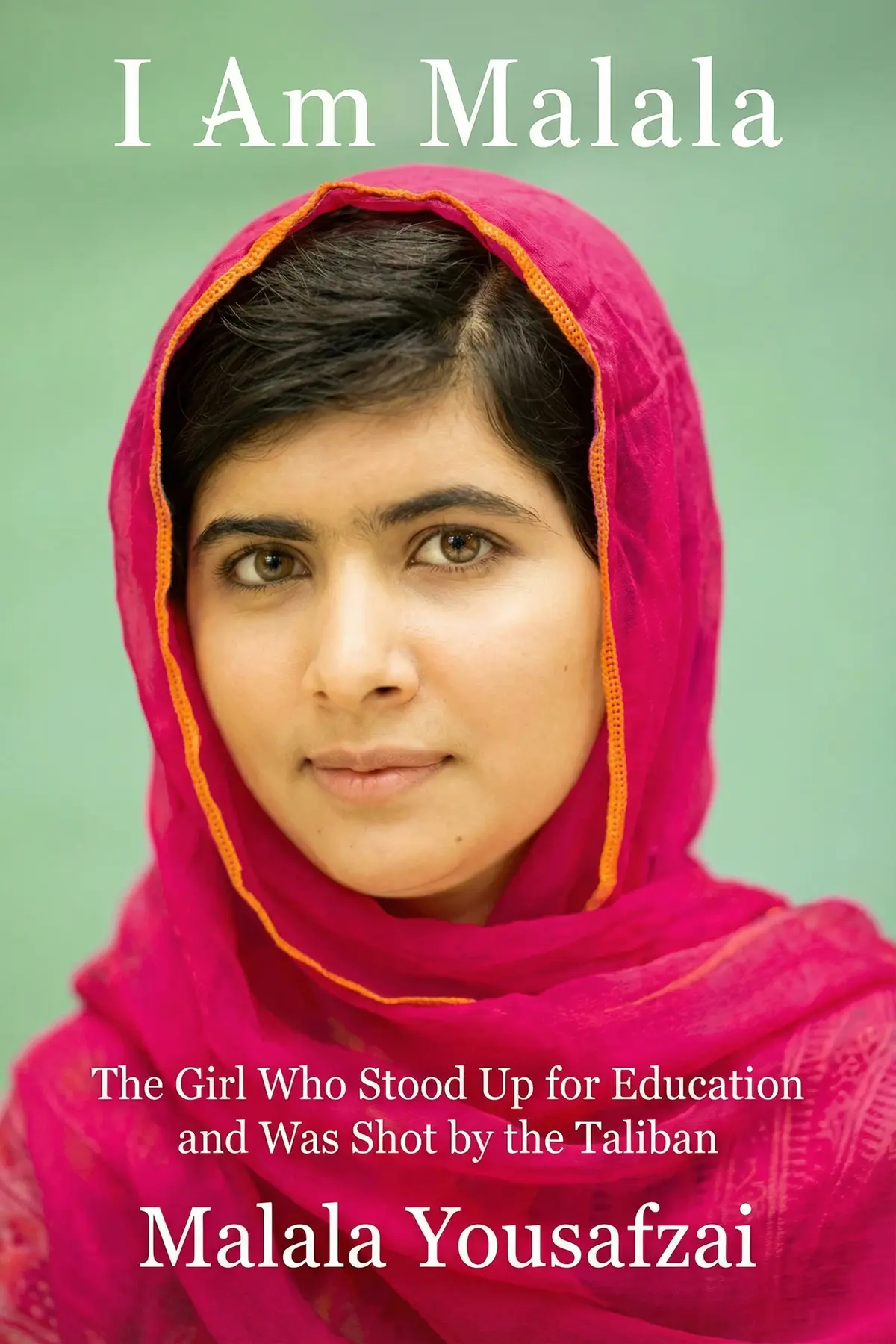
I Am Malala: The Girl Who Stood Up for Education and Was Shot
Malala Yousafzai
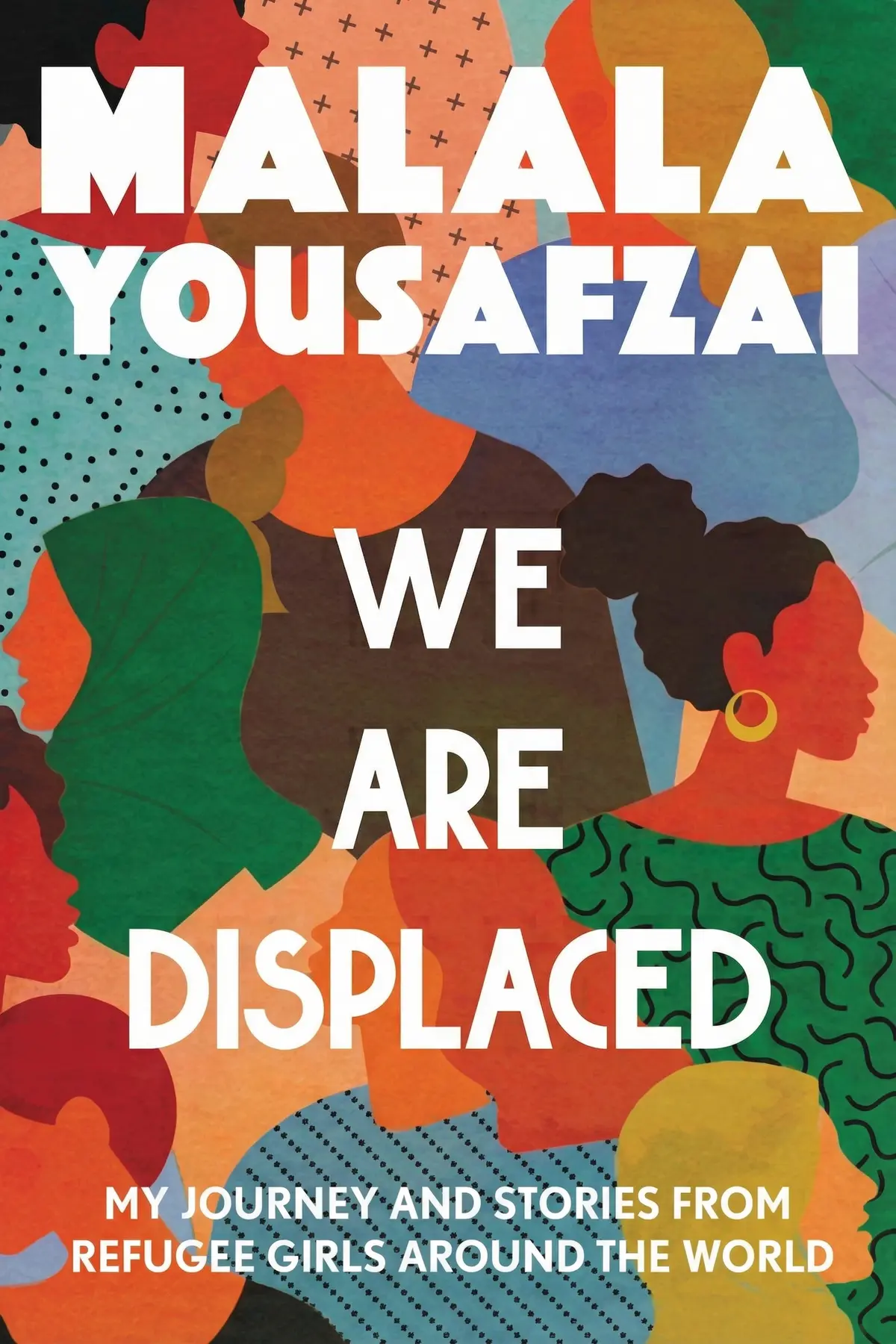
A moving collection of personal stories from young women forced to flee their homes, curated by Malala Yousafzai to highlight the resilience, loss, and humanity behind the global refugee crisis.
2 min 17 sec
When we hear the word “refugee,” it often comes filtered through the lens of news broadcasts, statistics, and political debates. We see images of crowded camps, overflowing boats, and distant borders. But behind every data point is a living, breathing human being with a favorite childhood memory, a family they love, and a dream that was interrupted. In the pages that follow, we are invited to look past the labels and see the individual faces of those who have been forced to leave everything behind. This is a journey through the lives of young women who have known the profound weight of displacement, curated and shared by someone who understands that weight better than most: Malala Yousafzai.
Malala’s own story has become a symbol of courage across the globe. She is known as the girl who stood up to extremists in Pakistan to demand her right to go to school, and as the survivor who took her message to the highest stages of the world. However, Malala is the first to say that she is just one among millions. Her experience of being displaced from her beloved Swat Valley is a single thread in a much larger, global tapestry of survival. By sharing her story alongside the stories of other girls she has met in her travels, she helps us navigate the complicated tangle of emotions that define the displaced experience—from the initial shock of loss to the slow, painful, yet often defiant process of building a new life.
What this exploration really reveals is the throughline of resilience. We will look at how the shifting winds of luck can dictate where a person ends up, and how the simple act of choosing a textbook over a wedding veil can be a revolutionary act of bravery. We will travel from the mountains of Iraq to the streets of Colombia, and from the shores of Yemen to the refugee camps in Bangladesh. Through it all, we are asked to consider what it means to lose a home and what it takes to carry the spirit of that home inside you when the walls and the land are gone. These are not just stories of victims; they are stories of leaders, students, and survivors who refuse to be defined only by what they have lost. They are here to show us that while they may be displaced, they are not defeated.
2 min 38 sec
Explore the transformation of a peaceful mountain valley into a zone of fear, where a natural disaster opened the door for religious extremism to take root and change a young girl’s life forever.
2 min 40 sec
Witness the moment advocacy becomes a matter of life and death, and how a move across the world creates a new, permanent reality far from the only home a family has ever known.
2 min 36 sec
Consider the role of chance in the lives of two sisters, where a single piece of paper determines who finds safety and who is forced onto a dangerous journey across the sea.
2 min 24 sec
Meet a young woman who refused to let displacement stop her mission, choosing to fight for the future of other girls by proving that a classroom is more powerful than an early marriage.
2 min 14 sec
Follow the journey of a girl who fled into the mountains to protect her right to learn, eventually facing a global stage to speak for those silenced by conflict and genocide.
2 min 18 sec
Understand the unique challenges of being a stranger in your own land, and how creative expression can become a vital tool for processing the trauma of loss and discrimination.
2 min 20 sec
Hear a story of ultimate sacrifice and the relentless pursuit of a dream, where a daughter’s graduation serves as a living tribute to a mother who gave everything for her children’s safety.
2 min 12 sec
Examine the limits of humanitarian aid and the enduring emotional burden of being a refugee, even when basic needs are met and new communities begin to form in exile.
2 min 22 sec
As we reach the end of these stories, we are left with a clearer understanding of what it means to be displaced. It is not just a status or a news headline; it is a lived reality for millions of young women who are fighting to keep their dreams alive in the face of overwhelming odds. We have seen that the journey of a refugee is rarely a straight line. It is a path filled with the trauma of loss, the arbitrary nature of international borders, and the crushing weight of having to prove one’s humanity over and over again. Yet, through the eyes of Malala, Zaynab, Muzoon, and the others, we have also seen a remarkable spirit of defiance. These are girls who choose books over silence, and who find ways to lead even when they are confined to a tent.
The throughline that connects all these experiences is the transformative power of education. For a displaced girl, a school is more than just a place to learn; it is a sanctuary, a community, and a roadmap to a future that she can control. When we support the education of refugee girls, we aren’t just giving them a skill; we are giving them back the agency that displacement tried to steal. We are acknowledging that their voices matter and that their potential is a global asset that we cannot afford to lose. The resilience they show is a call to action for the rest of us to look beyond the labels and see the individual stories that make up our shared human experience.
So, what can we do with this understanding? The first and most important step is to keep learning. Take the time to look past the statistics and read the individual accounts of those who are living through displacement. When we educate ourselves, we become better advocates. Whether it’s through supporting organizations that provide aid, campaigning for better refugee policies, or simply sharing these stories with others, every action counts. Malala’s journey started with a single voice in a small valley, and it has grown into a global movement. By listening to these voices and carrying their stories with us, we ensure that while these women may be displaced, they are never truly alone. Let their resilience be a reminder that home is something we build together, through empathy, through education, and through the refusal to look away.
We Are Displaced is more than a memoir; it is a platform for voices often silenced by conflict. Malala Yousafzai shares her own story of leaving Pakistan and weaves it together with the journeys of girls from Syria, Yemen, Colombia, and beyond. The book explores the complex emotional landscape of displacement—the grief of losing a homeland, the terror of the journey, and the struggle to rebuild in a foreign land. It challenges readers to look past the "refugee" label to see the individuals beneath. By focusing on education and the unique vulnerabilities of girls, the narrative offers a promise of hope and a call to action. It demonstrates how, even in the darkest circumstances, the human spirit refuses to be extinguished, and how a single opportunity, like a school desk, can change the trajectory of a life forever. Through these narratives, we see that while these young women have lost their homes, they have not lost their dreams or their capacity to lead.
Malala Yousafzai is a world-renowned activist for female education and the founder of the Malala Fund. Originally from Pakistan's Swat Valley, she gained international attention for defying the Taliban’s ban on girls’ education. In 2014, at the age of 17, she became the youngest person to ever receive the Nobel Peace Prize. Malala currently resides in the United Kingdom, where she continues her advocacy after graduating in philosophy, politics, and economics from Oxford University in 2020. Her work remains focused on ensuring that every girl has access to twelve years of free, safe, and quality education, using her global platform to amplify the stories of the marginalized.
Malala Yousafzai
Listeners find this book to be an essential and enlightening experience, with one noting that it serves as assigned reading for the upcoming school year. They also appreciate the work's uplifting message, as one review emphasizes the incredible hope and resolve of young women. Additionally, the book receives positive remarks for its moving narratives and poignant subject matter.
Wow. This book destroyed me and rebuilt me all in 200 pages. We often see refugees as a monolithic group on the news, but Malala gives them names, faces, and vivid dreams. Her own story of the Swat Valley is harrowing enough, yet she uses her platform to elevate others like the Yemeni sisters who faced unimaginable terror. The emotional weight is heavy, but the determination of these young women is truly inspirational. I found myself crying in public several times because the writing is so raw. It should be mandatory reading for every politician and student alike.
Show moreAfter hearing Malala’s interview on a late-night show, I felt a sudden urge to understand the refugee crisis through a lens of hope rather than just statistics. This book delivers exactly that. It is heartbreaking to read about Zaynab’s journey and the loss of her sister, but her eventual resilience is what stays with you. Malala’s return to her childhood home in the epilogue brought everything full circle for me. These girls aren't just victims; they are superheroes in training. Every high school curriculum needs this on its list for next year.
Show moreEver wonder what it's actually like to leave your entire life behind in a single suitcase? This book answers that question with brutal honesty and surprising beauty. The quote about home being the "mouth of a shark" resonates through every chapter. I loved learning about the various NGOs working on the ground, which adds a practical element to the emotional storytelling. It’s a fast read but one that lingers in your mind for weeks. Malala continues to be a beacon of hope, showing that education is the ultimate weapon against displacement and violence.
Show moreLook, we all know Malala’s courage, but seeing her shine the spotlight on others is the real power of this work. She doesn't just tell her story; she shares the microphone with those who haven't had the chance to speak. The stories of the sisters fleeing Yemen were particularly gripping and had me holding my breath. It’s a short book, but the emotional punch it packs is equivalent to a 500-page epic. Frankly, if this doesn't make you feel more compassion for the people at our borders, I don’t know what will.
Show moreThe opening pages where Malala recounts her return to the Swat Valley for the first time since the assassination attempt are incredibly moving. You can feel the bittersweet nature of her homecoming in every word. Transitioning from her personal journey to the lives of nine other women creates a powerful tapestry of survival and grit. These are stories of ordinary girls pushed into extraordinary circumstances by war and persecution. It’s a heartbreaking read, yet it somehow manages to leave you feeling optimistic about the future of humanity.
Show moreThis collection of oral histories provides a necessary face to the millions of displaced people globally. Malala introduces each girl with such grace, making the transition between different countries—from Colombia to Uganda—feel seamless yet distinct. While the tone is occasionally a bit repetitive in its structure, the power of the individual testimonies outweighs any stylistic complaints. Truth is, we rarely hear about the "before" lives of refugees, only their arrival. These stories prove that no one wants to leave their home unless they are forced to choose life over everything they love.
Show morePicked this up after finishing her first autobiography and I was impressed by how she balanced her own fame with the stories of others. The chapter on the girls from the DRC was particularly moving and shed light on a conflict I knew very little about. Personally, I think the book could have been longer to give more space to the individual histories, as some felt a bit rushed. Despite that, the emotional impact is undeniable. It humanizes a crisis that most of us only experience through cold headlines or political debates.
Show moreAs someone who follows human rights issues closely, I didn't expect to be so surprised by the nuances in these stories. The diversity of the girls' backgrounds—from the Yazidi community to Guatemala—highlights that displacement is a global epidemic, not just a Middle Eastern one. Not gonna lie, some parts are very difficult to stomach because the violence described is so senseless. My only small gripe is that I wanted even more of Malala's perspective on how she personally connected with these girls. Overall, it is a deeply humanizing and vital piece of work for our time.
Show moreFinally got around to reading this and I’m personally embarrassed it took me so long to pick it up. The way Malala frames these narratives is both accessible and deeply affecting for a wide range of readers. While I felt some of the later stories were a bit shorter and less detailed than the initial ones, the overall message of resilience remains consistent. It serves as a stark reminder that peace is a fragile gift we often take for granted. This book isn't just a collection of stories; it’s a call to action for everyone.
Show moreTo be fair, I found the writing style a bit too simplified for such complex humanitarian issues. I listened to the audiobook version, and while the content is vital, the narration felt somewhat flat during the more intense segments of the Yemeni and Rohingya stories. It felt more like a textbook at times rather than a deeply personal narrative. However, the mission behind the book—funding the Malala Fund—is something I fully support. It’s an eye-opening read for younger audiences, but I was hoping for more depth in the geopolitical analysis behind these conflicts.
Show more
J. Craig Venter

Ishmael Beah

James Herriot

Barack Obama
Masaji Ishikawa

Ben Macintyre
AUDIO SUMMARY AVAILABLE
Get the key ideas from We Are Displaced by Malala Yousafzai, plus 5,000+ more titles in English and Thai.







