
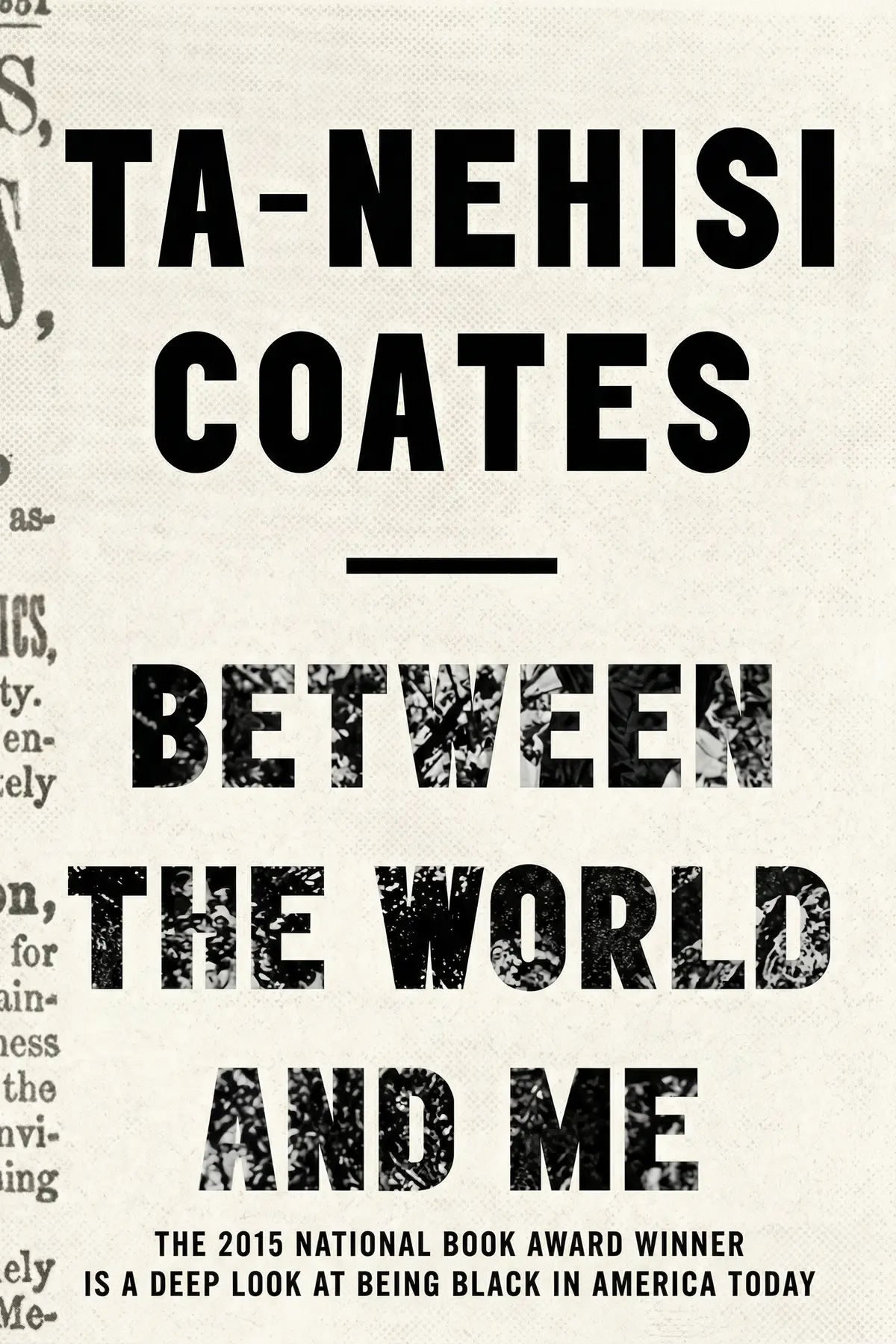
Between the World and Me
Ta-Nehisi Coates
A profound analysis of the Obama presidency and the enduring legacy of systemic racism, exploring how historical injustices continue to shape the American social and political landscape today.
1 min 42 sec
In the autumn of 2008, a wave of euphoria swept across the United States. To many, the election of Barack Obama felt like more than just a political victory; it felt like a fundamental shift in the American timeline. For generations of Black Americans, the idea of a person who looked like them occupying the highest office in the land was a dream so distant it often seemed relegated to the realm of fiction. Yet, there he was—a brilliant, composed Black man standing on the stage in Chicago, signaling what many hoped was the definitive end of an era defined by white supremacy.
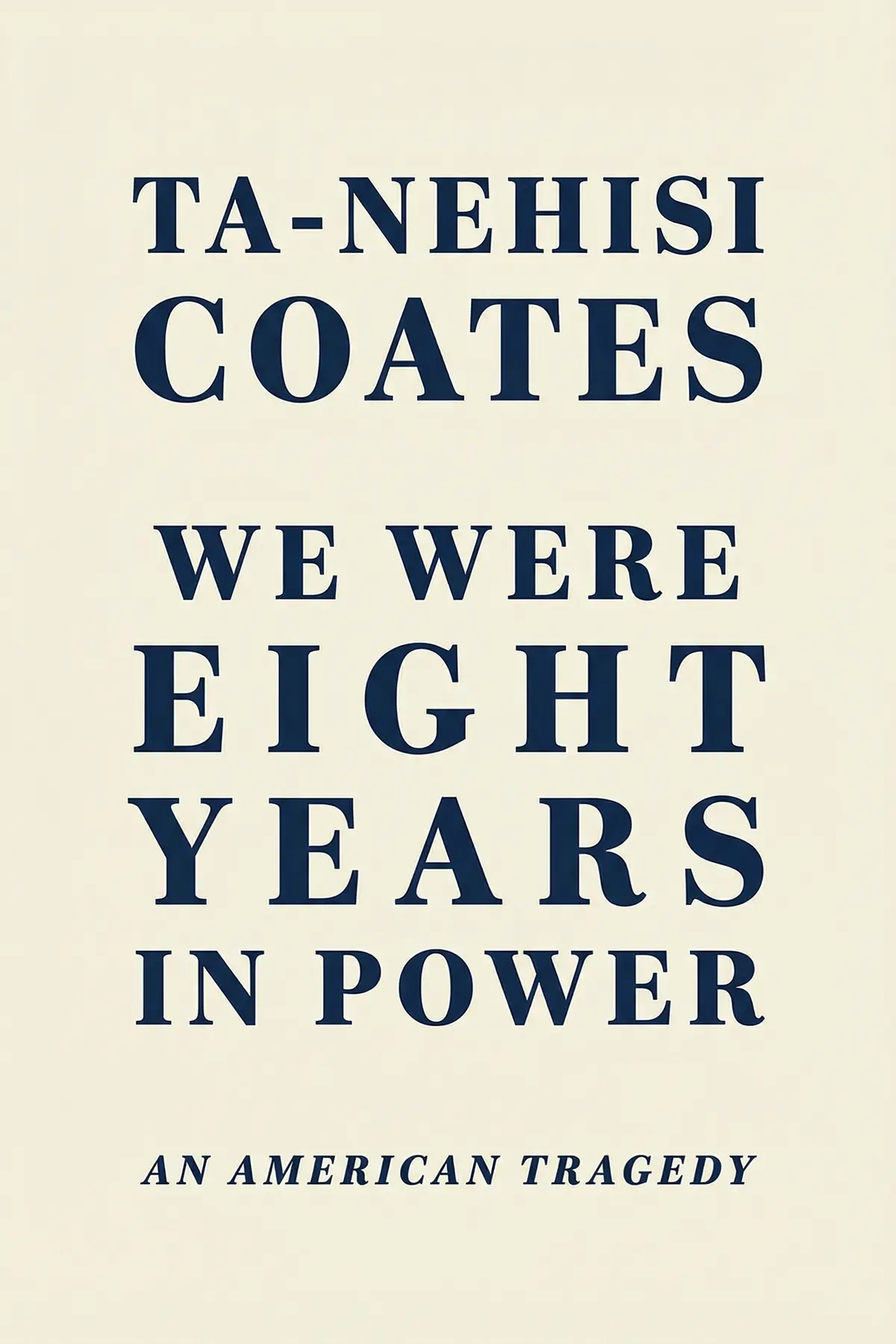
However, as we look back on those eight years, the narrative becomes more complicated. The title ‘We Were Eight Years in Power’ is actually a callback to a phrase used during the Reconstruction era, a time of brief hope for formerly enslaved people that was followed by a brutal and long-lasting period of repression. This throughline—the idea that Black progress is almost always followed by a fierce, reactionary backlash—is at the heart of our discussion today.
In this summary, we aren’t just looking at the policy wins or the political theater of the Obama administration. Instead, we are peeling back the layers of the American story to understand why the rise of one man was unable to dismantle the deep-seated racist assumptions that have governed the country since its inception. We will explore the development of modern Black identity, the economic foundations of slavery that still prop up American prosperity, and the systemic ways that Black life has been criminalized. This is a journey through a ‘tragedy’—not of a failed presidency, but of a nation still struggling to reconcile its ideals with its history. As we move through these ideas, we’ll see how the very things that made Obama’s rise possible also laid the groundwork for the era that followed him.
2 min 03 sec
Can a community simply ‘will’ its way out of systemic oppression? We examine the conflict between respectability politics and the structural reality of American life.
1 min 58 sec
Explore how growing up in a segregated but supportive community can shape one’s identity, and the jarring transition that occurs when entering the wider world.
1 min 48 sec
What if slavery wasn’t just a stain on American history, but the very engine that allowed the country to become a global power?
1 min 54 sec
How a controversial leader changed the way a community viewed itself, transforming a label of shame into a badge of honor.
1 min 52 sec
The election of Barack Obama was a historic milestone, but did it signal progress or merely a temporary interruption of the status quo?
1 min 56 sec
Beyond the headlines, what is the actual case for compensating Black Americans? We look at the historical data of stolen wealth.
1 min 56 sec
How did the United States end up with the world’s highest incarceration rate, and why is it so heavily concentrated in one community?
1 min 59 sec
Why did Barack Obama remain so hopeful in the face of deep-seated division? We look at the unique background that shaped his worldview.
1 min 55 sec
Why is it so difficult for a nation to acknowledge its own foundations? We explore the comfort of the ‘misrepresentative’ history.
1 min 47 sec
Beyond policy and politics, what did the daily presence of the Obamas mean for the American psyche?
1 min 37 sec
As we reflect on those eight years in power, we are left with a complex and challenging legacy. Barack Obama’s presidency was undeniably a historic achievement, a moment of profound victory that transformed the dreams of millions into a tangible reality. It showed that the highest levels of American power were not, by definition, reserved for white men. Yet, as Ta-Nehisi Coates so powerfully argues, we cannot mistake this symbolic success for a final victory over racism.
The throughline of the American story is one of struggle, where every step forward is met with a calculated effort to push back. The Obama era didn’t end racism; instead, it acted as a mirror, reflecting the deep-seated prejudices and historical myths that still poison American society. From the economic foundations laid by slavery to the modern architecture of mass incarceration, the forces of white supremacy have proven to be resilient and adaptive.
The takeaway here is not one of despair, but of clarity. We must move past the comforting lies of respectability politics and post-racialism. Real change requires more than just a change in leadership; it requires a honest accounting of our history, an acknowledgement of the debts owed, and a commitment to dismantling the structural barriers that continue to define the Black experience. The ‘Eight Years’ were a beginning, a glimpse of what is possible, but the tragedy lies in how far we still have to go. As we move forward, the challenge is to hold onto the progress that was made while remaining clear-eyed about the work that remains. The future of the ‘United’ States depends on our ability to finally tell the truth about our past.
This exploration of the American experience centers on the eight-year presidency of Barack Obama and the complex reactions it triggered across the nation. It examines the tension between the symbolic victory of a Black man in the White House and the structural realities of white supremacy that remained largely untouched by his presence. Through a series of critical perspectives, the narrative moves from the personal stories of the First Family to the broader historical context of the Civil War and the systematic extraction of Black wealth. The promise of this work is to provide a candid, unfiltered look at the state of race relations in the United States. It challenges the comfortable myths of a 'post-racial' era, arguing instead that the progress represented by the Obama years actually served as a catalyst for a deep-seated and predictable backlash. By examining everything from mass incarceration to the case for reparations, it offers a sobering look at how the past is never truly in the past, but rather forms the very foundation of the present.
Ta-Nehisi Coates is a national correspondent for the Atlantic and the author of Between the World and Me, which won the National Book Award in 2015.
Ta-Nehisi Coates
Ta-Nehisi Coates
Listeners view this book as a mandatory read for Americans, praising its elegant prose and stimulating essays. The work also provides a sharp perspective on American history, focusing specifically on African American discrimination while maintaining factual accuracy. Furthermore, listeners appreciate the flow created by the prologues for each essay and find the narrative style engaging, with one listener highlighting how it effectively blends modern-day events with historical context.
Ta-Nehisi Coates has this singular ability to make history feel like a living, breathing, and often bruising entity. This collection isn't just a reprint of his greatest hits from The Atlantic; it’s a masterclass in the evolution of a thinker. What truly elevates the book are the introductory notes where he reflects on his own headspace during those eight years. Hearing about his personal struggles with unemployment before his rise adds a layer of vulnerability that balances out the razor-sharp political analysis. The writing is impeccable, though it demands your full attention because the density of ideas is staggering. He maps out the plundering of black wealth with such factual precision that it's impossible to look away. If you want to understand how the hope of 2008 curdled into the reality of 2016, this is required reading. It’s heavy, it’s frustrating, and it’s absolutely essential for anyone trying to navigate the current American landscape.
Show moreWhile I’d already caught most of these essays in The Atlantic over the years, having them bound together creates a narrative arc I didn't expect. The juxtaposition of Obama's rise with the eventual election of Trump feels like watching a slow-motion train wreck you can’t stop. Truth is, Coates's argument about white supremacy being the core of Trump’s power is one of the most provocative things I’ve read this decade. The pacing is excellent, especially with the prologues that set the scene for each year of the presidency. My only real gripe is that there is a noticeable lack of intersectional focus regarding gender, which some other reviewers have pointed out. Still, the prose is so beautiful it almost hurts. It’s a sobering look at how deeply systemic discrimination is baked into our institutions. I found myself re-reading 'The Case for Reparations' just to absorb the sheer weight of the data he presents. A phenomenal, albeit painful, collection.
Show moreThe subtitle 'An American Tragedy' really sums up the gut-punch you feel by the final page. It’s a brilliant, if utterly depressing, look at the duality of the Obama years. On one hand, you have the symbolic triumph of a black president, and on the other, the fierce, eldritch energies of white supremacy gathering in response. Coates writes like an arsonist who burns with his pen, as someone once said. I was particularly moved by 'My President Was Black' and how it captured that fleeting sense of hope that feels like a lifetime ago now. The way he breaks down the 'working white class' myth in the epilogue is incredibly sharp. He uses facts to dismantle the narratives we tell ourselves to feel better. I think every high schooler in the country should be reading this to understand the mechanics of our democracy. It is a masterpiece of prose and a necessary mirror for the country. Simply stunning.
Show moreNot many writers can weave personal memoir with systemic political critique as seamlessly as this. This book is a gut-wrenching overview of the transition from Obama to Trump. Personally, I found the epilogue on the 'first white president' to be the most powerful part of the entire volume. Coates doesn't mince words. He calls out the ways whiteness is used as a tool of power with such clarity it’s almost uncomfortable. The book acts as a development of a writer, showing his shift from a more optimistic view to the sobering reality of the 2016 election. It’s a classic example of American prose that should be studied in universities for years to come. Even when I didn't agree with every single point, I couldn't help but admire the craftsmanship. It’s a must-read for anyone who wants to understand the racial dynamics of the 21st century.
Show moreAfter hearing so much buzz about the 'First White President' essay, I had to see the full context. I'm glad I did. This book is essentially an autopsy of the American dream. It’s fascinating to see how Coates’s thinking evolved over those eight years. He starts with a curiosity about Obama’s 'hope' and ends with a profound doubt that I think many of us share now. The writing style is dense but incredibly rewarding if you take the time to sit with it. He manages to make complex economic theories about reparations feel personal and urgent. It’s a sober, factual look at discrimination that doesn't shy away from the hard truths. The storytelling is engaging despite being nonfiction. It’s one of those rare books that actually changes the way you look at the news every morning. A definitive work for our times.
Show moreWait, why isn't everyone talking more about the intros between the chapters? I bought this thinking it was just a compilation, but those 'notes' are where the real growth of the writer happens. You see him go from a struggling freelancer to a national voice, and it’s fascinating. The essay on 'The Black Family in the Age of Mass Incarceration' is particularly devastating. He connects the dots between Daniel Patrick Moynihan’s policies and modern-day systemic failures with a surgical hand. However, the book does get a bit repetitive at times since the same statistics occasionally pop up across different essays. That’s probably just a side effect of how they were originally published. Still, the historical context he provides regarding the Reconstruction era made me realize how little I actually knew about American cycles of progress and backlash. This isn't just a book about race; it’s a book about how power protects itself. I'd give it 4 stars only because 'Between the World and Me' felt a bit more cohesive.
Show moreLooking back at the Obama era through this specific lens is frankly sobering. Not gonna lie, I struggled with the tone at times because Coates is a self-professed pessimist, and it can be a lot to take in during one sitting. The book does a great job of explaining the 'fear of a black president' and how that shaped the obstructionism of those years. I liked the focus on Michelle Obama in 'American Girl' too, as it highlighted a perspective often ignored. But I did feel the lack of a gendered lens when discussing mass incarceration. It felt like a missed opportunity to talk about black women’s experiences within that system. The writing itself is top-tier, though. The way he links the 1895 quote about being eight years in power to the modern day is a stroke of genius. It makes you realize that what we are seeing today isn't new; it's a return to an old form of American politics.
Show morePicked this up on a whim after a friend recommended it for my history course. Wow. I wasn't expecting to be this engrossed by a collection of essays. The pacing is surprisingly good because the prologues provide a nice 'behind the scenes' feel. You get to see the research process and the personal growth that went into pieces like 'The Case for Reparations.' It’s rare to find a writer who can make municipal fines and real estate scams feel like a gripping thriller, but Coates does it. He has a keen eye for how the past informs the present. The parallels he draws to the Reconstruction era are especially enlightening for someone who didn't learn much about it in school. It’s a heavy read, for sure, but it feels vital. It challenges you to look at American history without the rose-colored glasses. Definitely worth your time.
Show moreIs it as impactful as Between the World and Me? Maybe not quite, but it’s close. While that book was a concentrated burst of emotion, this one is a slow-burn intellectual journey. I really enjoyed the way he organized the chapters by year. It felt like a time capsule. Some of the early essays, like the one on the Civil War, show a writer still finding his footing, but the intellect is already there. The way he describes Trump as 'cracking the glowing amulet' of whiteness open is a hauntingly beautiful metaphor. There’s a lot of anger in these pages, but it’s a righteous, well-researched anger. My only small complaint is that the middle sections on the black family felt a little dry compared to the more personal essays. Regardless, the book is a staggering achievement in journalism and cultural criticism. 4 stars for the sheer depth of research alone.
Show moreTo be fair, some sections felt a bit redundant since the essays were written for separate publications over a decade. I found myself skimming some of the later chapters because the arguments about red-lining and housing scams were repeated almost verbatim from earlier sections. That’s the risk with a collection like this, I guess. While I appreciate the 'notes' between essays, they weren't enough to make the whole thing feel like a new work. Don't get me wrong, Coates is an incredible writer and his intellect is undeniable. The essay on Bill Cosby was eye-opening and provided a lot of necessary nuance regarding black activism traditions. But if you’ve already read his work in The Atlantic, you might feel like you’re paying for content you’ve already consumed. It’s a good reference to have on the shelf, but it didn't hit me as hard as his previous book did. It felt a bit disjointed for my taste.
Show more
Yuval Noah Harari
Jacinda Ardern
Pankaj Mishra
Johny Pitts
James Comey
Anthony Pratkanis
AUDIO SUMMARY AVAILABLE
Get the key ideas from We Were Eight Years in Power by Ta-Nehisi Coates, plus 5,000+ more titles in English and Thai.







