
14 min 48 sec
You Already Know: The Science of Mastering Your Intuition
By Laura Huang
Discover how to transform gut feelings into a precise professional tool. This guide reveals the science behind intuition, teaching you to harness personal experiences for smarter, faster, and more confident decision-making.
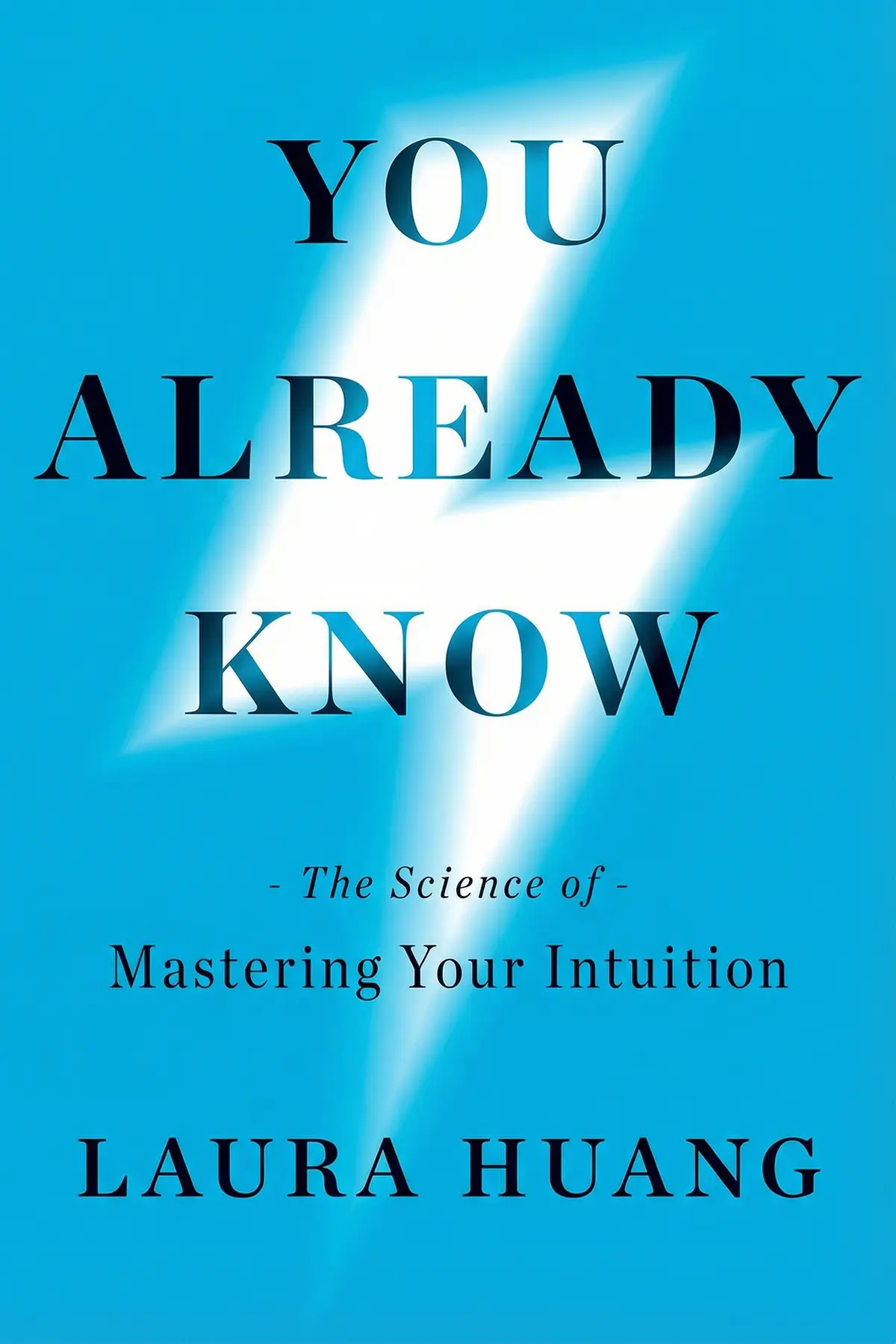
Table of Content
1. Introduction
1 min 37 sec
We have all been there: standing at a crossroads, faced with a decision that looks perfect on paper, yet something deep inside tells us to walk away. Or perhaps we meet someone new, and before they even finish their first sentence, we feel an inexplicable sense of trust. For a long time, we’ve been told to ignore these feelings—to prioritize data, spreadsheets, and cold, hard logic over the ‘fluff’ of a gut instinct. But what if that internal nudge isn’t a distraction? What if it’s actually the most sophisticated data-processing tool you own?
In this BookBit, we are exploring the core principles of Laura Huang’s insights on intuition. The central theme here is that you already possess the answers you’re looking for; you simply haven’t learned how to decode the signal. We often view intuition as a mysterious lightning bolt that strikes at random, but in reality, it is a cultivated skill. It’s a synthesis of everything you’ve ever learned, seen, and felt, distilled into a momentary realization.
Over the next few minutes, we’ll break down how to stop second-guessing yourself and start refining your natural instincts. We will look at how your personality and even your physical body provide clues to the right path. We’ll also categorize the different types of intuitive signals—from the ‘A-ha’ moments of clarity to the ‘Uh-oh’ warnings of danger. By the end, you’ll see how to treat your intuition not as a fickle mood, but as a reliable compass that grows stronger with every experience you have. Let’s get started on the journey to mastering the wisdom you already carry within.
2. The Science of the Subconscious Narrative
2 min 36 sec
Intuition is far more than a lucky guess; it is the silent culmination of every experience you have ever had, woven together into a powerful internal guide.
3. The Four Dimensions of Introspection
3 min 04 sec
Honing your instincts requires looking inward at four specific areas: your personality, your body, your emotions, and your cognitive frameworks.
4. Categorizing the Signals of Interaction
2 min 57 sec
Not all intuitive flashes are the same; learning to distinguish between a ‘Eureka,’ a ‘Spidey Sense,’ and a ‘Jolt’ changes how you respond in the moment.
5. The Path to Mastery through Iteration
2 min 48 sec
Mastery isn’t about being right every time; it’s about creating a feedback loop where every mistake and every outside perspective refines your inner compass.
6. Conclusion
1 min 46 sec
As we wrap up this look at You Already Know by Laura Huang, the most important takeaway is that your intuition is not a magical gift reserved for the lucky few. It is a functional, biological, and psychological tool that you have been building since the day you were born. Every experience you’ve had has contributed to an internal database that is far more vast than you probably realize.
We’ve seen that mastering this tool requires a three-step approach. First, you must practice introspection to understand how your personality, body, and emotions influence the signals you receive. Second, you must learn to interact with those signals in real time, distinguishing between the excitement of a Eureka and the caution of a Spidey Sense. And finally, you must iterate—constantly refining your instincts by learning from your mistakes and expanding your perspective through the stories of others.
The throughline of all this work is trust—but it’s not blind trust. It’s a trust earned through observation and practice. When you stop seeing your gut as an enemy of logic and start seeing it as the ultimate partner to logic, you unlock a new level of clarity. You begin to move with more confidence, not because you have all the external answers, but because you trust your internal ability to find them.
So, the next time you feel that subtle nudge or that sudden spark of clarity, don’t brush it aside. Lean into it. Ask the questions we’ve discussed today. The guidance you are looking for isn’t in the next spreadsheet or the next expert’s opinion. It’s already there, waiting for you to listen. Thank you for joining us for this BookBit. If you found these insights helpful, please leave us a rating—it helps us keep bringing you the best in personal and professional growth. Until next time, trust what you already know.
About this book
What is this book about?
Have you ever felt a powerful pull toward a specific choice without being able to explain why? This summary of You Already Know explores the idea that these instincts are not random or magical; they are the result of your brain processing a lifetime of data and patterns at lightning speed. Laura Huang moves beyond the notion of intuition as a mysterious gift, framing it instead as a practical skill that can be developed through specific, repeatable practices. The promise of this guide is a more navigated life where uncertainty is handled with grace rather than fear. You will explore the four internal dimensions—personality, physical cues, emotional intelligence, and cognitive frameworks—that contribute to your judgment. By moving through stages of introspection and real-world interaction, you learn to distinguish between a helpful Eureka moment and a warning Spidey Sense. Ultimately, the book provides a roadmap for iterating on your past experiences, turning every success and failure into a sharper edge for your future self.
Book Information
About the Author
Laura Huang
Laura Huang, PhD, is a Distinguished Professor at Northeastern University’s D’Amore-McKim School of Business. She previously held faculty positions at prestigious institutions like Harvard Business School and the Wharton School. In 2016, she was named one of the top 40 business school professors by Poets & Quants. Her research excellence was further recognized with the 2020 Cozzarelli Prize from the National Academy of Sciences. She is also the author of the book Edge.
Ratings & Reviews
Ratings at a glance
What people think
Listeners find that *You Already Know* provides an engaging look at intuition, treating it as a trainable skill instead of a supernatural phenomenon. Although some listeners feel the pacing is uneven and sections are occasionally redundant, most enjoy the balance of scholarly depth and actionable decision-making strategies. They also find value in the frameworks for recognizing intuitive cues, like "Eureka" and "Spidey Sense" moments. These evidence-based observations empower listeners to trust their own patterns; specifically, one listener remarked that the work gives them the self-assurance needed to bypass "paralysis by analysis" in a risk-averse world.
Top reviews
Diego
Laura Huang has managed to turn the 'mystical' concept of intuition into a legitimate, data-backed discipline that anyone can master. This isn't just a collection of 'trust your gut' platitudes; it’s a deeply researched guide grounded in her PhD work and years of organizational study. I loved the breakdown of the four dimensions—personality, embodiment, emotions, and cognition—because it helped me realize why my instincts manifest differently than my colleagues'. The distinction between a 'Spidey Sense' warning and a 'Eureka' insight provided a language for feelings I've had my whole life but could never quite explain. For those of us who struggle with paralysis by analysis in our careers, this book offers a reliable compass to navigate complex decisions when logic isn't enough. It's an empowering, essential read for the modern professional.
Show morePete
Ever wonder why you get that sudden knot in your stomach during a business meeting even when the data looks perfect? Huang’s book dives into exactly that, arguing that our subconscious is constantly processing patterns that our conscious mind hasn't caught up to yet. I found the section on 'embodiment' particularly striking, as it forced me to pay more attention to the physical signals my body sends before I even make a choice. The writing is accessible and often quite funny, which balances out the more academic sections regarding her research data. It’s a refreshing take that moves away from the idea that intuition is just some magical gift for a lucky few. Instead, she treats it as a muscle that requires constant iteration and a willingness to fail.
Show morePreeda
As a professional who has often been told to 'just stick to the facts,' this book was a massive relief for my sanity. Huang validates the idea that our instincts are actually the result of years of hidden learning and observation distilled into a single moment of clarity. I especially appreciated her advice on setting boundaries for dwelling on mistakes, as it turns every failure into a necessary part of the iterative process. The research feels robust, yet the stories about her own experiences in academia and business keep the pages turning quickly. It helped me realize that my 'Spidey Sense' isn't just anxiety; it's a legitimate signal from my brain picking up on subtle incongruities. Definitely a must-read for anyone who feels stuck in a cycle of over-analysis and risk aversion.
Show moreSeksan
Finally, a book about intuition that doesn't feel like 'woo-woo' nonsense or some vague spiritual manifesto! Laura Huang uses her background in management science to explain how our brains weave together memories and emotions into a trustworthy compass. I loved the focus on the 'Jolt' moment—those times when our assumptions are totally shattered—and how we can use those to recalibrate our future instincts. While I do think some sections were a bit more repetitive than they needed to be, the overall message is incredibly empowering. It reminds us that we already carry the wisdom we need; we just have to learn how to filter out the noise of external expectations. It’s a practical, grounded approach to a topic that is usually treated with far too much mystery.
Show moreGiulia
In a world that constantly demands more data and more spreadsheets, this book is a necessary reminder to trust the person behind the desk. Huang argues that our cognitive patterns and mental models are actually more powerful than any algorithm when we learn to tune them correctly. I found the discussion on the 'four dimensions' of intuition to be the most valuable part of the book, as it gave me a framework to analyze my own biases. Not every chapter hit the mark for me, and some of the stories felt a bit long-winded, but the core philosophy is sound. It’s about honoring your own history and the thousands of micro-lessons you’ve learned over a lifetime. This is a solid 4-star read for anyone looking to build more confidence in their own judgment.
Show moreGai
This isn't your typical business manual, and that's exactly why I enjoyed it so much. Huang manages to bridge the gap between rigorous academic research and the messy, human reality of making tough choices under pressure. The 'Spidey Sense' concept is something I’ve already started using to evaluate new projects, and it’s already helping me spot red flags I would have otherwise ignored. My only minor gripe is that the book sometimes circles back to the same points too many times, which can slow down the momentum of the reading experience. Still, the insights into how our personalities shape our gut feelings are worth the price of admission alone. It’s a smart, engaging look at the quiet power we all have but rarely use to its full potential.
Show moreWillow
Picked this up after hearing a podcast with the author, and I have mixed feelings about the final product. On one hand, the way Huang categorizes intuitive signals like 'Spidey Sense' and 'Eureka' moments is genuinely helpful for self-reflection. However, the book feels quite bloated with anecdotes that often repeat the same core message in slightly different ways. I appreciate the academic rigor she brings from her background at Harvard and Wharton, but I found myself skimming through the middle chapters. It’s a solid resource for anyone prone to overthinking, yet it definitely could have been condensed into a much shorter read. To be fair, the frameworks are useful, but you have to dig through a lot of fluff to get to the actual meat of the strategy.
Show moreChanikarn
The concept of intuition as a synthesis of lived experience is brilliant, but I struggled with the pacing of the narrative throughout the book. Look, the 'Eureka' and 'Jolt' frameworks are excellent tools for anyone trying to sharpen their decision-making skills in a chaotic environment. However, the academic tone occasionally clashes with the more casual anecdotes, making the flow feel a bit disjointed at times. I appreciate that Huang doesn't ignore the role of logic, but I wanted more concrete exercises rather than just being told to reflect on my feelings. It’s a thoughtful book that will certainly make you think differently about your internal 'autopilot,' but it requires some patience to get through. Not a bad read, though I wouldn't call it a life-changer.
Show moreLandon
To be fair, the author clearly knows her stuff, but the execution of this book left me wanting much more. While the initial premise that intuition is a trainable skill is fascinating, the writing style is incredibly repetitive and feels significantly padded out to reach a certain page count. I felt like I was reading the same three points about 'listening to your body' and 'learning from mistakes' over and over again for two hundred pages. Frankly, a long-form article or a single chapter in a management book would have sufficed to convey these specific ideas. If you are already someone who values introspection, you probably won't find much new information here that you haven't already encountered in basic psychology. It’s an okay primer for beginners, but it lacks the depth I expected from a former professor.
Show moreTantipat
Not what I expected given the hype around Huang’s previous work. I found this to be a bit of a slog, primarily because the 'practical' advice felt very abstract and difficult to actually apply to my day-to-day life. She talks a lot about 'paying attention' and 'learning from experience,' but these felt like generic self-help tropes rather than the groundbreaking insights promised. In my experience, a good business book should provide clear, actionable steps, but this felt more like an academic defense of why intuition exists in the first place. The 'Eureka' moments she describes are interesting, but the book doesn't really show you how to have more of them. It’s well-written enough, but I wouldn't recommend it if you’re looking for a quick, transformative guide.
Show moreReaders also enjoyed
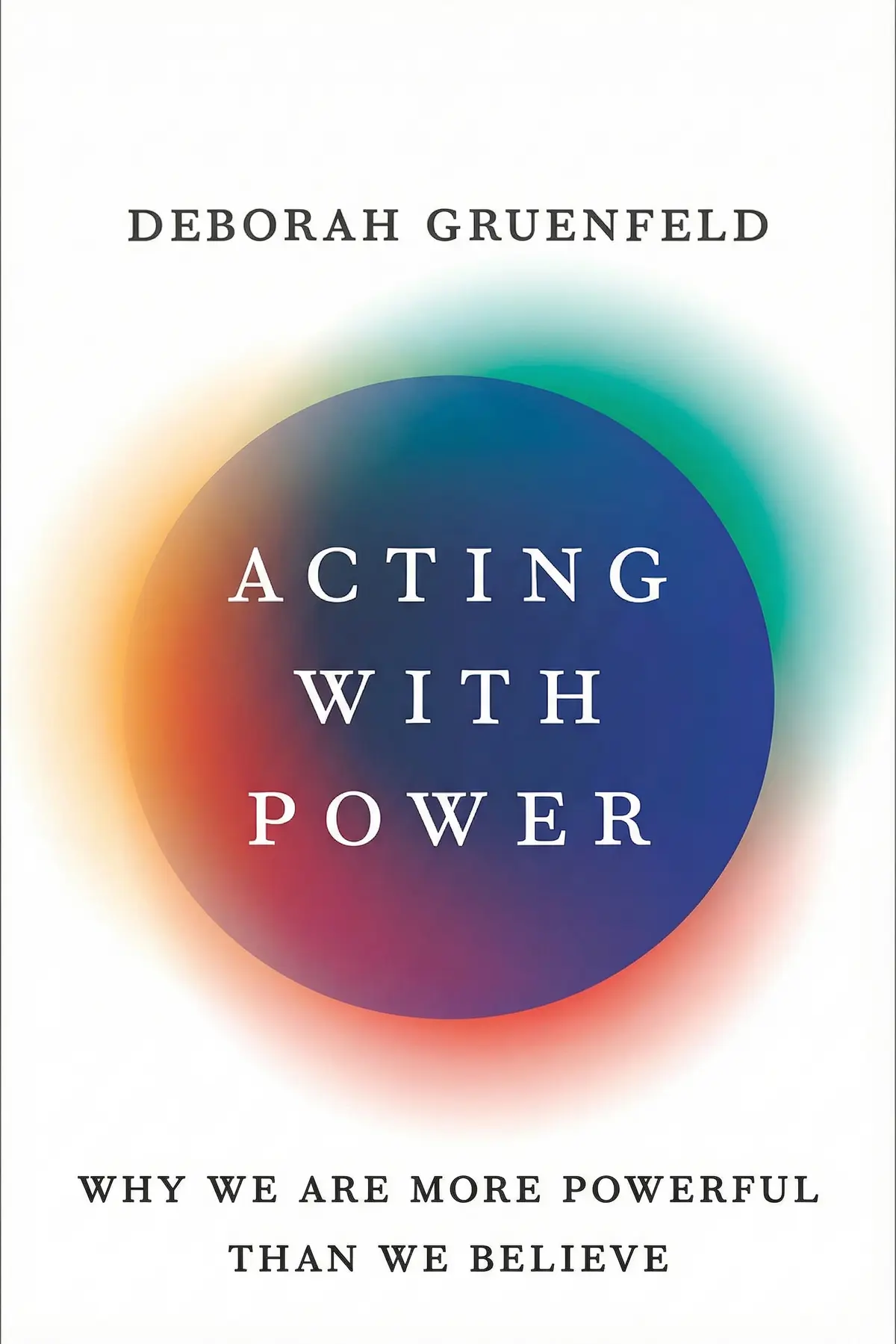
Acting with Power: Why We Are More Powerful Than We Believe
Deborah Gruenfeld
Age of Propaganda: The Everyday Use and Abuse of Persuasion
Anthony Pratkanis
A Guide to the Good Life: The Ancient Art of Stoic Joy
William B. Irvine
AUDIO SUMMARY AVAILABLE
Listen to You Already Know in 15 minutes
Get the key ideas from You Already Know by Laura Huang, plus 5,000+ more titles in English and Thai.
- 5,000+ titles
- Listen as much as you want
- 7-day free trial
- Cancel anytime







