
13 min 10 sec
10 Days to Faster Reading: Zip Through Books, Magazines, and Newspapers – Understand and Remember Everything You Read
10 Days to Faster Reading offers practical strategies to break old reading habits, increase speed, and improve comprehension, helping you manage the modern information deluge with efficiency and confidence.
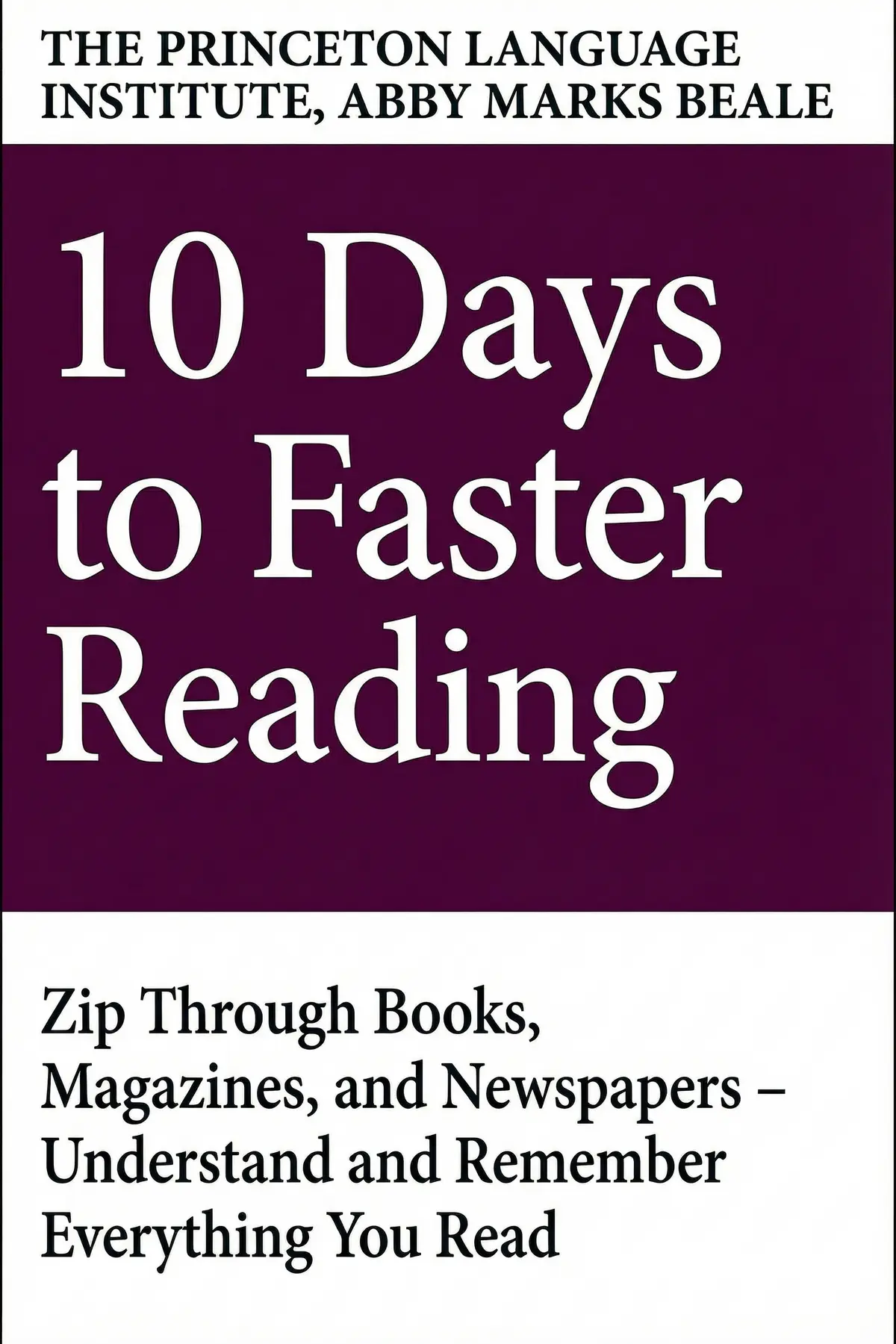
Table of Content
1. Introduction
1 min 25 sec
In an era where information is the most valuable currency, many of us feel like we are constantly falling behind. Our ‘to-read’ piles grow taller, our inboxes fuller, and the sense of guilt over unread books becomes a permanent mental weight. We often wish for more hours in the day, but the reality is that the problem isn’t time itself; it’s the outdated way we process the written word. Most of us haven’t had a formal reading lesson since the third or fourth grade. We are essentially using horse-and-buggy mental software to navigate a fiber-optic world.
This summary of 10 Days to Faster Reading is your system upgrade. We are going to deconstruct the myths that hold you back—like the idea that you must read every single word to understand a text—and replace them with high-efficiency techniques used by the world’s most productive people. Over the next few sections, we will explore how to shed bad habits like mental whispering and ‘regression,’ and how to use your peripheral vision to swallow entire phrases at a glance.
The throughline here is simple: reading faster isn’t just about moving your eyes quickly. It’s about a fundamental shift in how you prioritize information and engage your brain. By the end of this journey, you will have a toolkit of physical and psychological strategies that will allow you to zip through books, magazines, and newspapers while maintaining a deep, lasting understanding of the content. Let’s begin the process of turning you into a more efficient, focused, and confident reader.
2. Shedding Psychological Reading Myths
1 min 53 sec
Discover why the pressure to memorize everything actually hurts your retention and how changing your perspective on reading at work can boost your productivity.
3. Breaking the Habit of Mental Whispering
1 min 45 sec
Learn how your ‘inner voice’ is acting as a speed limiter and discover the techniques to bypass it for much faster processing.
4. Stopping the Cycle of Rereading
1 min 34 sec
Find out why your eyes naturally drift backward and how to use simple physical barriers to keep your focus moving forward.
5. The Strategic Art of Previewing
1 min 41 sec
Unlock a method that allows you to absorb nearly half of a book’s core message before you even start reading the first chapter.
6. Expanding Your Visual Span
1 min 41 sec
Explore how to use your peripheral vision to read ‘thought groups’ rather than single words, drastically reducing eye fatigue.
7. Mastering Focus and Pacing
1 min 47 sec
Discover why using a physical pacer like your finger can keep you on track and why a 20-minute timer is your best friend.
8. Conclusion
1 min 24 sec
Mastering the art of speed reading is not about a magic trick or a superhuman gift; it’s about intentional practice and shedding the limitations of the past. As we’ve explored, the journey toward faster reading involves a combination of mental shifts and physical techniques. By rejecting the myth that you must read every word, silencing your inner subvocalizing voice, and using strategic previewing to map out your material, you can transform the way you consume information.
Remember that this is a ten-day process. You shouldn’t expect to be a master on day one. Start with easier materials—like newspapers or light non-fiction—and gradually apply these techniques to more complex documents. Use your finger as a pacer, embrace the ‘indenting’ method to save your eyes, and always respect the twenty-minute limit of your concentration.
In our information-saturated world, the ability to quickly synthesize and act on new knowledge is a superpower. By applying these lessons from Abby Marks Beale and the Princeton Language Institute, you aren’t just reading faster; you are reclaiming your time and expanding your potential. The next time you face a daunting stack of books, don’t feel overwhelmed. Instead, feel empowered. You have the tools to zip through the noise and find the value that others miss. Now, pick up that book you’ve been avoiding, set a timer for twenty minutes, and start practicing your new skills today.
About this book
What is this book about?
Have you ever felt overwhelmed by the mountain of books, articles, and reports piled on your desk? 10 Days to Faster Reading is designed to tackle that exact stressor. This summary explores the psychological and physical barriers that slow us down—habits we likely picked up in primary school that no longer serve us in an information-heavy world. The promise of the material is simple but life-changing: by retraining your eyes and your brain, you can double or even triple your reading speed while actually remembering more of what you consume. You will learn how to bypass the 'inner voice' that limits your pace, how to strategically scan documents to extract forty percent of the value in a fraction of the time, and how to use physical pacing tools to keep your focus laser-sharp. It is about transforming reading from a passive chore into an active, high-speed skill.
Book Information
About the Author
The Princeton Language Institute
Abby Marks Beale is a leading expert in speed reading and the founder of the corporate training organization known as The Corporate Educator. She is the author of Success Skills: Strategies for Study and Lifelong Learning and the creative force behind Rev It Up Reading, a specialized program designed to help professionals and students sharpen their reading efficiency.
Ratings & Reviews
Ratings at a glance
What people think
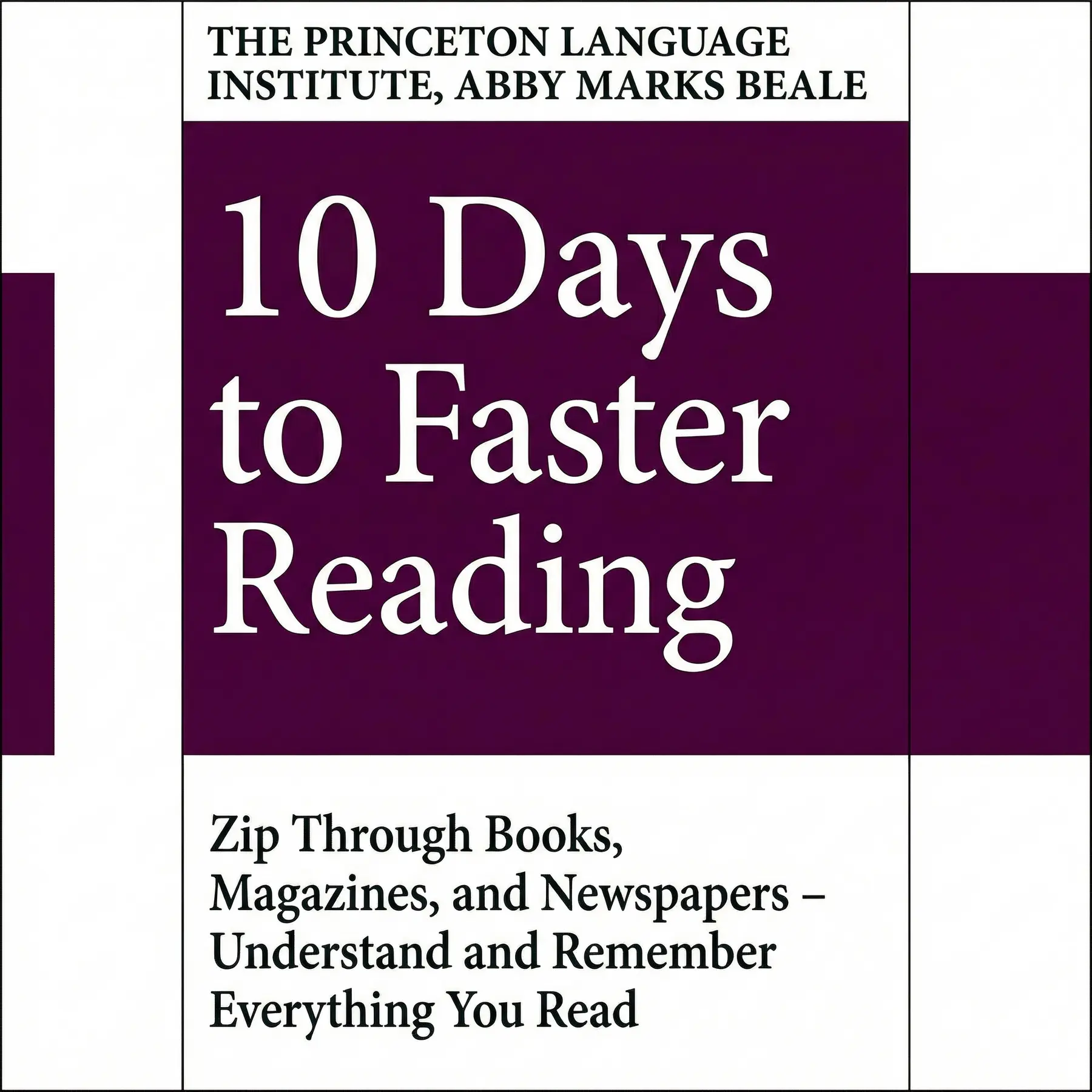
Listeners find this book effective for boosting reading pace and retention, with comprehension rates rising from 50 to 70%, and one listener noting no loss in comprehension. They also value the hands-on style, with one review emphasizing the chapter exercises, and find the techniques easy to grasp. The guide works quickly and follows through on its promises. However, the length receives mixed reviews, with one listener noting the chapters are short.
Top reviews
Chiw
I was skeptical, but this actually works. I went from a sluggish pace to finishing non-fiction books in nearly half the time. What really surprised me was that my comprehension actually improved—I’m retaining about 70% of what I read now compared to the 50% I was hitting before. The techniques for quietening that 'inner voice' (subvocalization) were the most helpful part for me. It’s well-organized and the chapters are short enough that you don't feel overwhelmed. If you're a student or someone who has to plow through a mountain of emails every morning, just buy it. It’s a solid investment in your own efficiency.
Show moreTalia
Five stars because it delivers exactly what the title says. It’s a 10-day program, and if you follow the schedule, you will see results. I felt like the writing style was very encouraging, even when the concepts (like using your peripheral vision to see blocks of text) were a bit tricky to master at first. The focus on comprehension is what sets this apart from other speed-reading 'hacks' I've seen online. It’s not just about moving your eyes faster; it’s about training your brain to absorb information more aggressively. Highly recommended for anyone overwhelmed by information overload.
Show moreBua
This book is a lifesaver for grad school! The chapter exercises are short and punchy, and they actually show you your progress in real-time. I went from being a 'word-by-word' reader to being able to scan whole paragraphs for the main idea without losing the plot. It’s very easy to understand, and Abby Marks Beale has a way of making the technical stuff feel accessible. I don't care how cheesy the car metaphor is—it works for the structure. If you feel like you're drowning in textbooks, this is the life raft you need. Fast, effective, and worth every penny.
Show moreNit
I honestly didn't think I'd get much out of this, but the exercises at the end of each chapter really kept me grounded. The whole 'racecar' metaphor is spread a bit thick—we get it, fast cars go zoom—but if you can look past the cheesy terminology like 'pit-stops' and 'engine overhauls,' there’s actual substance here. I personally found that using a pacer (like my finger or a pen) was a game-changer for my focus. My comprehension didn't just stay the same; it actually felt sharper because I wasn't letting my mind wander off every two sentences. It’s a slim book, which is ironic since it’s about reading faster, but it delivers on its promise if you actually do the work.
Show morePop
Practical and straight to the point. I loved that the book itself is printed in a larger font and is relatively short, making it easy to practice the techniques on the book itself. The previewing and scanning methods have saved me a ton of time at work. I used to feel guilty for skipping paragraphs, but this book gave me the 'permission' to only focus on the keywords and the meat of the content. It’s not perfect—some of the drills felt repetitive—but for the price of a lunch, I definitely got my money's worth in saved time.
Show moreKwame
A very solid manual for anyone looking to optimize their study habits. The Princeton Language Institute branding made me think it would be a dry, academic slog, but it’s actually quite casual and easy to digest. I particularly appreciated the section on 'previewing' text before diving in. It feels like a small thing, but it sets a mental framework that makes the actual reading much faster. I did find some of the 'props' a bit much—I’m not going to carry an index card around with me everywhere—but the core principles are sound. A good, practical tool for the modern age.
Show moreYuki
I applied the techniques from this book to the book itself, and it was a breeze to get through. It’s a very meta experience. While I don't think I'll ever be a 'super-speed' reader, I’ve definitely doubled my comfort level with skimming non-fiction. The advice to avoid subvocalizing is hard to follow, but even getting halfway there has helped me pick up the pace. My only gripe is that it feels very geared toward people who don't like reading. As someone who loves the prose in a good book, some of these methods felt a bit clinical. But for business or learning, it's excellent.
Show moreKavya
This book is a bit of a mixed bag for me. On one hand, the Princeton Language Institute clearly knows the mechanics of how we process text, and I did see a bump in my words-per-minute after practicing the peripheral vision drills. On the other hand, it feels very 'old school' with all the physical props like index cards and highlighters. I’m mostly reading on a Kindle these days, so those tips felt a little dated. Also, I’m not sure I agree that skimming is 'reading.' It felt more like a strategy to avoid reading, which might be fine for a boring business report but feels like a waste for a good novel. Still, it’s a quick 200-page read.
Show moreGiulia
I’ve been trying to get through my 'to-read' pile for years, so I picked this up hoping for a miracle. It’s okay, I guess. It basically teaches you that you don't have to read every single word, which felt like a 'duh' moment for me. The author relies way too heavily on car metaphors, which started to get on my nerves by chapter three. I found the 'pacer' technique with a pen incredibly distracting; it honestly made me feel like I was back in grade school. It’s probably great for people who really struggle with reading or hate it, but for a regular reader, it’s mostly just common sense packaged in a fancy way.
Show moreDylan
It is deeply ironic that a book about faster reading was one of the few books I’ve actually struggled to finish lately. I found the constant car analogies—road maps, stick-shifts, whatever—to be incredibly patronizing and tired. The 'tricks' are mostly things you’ve already heard: don't let your mind wander, look for keywords, use a finger to guide your eyes. It felt like a lot of fluff for very little payoff. I tried the pacer method and it just gave me a headache. Honestly, just google 'how to speed read' and save yourself the time and money. This was not for me.
Show moreFeatured in
Readers also enjoyed
AUDIO SUMMARY AVAILABLE
Listen to 10 Days to Faster Reading in 15 minutes
Get the key ideas from 10 Days to Faster Reading by The Princeton Language Institute, plus 5,000+ more titles in English and Thai.
- 5,000+ titles
- Listen as much as you want
- 7-day free trial
- Cancel anytime







