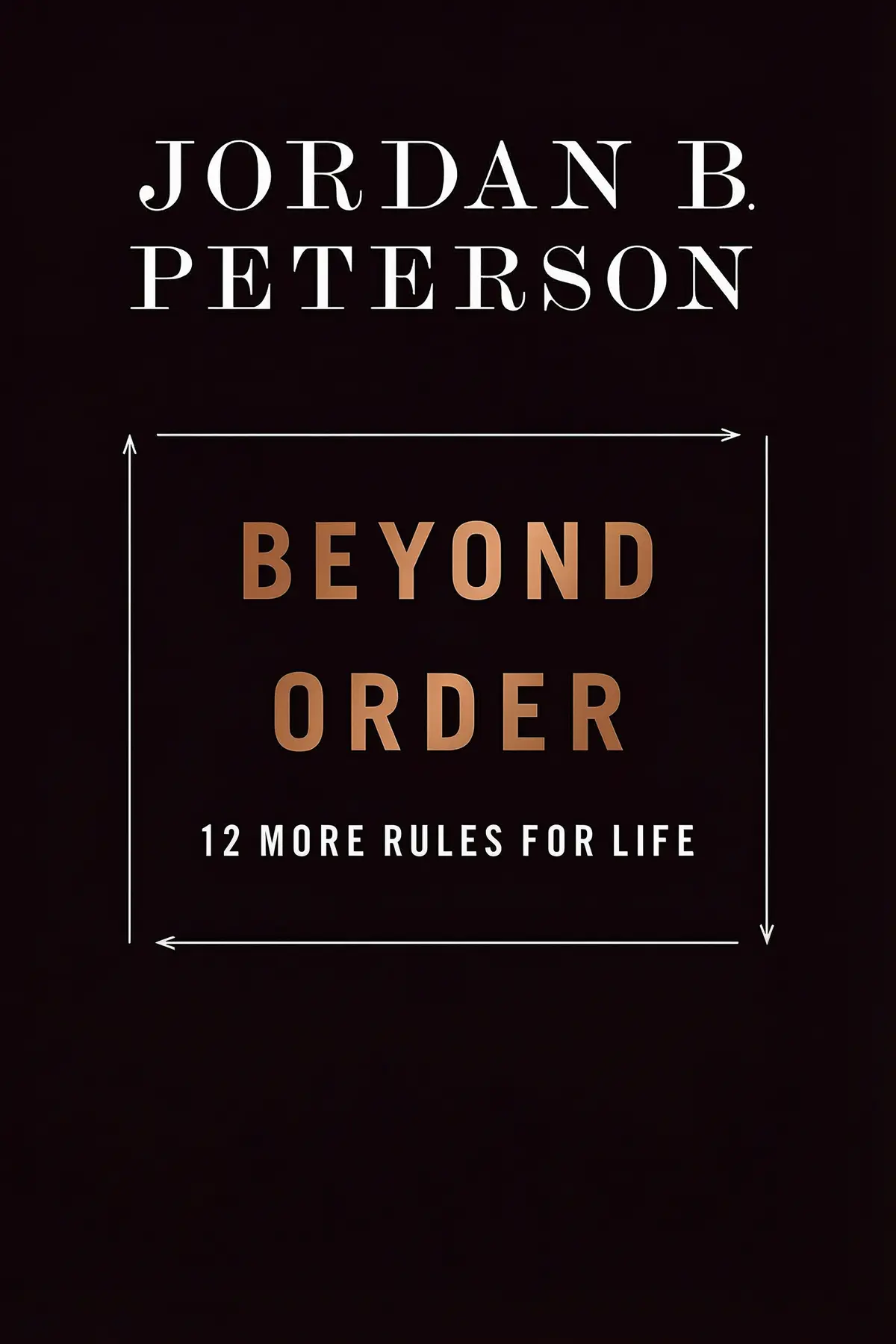
Beyond Order: 12 More Rules for Life
Jordan B. Peterson
Discover a provocative set of principles designed to help you navigate the chaos of modern life by balancing personal responsibility, ancient wisdom, and the psychological realities of the human experience.
2 min 29 sec
Think back to the childhood story of Pinocchio. We often remember it as a simple tale about a puppet who wanted to be human, but there is a much deeper layer to that narrative. When Pinocchio finally sheds the strings that control him, he gains his freedom—but that freedom comes with a heavy price. Suddenly, he is thrust into a world of deception, danger, and difficult choices. He has to learn, through trial and error, how to navigate the complexities of family, friendship, and his own conscience.
This classic story serves as a powerful metaphor for the human condition. We all yearn for independence, yet when we find it, we are often overwhelmed by the sheer scale of the world’s chaos. For centuries, humans have looked to myths, religious parables, and great works of philosophy to find a map for this journey. We seek a way to balance the security of the familiar—what we might call ‘order’—with the unpredictable nature of the ‘chaos’ that constantly threatens to upend our lives.
In our modern era, many of the traditional structures that once provided this map have crumbled. We live in a time of incredible flux, where old values are often discarded before new ones are fully formed. This leaves many people feeling adrift, struggling to find a sense of direction or meaning. It is within this context that we explore a set of twelve modern rules designed to act as an antidote to this pervasive sense of disorder.
In the following segments, we aren’t just looking at a checklist of chores. Instead, we are diving into a deep philosophy of being. We will explore how biological structures that are hundreds of millions of years old still influence our confidence today. We will look at why treating yourself with kindness is actually a moral obligation, and why the way you raise your children dictates the future of society. We will even see how something as simple as a child on a skateboard can teach us about the necessity of risk.
By the end of this journey, the goal is to see that life isn’t about avoiding trouble or seeking constant pleasure. It’s about finding a way to stand tall amidst the storm, taking responsibility for your own corner of the world, and speaking your truth so clearly that the chaos begins to settle into a meaningful order. Let’s begin by looking at what a simple sea creature can tell us about our own place in the world.
2 min 45 sec
Discover how the neurochemistry of ancient sea creatures reveals a startling truth about human social standing and the power of physical presence.
2 min 24 sec
Explore the psychological paradox of why we often extend more compassion to our pets than we do to our own struggling selves.
2 min 19 sec
Learn why the people you surround yourself with are the strongest predictors of your future, and why being picky is a virtue.
2 min 14 sec
Stop the toxic cycle of comparing your life to the highlight reels of others and discover a more honest way to track your growth.
2 min 19 sec
Why being your child’s ‘best friend’ might be the most dangerous path a parent can take for their child’s future happiness.
2 min 18 sec
Learn how the legendary writer Aleksandr Solzhenitsyn discovered the ultimate power of self-reflection while suffering in a Soviet gulag.
2 min 09 sec
Uncover the secret to long-term fulfillment by understanding why the things that make us ‘happy’ right now are often the things that ruin us later.
2 min 23 sec
Examine how the ‘life-lies’ we tell ourselves create a distorted reality and why the truth is the only foundation for a stable life.
2 min 12 sec
Stop treating conversations as a battle for dominance and learn the transformative power of assuming the other person knows something you don’t.
2 min 23 sec
Discover why vague language is the breeding ground for chaos and how being specific can help you fix the ‘breakdowns’ in your life.
2 min 33 sec
Why protecting ourselves and our children from all danger actually makes us more vulnerable and inhibits the development of true strength.
2 min 18 sec
Discover how to maintain your spirit through life’s darkest chapters by learning to cherish the small, spontaneous moments of grace.
1 min 50 sec
As we look back over these twelve rules, a clear throughline emerges: your life is your responsibility. We live in a world that is a constant swirling mix of order and chaos, and it is very easy to feel like a victim of circumstances beyond your control. But the wisdom found in biology, history, and psychology tells us that we have much more power than we realize.
It starts with how you carry yourself. By standing tall and choosing your friends with care, you build a foundation of confidence and support. By comparing yourself only to your past self and being precise with your words, you create a map for continuous improvement. By raising your children with love and discipline and refusing to lie to yourself, you contribute to a more stable and honest society. And finally, by recognizing that meaning is more important than pleasure, you find the strength to endure the inevitable suffering of the human experience.
There are no quick fixes here. Following these rules requires a constant, daily effort to be better, more honest, and more disciplined. It means asking yourself the difficult question: ‘In what ways am I responsible for the problems I’m facing?’ This isn’t about blaming yourself; it’s about empowering yourself.
So, as you step back into your daily routine, carry these principles with you. Notice your posture. Be careful with your words. Look for the small joys. And most importantly, remember that you are a person of consequence. Your choices matter, your voice matters, and your willingness to face the chaos and turn it into order is the most important work you will ever do. The world is waiting for you to stand up straight and begin.
This summary explores a transformative framework for living a meaningful life in an inherently difficult world. Drawing on a blend of evolutionary biology, clinical psychology, and timeless mythology, it presents twelve distinct rules that challenge the reader to step out of victimhood and into a position of strength and clarity. The promise of this work is not just happiness—which is often fleeting—but rather a sense of grounded purpose. By understanding the hierarchies that govern our biology, the importance of precise speech, and the necessity of honest self-reflection, you will learn how to stabilize your surroundings and contribute something positive to the world, even in the face of suffering and disorder.
Jordan B. Peterson is a professor of psychology at the University of Toronto, as well as a clinical psychologist and cultural critic. He has garnered widespread publicity and media coverage for his often controversial YouTube videos and public appearances, in which he critiques political correctness.
Jordan B. Peterson
Jordan B. Peterson
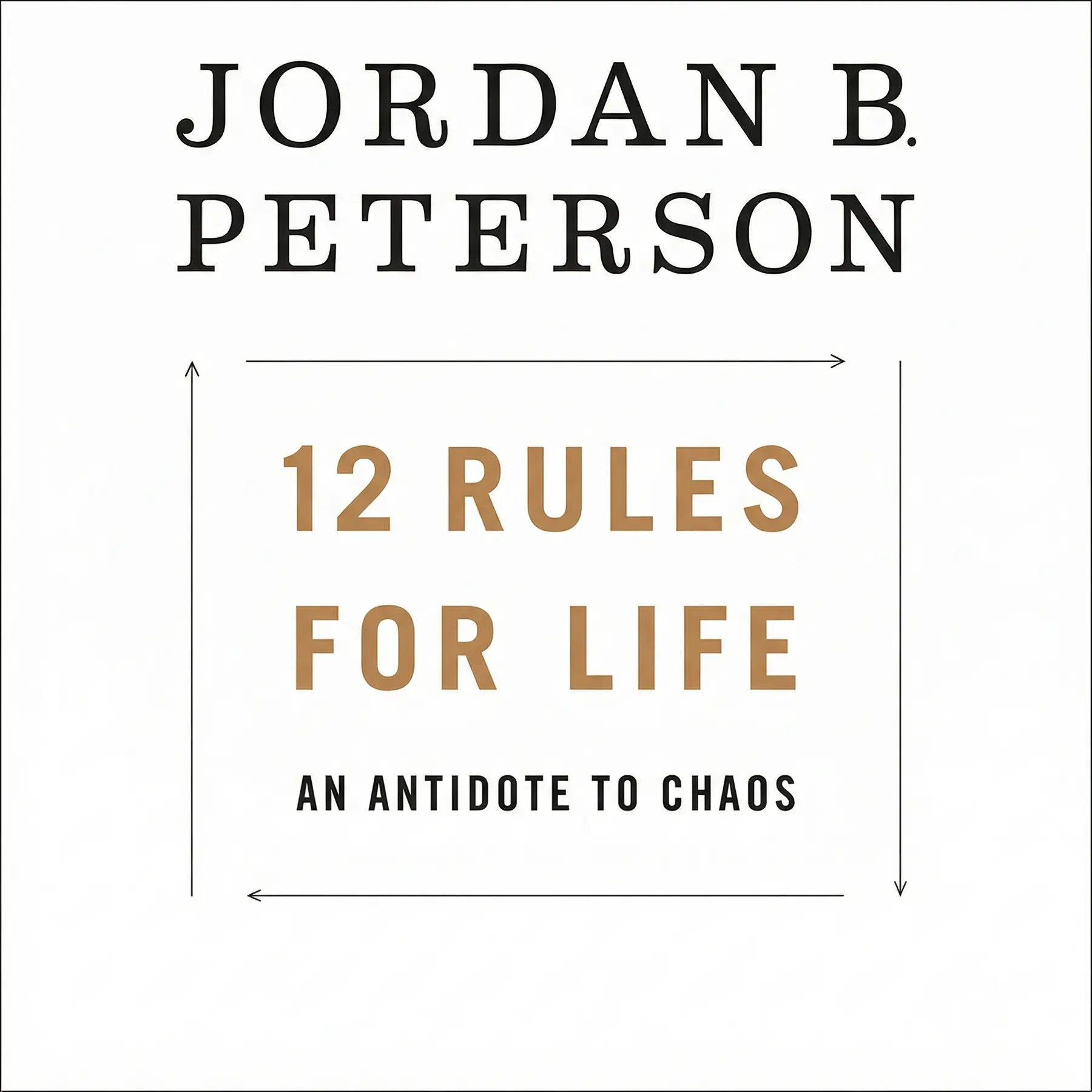
Listeners find the work highly accessible and value its insights, as one review mentions the way it merges intellectual depth with common sense principles. The content is stimulating and immersive, assisting listeners in shifting their perspectives on life while offering practical self-improvement guidance. Listeners commend the book's extensive scope and profound expertise, with one review specifically pointing out its deep understanding of history, while the approachable tone ensures the information remains simple to process.
I honestly didn't expect to enjoy this as much as I did. Peterson has this way of weaving together ancient myths and evolutionary biology that just clicks for me. Some of it feels like stuff your grandpa would tell you—like the advice to 'clean your room'—but when he explains the psychological weight behind those actions, it carries so much more gravity. It’s a very conversational read, despite being quite dense in parts. I felt like I was sitting in a lecture hall with a professor who actually cared if I got my act together. It isn’t just a checklist of habits; it's more of a philosophy for taking responsibility in a world that feels increasingly chaotic. I’ve already started implementing some of the smaller things, like Rule 2, and the shift in my mindset is palpable. Highly recommended for anyone feeling a bit adrift.
Show moreAs a young man who felt pretty lost in the corporate grind, this book was exactly what I needed. It isn’t 'sweet' self-help; it’s actually quite dark and realistic about how much life can suck. Peterson doesn't offer easy platitudes. He tells you that life is suffering and then gives you the tools to stand up straight and face it anyway. I loved the depth of history he brought into it. He isn't just giving you 12 rules; he's giving you thousands of years of human wisdom distilled into a conversational format. It honestly changed how I look at my daily responsibilities. I stopped blaming my boss for my problems and started looking at what I could actually fix myself. It’s powerful, intellectual stuff that stays with you long after you close the cover.
Show more12 Rules for Life is a rare find that managed to bridge the gap between high-level philosophy and practical advice. I appreciated the breadth of knowledge on display here. Peterson draws from Dostoevsky, Nietzsche, and clinical case studies to build a case for living a life of integrity. I see some people complaining about the religious references, but I felt he treated the stories as psychological truths rather than dogmatic ones, which I found refreshing. It’s a very engaging read, even when it’s uncomfortable. It challenges your ego and makes you realize how often you’re acting as the 'villain' in your own story. I’ve recommended it to several friends already.
Show moreI'm not usually one for self-help, but this felt more like a deep dive into what it means to be human. Rule 7, about pursuing meaning instead of expediency, is something I think about every day now. The book is very readable despite its length, and Peterson's voice comes through clearly—it’s like he’s talking directly to you. He doesn't pull his punches, and I think that's why it resonates so much. He acknowledges the tragedies of history and the darkness in our own hearts, then points toward a way out. It’s a masterclass in combining intellect with actual, boots-on-the-ground wisdom. It’s probably the most important book I’ve read in the last decade.
Show moreThis was a bit of a mixed bag for me, though ultimately very worth the read. On one hand, the advice on parenting and marriage is some of the most profound stuff I've encountered in years. He really gets into the grit of how we interact with our loved ones. On the other hand, he gets pretty shrill when he starts talking about 'liberal academics' and the downfall of the West. It felt like two different books fighting for space. The Jungian archetypes and the deep dives into Disney movies like Pinocchio were fascinating, but I did find myself skimming some of the longer tangents. Still, Peterson’s core message about pursuing meaning over what is just 'expedient' resonated with me deeply. It's a challenging book that makes you look at your own flaws.
Show morePeterson is clearly a brilliant guy, and his professional background as a clinical psychologist shines through in the more practical chapters. Rule 8, about telling the truth or at least not lying, really hit home for me. I think we all tell those little 'white lies' to keep the peace, but he argues so convincingly about how that rots your character over time. The writing style is very dense and can be a bit of a slog if you aren't used to academic prose, but it's punctuated by moments of real clarity and wit. I did find the constant referencing of the Bible a bit repetitive—I wish he'd branched out into more varied cultural myths. However, the overall impact was positive. It’s a dense, thought-provoking manual that actually demands something of the reader.
Show moreI picked this up because of all the controversy, but I found it to be a much more 'common sense' book than the internet would have you believe. Most of the rules are basic things we’ve forgotten, like 'be precise in your speech.' What makes it special is the intellectual weight Peterson puts behind these ideas. He uses biology and history to explain why these rules matter. I did feel that his view of the world is a bit grim—he definitely leans into a 'dark vision' of human nature. But maybe that's what we need right now? My only real gripe is that he can be a bit repetitive with his favorite themes. If I never hear about the 'dominance hierarchy' again, it’ll be too soon, but I still think the book is a net positive for anyone wanting to take more responsibility.
Show moreI have complicated feelings about this one. There’s no denying that Peterson is a gifted storyteller, and I think his intent is genuinely to help people. But man, does he ever need an editor. The book is easily 200 pages too long. He tends to ramble, circling back to the same points about 'chaos and order' and 'Eve in the garden' until they lose their punch. I personally found the chapter on 'not bothering children while they are skateboarding' to be the strongest because it felt grounded in real-world observation. The rest often drifted into a kind of murky theological territory that didn't feel as objective as the introduction promised. It’s an interesting cultural artifact, but I’m not sure it’s the life-changing masterpiece his fans claim it to be.
Show moreThis book is a lot. Peterson has a very 'baroque' writing style, and it can be exhausting. I think his insights into human behavior and the way we use stories to make sense of the world are spot on, but he gets bogged down in his own vocabulary. There were times I had to reread a paragraph three times just to realize he was saying something fairly simple. I also think his use of Disney movies as the primary source for 'ancient wisdom' is a bit of a stretch—it felt a bit like he was forcing the narratives to fit his preconceived notions. It’s not a bad book, and there is definitely some gold in there if you’re willing to dig, but you have to be prepared for a lot of wordiness.
Show moreI’m giving this one star because the signal-to-noise ratio is incredibly low. For a book that claims to be a guide for life, it spends an exhausting amount of time wandering through biblical interpretation and bizarre analogies about lobsters. Rule 1 is basically 'have confidence,' but Peterson takes fifty pages of pseudo-scientific rambling to say it. I didn't sign up for a Sunday school lesson, yet he treats the Bible as the only source of truth while ignoring the Enlightenment values of guys like Bertrand Russell or even the Stoics. It's incredibly wordy, full of 'look-at-me' vocabulary that obscures very simple, almost trite, self-help advice. Honestly, you could get the same value from a five-minute YouTube summary without having to endure his shrill rants about 'post-modernism.' Save your money and buy Marcus Aurelius instead.
Show more
Richard Wiseman
William B. Irvine
Andrew D. Thompson
Deepak Chopra
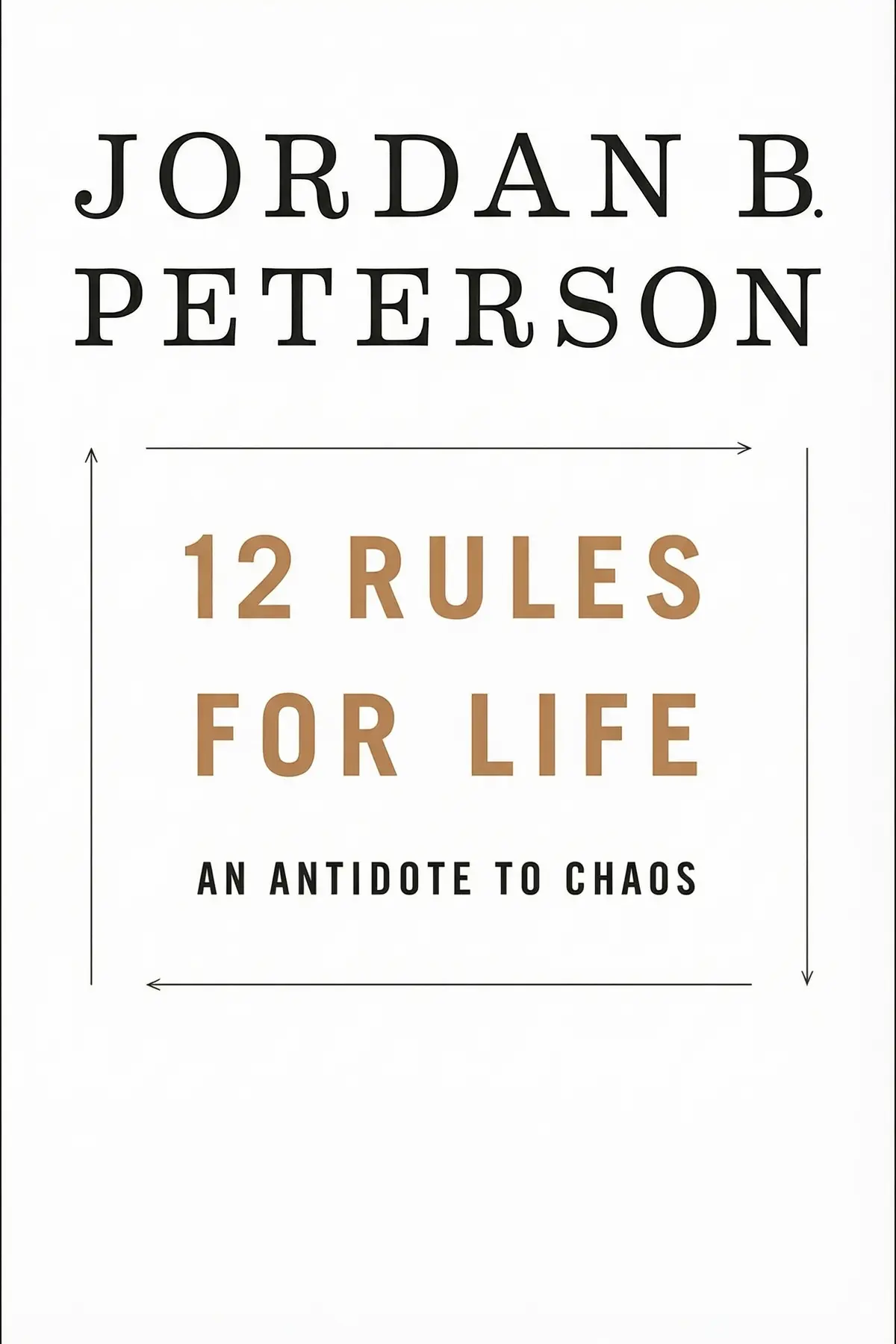
AUDIO SUMMARY AVAILABLE
Get the key ideas from 12 Rules For Life by Jordan B. Peterson, plus 5,000+ more titles in English and Thai.