
A Life Decoded: My Genome: My Life
J. Craig Venter
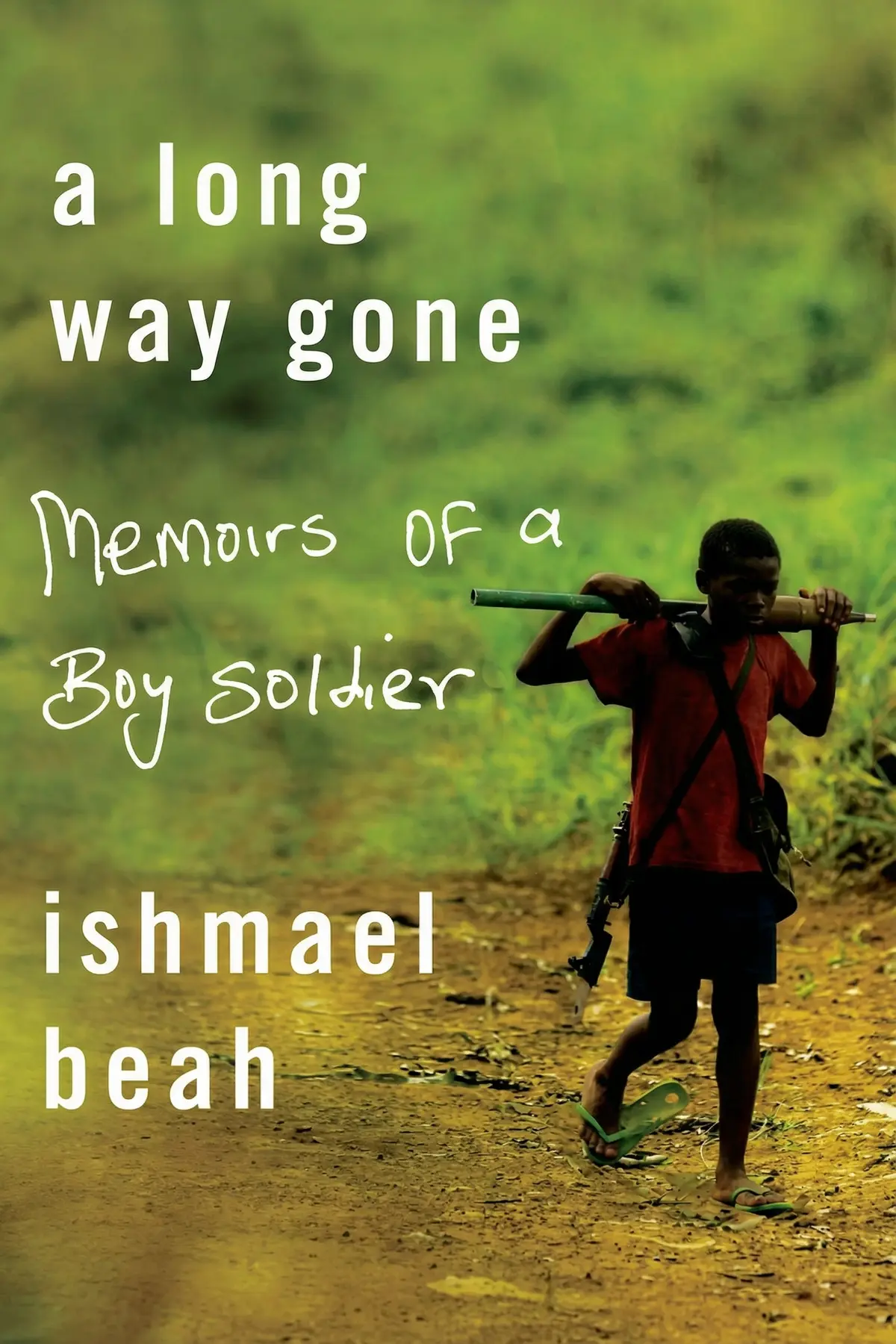
A powerful memoir detailing Ishmael Beah’s transition from a typical childhood to a forced life as a child soldier in Sierra Leone, followed by his difficult but inspiring path toward healing.
1 min 53 sec
In the early 1990s, the world often viewed West Africa through a lens of distant turmoil, but for those living in Sierra Leone, life was as vibrant and peaceful as it was anywhere else. Imagine a childhood filled with the rhythms of hip-hop, the warmth of family meals, and the simple joy of preparing for a local talent show. This was the world of Ishmael Beah before a brutal civil war, fueled by unrest in neighboring Liberia, spilled across the border and shattered his reality.
What followed was a decade-long conflict that would become infamous for one of the most heartbreaking human rights violations imaginable: the widespread use of child soldiers. These were children, some barely tall enough to carry a rifle, who were forced to trade their schoolbooks for bayonets. Ishmael was one of them. Separated from his parents and siblings in the chaos of a rebel attack, he was thrust into a world where survival meant becoming the very thing he feared.
This summary explores Ishmael’s journey through the darkest corners of human experience. We will look at how the war arrived without warning, how children were forced to navigate a landscape where neither soldiers nor civilians could be trusted, and how a national army systematically stripped away the humanity of its youngest recruits through drugs and propaganda. But more importantly, this is a story about what happens after the guns fall silent. It is a look at the grueling process of rehabilitation and the profound power of kindness to mend a soul that has seen the unthinkable. As we move through these chapters, we will see how a boy who was once a killing machine found his way back to his own humanity, offering a throughline of hope in the face of absolute devastation.
2 min 14 sec
Discover how a typical afternoon centered around music and friendship was instantly replaced by the terrifying reality of a sudden, violent invasion.
2 min 02 sec
Learn about the unique challenges faced by children wandering a war-torn landscape without the protection of family or technology.
2 min 11 sec
Explore the tragic irony where children seeking refuge were feared and attacked by the very civilians they hoped would protect them.
2 min 07 sec
See how the national army used a mix of false safety and grim threats to press-gang boys into the front lines of the war.
2 min 15 sec
Examine the disturbing methods used to desensitize children to violence, including the use of powerful drugs and targeted brainwashing.
2 min 22 sec
Understand the difficult road back to humanity as rescued soldiers confront their past and learn to trust in kindness again.
1 min 44 sec
The story of Ishmael Beah is a staggering reminder of both the depths of human cruelty and the heights of human resilience. His journey through the civil war in Sierra Leone shows us how quickly the structures of a peaceful society can collapse, leaving the most vulnerable to fend for themselves in a moral vacuum. We have seen how a young boy, stripped of his family and his future, was systematically re-engineered by a military machine that used drugs and propaganda to turn his grief into a weapon.
Yet, the ultimate message of this memoir is one of reclamation. The transition from a child soldier back to a human being is not an easy or linear path; it is a grueling process of detoxification, both physical and psychological. It requires a society that is willing to see the child behind the soldier and offer forgiveness where most would offer condemnation. The kindness of individuals like Esther and the unconditional love of family members like Uncle Tommy were the catalysts that allowed Ishmael to silence the ghosts of his past.
What we can take away from Ishmael’s experience is a profound understanding of the necessity of empathy in the aftermath of conflict. His story challenges us to consider how we treat the victims of systemic violence and highlights the critical importance of rehabilitation programs that focus on healing rather than punishment. Ishmael Beah did not just survive; he found a way to use his voice to speak for those who could not. His life stands as a testament to the fact that no matter how long the way gone has been, there is always a path back to the light, provided there are hands reaching out to help along the way.
Ishmael Beah provides a harrowing first-person account of the civil war in Sierra Leone during the 1990s. The book explores how a young boy, initially more interested in hip-hop and dance than conflict, is thrust into a landscape of unimaginable violence. After being separated from his family by a sudden rebel attack, Beah wanders the countryside with other displaced children until he is recruited by the national army. The narrative delves into the psychological manipulation used to turn children into soldiers, including the use of drugs and intense propaganda. Beyond the violence, the book offers a message of resilience and hope. It tracks Beah's rescue by UNICEF and his time at a rehabilitation center, where he must confront the atrocities he committed and witnessed. This memoir serves as both a testament to the horrors of modern warfare and a tribute to the human capacity for recovery through the power of compassion and family support. Ultimately, it is a story of how a shattered life can be rebuilt through patience and love.
Ishmael Beah is a human rights activist and author who experienced the Sierra Leone civil war firsthand as a child soldier. Born in Sierra Leone, he later moved to New York. His work focuses on raising awareness about the plight of children in conflict zones and the process of reintegration and recovery for former combatants.
Listeners find this memoir riveting and compelling, noting that the author’s remarkably detailed prose keeps them hooked from start to finish. This heart-wrenching account has moved listeners to tears on occasion, while offering deep perspective on the experiences of a child soldier. They value its genuine nature, calling the story unbelievable but true, and view it as a vital piece of writing that helps shape one’s outlook.
Wow. This isn't just a book; it's a gut-wrenching survival story that stays with you long after the final page is turned. I was struck by the sheer resilience of Ishmael, who went from a boy obsessed with rap music and dance moves to someone forced into the darkest corners of humanity. The descriptions of the war in Sierra Leone are brutal and unflinching, making it hard to read at times, but that's exactly why it's so necessary. Seeing how the military used drugs like 'brown-brown' to brainwash these children was absolutely terrifying to contemplate. Yet, the sections on his rehabilitation with UNICEF provide a flicker of hope that is desperately needed after so much carnage. It’s an essential read for anyone who needs a perspective shift on the privileges we often take for granted. This memoir is haunting, beautiful, and deeply human.
Show moreThe imagery in this memoir is so vivid it feels like a physical blow to the chest. Ishmael Beah doesn't sugarcoat anything, from the scent of burnt villages to the sound of AK-47s echoing through the bush. I found myself particularly moved by the rehabilitation section, where the nurses and staff at the center showed such incredible patience with boys who had been taught only to kill. It’s a miracle that someone can experience that much blood and terror and still find a way back to their humanity. Personally, I think the way he describes his friendship with the nurse who gave him music was the turning point of the whole story. It reminds us that even in the most broken souls, there is a piece of the original child waiting to be found. This book is a reminder of how fragile peace really is. Truly an unforgettable piece of writing.
Show moreEver wonder what it's like to have your childhood stolen in a single afternoon? This book answers that question in the most painful way possible. I was captivated by Ishmael’s journey and his ability to recall the smallest details of his life before the war. The way he describes the loss of his family is just soul-crushing, especially since he never really gets the closure he deserves. What really stood out to me was his trip to New York for the UN conference. Seeing his reaction to snow and the giant buildings after everything he’d been through in the jungle was such a poignant moment. It’s a story of survival, yes, but also a story about the incredible capacity for a human being to start over. I finished this in two sittings because I simply couldn't put it down.
Show moreThis is one of those books that should be mandatory reading in every high school. It offers such a profound perspective on the world outside our own comfortable bubbles. Ishmael’s voice is authentic and raw, capturing the confusion of a child caught in a political nightmare he doesn't understand. I was particularly impressed by the descriptions of the UNICEF workers who refused to give up on the boys, even when they were being violent and ungrateful. It shows the power of compassion in the face of absolute darkness. While it's a quick read in terms of page count, the emotional weight of the story makes it feel much larger. I came away from this feeling both devastated and inspired by the strength of the human spirit.
Show moreFinally got around to reading this, and I'm honestly floored by how much I learned about the Sierra Leone civil war. The contrast between Ishmael’s childhood innocence—carrying those hip-hop cassettes everywhere—and the sudden arrival of the rebels is just heartbreaking. One moment they are practicing dance routines, and the next they are running for their lives through the forest. Truth is, some of the violence is quite graphic, and I had to put the book down a few times just to catch my breath. The scene where the boys see the ocean for the first time was a rare, beautiful moment of levity amidst the chaos. My only minor gripe is that the pacing felt a bit rushed toward the end when he was moving to the United States. Still, this is a powerful testament to the fact that children should never be pawns in adult wars.
Show moreAs someone who usually sticks to fiction, this was a massive wake-up call about the realities of global conflict. Beah’s writing style is surprisingly accessible, which makes the horrors he describes feel even more immediate and shocking. I was fascinated by the psychological tactics used by the army to turn kids into killers, especially the way they used movies and drugs to desensitize them. Gotta say, the parts where the boys would fight other child soldiers even after being rescued were some of the most difficult to read. It shows that healing isn’t just about stopping the fighting; it’s about deprogramming the hate. While I wish there was a bit more historical context about the political causes of the war, the personal focus makes the story feel intimate. It’s a heavy lift emotionally, but definitely worth the time.
Show moreIshmael Beah’s journey from a hip-hop loving kid to a soldier and back again is nothing short of miraculous. This memoir provides an eye-opening look at the life of a child soldier, stripping away any Hollywood-style glorification of war. I liked the focus on the cassettes and how music served as a bridge back to his past self. However, I did find the middle section where they were constantly moving from village to village to be a bit repetitive after a while. I understand that was his reality, but it did make the middle of the book drag slightly. Regardless, the second half regarding his rehabilitation and his move to America is where the book truly shines for me. It’s a testament to the fact that with the right support, recovery is possible.
Show moreIt’s rare that a book makes me cry, but the ending of this one absolutely got me. After hundreds of pages of suffering and loss, seeing Ishmael find a new mother in New York felt like a light at the end of a very long tunnel. To be frank, I wasn't prepared for how much the violence would affect me, but the author’s honesty is what makes it so powerful. He doesn’t try to make himself look like a hero; he shows how the war turned him into someone he didn't recognize. While the transition to his life in the US felt a bit quick compared to the rest, the emotional payoff was huge. It’s a harrowing read, but I think everyone should read it at least once to understand the human cost of these conflicts.
Show moreI struggle with how to rate this because the subject matter is so heavy and important, but the execution felt a bit uneven to me. To be fair, Beah’s account of his time wandering the countryside as a refugee is incredibly detailed and immersive. However, once he actually becomes a soldier, the narrative becomes strangely brief and detached. I wanted more insight into his internal state during those years of fighting, but perhaps the trauma or the drugs made those memories too hazy to articulate fully. The ending also felt quite abrupt, leaving several loose ends about his transition to life in New York that I was curious about. While I deeply respect his courage in sharing this, the book felt like it was missing a middle chapter that would have made the transformation more visceral. It's a significant historical document, but as a narrative, it left me wanting a bit more depth.
Show moreLook, I recognize the immense importance of this story, but the writing style just didn't click for me at all. It felt very repetitive at points, with a rhythm of 'and then this happened, and then that happened,' which created a distance that prevented me from fully connecting with Ishmael’s emotional journey. For such a traumatic subject, the prose often felt flat or overly journalistic, lacking the lyrical quality I’ve found in other memoirs about similar hardships. Also, the transition from being a victim to becoming an active participant in the violence happened so quickly in the text that it was hard to follow his psychological shift. I appreciate the bravery it took to write this, but as a reader, I felt like I was watching the events through a foggy window rather than experiencing them alongside him. It’s an important testimony, but not necessarily a well-paced book.
Show moreJ. Craig Venter
James Herriot
William J. Bernstein

Barack Obama
Pankaj Mishra
Masaji Ishikawa
Ben Macintyre
AUDIO SUMMARY AVAILABLE
Get the key ideas from A Long Way Gone by Ishmael Beah, plus 5,000+ more titles in English and Thai.







