
A Spy Among Friends: Philby and the Great Betrayal
Ben Macintyre
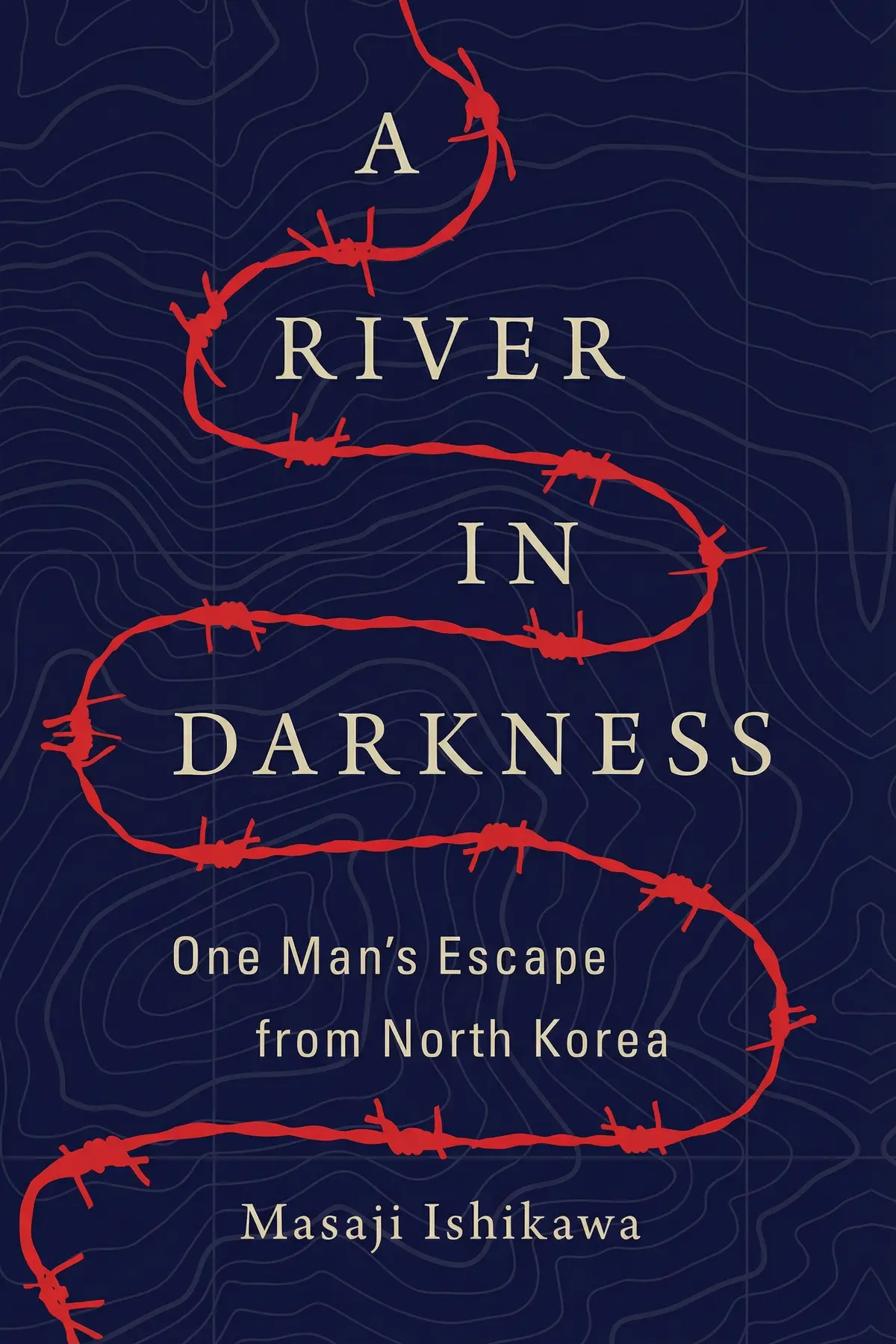
A harrowing firsthand account of Masaji Ishikawa’s life in North Korea, documenting his family's struggle against state oppression, famine, and a perilous journey toward freedom and an uncertain future.
1 min 36 sec
In our modern world, North Korea often feels less like a real country and more like a recurring character in a high-stakes political thriller. We see the satellite images of a darkened landmass at night, the synchronized military parades in Pyongyang, and the aggressive rhetoric broadcast by state media. But behind that carefully constructed wall of propaganda, there are millions of individual lives being lived in a reality that most of us can barely imagine. We rarely get to hear their voices because the state is designed to keep them silent.
This is why the story of Masaji Ishikawa is so vital. He is one of the few who managed to pierce that veil of secrecy, not as a visitor or a diplomat, but as a person who spent thirty-six years living within the system. His memoir, A River in Darkness, is more than just a historical record; it’s a deeply personal narrative of a family lured by false promises into a waking nightmare.
As we walk through the chapters of his life, we aren’t just looking at political systems; we’re looking at what happens to the human soul when it is subjected to constant fear, hunger, and betrayal. We will explore how a journey that began with hope ended in a desperate scramble for survival. Through Ishikawa’s eyes, we see the shift from the optimism of a new arrival to the grim realization that the “paradise” he was promised was actually a prison. This is a journey through the heart of darkness, leading eventually to a river that represented both the end of one life and the terrifying beginning of another.
2 min 38 sec
Discover how over 100,000 people were lured from capitalist Japan to a socialist nightmare based on a lie of prosperity.
2 min 32 sec
Learn how the North Korean state predetermines a child’s entire future based on loyalty and family background rather than merit.
2 min 17 sec
Explore the breakdown of basic human compassion in a society where bribes are the only currency for survival.
2 min 24 sec
Witness the devastating impact of the 1990s famine that pushed an entire nation to the brink of collapse and cannibalism.
2 min 09 sec
Follow Ishikawa’s high-stakes escape through a border guarded by snipers and the constant threat of a horrific death.
2 min 14 sec
Discover the bitter irony of Ishikawa’s return to Japan, where he found himself a social outcast haunted by loss.
1 min 42 sec
Masaji Ishikawa’s journey is a profound reminder of the fragility of human freedom and the devastating power of state-sponsored deception. What began as a family’s search for a better life ended in a thirty-six-year struggle against a system designed to crush the individual. We have seen how the promise of a “paradise” was used to lure thousands into a life of caste-based discrimination, where their very existence was categorized as “hostile” and their futures were stripped away before they could even begin.
We explored the depths of the Great Famine, a period where the basic tenets of humanity were tested by extreme hunger and systemic corruption. We followed Ishikawa across the treacherous Yalu River, a crossing that represented the thin, violent line between a slow death and a desperate hope. But perhaps the most important takeaway is the realization that escape does not mean an easy ending. The scars of totalitarianism run deep, and the transition back to a free society is a mountain of its own.
Ishikawa’s account challenges us to look past the political caricatures of North Korea and see the real, breathing people caught in its gears. It asks us to value the simple things—food on the table, the right to choose a career, the safety of our families—that we so often take for granted. As you reflect on this story, consider the resilience it takes to survive such darkness and the importance of ensuring that such stories are told, heard, and never forgotten. The river may be dark, but the act of bearing witness is a necessary light.
A River in Darkness offers a rare and chilling look into the inner workings of North Korea through the eyes of someone who lived through its most brutal decades. The narrative follows Masaji Ishikawa, who moved from Japan to the so-called workers' paradise as a child, only to find a world defined by starvation, government surveillance, and a rigid social hierarchy that condemned his family to a life of misery. This account moves beyond the headlines of nuclear tests and military parades to reveal the human cost of a totalitarian regime. It chronicles the everyday horrors of the Great Famine, the corruption of the local bureaucracy, and the psychological toll of being an outsider in a xenophobic state. Ultimately, the story is a testament to the resilience of the human spirit, following Ishikawa’s life-threatening escape across the Yalu River and his difficult journey to reclaim his identity in a world he barely remembered. It promises a deeply moving exploration of survival against all odds.
Masaji Ishikawa was born in 1947 to a Korean father and a Japanese mother. In 1960, at the age of thirteen, he moved with his family to North Korea under the promise of a better life. After spending thirty-six years trapped in the totalitarian state, he successfully escaped to Japan in 1996. His memoir, A River in Darkness, has become an international bestseller and a critically acclaimed chronicle of life inside the hermit kingdom.
Listeners consider the work to be superbly composed and simple to follow, calling it both revelatory and intellectually stimulating. The account keeps audiences engaged throughout, showcasing the central figure's remarkable determination to stay alive and withstand immense suffering. Listeners value the uplifting quality of the story, observing that it prompts them to reflect profoundly on existence. The tale elicits varied responses, with some finding it deeply distressing while others characterize it as infuriating.
Wow. It’s hard to find words for the level of suffering Masaji Ishikawa endured after his family was lured from Japan to North Korea. This isn't just a story about a bad government; it's a visceral account of how a "paradise" can turn into a literal wasteland of starvation and fear. The deception by the Red Cross and the Japanese government is absolutely infuriating to read about in hindsight. Ishikawa’s status as a "hostile" meant he never stood a chance, yet his will to survive kept him going for thirty-six years. I finished this in two sittings, feeling both enlightened and completely devastated. It makes you realize how fragile our comfortable lives really are. Truly an eye-opening memoir that everyone should read to understand the human cost of these political regimes.
Show moreThe depiction of the 1990s famine in this book is something I won’t soon forget. It is one thing to see statistics on the news, but it is another thing entirely to read about a man watching his neighbors and family members literally waste away while the state demands gratitude. Ishikawa’s resilience is nothing short of miraculous. He doesn't sugarcoat anything, and he doesn't pretend to be a saint; he was a man doing what he had to do to stay alive. The book is short, but the weight of the content makes it feel much longer. It’s an inspirational narrative in the sense that it shows the incredible strength of the human spirit, but it’s also a haunting reminder of the atrocities currently happening in our world. Absolutely captivating from start to finish.
Show morePicked this up after reading Pachinko and it provided such a necessary, if harrowing, companion piece to that story. Where Pachinko shows the struggle of Koreans in Japan, this book shows the nightmare that awaited those who tried to "return." The level of betrayal Ishikawa felt—from his father, from the Japanese government, and from the North Korean state—is palpable on every page. This isn't just a book; it's a witness statement. The chapters detailing his final escape across the Yalu River are as tense as any thriller, yet the aftermath is just as heartbreaking. It really makes you think deeply about the luck of your own birth. I highly recommend this to anyone who thinks they know what life is like in a totalitarian state.
Show moreTotalitarianism is a word we throw around, but Ishikawa gives it a terrifying, hungry face. He doesn't focus on the leaders or the nukes; he focuses on the empty stomach, the lack of electricity, and the constant fear of saying the wrong word to a friend. The grit required to survive in a place where "the kind people were the first to die" is unimaginable. I found this to be an incredibly fast read because I simply had to know if he made it out. Even though the ending isn't a typical "happily ever after," it feels authentic to the trauma he experienced. This book changed the way I look at North Korea and made me feel a profound sense of gratitude for my own basic freedoms. It’s an essential piece of nonfiction.
Show moreFinally got around to this short but heavy memoir, and it’s left me staring at my full pantry with a sense of immense guilt. The way Ishikawa describes the simple joy of finding a scrap of food or the sheer terror of being caught with a "Japanese" background is haunting. It’s a story of survival that feels both ancient and incredibly modern. The prose is simple, but that only makes the horrors feel more real. I appreciate that he didn't try to make it a Hollywood story; it’s messy, it’s dark, and the ending is bittersweet at best. This book is a testament to human endurance and a fierce reminder of the injustices we allow to persist in the world. I haven't been this moved by a book in a long time.
Show moreAs someone who is fascinated by the history of the Korean peninsula, this memoir provided a missing piece of the puzzle. I’ve read about the migration of Koreans to Japan, but seeing the reverse—the "return to paradise" program—was shocking. Ishikawa writes with a blunt, almost detached clarity that highlights the mundane nature of his daily horrors. From eating weeds to surviving the physical abuse within his own family, the narrative is heavy. My only gripe is that the translation feels a bit stiff at times, which occasionally creates a barrier between the reader and the emotional core of the story. However, the historical value and the sheer grit of the author are undeniable. It’s a necessary, if maddening, look at a social caste system designed to crush the spirit.
Show moreThis book is a punch to the gut that leaves you gasping for air. It’s a true story that reads like the most depressing dystopian fiction imaginable, except there’s no heroic rebellion, just a slow, grinding fight for the next bowl of gruel. Ishikawa’s perspective as a half-Japanese "outsider" offers a unique look at how North Korea treats its own people based on perceived loyalty. I found myself particularly moved by the tragedy of his mother, a Japanese woman who followed her husband into a trap she could never escape. The prose is sparse and direct, which I think fits the bleakness of the setting. It’s not a "pleasant" read by any means, but it is a deeply important one for anyone who wants to look past the headlines and see the actual people living under the Kim regime.
Show moreHow can a human being endure decades of systematic dehumanization and still find the strength to cross a river into the unknown? This is the central question of Ishikawa’s life, and he answers it with a harrowing account of his thirty-six years in North Korea. I was particularly struck by the description of the "propaganda meetings" where neighbors were forced to turn on each other. It shows how the regime uses the citizens as tools of their own oppression. The book is very well-written and easy to read, though the content is anything but. My heart broke for his children and the life they were forced into because of a choice made by their grandfather. It’s a thought-provoking look at the consequences of political idealism gone wrong. Definitely worth your time.
Show moreI’ll be frank: this was an exhausting read that left me feeling more drained than enlightened. While I have immense sympathy for Ishikawa and what he went through, the writing felt incredibly monotone and repetitive after a while. Every chapter is a new variation of misery with zero moments of levity or hope to balance the scale. I understand that this was his reality, but as a piece of literature, it lacks the narrative arc that makes memoirs like "Nothing to Envy" so compelling. The tone is one of constant, justified anger, which can be hard to sit with for 200 pages. It’s an important testimony, but it felt more like a list of grievances than a cohesive story. If you’re looking for a detailed account of North Korean life, it’s here, but prepare for a very dark experience.
Show moreTruth is, I struggled with the tone of this memoir even though I recognize its importance. To be fair, Ishikawa has every right to be bitter—his life was essentially stolen from him by a series of lies—but that bitterness permeates the writing to a degree that makes it difficult to engage with. It felt less like a reflective memoir and more like a raw, unprocessed scream of pain. There is a lack of depth regarding the other people in his life; they often feel like background characters in his personal tragedy. I think the translation might be partly to blame for the flat delivery of such dramatic events. It’s an eye-opening account of a horrific situation, but as a reader, I found it more maddening than moving.
Show moreBen Macintyre


Yuval Noah Harari

James Shapiro
John Rawls


Ben Macintyre
AUDIO SUMMARY AVAILABLE
Get the key ideas from A River in Darkness by Masaji Ishikawa, plus 5,000+ more titles in English and Thai.







