

Agent Sonya: The Spy Next Door
Ben Macintyre
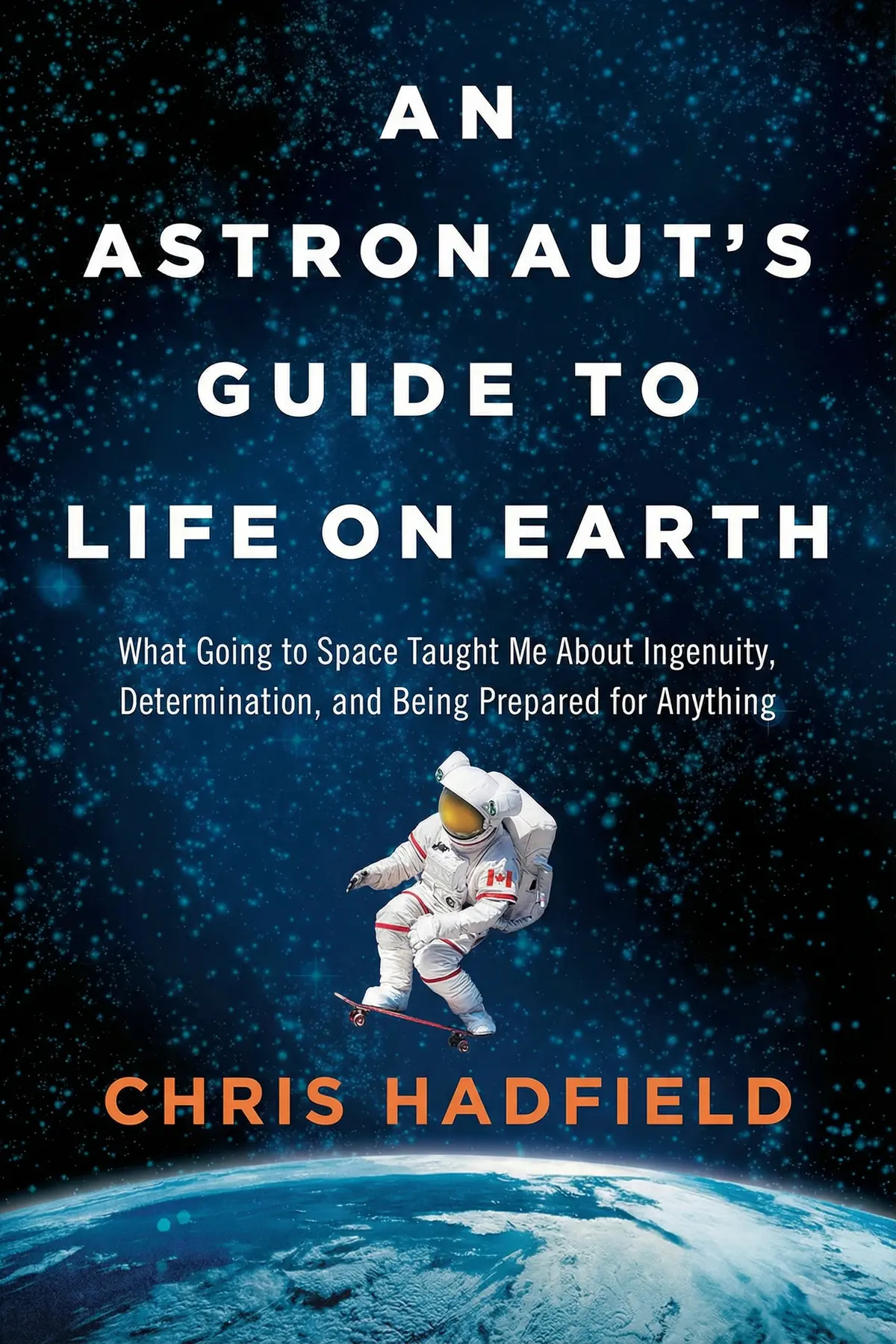
Discover how the rigorous discipline of astronaut training provides a blueprint for success on Earth. Chris Hadfield shares lessons on preparation, managing fear, and finding beauty in the most challenging environments.
1 min 48 sec
When we look up at the night sky and see the International Space Station passing overhead, it is easy to get lost in the romance of space travel. We imagine the silence, the weightlessness, and the stunning views of our blue planet. However, the life of an astronaut is far more grounded than most of us realize. It is a life defined not by the moments spent in orbit, but by the years spent on Earth preparing for them. This is the central realization of Chris Hadfield’s journey: that the most valuable lessons space has to offer are actually about how to live more effectively right here on the ground.
In this exploration of Hadfield’s experiences, we are going to look past the fire of the engines and the majesty of the cosmos. Instead, we will focus on the throughline of his career—a philosophy built on ingenuity, extreme determination, and the idea that being prepared for the worst is the only way to truly enjoy the best. We will see how the rigors of astronaut training can rewire a person’s brain, replacing the natural panic of a crisis with the calm, methodical steps of a problem-solver.
What does it mean to be a ‘zero’ in a high-performing team? Why is constant criticism actually a form of kindness? And how do you stay connected to your family when you are literally in a different world? As we navigate these questions, you will see that the path to the stars is paved with mundane details, rigorous discipline, and a deep appreciation for the fragility of life. This isn’t just a story about space; it’s a guide for anyone looking to navigate the complexities of life with more resilience and perspective. Let’s begin by looking at the incredible amount of work that happens before an astronaut ever leaves the launchpad.
2 min 21 sec
Spaceflight is a rare event preceded by years of intense study, where astronauts must master everything from dentistry to complex robotics.
2 min 05 sec
Instead of blind optimism, astronauts embrace ‘what-if’ scenarios to build the muscle memory required to survive unexpected disasters.
2 min 10 sec
High-stakes environments require a culture where mistakes are analyzed without ego to ensure the safety of the entire crew.
2 min 04 sec
Maintaining family relationships requires proactive planning and creative gestures when the job demands months of physical separation.
2 min 17 sec
Life on the space station is a mix of rigorous scientific labor and the bizarre logistical challenges of a world without gravity.
2 min 06 sec
The return to Earth is a violent, transformative event that requires both physical recovery and a mental re-evaluation of life on the ground.
1 min 54 sec
As we conclude this journey through the eyes of Chris Hadfield, the message is clear: success is not a stroke of luck or a moment of glory on a televised launch. It is the result of a lifelong commitment to the small things. It is found in the hundreds of hours of study, the willingness to be corrected by your peers, and the discipline to prepare for a disaster you hope will never happen. Being an astronaut is less about the heights you reach and more about the depth of your preparation.
The ‘Astronaut’s Guide’ teaches us that we can apply this same level of intentionality to our own lives. We don’t need to be in orbit to appreciate the beauty of our planet or to be the kind of teammate people can rely on in a crisis. We can choose to view every obstacle as a problem to be solved rather than a reason to panic. We can prioritize our relationships even when our work demands our focus. And we can treat criticism as the valuable data we need to become better versions of ourselves.
If there is one actionable piece of advice to take away, it is this: start planning for the times you won’t be there. Whether you are traveling for work or simply overwhelmed by a project, don’t let your absence create a void. Proactively schedule your connection with your loved ones. Send that message, arrange that gift, or make that call before the ‘launch’ of your busy season. By taking care of the mission at home, you give yourself the peace of mind to reach for the stars in your professional life. Life on Earth, much like life in space, is a team effort—and the best way to succeed is to make sure everyone on your crew feels valued and prepared for the journey ahead.
Most people imagine the life of an astronaut as a series of breathtaking views and weightless maneuvers. While those moments exist, the reality of the profession is rooted in years of grueling preparation, constant self-critique, and a relentless focus on what could go wrong. This summary explores the unconventional wisdom of Chris Hadfield, one of the world’s most seasoned space travelers. It moves beyond the spectacle of rocket launches to examine the psychological and practical tools required to survive and thrive in high-stakes environments. You will learn how to transform fear into a productive state of readiness and why being the most critical member of your own team is a survival skill. The narrative covers the intense physical demands of living on the International Space Station, the logistical challenges of maintaining family bonds from orbit, and the jarring experience of returning to a world where gravity suddenly feels like a heavy burden. Ultimately, the book offers a new perspective on how to live with purpose, whether you are orbiting the planet or simply navigating your daily routine at home.
Chris Hadfield is among the most accomplished astronauts in history, having been recruited by the Canadian Space Agency in 1992. Throughout his distinguished career, he has held high-level leadership roles, including serving as the Director of NASA Operations in Star City, Russia. Additionally, he played a pivotal role in global space cooperation as the Chief of International Space Station Operations from 2006 to 2008, bringing a wealth of technical and command experience to the exploration of the final frontier.
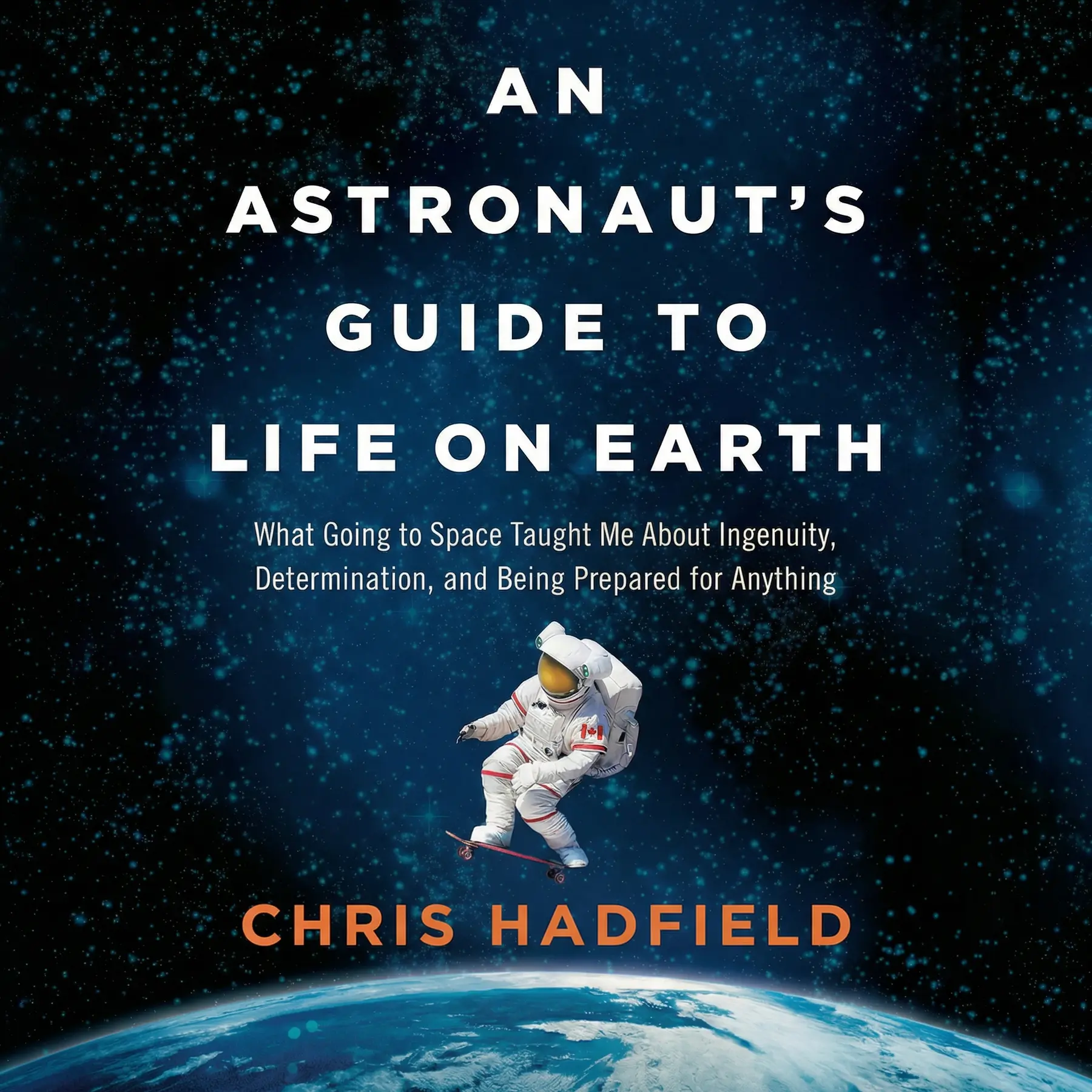
Listeners find this work to be a charming and captivating experience, packed with wisdom and practical guidance for navigating existence. Furthermore, they value the inspiring material geared toward professional environments and the collaborative perspective on life it offers. The prose is also noted for being articulate and clear, featuring excellent narratives, while listeners consider it funny and deeply informative regarding the realities of space exploration.
This book surprised me by being less about the glory of space and more about the grit required to get there. Hadfield writes with a warmth that makes his incredible career feel almost accessible, though his discipline is clearly on another level. I was particularly struck by his "aim to be a zero" philosophy, which flies in the face of most modern self-help advice that demands we all be superstars immediately. Truthfully, the way he describes the mundane parts of training—learning Russian, practicing every possible disaster—is just as gripping as his descriptions of liftoff. It’s a grounded perspective from someone who has literally left the planet. While some might find the heavy emphasis on preparation a bit repetitive, I found it incredibly refreshing to hear a successful person credit their luck to exhaustive hard work rather than innate genius. It is a genuine masterclass in perspective.
Show morePicked this up after watching Chris Hadfield’s viral Space Oddity video, expecting a light collection of space anecdotes, but what I got was a profound meditation on what makes a life well-lived. His mantra of "sweat the small stuff" is the total opposite of what we’re usually told, yet he makes a compelling case for how attention to detail creates true freedom and safety. The writing is incredibly genial, making you feel like you’re sitting in a pub with the world’s most interesting astronaut while he spills all his secrets. Frankly, the transition back to Earth and the description of how gravity feels like a physical weight after months in orbit was the most moving part for me. It’s a beautiful reminder that our home planet is something to be cherished, not just a launchpad. This is easily one of the most inspirational books on my shelf.
Show moreWow. This is the kind of book that makes you want to wake up at 5:00 AM and reorganize your entire life. Hadfield’s voice comes through so clearly on every page; he is remarkably likable and seems to have a genuine desire to share his knowledge with the rest of us. I was especially fascinated by the description of the Cupola on the ISS and how it changed his view of borders and geography. The way he discusses managing the worst-case scenario transformed my own anxiety into a more productive form of planning. It’s a delightful read that balances the high-tech world of aeronautics with very simple, relatable advice about being a good neighbor and a reliable teammate. It really does serve as fuel for your own metaphorical rocket.
Show moreFinally got around to reading this, and I’m kicking myself for waiting so long because it is absolutely fantastic. Hadfield’s description of the physical toll of returning to Earth—the heavy limbs, the nausea, the "old man" shuffle—was eye-opening and something you never see in the movies. This isn't just a book for space nerds; it's for anyone who wants to be better at what they do. His focus on the collective effort of the ISS crew and the beauty of international cooperation is exactly the kind of optimism we need more of right now. The prose is eloquent and the pacing is perfect, moving between high-pressure simulations and quiet moments of reflection. It’s easily one of the best books I’ve read this year.
Show moreEver wonder what it actually feels like to be stuffed into a tiny Soyuz capsule or how you brush your teeth without a sink? Hadfield delivers those details with a dry wit that kept me turning pages late into the night. It isn’t just a dry memoir; it’s a manual for staying calm when the stakes are literally life or death. To be fair, there are sections where the technical descriptions of the ISS feel a bit dense for a casual reader, but his passion carries the narrative through the slower moments. I loved the way he reframes fear as a lack of preparation—it’s a mindset shift that I’ve already started applying to my own career. The book is eloquent, straightforward, and filled with the kind of hard-earned wisdom you can only get by orbiting the Earth sixteen times a day.
Show moreAfter hearing so much hype about Commander Hadfield, I was worried this would be another ghost-written celebrity fluff piece, but it is remarkably substantial. The book functions as a team-oriented guide to life, showing that even the person on the spacewalk is only successful because of a thousand people on the ground. Not gonna lie, the constant "can-do" attitude can feel slightly overwhelming if you’re in a cynical mood, but his humility feels authentic rather than performed. He doesn't sugarcoat the sacrifices his family made during his career, which adds a necessary layer of reality to the hero narrative. It’s a great mix of high-stakes adventure and practical advice for navigating office politics or personal goals. Definitely worth a read for the perspective on global cooperation alone.
Show moreNot what I expected at all, as I thought this would be a strictly chronological autobiography, but it’s structured more like a series of interconnected life lessons. Hadfield uses his time at NASA to explain why being a "plus-one"—someone who adds value without seeking the spotlight—is the ultimate professional goal. Look, I’m not a scientist, and I usually find business-adjacent books boring, but the stories about his training in Russia were genuinely fascinating. My only minor gripe is that he occasionally repeats certain themes about preparation, but maybe that’s the point? If you want to understand the psychological makeup of a test pilot, this is the book for you. It’s a solid, insightful read that manages to be both educational and deeply human without ever feeling like it’s talking down to you.
Show moreThe chapter on managing fear was a game-changer for me, especially as someone who struggles with irrational phobias. Hadfield explains that he isn't fearless; he’s just extremely prepared, and that distinction is so important. I loved the "what's the next thing that's going to kill me?" mentality—it's a hilarious but effective way to prioritize problems. The book is full of these little nuggets of wisdom that are clearly born from extreme situations but apply perfectly to a stressful day at work. My only complaint is that the writing is a bit straightforward and lacks some of the poetic flair I’ve seen in other space memoirs, but Hadfield’s sincerity more than makes up for it. It's a very practical, grounded look at a career that is literally out of this world.
Show moreAs someone who isn't particularly obsessed with space, I found the middle sections of this book a bit of a slog through technical acronyms. Hadfield is clearly a sterling human being, but his tendency to pontificate on the "right" way to live can feel a bit preachy after a few chapters. He is a perfectionist to the core, and while that works for an astronaut, it’s a bit exhausting to imagine applying that level of "sweating the small stuff" to a regular Monday. However, I can't deny that the stories about his early days as a fighter pilot were thrilling, and his sense of humor about his own quirks helps soften the lecture-heavy tone. It’s a decent memoir with some great takeaways, but I think I would have preferred a more traditional narrative style.
Show moreGotta say, while the content is definitely interesting, I struggled a bit with the pacing of the life lessons versus the space stories. Sometimes the transition from a life-threatening crisis in orbit to a tip about how to handle a business meeting felt a little disjointed. I also found the emphasis on meritocracy a bit idealistic, given that not everyone has the same starting line as a fighter pilot. That said, the "being a zero" concept is a truly brilliant piece of social advice that I think everyone should hear. The book provides a great peek behind the curtain of NASA, and Hadfield’s personality is infectious even if the book's structure didn't totally work for me. It's a three-star read that I'm still glad I picked up.
Show moreBen Macintyre
Richard Wiseman
Jacinda Ardern
Ron Chernow
James Comey
Philip Freeman
AUDIO SUMMARY AVAILABLE
Get the key ideas from An Astronaut’s Guide to Life on Earth by Chris Hadfield, plus 5,000+ more titles in English and Thai.







