
20 min 13 sec
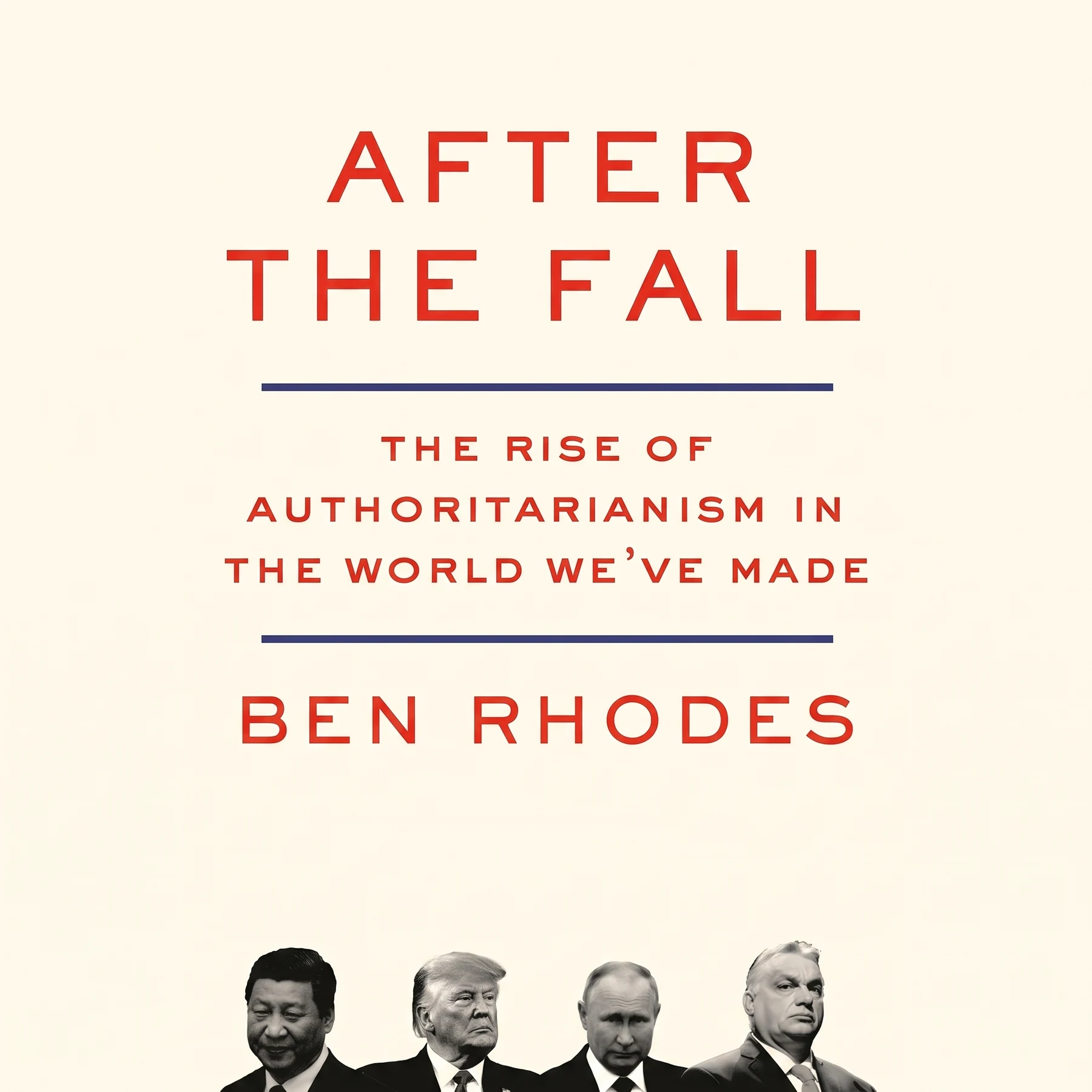
After the Fall: The Rise of Authoritarianism in the World We've Made
By Ben Rhodes
Examine the global retreat of democracy and the rise of authoritarianism through the eyes of former White House advisor Ben Rhodes, exploring how American influence and technology unintentionally fueled this shift.
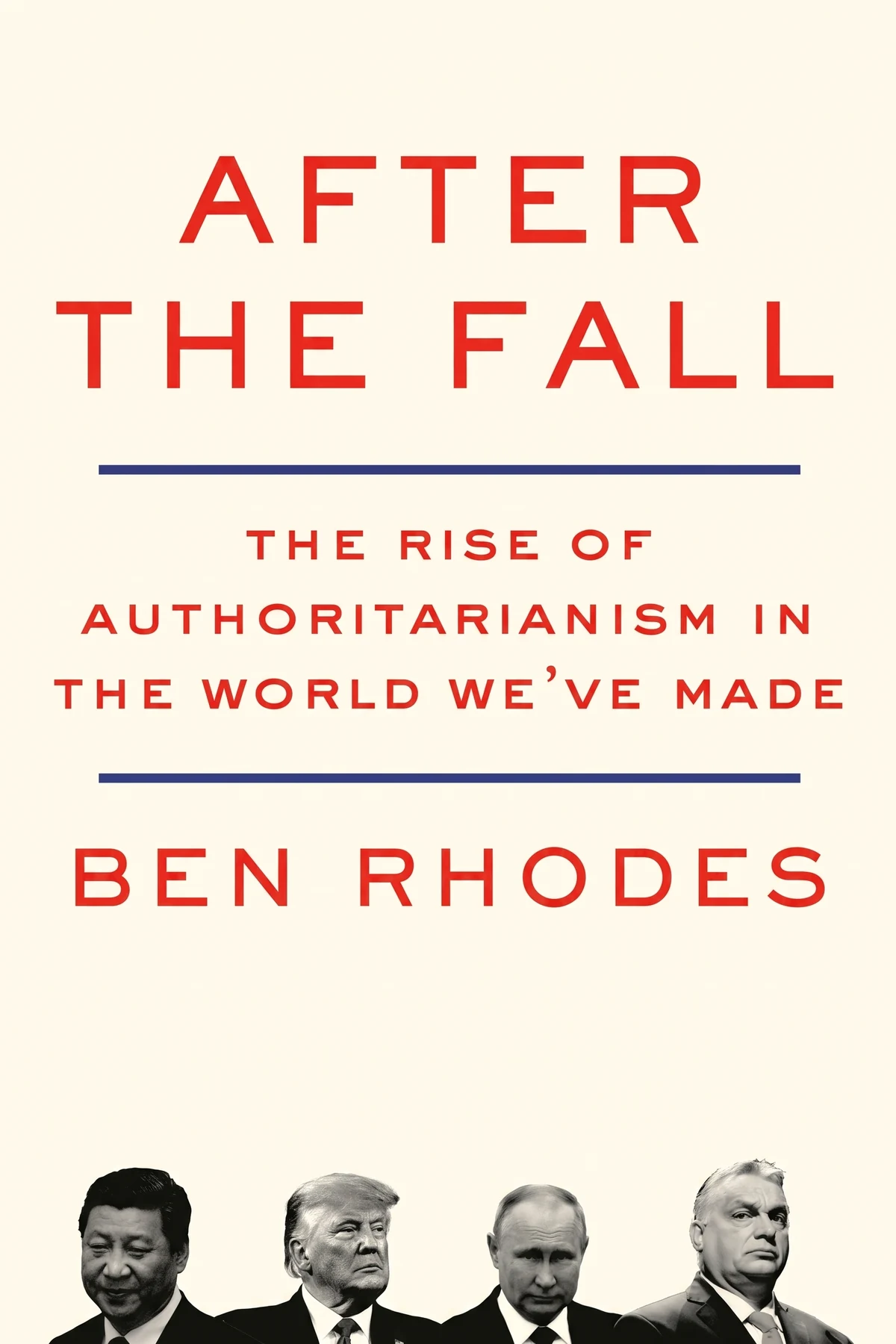
Table of Content
1. Introduction
1 min 49 sec
In the late 1980s, the world felt like it was on the precipice of a permanent democratic dawn. The images are etched into history: Germans swinging sledgehammers at the Berlin Wall, the velvet revolutions of Eastern Europe, and the slow, inevitable collapse of the Soviet Union. For many, it seemed the debate was over. The American model of liberal democracy and free-market capitalism had won. There was a palpable sense of triumph in the air, a belief that the future would be defined by increasing openness, individual rights, and global cooperation. But as the decades rolled on, that triumphalism began to curdle.
What happened in the years following that historic peak? Instead of a world that looked more like the United States, we began to see a United States that, in many ways, started to mirror the darker impulses of the regimes it once opposed. The exports America sent abroad weren’t just democratic ideals; they were also a volatile brand of capitalism that fueled massive inequality and a brand of politics that prioritized dollars over citizens. This shift created a vacuum—a space where nationalism, corruption, and authoritarianism could take root and flourish.
In this exploration of Ben Rhodes’s reflections, we are going to look at the “throughline” of the last thirty years. We will examine how the American dream of the 1980s morphed into the global anxieties of the 21st century. We’ll see how leaders in places like Hungary and Russia took the tools of the modern world—including American-made technology—and used them to dismantle the foundations of a free society. More importantly, we’ll ask what it means to be an American in a world that America helped build, for better and for worse. This isn’t just a story of political shifts; it’s a story of lost identity and the difficult search for a new way forward. Let’s dive into the reality of the world we’ve made and see if there is still a way to reclaim the promise of that fallen wall.
2. The Post-Cold War Identity Crisis
2 min 11 sec
Discover how the end of the Cold War left the United States without a clear moral compass, leading to a shift from idealism to economic obsession.
3. The Export of Inequality and Disillusionment
2 min 01 sec
Explore how the American brand of capitalism and the 2008 financial crisis shattered global trust in democratic institutions.
4. The Rise of Nationalistic Identity Politics
2 min 04 sec
Learn how leaders like Viktor Orbán utilized the fear of lost national identity to dismantle democratic norms from within.
5. The Russian Model of Resentment and Corruption
2 min 09 sec
Analyze how Vladimir Putin leveraged post-Soviet humiliation and a cynical view of Western hypocrisy to consolidate absolute power.
6. The Global Shadow of the War on Terror
2 min 00 sec
Examine how the U.S. response to 9/11 provided a justification for authoritarian crackdowns around the world.
7. China’s Convergence of Capitalism and Control
2 min 05 sec
Understand how the Chinese Communist Party successfully merged economic growth with high-tech totalitarianism.
8. The Double-Edged Sword of American Technology
2 min 04 sec
Learn how the tools of the digital age, born in Silicon Valley, have become the primary weapons for spreading disinformation and suppressing dissent.
9. The Persistence of the Democratic Spirit
2 min 21 sec
Find hope in the stories of activists and leaders who continue to fight for transparency and human rights despite the global authoritarian tide.
10. Conclusion
1 min 29 sec
As we reflect on the journey from the euphoria of 1989 to the complexities of today, the throughline becomes clear. The global rise of authoritarianism wasn’t an accident or an act of fate; it was the result of specific choices made by the world’s leading democracies. By prioritizing market growth over moral leadership, by allowing economic inequality to reach record levels, and by sacrificing civil liberties in the name of security, we created a world that was ripe for the pickings of strongmen and populists.
However, the story doesn’t have to end with the ‘fall.’ The lessons of the last thirty years provide us with a roadmap for renewal. We now know that democracy cannot be taken for granted and that it requires more than just an open market to survive. It requires a commitment to the truth, a dedication to economic fairness, and a vigilant defense of the rights of every individual. We have seen that technology is not a neutral force and that we must take responsibility for the tools we create.
The activists in Budapest, the protesters in Hong Kong, and the dissidents in Moscow are not just fighting for their own countries; they are fighting for a universal ideal. Their courage serves as a reminder that the democratic spirit is resilient. The path forward involves looking honestly at our own failures and recommitting to the values we claim to hold dear. It means building a version of democracy that actually works for everyone, not just those at the top. If we can do that, then the legacy of the fallen wall won’t be a memory of a lost moment, but the foundation for a more just and open future for all.
About this book
What is this book about?
After the Fall explores the complex geopolitical landscape that emerged following the Cold War and the 2016 U.S. presidential election. Ben Rhodes, a key figure in the Obama administration, reflects on how the United States’ post-Cold War actions—from the export of unfettered capitalism to the aggressive tactics of the War on Terror—contributed to a worldwide rise in nationalism and autocratic leadership. Through personal interviews with activists and political figures in countries like Hungary, Russia, and China, the book investigates the blueprints used by modern strongmen to consolidate power. It offers a sobering look at how democratic ideals were gradually replaced by economic inequality and technological surveillance, while ultimately searching for a path toward democratic renewal and the persistent hope held by those fighting for freedom on the ground.
Book Information
About the Author
Ben Rhodes
Ben Rhodes is a former advisor and speechwriter for President Barack Obama and current cohost of the popular podcast Pod Save the World. He is a contributor to MSNBC and NBC News, as well as the author of the best-selling memoir The World As It Is.
Ratings & Reviews
Ratings at a glance
What people think
Listeners consider this work a vital resource for comprehending modern history, offering thorough observations through the lens of an experienced expert. The prose is elegantly crafted, and listeners characterize it as a captivating narrative that adds a human element to significant policy issues. There is high praise for the book's distinct viewpoint and precision, with one listener highlighting how it identifies America's touch and influence on the world. Opinions on the flow are varied; some label it a mandatory read, whereas others perceive it as being too cynical.
Top reviews
Ingrid
This book feels like a wake-up call that doesn't just scream at you but instead walks you through the wreckage of the last twenty years. Ben Rhodes has a way of humanizing massive, tectonic shifts in global politics by focusing on the individuals caught in the crossfire. Frankly, I was struck by how he connects the rise of Orban in Hungary to our own political fractures here in the states. It’s a beautifully written, almost poetic analysis of how the 'American-led globalization' we pushed ended up feeding the very authoritarianism we’re now fighting. While some might find it a bit self-reflective regarding his time with Obama, I think that's exactly what gives it such a seasoned professional perspective. It isn't just a dry policy paper; it's a story about identity and what happens when a superpower loses its way.
Show moreMatteo
Few policy-heavy books manage to pack this much heart into their pages. The truth is, I expected a dense political science text, but what I got was a hauntingly beautiful look at the human cost of rising autocracies. The chapter on Navalny and the Russian opposition feels especially poignant given everything that has happened since this was published. Rhodes doesn’t shy away from the U.S.’s own role in this mess, particularly how our post-9/11 obsession with national security provided a template for dictators elsewhere. He avoids the typical partisan bickering to offer something much more profound: a meditation on what it actually means to be a 'citizen' in the 21st century. It’s a must-read for anyone who cares about the future of democracy.
Show moreAdam
Brutally honest and deeply necessary. Rhodes doesn't just point fingers at foreign dictators; he looks in the mirror and asks how American choices—from the 2008 financial crash to our invasions in the Middle East—created the vacuum these authoritarians filled. The sections on Hong Kong are particularly moving, bringing a real humanity to policy matters that often feel abstract when you're just reading the news. I loved the way he framed the 'American identity' as something that is inherently contested and full of contradictions. It’s a magnificent read that somehow manages to end on a note of hope despite the grim subject matter. If you want to understand the world we’ve actually made, start here.
Show morePierre
The chapter on Navalny is haunting now, but the entire book is a masterclass in political observation. Rhodes uses his unique position as a former Deputy National Security Advisor to give us a 'behind the curtain' look at how world leaders actually think. I was particularly impressed by the Part 3 analysis of Xi Jinping’s China—the transition from 'get rich' to 'become strong' is such a succinct way to frame that shift. The writing is seasoned and professional, yet it never feels cold. He captures the anxiety of this moment in history perfectly. Some might call it pessimistic, but I think it’s just being realistic about the challenges we face. Compulsory reading for anyone who wants to understand the 'authoritarian playbook' before it’s too late.
Show moreStella
Ever wonder how we actually got to this point? Rhodes provides the most comprehensive answer I’ve read yet. He masterfully ties together the threads of Russian disinformation, Hungarian nationalism, and Chinese techno-totalitarianism into one cohesive narrative. What sets this apart is how it brings humanity to the table—you aren't just reading about 'regimes,' you're reading about people trying to find their dignity in a system that feels rigged against them. The book’s core message about how our scaling up of technology we didn't understand helped create this mess is spot on. It’s a fascinating, beautifully written, and ultimately hopeful call to figure out what it actually means to be an American in this new, darker era.
Show moreTod
Finally got around to reading Rhodes’ latest and I have to say, the prose is stunning. He captures the 'ocean-liner' nature of the U.S. government perfectly—how hard it is to turn the ship even when you see the iceberg coming. I particularly appreciated the sections on the 'Chinese Dream' and how they’ve managed to blend state-led capitalism with a level of data collection that is honestly terrifying. My only real gripe is that it leans a bit too heavily into memoir territory at times. I wanted a bit more hard data and a little less 'here is what I was feeling while talking to a dissident in a cafe.' Still, it’s an essential read for anyone trying to understand why the post-Cold War era didn't end in the utopia we were promised.
Show moreNum
Look, Ben Rhodes can write better than almost anyone else in the political sphere. The way he describes the 'Authoritarian Playbook' in Hungary is chilling because it feels so familiar to current American headlines. He highlights how the right wing has embraced a specific brand of Christian nationalism and resentment toward 'globalist' elites. It’s an interesting recap of the last few decades, and he is surprisingly self-critical about the Obama administration’s own shortcomings. My only complaint is the pacing. Some chapters move like a thriller, while others get bogged down in philosophical musings that feel a bit repetitive. However, the insight into how American social media essentially exported Russian-style conspiracy theorizing is worth the price of admission alone. A solid 4-star effort that identifies America's touch on the world.
Show moreChamlong
As someone who follows international relations closely, I found this to be a fascinating, albeit pessimistic, look at our current reality. Rhodes does a great job of showing how Putin used our own 'War on Terror' rhetoric to justify his own aggressions. The book is definitely US-centric, but it uses that lens to show how our cultural and technological exports have backfired. I listened to the audiobook version and did find myself getting lost a few times during the more dense sections on Hong Kong’s security laws. Personally, I think it works better as a physical book where you can sit with the heavier paragraphs. It’s not a light read by any means, but it’s a necessary one if you want to understand the 'why' behind the global shift toward strongman politics.
Show moreCharles
Is this a history book or a diary? I’m still not entirely sure. While the premise is fantastic, the execution felt a bit disjointed to me. The subtitle about 'The Rise of Authoritarianism' is slightly misleading because the book spends so much time on the author’s personal anecdotes and his interactions with Obama. I was hoping for a more clinical, in-depth analysis of the economic factors driving these movements. Instead, it’s a collection of very well-written stories that don’t always feel like they’re proving a cohesive point. To be fair, his writing style is top-notch and he is clearly an astute observer of the world stage. But if you aren’t already a fan of Rhodes’ previous work, you might find this a bit self-indulgent. It’s a decent read, but not the definitive history I wanted.
Show moreChon
Not what I expected based on the title and I was pretty disappointed. I wanted a deep dive into the psychological and social drivers of autocracy, but instead, I got a lot of stories about Ben Rhodes traveling. It felt very partisan and, at times, incredibly self-serving. There is almost no historical research here; it's mostly just him recounting conversations he had with like-minded people. The 'ocean-liner' argument he makes about the government is okay, but it doesn't justify the lack of academic rigor in the rest of the text. Unless you are a die-hard fan of the author’s podcast or his work with Obama, you can probably skip this one. There are much better books on the rise of populism that don't feel like a long-form memoir in disguise.
Show moreReaders also enjoyed
A Higher Loyalty: Truth, Lies and Leadership
James Comey
A Promised Land
Barack Obama
A River in Darkness: One Man’s Escape from North Korea
Masaji Ishikawa
A Theory of Justice
John Rawls
A Warning
Miles Taylor
AUDIO SUMMARY AVAILABLE
Listen to After the Fall in 15 minutes
Get the key ideas from After the Fall by Ben Rhodes, plus 5,000+ more titles in English and Thai.
- 5,000+ titles
- Listen as much as you want
- 7-day free trial
- Cancel anytime







