
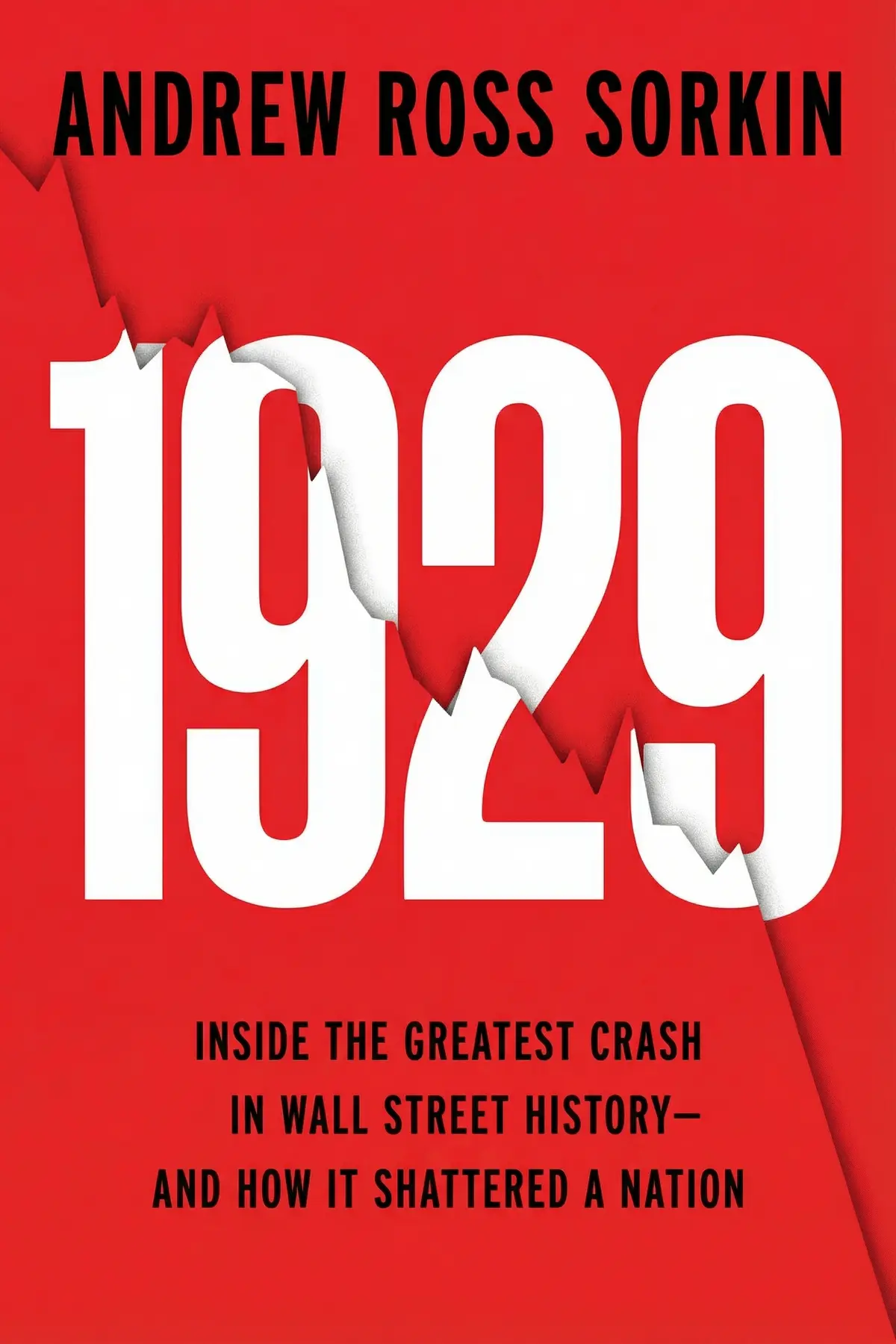
1929: Inside the Greatest Crash in Wall Street History--and How It
Andrew Ross Sorkin
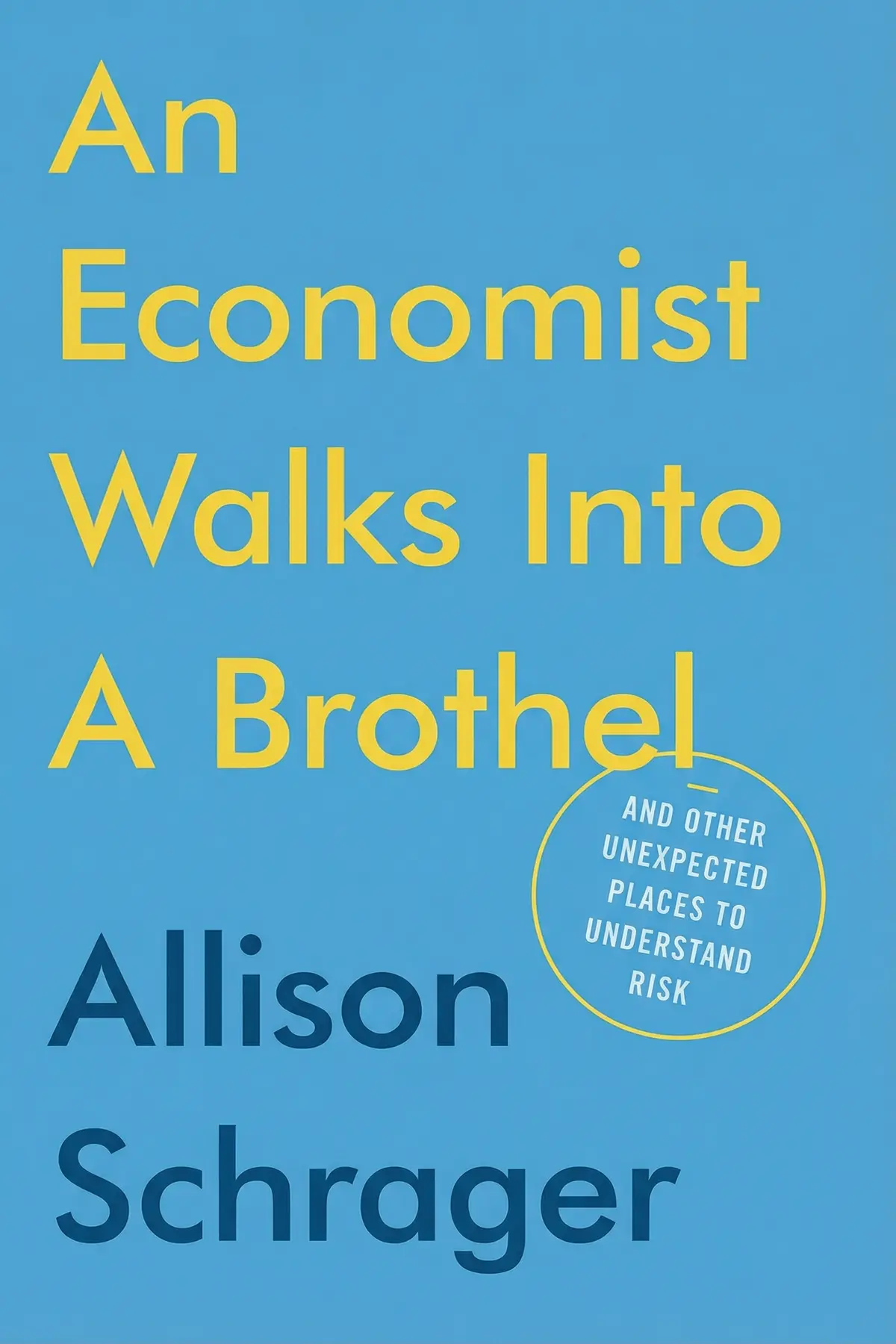
Explore the hidden mechanics of risk management through unconventional lenses. From Nevada brothels to high-stakes poker, learn how to navigate life's uncertainties using the powerful tools of professional economists.
2 min 07 sec
When we hear the word risk, our minds often jump to extreme scenarios. We think of mountain climbers dangling off cliffs, high-rolling gamblers in smoky backrooms, or daring entrepreneurs betting their life savings on a wild idea. But if we peel back the layers of our daily existence, we find that risk is the silent companion of every choice we make. From the moment you decide to snooze your alarm—risking a stressful morning commute—to the moment you choose a partner or a career path, you are constantly trading certainty for a potential reward.
The problem is that most of us are never taught how to speak the language of risk. We rely on gut feelings, we let our fears dictate our boundaries, or we mistakenly believe that if we just play it safe, we can avoid risk altogether. But as we will explore, avoiding risk is often the riskiest move of all. There is always a price to pay for certainty, and often, that price is a life that is smaller and less rewarding than it could be.
In this journey, we are going to look at risk through a very different lens. We are going to step away from the sterile environment of a bank or a boardroom and instead visit some of the world’s most unexpected places. We will see how a legal brothel in the Nevada desert manages the safety and income of its workers. We will look at why a Hollywood studio might greenlight a hundred-million-dollar movie that looks like a guaranteed flop on paper. And we will see how professional poker players manage their emotions when the pot reaches a level that would change most people’s lives.
Through these stories, a clear throughline emerges: risk is not a monster to be feared, but a tool to be mastered. By understanding the economic principles that govern these high-stakes environments, we can begin to apply them to our own lives. We can learn to distinguish between a gamble and a calculated risk, and we can start making decisions that align with what we truly value. Let’s dive into the fundamental principles that transform risk from a source of anxiety into a pathway for growth.
2 min 57 sec
Before you take any leap, you must know exactly where you want to land. Discover why a clear objective is the first defense against reckless behavior.
2 min 58 sec
Just because the sun rose yesterday doesn’t mean tomorrow won’t bring a storm. Learn why relying on history can lead to dangerous blind spots.
2 min 57 sec
We aren’t the logical machines we think we are. Explore how emotions and ‘utility’ skew our perception of what’s truly risky.
3 min 10 sec
Putting all your eggs in one basket is a recipe for disaster. Discover how spreading your bets can protect you from specific failures.
2 min 59 sec
Sometimes the best way to move forward is to give up a little bit of the top to protect the bottom. Explore the mechanics of insurance.
2 min 45 sec
Plans are useless, but planning is indispensable. Learn how to navigate the ‘fog of uncertainty’ when the unexpected hits.
1 min 30 sec
We’ve traveled from the neon lights of Nevada to the high-stakes tables of poker rooms and the frantic sets of Hollywood. Along the way, we’ve seen that the principles used by professional risk-takers are not just for economists; they are essential tools for anyone looking to live a more intentional and successful life.
To recap, remember the six essential tools: starts with a clear goal that defines your destination. Use fresh, current data rather than relying on the ghost of past successes. Understand that your own brain will often try to trick you with emotional ‘utility,’ so stay objective. Use diversification to spread your vulnerabilities, and employ hedging and insurance to put a floor under your potential losses. Finally, when the world throws you a curveball that no model could predict, remain humble and flexible enough to pivot.
Risk is not the enemy. It is the very thing that makes life exciting and rewards possible. By learning to speak its language, you stop being a victim of chance and start becoming the architect of your own fortune. Whether you are planning for retirement, starting a new business, or just deciding how to spend your time, do not be afraid to walk into your own metaphorical brothel. Understand the stakes, pay for the protection you need, and then step forward with confidence. The most rewarding path is rarely the safest one, but with these tools in hand, it is a path you can walk with your eyes wide open.
Risk is often perceived as a danger to be avoided, but in reality, it is the fundamental currency of progress and reward. This summary dives into the surprising world of risk management by looking at industries where the stakes are highest and the outcomes most unpredictable. By examining how sex workers, professional gamblers, and Hollywood producers mitigate danger, we uncover a framework for making better choices in our own lives. The book promises to demystify complex economic concepts like diversification, hedging, and idiosyncratic risk, turning them into practical strategies. You will learn how to define your goals clearly, why your past success might be a deceptive guide for the future, and how to stay flexible when the unexpected inevitably occurs. It is a guide to taking smarter risks, not fewer risks, to achieve a more fulfilling and secure life.
Allison Schrager is an economist and journalist with a background in retirement planning, finance, public policy and media. Her writing has appeared in the Economist, Bloomberg Businessweek, Wired and numerous other outlets.
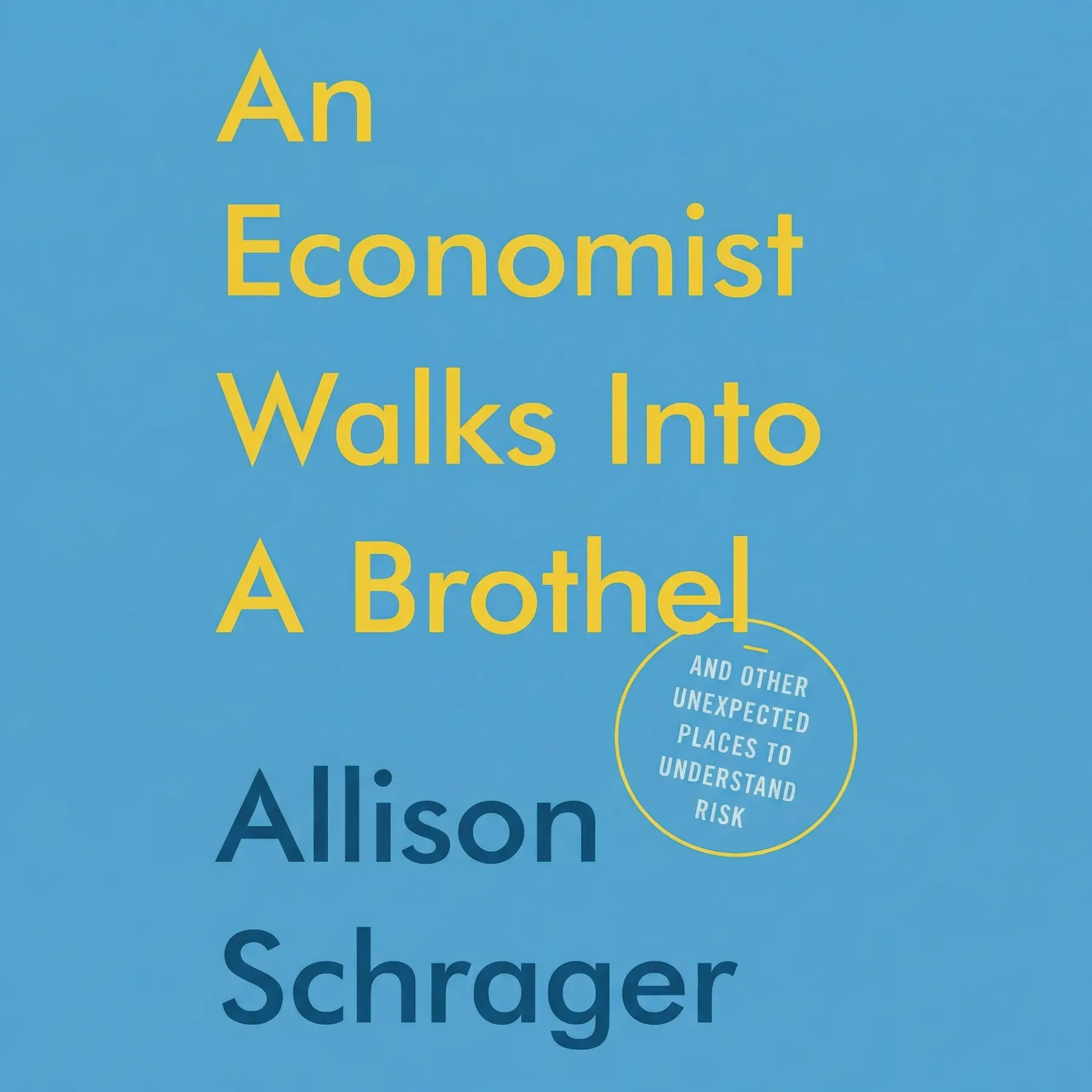
Listeners find the work highly accessible and excellently composed, functioning as an effective introduction that piques curiosity in risk management. Furthermore, the narratives are skillfully shared and loaded with illustrations, making for a captivating experience. On the other hand, the prose style gets varied reviews, with several listeners observing that it does not function as a manual. Additionally, listeners hold differing views regarding the level of detail provided.
Picked this up on a whim because of the title, but I stayed for the incredibly clear explanations of diversification and hedging. Allison Schrager has a gift for taking the stuff that usually puts people to sleep—like insurance math and retirement planning—and making it feel vital and alive through stories about pro surfers and horse breeders. I especially appreciated the distinction between risk and uncertainty; it’s a nuance most people miss but it's crucial for making better decisions in a chaotic world. Not gonna lie, it isn’t a step-by-step manual for getting rich, but it provides a framework for thinking that is far more valuable in the long run. The chapters on the military and Hollywood were particularly eye-opening for me, showing that risk management is a universal human skill. Highly recommended for any layperson who wants to understand the forces shaping their financial life without staring at a spreadsheet all day.
Show moreWow, what a fascinating way to look at the world. Allison Schrager manages to make the complex math of risk feel completely intuitive by showing us how it plays out in brothels, on movie sets, and in the middle of a war zone. This book isn't about telling you what stocks to buy; it’s about teaching you how to think about the trade-offs you make every single day. I loved the section on the 'risk premium'—it really changed how I think about my career and my salary. The writing is crisp, the examples are incredibly diverse, and the pacing is excellent. In my experience, most finance books are either too academic or too much like a 'get rich quick' scheme. This one occupies a perfect middle ground, offering genuine intellectual depth in a package that is fun to read. It's a rare book that makes you feel smarter without making you work too hard for it.
Show moreThe premise is absolutely brilliant: taking the complex, often dry world of financial risk and mapping it onto unexpected real-world scenarios. Schrager uses the Moonlight Bunny Ranch not just for shock value, but to illustrate how sex workers negotiate their own risk premiums and manage 'depreciating assets' in a way that is surprisingly logical. I found the chapters on big wave surfing and horse breeding particularly enlightening, as they provide a concrete look at how professionals calculate the odds when the stakes are literally life or death. While some of the transitions between the stories and the economic theory felt a little abrupt, the overall narrative is incredibly engaging. It’s not a 'how-to' book in the traditional sense, but it forces you to look at your own decision-making process through a much sharper lens. To be fair, some sections on diversification felt a bit basic for anyone with a finance background, but as a primer for the general public, it hits the mark perfectly.
Show moreAs someone who usually finds economics books drier than a desert, Schrager’s narrative style was a breath of fresh air. She manages to explain the Black-Scholes model using anecdotes from the entertainment industry, which is a feat in itself. The way she breaks down how paparazzi mitigate their irregular income through pools is a perfect metaphor for modern portfolio theory. My only real gripe is that the book sometimes prioritizes the 'vignettes' over the actual economic payoff. I would be reading about the life of a horse breeder for twenty minutes and realize I had forgotten this was supposed to be a book about finance. Still, the insights into risk homeostasis and how safety features can actually encourage more dangerous behavior were fascinating. It’s a very readable, thoughtful book that makes you realize you are managing risk every time you walk into a grocery store or plan a vacation.
Show moreTo be fair, this isn't a manual for day trading, but it is a masterclass in understanding the 'unknown unknowns' that we all face. Schrager takes us from the Bunny Ranch to the halls of Hollywood, explaining how different industries price and manage risk in ways we often overlook. The distinction between risk (which can be measured) and uncertainty (which cannot) is the highlight of the book for me. It’s a fundamental concept that is often ignored in traditional financial education. The writing is punchy and the anecdotes are well-told, particularly the sections on big wave surfing and the Peltzman effect. Some might find the level of detail regarding the sementals or the paparazzi a bit excessive, but I think it adds a human element that is usually missing from economic texts. It’s an engaging, smart read that effectively bridges the gap between high-level theory and the real, messy world we live in.
Show moreSchrager manages to turn the Moonlight Bunny Ranch into a classroom for modern finance, which is no small feat. The book is essentially a series of case studies on how people in high-stakes environments manage the tension between safety and profit. Personally, I found the discussion on hedging versus insurance to be the most useful part of the text, as it’s a distinction that most people get wrong. The author’s voice is authoritative yet accessible, and she does a great job of simplifying concepts like diversification without being patronizing. There are moments where the narrative takes a long detour—like the deep dive into the life of paparazzi—but the payoff is usually worth the wait. It’s a very well-written primer that serves as a great reminder that risk is something to be managed and embraced, not just feared. A very solid read for anyone curious about the mechanics of the world.
Show moreEver wonder how a legal sex worker manages their career longevity compared to a professional surfer or a Hollywood producer? Schrager explores these odd parallels to teach us about the 'unknown unknowns' that govern our financial lives. The book is written in a very conversational style, making it a quick read that doesn’t require a PhD to understand. However, the depth of the content is a bit hit-or-miss for me. Some chapters, like the one on the Gulf War and military planning, are fascinating but feel tenuously linked to the core economic concepts. It’s a great introductory book for a layman, but advanced practitioners might find it a bit too elementary. I liked the focus on the difference between hedging and insurance, though I wish there was more practical advice on how to apply these ideas to a personal portfolio. It’s a solid 3-star read that’s entertaining but occasionally misses the mark on substance.
Show moreFinally got around to finishing this, and while the stories are captivating, the 'economic' payoff often felt like a bit of an afterthought. The author is clearly a talented storyteller, and she has a knack for finding colorful characters to interview. However, the actual takeaways for my personal finances were a bit sparse. I enjoyed learning about how racehorse breeders evaluate value and how military generals plan for the unexpected, but translating those lessons into my 401k felt like a bit of a stretch. Look, it's a great book for sparking curiosity about risk management, and it's definitely not boring. If you want a light, narrative-driven introduction to financial concepts, this is perfect. But if you’re looking for a deep dive into the math or a tactical guide on how to survive the next market crash, you might find it a bit too surface-level for your tastes.
Show moreFrankly, I found the execution of this book quite frustrating. While the initial concept of using a brothel to explain the risk premium is clever, the author gets bogged down in narrative filler that adds little value to the actual economic lessons. For example, the section on paparazzi pools spends twenty pages detailing their daily lives only to conclude with a brief, surface-level analogy about diversification. It felt like I was reading a collection of magazine profiles that occasionally remembered they were supposed to be about finance. If you're looking for deep technical insights or a rigorous guide, you’ll likely be disappointed by the sparse definitions and lack of logical depth. The writing is accessible, sure, but it prioritizes 'cool' stories over clarity and meaningful instruction. I much preferred 'Thinking in Bets' for this kind of subject matter; it felt more focused and provided actual tools I could use.
Show moreNot what I expected based on the catchy title. The book feels like a collection of disjointed essays rather than a cohesive argument about risk management. The author clearly did a lot of field research, but she spends way too much time describing the atmosphere of coffee shops and the personalities of her interviewees. I wanted more 'economist' and less 'travel blogger.' When she finally gets to the point about call options or systemic risk, it’s often just a sentence or two at the end of a very long chapter. To be fair, the examples themselves—like the Cinnabon turnaround or the Iraq war planning—are interesting on their own. But as a guide to understanding finance, it lacks the rigor I was hoping for. The connections between the anecdotes and the economic principles felt forced and underdeveloped. It’s an okay airport read, but not a book I’d return to for actual financial wisdom.
Show moreAndrew Ross Sorkin
Ha-Joon Chang
Niall Kishtainy
William J. Bernstein
Yanis Varoufakis
AUDIO SUMMARY AVAILABLE
Get the key ideas from An Economist Walks into a Brothel by Allison Schrager, plus 5,000+ more titles in English and Thai.







