
18 min 10 sec
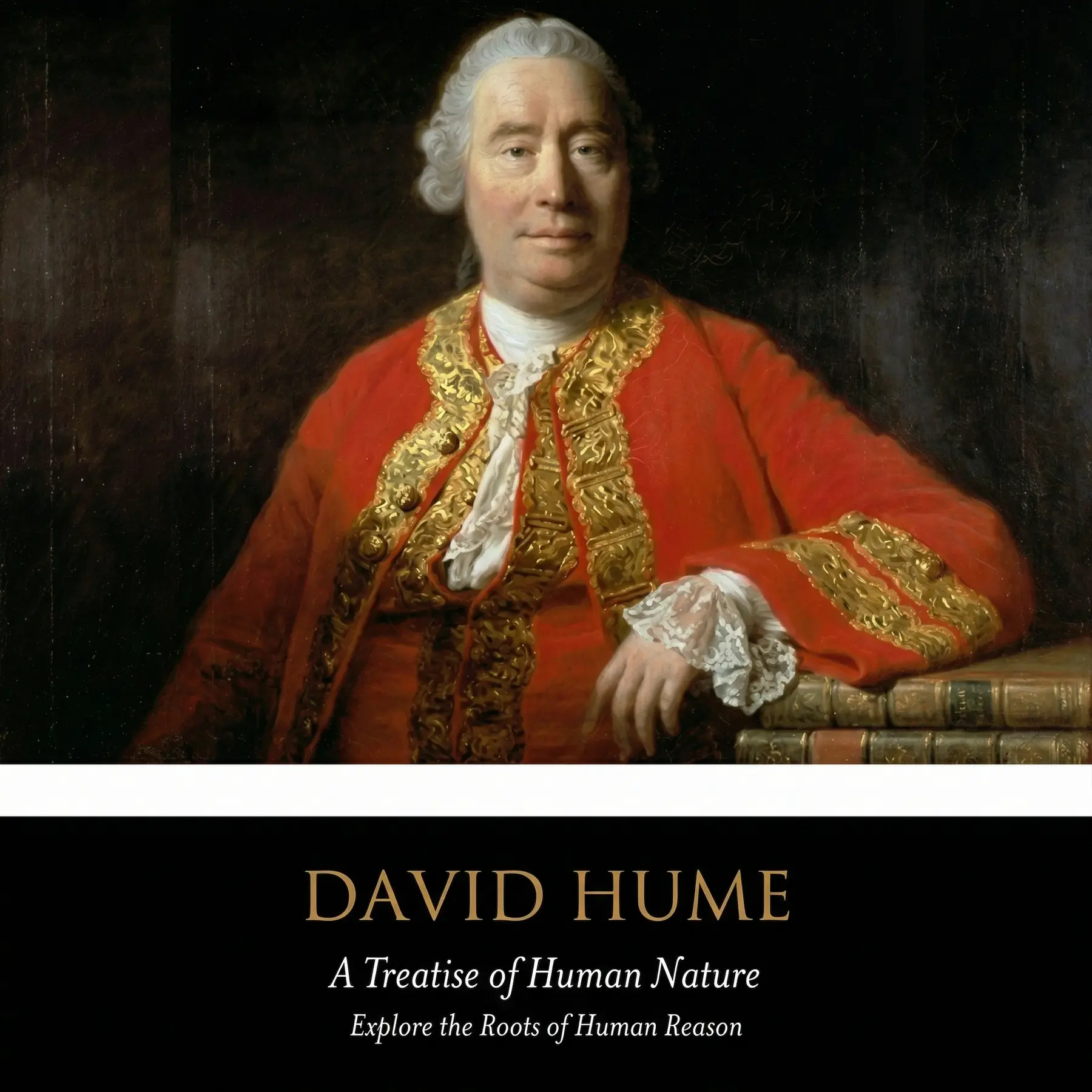
A Treatise of Human Nature: Being an Attempt to Introduce the Experimental Method of Reasoning into Mor
By David Hume
Explore David Hume’s landmark investigation into the human mind, challenging the supremacy of reason and revealing how our sensory experiences, habits, and emotions truly shape our understanding of the world and morality.
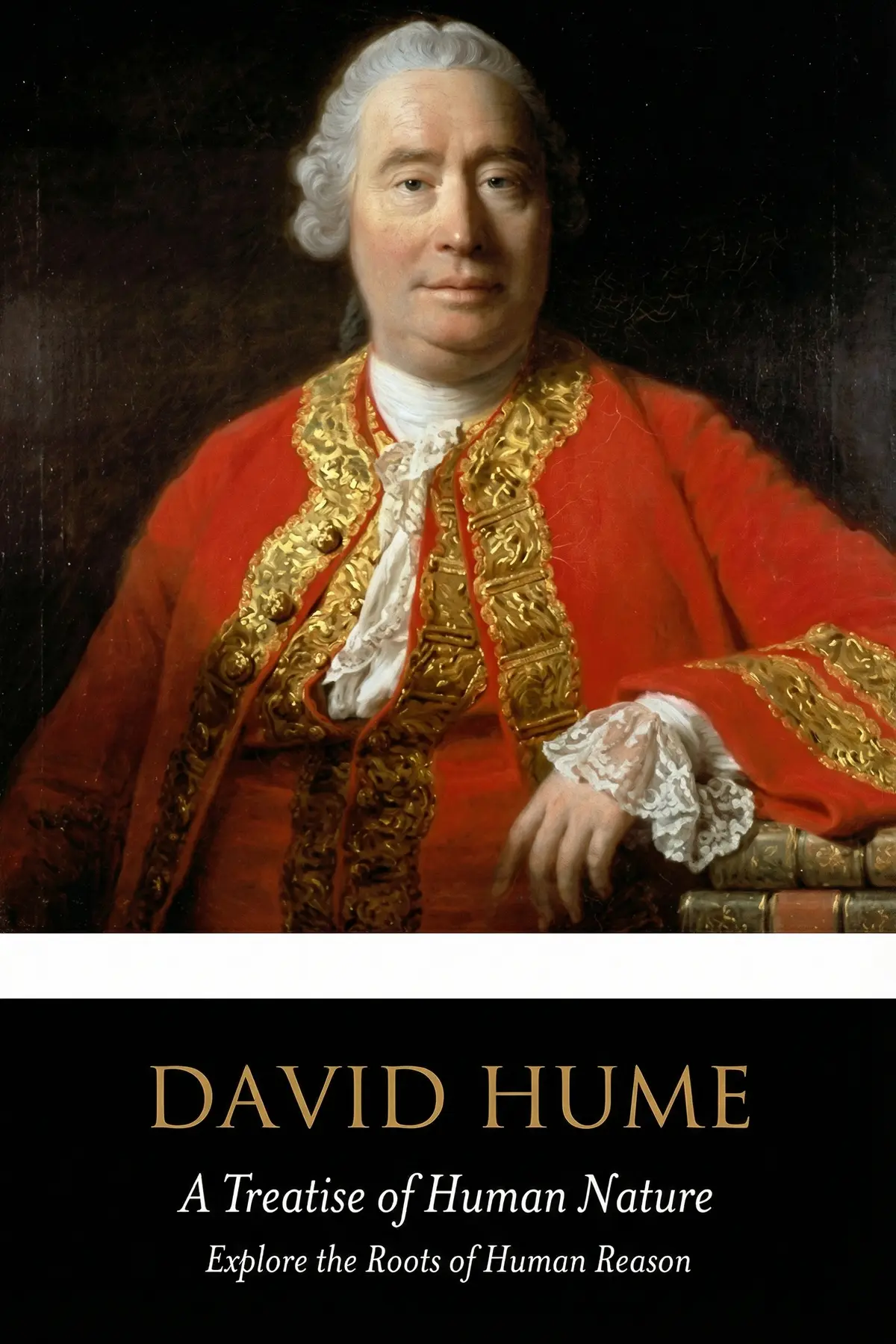
Table of Content
1. Introduction
1 min 49 sec
Why do we believe the things we believe? If you look closely at the history of thought, you’ll find that for a very long time, the answer was simple: reason. Philosophers argued that humans were distinct because of our capacity for pure, logical deduction. But in 1740, a young Scottish thinker named David Hume released a work that would essentially pull the rug out from under this intellectual certainty. That work was A Treatise of Human Nature.
In this foundational text, Hume takes a scalpel to the human psyche. He doesn’t just want to describe what we think; he wants to uncover the machinery behind the thoughts. He argues that we aren’t the purely rational beings we like to imagine. Instead, he suggests we are creatures of habit, driven by our senses and guided by our passions. This wasn’t just a minor disagreement with his peers; it was a philosophical earthquake. By suggesting that even our most cherished certainties—like cause and effect—are actually just psychological shortcuts, Hume laid the groundwork for everything from modern psychology to the scientific method as we know it today.
As we walk through this exploration, we’re going to look at the building blocks of the mind. We’ll see how every complex idea we have is just a recycled version of something we’ve felt or seen. We’ll dive into the startling idea that logic isn’t what tells us the sun will rise, and we’ll discover why our sense of morality is more of a gut feeling than a mathematical equation. Through this journey, Hume invites us to embrace a kind of healthy skepticism—a realization that while our knowledge has limits, our nature provides us with the tools we need to navigate the world. Let’s begin by looking at where it all starts: the very first flicker of a thought in the human mind.
2. The Origin of All Thoughts in Experience
2 min 55 sec
Discover why the mind is essentially a blank canvas that can only paint with the colors provided by our direct sensory encounters with the world.
3. Knowledge as a Product of Habitual Association
2 min 55 sec
Uncover the surprising truth that our most basic beliefs about the world are based on psychological patterns rather than ironclad logical proofs.
4. The Emotional Mechanics of the Human Mind
2 min 47 sec
Explore the intricate web of associations that generate our deepest feelings, from the pride we take in ourselves to the love we feel for others.
5. Moral Judgments as Sentiments of the Heart
2 min 56 sec
Challenge the idea that right and wrong are found through logic, and see why our moral compass is actually powered by our internal feelings.
6. Justice and the Invention of Social Order
2 min 59 sec
See how humans created the concepts of property and promises not out of natural instinct, but as essential tools for survival and cooperation.
7. Conclusion
1 min 49 sec
In David Hume’s A Treatise of Human Nature, we find a profound dismantling of the ego. By the end of his exploration, Hume has shown us that the ‘rational’ human being is largely a myth of our own making. We are not soaring spirits guided by pure logic; we are earthly creatures whose every thought is a shadow of a past sensation. Our deep-seated beliefs about cause and effect are simply the grooves worn into our minds by the repetition of daily life. Our sense of morality is a pulse of the heart, and our systems of justice are the clever tools we’ve built to stop ourselves from tearing society apart.
If this sounds like a bleak or skeptical view, Hume would argue the opposite. By accepting the limits of our reason, we can stop chasing phantoms and start focusing on the actual human experience. We can appreciate that our emotions and habits are not flaws, but essential features that allow us to function. The throughline of Hume’s work is that while we may never have absolute, logical certainty about the universe, we have something much more practical: a nature that guides us through it.
The actionable takeaway from Hume is to embrace a ‘mitigated’ skepticism. Be wary of anyone claiming to have found the absolute, undeniable ‘Truth’ through pure reason alone. Instead, look to experience, look to what is useful for human flourishing, and trust the shared sentiments that connect us to one another. By grounding our lives in observation and sympathy, we can build a world that is not just logical, but truly human. Hume’s masterpiece reminds us that the study of human nature is the foundation for all other knowledge, and that understanding our own minds is the first step toward a wiser, more compassionate life.
About this book
What is this book about?
A Treatise of Human Nature is a foundational pillar of Western philosophy that seeks to apply a scientific method to the study of human psychology and ethics. David Hume dismantles the long-held belief that humans are primarily rational creatures, arguing instead that our thoughts are merely reflections of sensory experience and our beliefs are products of habit rather than logical proof. The book promises a radical shift in perspective, moving from abstract metaphysical speculation to a grounded, empirical look at how we perceive reality, why we feel complex emotions like pride or love, and where our sense of right and wrong actually originates. By exploring the limits of human understanding and the artificial nature of social institutions like justice, Hume provides a blueprint for modern skepticism and the behavioral sciences, offering a profound look at what it truly means to be human.
Book Information
About the Author
David Hume
David Hume was a preeminent Scottish philosopher, historian, and essayist of the Enlightenment era. Recognized as a towering figure in Western thought, he is celebrated for his commitment to empiricism, skepticism, and a naturalistic approach to philosophy. His work revolutionized the field and deeply influenced future thinkers, including Immanuel Kant. In addition to his 1740 masterpiece A Treatise of Human Nature, Hume's significant contributions include An Enquiry Concerning Human Understanding and a massive, multi-volume History of England.
Ratings & Reviews
Ratings at a glance
What people think
Listeners find this philosophical work significant, with one observer noting how it establishes an intellectual framework. Additionally, the annotations are well-received. However, the text quality and readability get mixed reactions; some find the writing accessible, while others find it hard to track. The binding's durability is also a worry, with multiple listeners reporting that it completely fell apart.
Top reviews
Tar
Wow, I finally understand why Kant said this book woke him from his dogmatic slumber. Hume’s skepticism is absolutely brutal, tearing down our assumptions about induction and the very nature of reality itself. Personally, I found the chapters on the 'passions' a bit of a chore to get through compared to the brilliance of the first volume. The way he describes reason as a slave to the passions feels incredibly modern, almost like he’s predicting 21st-century psychology. Look, this isn't a breezy beach read, and you’ll likely need the annotations to keep track of his specific terminology. The notes in this version were a lifesaver for clarifying his stance on moral subjects versus natural philosophy. It’s an essential text, even if his views on certain social customs feel incredibly dated now.
Show moreKanchana
Mind control or just brilliant philosophy? After watching that Jared Henderson video, I had to see if the hype was real. It turns out Hume is just that good at making you doubt your own existence through sheer cold logic. His exploration of how we associate ideas through resemblance and contiguity is still relevant to cognitive science today. In my experience, the first book is the strongest, while the later books on morality feel slightly less rigorous. The truth is that his writing style is an acquired taste, and the text quality here could be much sharper. It’s an essential intellectual framework, but don’t expect to breeze through it in a weekend. It’s a heavy, clunky, brilliant mess of a book that changed how I view my own perceptions.
Show moreVipawan
After hearing so much about how this book 'destroyed' science by attacking induction, I had to read it for myself. Hume doesn't actually hate science; he just wants us to realize that our knowledge is based on habit rather than absolute certainty. There’s a certain humility in his skepticism that I find really refreshing compared to other dogmatic philosophers. Personally, I found the discussion on the 'slave of the passions' to be the most relatable part of the entire treatise. The sentence structure is definitely a challenge, with some thoughts spanning several lines, but the rhythm eventually makes sense. It’s a brilliant, exhausting journey that provides a comprehensive framework for understanding the human mind. Just watch out for the poor binding quality on this specific print—it's definitely a 'read once then buy a better copy' situation.
Show moreSarawut
Picked this up because a YouTuber named Jared Henderson listed it as a top ten essential read, and man, it lives up to the hype despite being a slog. Hume is trying to build a literal science of the mind here, mapping out how our impressions turn into faint ideas. To be fair, the prose is incredibly dense, reflecting that 18th-century Baroque style where one sentence lasts an entire paragraph. I found the section on personal identity particularly haunting since he basically argues the 'self' is just a bundle of perceptions. It’s a foundational intellectual framework that every philosophy student needs to grapple with eventually. My only gripe is the physical quality of this specific edition; the binding started cracking before I even finished Book I. If you can get past the dry language, the insights into cause and effect are genuinely mind-bending.
Show moreNathan
As someone who usually sticks to modern ethics, tackling Hume’s original treatise felt like a daunting rite of passage. He approaches human nature with the same experimental method used in physics, which was a revolutionary shift for his time. The distinction between strong impressions and weak ideas provides a solid foundation for everything that follows in his system. Not gonna lie, the middle section on pride and humility felt repetitive and arguably less impactful than his work on the understanding. You can see the seeds of the 'age of reason' here, even if his skepticism eventually leads to a kind of productive nihilism. It’s a heavy lift, but the annotated footnotes help clarify his more abstruse arguments about space and time. This is mandatory reading for anyone who wants to understand how we moved away from purely metaphysical speculation.
Show moreAndrew
This book is an absolute masterpiece of skepticism that manages to be both enlightening and deeply frustrating at the same time. David Hume is clearly a genius, yet his tendency to ramble for twenty pages on a single point is exhausting. I loved the way he deconstructs justice as an artificial virtue created for social utility rather than something dictated by nature. Frankly, the text quality in this reprint is a bit hit-or-miss with some faint ink, but the overall framework is vital. It’s amazing to think he wrote the bulk of this in his twenties while most of us were still figuring out life. Highly recommended for the patient reader, but keep some glue handy because the binding is notoriously weak.
Show moreHassan
Finally got around to finishing the whole thing and I feel like my brain has been through a blender. Hume’s 'veil of perception' makes you question every single interaction you have with the physical world. I’ll be honest, I struggled with the sections on the infinite divisibility of time because the logic felt circular at points. But then he hits you with a brilliant insight about sympathy and moral approbation that makes it all click. The annotations were surprisingly helpful, providing historical context that I definitely would have missed on my own. It’s definitely not a book for everyone, and the readability is quite low if you aren't used to Baroque prose. Still, there’s a reason this is a top 10 book for so many philosophers. Just be prepared for a slow burn that demands your full attention.
Show moreChanon
Ever wonder if your 'self' is actually just a collection of fleeting memories and sensory inputs? Hume dives deep into that abyss, and honestly, the conclusion is a little bit terrifying for anyone who wants to believe in a soul. This book sets up an incredible intellectual framework for empiricism, though the 18th-century phrasing makes it feel like you're wading through molasses. Truth is, I spent more time re-reading paragraphs than I did moving forward, but the payoff for understanding 'cause and effect' is worth it. I really appreciated the annotations in this edition because they bridge the gap between his archaic English and modern philosophical concepts. However, the physical book itself is poorly made; the pages began falling out of the spine by the time I hit the third book. Great content, but the publisher really dropped the ball on the binding strength.
Show moreSiriphen
Not what I expected at all, considering how much people talk about Hume being a 'clear' writer. Compared to Kant or Hegel, sure, he’s a breeze, but he’s still an 18th-century Scot with a love for complex sentences. The way he breaks down our perceptions into impressions and ideas is a great starting point for empiricism. Gotta say, the binding on this edition is atrocious and I had to tape the cover back on twice. Despite the physical flaws, the intellectual content is top-tier and the annotations provide a lot of needed clarity. He really tackles the big questions about why we believe in the persistence of objects when we aren't looking at them. It’s a slog, but it’s a foundational slog that everyone interested in the 'age of reason' should attempt.
Show moreYui
The chapter on personal identity is the only reason I didn't throw this across the room in frustration. Hume is a precise thinker, but he desperately needed an editor to cut about two hundred pages of repetitive filler. To be fair, his goal was ambitious—creating a total science of human nature—so some density is probably expected. I found his arguments against the idea of 'cause' as a necessary connection to be the most challenging part of the work. It’s a classic for a reason, but the actual experience of reading it feels like a total chore most of the time. Also, my copy completely fell apart before I reached the section on morals, which seems to be a common complaint. If you want the ideas without the headache, maybe just find a summary or his later, shorter works.
Show moreReaders also enjoyed
A Little History of Philosophy
Nigel Warburton
A Theory of Justice
John Rawls
A Guide to the Good Life: The Ancient Art of Stoic Joy
William B. Irvine
Anarchism: A Very Short Introduction
Colin Ward
Anarchy, State, and Utopia
Robert Nozick
AUDIO SUMMARY AVAILABLE
Listen to A Treatise of Human Nature in 15 minutes
Get the key ideas from A Treatise of Human Nature by David Hume, plus 5,000+ more titles in English and Thai.
- 5,000+ titles
- Listen as much as you want
- 7-day free trial
- Cancel anytime







