
21 min 31 sec
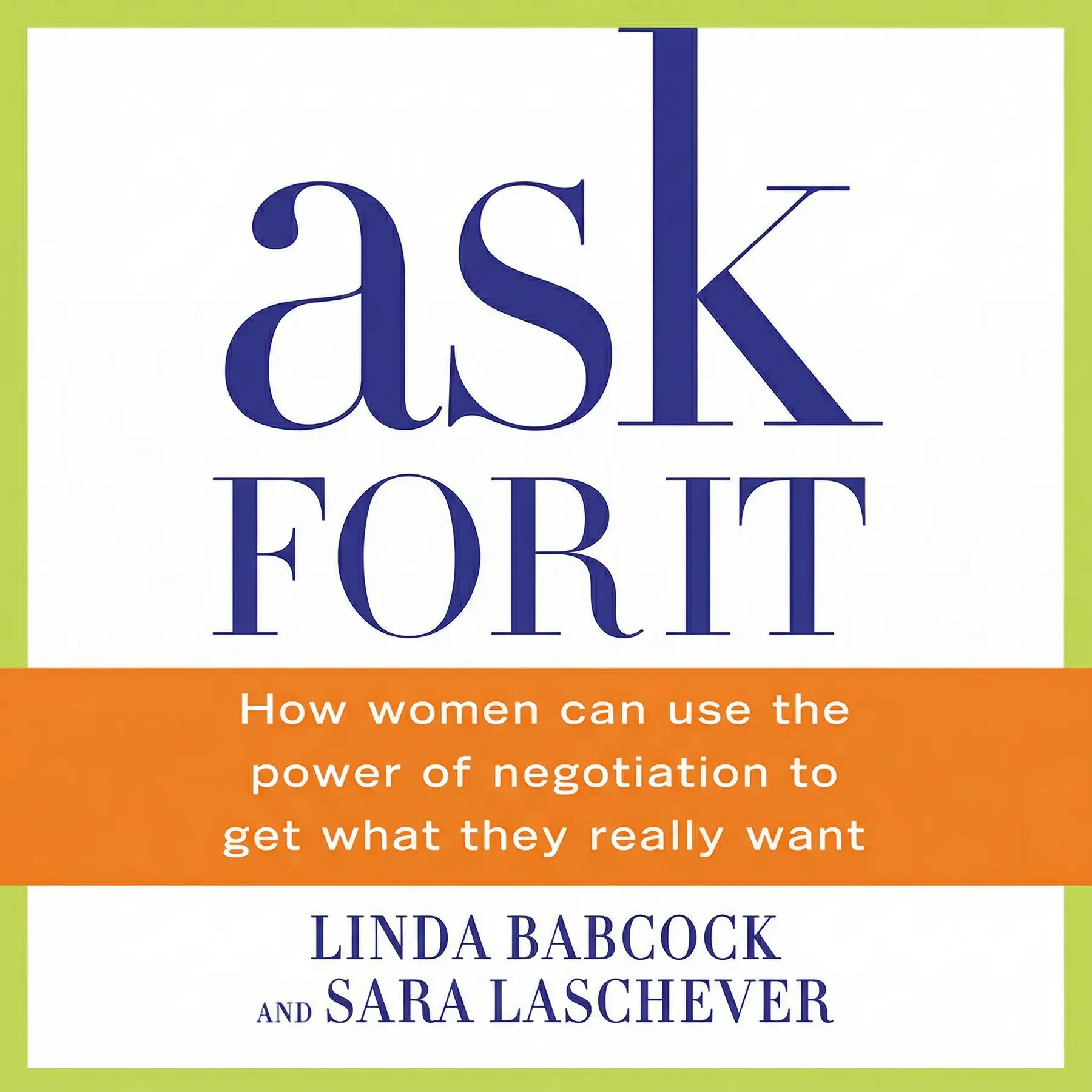
Ask For It: How Women Can Use the Power of Negotiation to Get What They Want
Discover how to overcome social conditioning and master the art of negotiation. This guide empowers women to advocate for their worth, secure better pay, and design a life they truly desire.
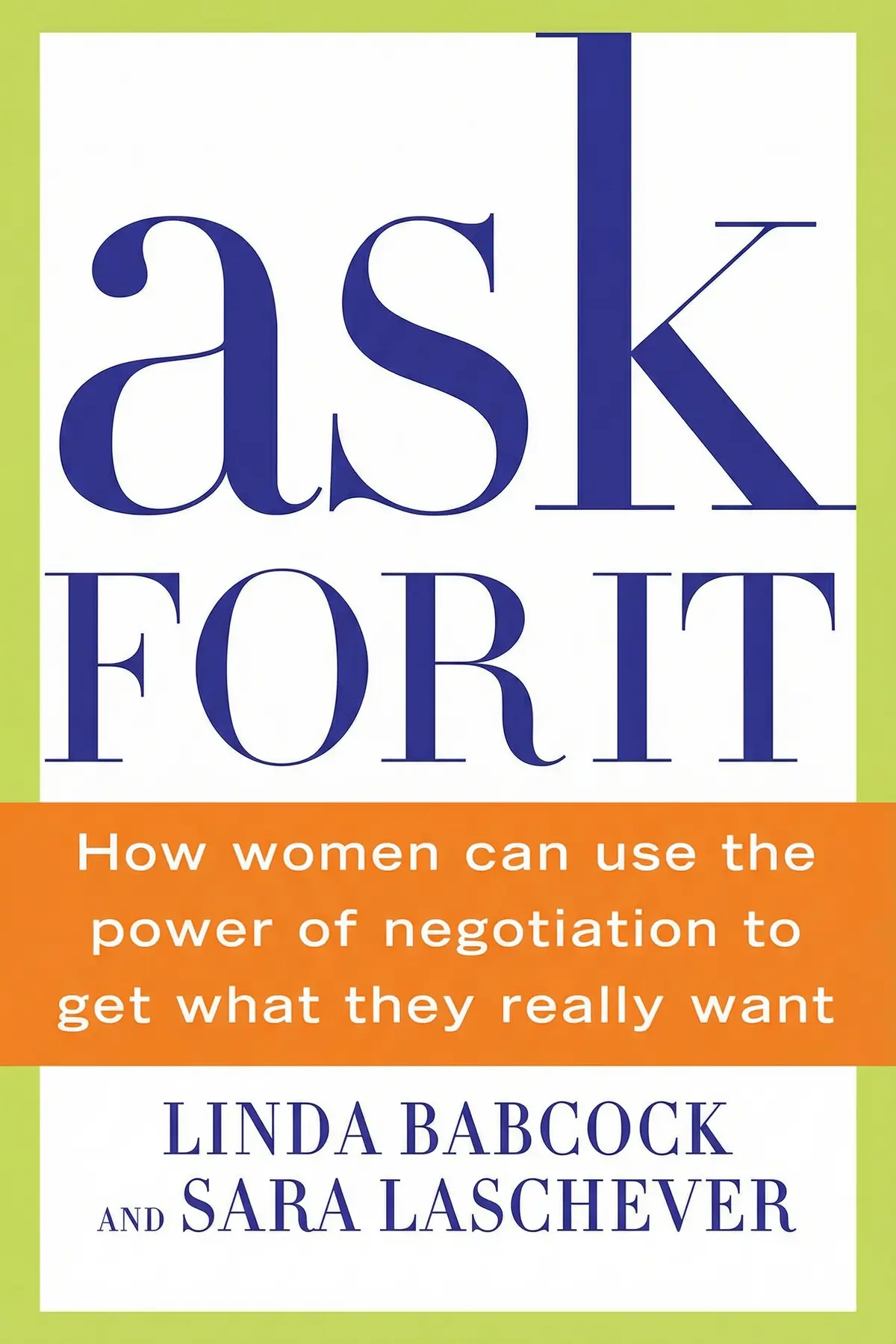
Table of Content
1. Introduction
1 min 56 sec
In our culture, the phrase “asking for it” usually carries a heavy, negative weight, often used to blame someone for an unfortunate situation they find themselves in. But here, we are reclaiming that phrase and turning it on its head. In this context, asking for it is not about being a victim; it is about taking the reins of your own destiny. It is about identifying exactly what you want from your life and having the courage and the skill to go out and get it. This summary will guide you through the transformative power of negotiation, showing you that it is not just a business tactic, but a fundamental way of engaging with the world that can lead to deeper satisfaction and better relationships.
Many women grow up with a silent script that tells them to be patient, to work hard, and to wait for their efforts to be noticed and rewarded. We are taught that if we are good enough, the world will eventually give us our due. But as you will see, this mindset can be incredibly limiting. It often leaves women feeling stuck or undervalued, wondering why their male counterparts seem to be moving ahead faster. The truth is that the world rarely hands out rewards spontaneously; you have to ask.
Throughout this journey, we will explore the psychological hurdles that specifically affect women, such as the tendency to believe that our lives are controlled by external forces rather than our own choices. We will look at how to prepare for a negotiation with the precision of a professional, using information as your most potent weapon. You will learn how to turn potentially confrontational situations into collaborative problem-solving sessions that benefit everyone involved. Whether you are aiming for a corner office, a more flexible schedule, or just more respect in your personal life, the throughline here is agency. By the end of this exploration, you will understand that negotiation is a bridge between the life you have and the life you want, and you will have the tools to walk across it.
2. Identifying Authentic Desires
2 min 20 sec
Uncover why social expectations often cloud personal ambition and learn a simple technique to rediscover what is truly missing from your professional and private life.
3. Shifting the Locus of Control
2 min 08 sec
Explore why women often feel they lack influence over their circumstances and how adopting a new mindset can reveal a world full of untapped opportunities.
4. The Ubiquity of Negotiation
2 min 05 sec
Learn to see negotiation as a daily tool for cooperation rather than a rare boardroom conflict, and discover the essential backup plan every negotiator needs.
5. Empowerment Through Information
1 min 56 sec
Discover why data is your most powerful asset in any discussion and how a lack of market knowledge leads women to significantly undervalue their own worth.
6. The Art of Seeing the Other Side
2 min 12 sec
Learn how tunnel vision can sabotage your goals and why understanding the hidden motivations of your counterpart is the secret to getting what you want.
7. Cooperation Over Competition
2 min 26 sec
Understand the difference between winning a battle and winning the war, and why interest-based negotiation leads to superior, long-term outcomes.
8. Navigating the Social Tightrope
2 min 15 sec
Address the unfair double standards women face in the workplace and learn the tactical empathy required to be both firm and likable during a negotiation.
9. Patience, Tempo, and High Targets
2 min 05 sec
Discover the ‘The Closer’ mindset for finishing a deal, including why you should always aim for your highest goal and how to control the speed of the conversation.
10. Conclusion
2 min 08 sec
As we wrap up our look at the art of asking for it, it’s important to remember that negotiation is a muscle. The more you use it, the stronger and more natural it becomes. We have seen that the journey begins with an internal shift—recognizing that you have the right to want things and the power to influence your own life. From there, it is about preparation: finding out what is missing, gathering hard data to support your worth, and understanding the hidden motivations of those across the table from you. By choosing cooperation over competition and navigating social expectations with a ‘relentlessly pleasant’ demeanor, you can overcome the unique hurdles that women face in the professional world.
One of the most practical pieces of advice to take away is to be careful with your numbers, especially in the early stages of a deal. Think about the car-selling example: if you list a car for $14,500 and someone offers you $12,000, don’t immediately jump down to $13,000. That tells the buyer that your ‘bottom line’ is actually much lower, and they will keep pushing you. Instead, make a small, incremental adjustment to $14,000. This signals that your price is firm and based on value, which encourages the other person to make a more serious offer. This same logic applies to your salary, your consulting fees, or even how you negotiate your time.
Ultimately, the goal of learning to negotiate isn’t just about getting more money—though that is certainly a major part of it. It’s about building a life that feels authentic and balanced. It’s about ensuring that your relationships, both at work and at home, are based on mutual respect and shared interests rather than silent resentment or lopsided sacrifices. Negotiation is the tool that allows you to advocate for yourself in a world that often forgets to do it for you. So, the next time you find yourself wanting something—whether it’s a promotion, a bathrobe in a hotel, or more help with the chores—don’t wait for someone to notice. Do your research, find your ‘win-win,’ take a deep breath, and ask for it.
About this book
What is this book about?
Negotiation is often viewed as a high-stakes, competitive battle reserved for boardrooms and international treaties. However, this book redefines negotiation as a fundamental life skill that occurs in every corner of our lives, from requesting a raise to deciding on weekend plans. For many women, internal and external barriers—such as social conditioning and the fear of being perceived as aggressive—often prevent them from asking for what they deserve. This results in a persistent gender gap in pay, promotions, and overall life satisfaction. Ask For It provides a strategic roadmap for women to navigate these challenges with confidence. By combining psychological research with practical advice, the authors illustrate how to gather market information, leverage the power of collaboration, and manage the social nuances of the workplace. The promise is simple yet profound: by learning to ask effectively, you can shift from being a passive recipient of your circumstances to an active architect of your career and personal life. Whether you are aiming for a significant salary increase or simply want more balance in your daily routine, these insights show you how to turn every conversation into an opportunity for growth.
Book Information
About the Author
Linda Babcock
Linda Babcock is a distinguished professor of economics who has earned numerous accolades for her contributions as an educator. Her groundbreaking research on gender and negotiation has been featured in prestigious academic journals, including the American Economic Review and the Quarterly Journal of Economics. Sara Laschever is a gifted writer known for her ability to translate complex, scholarly themes into engaging and accessible narratives. Her work covers a wide spectrum of topics, from pop culture and literature to science, and has been published in leading outlets such as the New York Times, the Boston Globe, Glamour, and Vogue.
Ratings & Reviews
Ratings at a glance
What people think
Listeners find this book provides actionable, sequential guidance and is an accessible listen, making it essential for professional women. The content is empowering, helping to increase self-assurance, and proves effective for both men and women. Though it incorporates numerous personal accounts, listeners have varied views on the diversity of these narratives. Additionally, the speed of the narration receives mixed reactions from listeners.
Top reviews
Tong
This book is an absolute game-changer for any woman who has ever felt hesitant to speak up about her worth. The authors dive deep into 'bias without malice,' explaining how societal expectations often hold us back from even realizing we can negotiate. I found the anecdotes about women in various stages of their careers to be incredibly motivating. It isn’t just about the money; it’s about the confidence to ask for a better life. The writing style is down-to-earth and feels like a conversation with a very smart mentor. It’s a mandatory read for anyone entering the workforce or looking for that next promotion. The advice is practical and helps build that negotiation muscle starting with small, everyday asks.
Show moreWararat
Ever wonder why men seem to get ahead faster even when skills are equal? Babcock and Laschever prove it's often because they simply ask more frequently—four times more, to be exact! This book was an eye-opener that changed how I view every interaction, from salary talks to household chores. The data provided, like the study on school children and Hershey’s Kisses, is heartbreaking but necessary to hear. It’s empowering to realize that the 'no' we fear isn't actually the worst-case scenario. The writing is incredibly readable and the tone is encouraging without being overly preachy or academic. I’ve already recommended it to my daughter to ensure she starts her career with these tools.
Show moreConnor
Picked this up during a job transition, and the timing could not have been more perfect. As someone in academia, the idea of negotiation is often treated as taboo or even 'unbecoming,' but this book completely dismantled that myth. It provided me with the language to articulate my value without feeling like I was being aggressive or difficult. I actually used the tips to ask for additional resources that weren't in the initial offer, and my new employer was happy to provide them! It's not just about the paycheck; it's about feeling valued in your workspace. Truly a life-changing read for any woman in a specialized field where we are often taught to just be grateful for what we get.
Show moreBunyarit
Finally got around to reading this, and I’m glad I did, even if I have some reservations. The concept of being 'relentlessly pleasant' during negotiations was a huge takeaway for me because it addresses the very real social backlash women face. I appreciated the technical bits like defining your BATNA and doing your research before sitting down at the table. However, the authors could have spent more time discussing the potential costs of a poorly timed ask. It’s great to have chutzpah, but you need a large reserve of 'brownie points' saved up if you’re dealing with a long-term supervisor who might misinterpret your ambition. Still, it's a solid 4-star guide that I'll keep on my shelf.
Show moreBig
After hearing so much buzz about this in my professional circles, I decided to give it a go. The truth is, negotiation isn't a battle, and this book does a great job reframing it as a collaborative conversation. I loved the emphasis on preparation and understanding what the other side values most. It taught me to ask for what I'm worth, not just what I need to survive. While I didn't love every single case study—some felt a bit dated—the overarching framework is incredibly practical. It gave me the boost of confidence I needed to negotiate my last contract, and it actually worked! It’s all about finding potential areas of compromise while standing your ground.
Show moreZoe
Not what I expected, but in a good way. I thought this would be a dry business manual, but it’s actually quite companionable and even funny at times. What surprised me most was how applicable the advice is to everyday life outside of the office. Since reading, I’ve started asking for better tables at restaurants and even bartering for services in my neighborhood. The book builds your 'negotiation muscle' starting with small stakes, which makes the big career asks feel much less daunting. My only gripe is that some of the 'stories' felt a little too perfect, but the core strategies are definitely legit and help you see opportunities you would have missed.
Show moreFah
The chapter on preparation was worth the price of the book alone. I’ve always been someone who avoids conflict, so the idea of 'asking' was terrifying to me before I read this. Babcock and Laschever show that negotiation is really just a form of problem-solving where both sides can win. I appreciated the specific tips on how to frame requests to avoid the 'ambitious woman' backlash that we all know is real. It’s a practical, step-by-step guide that helps you build a reserve of confidence through research and strategy. A few parts felt a bit wordy, but the overall message is something every woman needs to hear. Whether it's a yard sale or a boardroom, you should always Ask For It.
Show moreMilk
Look, the information here is undeniably important, but the execution left me wanting more. The book is divided into parts, and you have to trudge through a lot of sociology and anecdotes before you get to the actual 'how-to' in Part 4. For a busy professional, the pace felt a little sluggish, and I found myself skimming through the middle sections just to get to the meat of the advice. It's insightful and certainly highlights the gender gap in negotiation styles effectively. I just wish it were more concise and focused on the tactical maneuvers rather than repeating the same points through different stories. It's a good faculty reading group choice, but be prepared for some repetition.
Show moreWatchara
Honestly, I struggled to get through the first half because it felt so repetitive and slow. While I appreciate the core message that women should advocate for themselves, the book is packed with an overwhelming number of stories that feel a bit too idealistic. Many of these 'successful women' examples are unknown, making the advice feel less grounded in reality and more like filler. I was looking for concrete, step-by-step strategies right away, but I had to wait until the final sections to find anything actionable. If you enjoy long narrative case studies, you might like it, but for me, it was a bit of a bore and didn't offer enough proof for its claims.
Show moreAim
To be fair, I think the authors have good intentions, but I really disliked the underlying suggestion that women need to mimic male behavior to succeed. It felt like the book was blaming women for being 'cheated' out of raises because they aren't aggressive enough. I found the tone a bit patronizing at times, and the sheer volume of repetitive examples made it a chore to finish. I’m all for empowerment, but this felt more like a collection of anecdotes than a rigorous guide with actual proof. There are better books out there that focus on changing the system rather than just changing the woman. Legit had to stop reading this due to boredom level halfway through.
Show moreReaders also enjoyed



AUDIO SUMMARY AVAILABLE
Listen to Ask For It in 15 minutes
Get the key ideas from Ask For It by Linda Babcock, plus 5,000+ more titles in English and Thai.
- 5,000+ titles
- Listen as much as you want
- 7-day free trial
- Cancel anytime







