
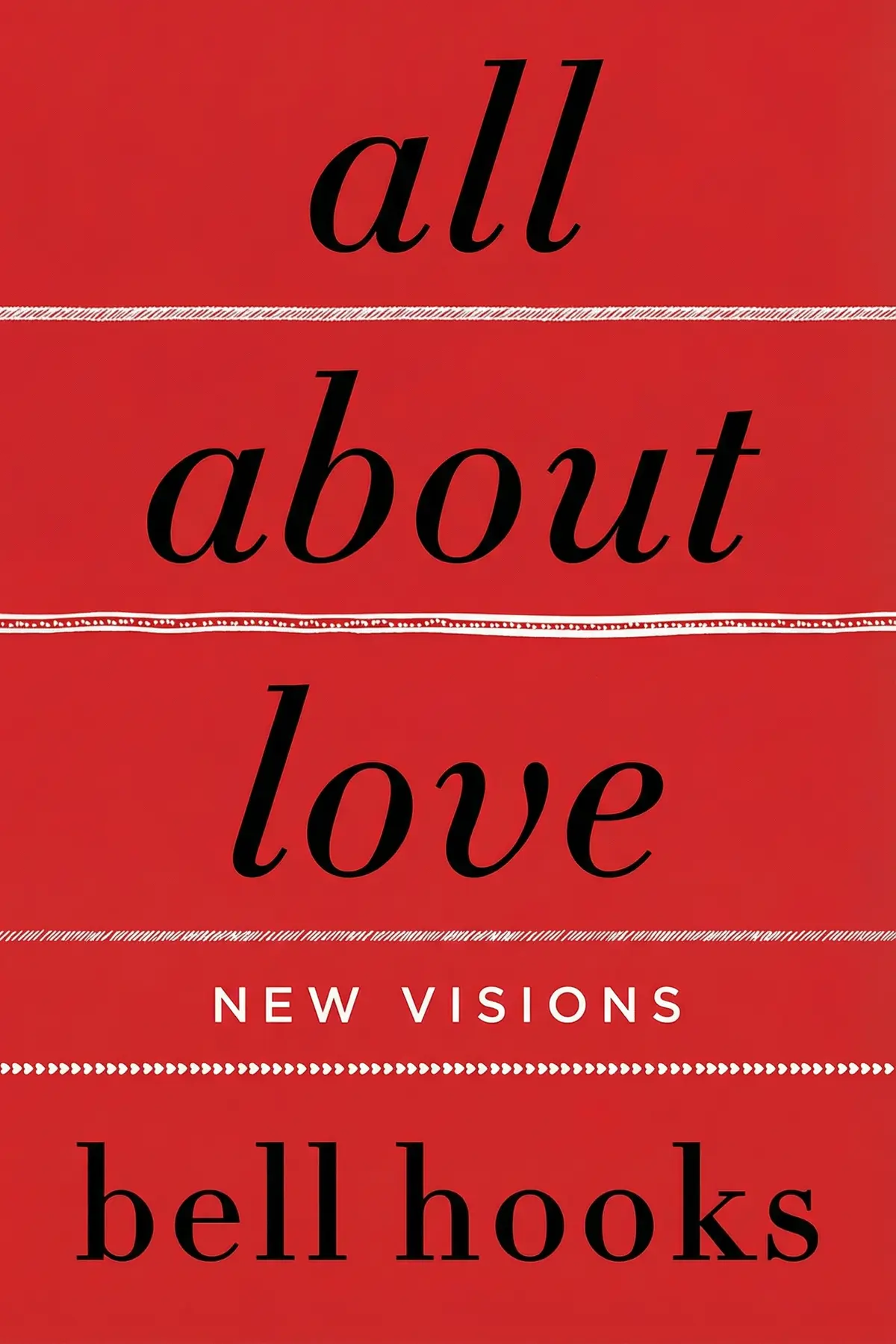
All About Love: New Visions
bell hooks
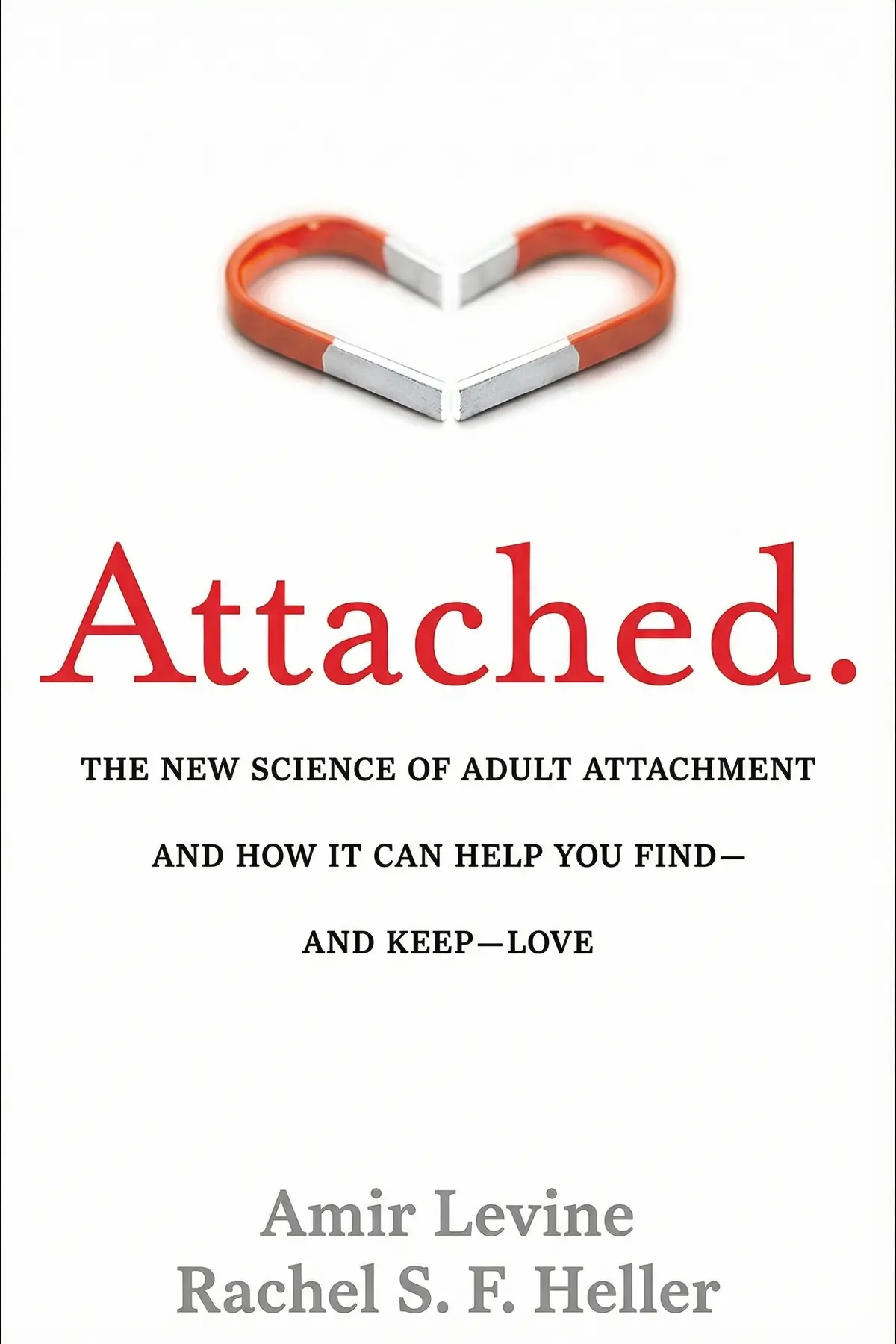
Attached explores how biological attachment styles—anxious, avoidant, and secure—dictate adult romantic behavior, offering a scientific roadmap to finding compatible partners and building lasting, healthy connections through effective communication and understanding.
1 min 37 sec
Every relationship comes with its own unique set of rhythms, puzzles, and challenges. We often look at our romantic behavior as a series of choices or perhaps just a reflection of our personality, but what if there was something much deeper at play? What if the way you react when your partner doesn’t text back, or the way you feel a sudden urge to pull away when things get too serious, is actually hardwired into your biology? This is the core premise of our exploration today. We are looking at the fascinating world of adult attachment theory, a field of study that suggests our romantic lives are guided by a biological system designed to ensure our survival and well-being.
In the journey ahead, we’re going to move past the typical ‘he-said-she-said’ relationship drama and look at the underlying mechanics of how we connect. We’ll explore why some of us are naturally more comfortable with intimacy while others feel it as a threat to their freedom. We’ll see how our childhood and even our evolutionary ancestors have shaped the way we interact with our partners today. Most importantly, we are going to discover that understanding these patterns—these ‘attachment styles’—isn’t just an academic exercise. It is a powerful tool that can help us navigate the dating world with more clarity, resolve conflicts with less pain, and ultimately build the kind of secure, supportive partnership that allows us to be our best selves. Whether you’ve spent years wondering why you seem to attract the ‘wrong’ people or you’re simply looking to strengthen a bond you already have, this throughline of biological understanding will offer a fresh perspective on the most important connections in your life.
2 min 31 sec
Discover why the need for a partner is more than just a social desire—it’s a physical requirement for health and survival.
2 min 35 sec
Explore how ancient survival tactics and early life experiences combine to form your unique approach to love.
2 min 14 sec
Understand the inner world of the anxious attacher, where sensitivity to cues can lead to both deep connection and intense worry.
2 min 24 sec
Learn why some people view intimacy as a threat to their freedom and how they use distancing tactics to maintain independence.
2 min 12 sec
Find out why secure individuals are the ‘super-partners’ of the dating world and how they handle intimacy with ease.
2 min 14 sec
Master the art of expressing your needs clearly to filter out the wrong partners and strengthen the right ones.
2 min 08 sec
Transform disagreements from relationship threats into opportunities for deeper connection through healthy fighting techniques.
2 min 23 sec
Break free from the idea that love conquers all and learn why matching attachment styles is the key to lasting happiness.
1 min 37 sec
As we come to the end of our exploration into the science of attachment, the message is clear: the quality of our romantic lives is not a matter of luck or fate. It is something we can understand, navigate, and ultimately improve through the lens of biology and psychology. We’ve seen that our need for connection is a fundamental human requirement, as essential to our well-being as the air we breathe. We’ve identified the three main attachment styles—the anxious, the avoidant, and the secure—and seen how they dictate our behavior in the dance of intimacy.
The most important takeaway is that your attachment style is not a life sentence, but a map. By identifying where you fall on the spectrum, you gain a deeper understanding of your own needs and triggers. You stop apologizing for wanting closeness or feeling the need for space, and you start looking for partners who can honor those traits. You’ve learned that the ‘secure’ style offers a blueprint for stability and that, through effective communication and healthy conflict resolution, we can all move toward more secure relationships.
So, as you move forward, take these tools with you. Be honest about what you need from a partner and don’t be afraid to communicate it early and often. Stop chasing those who make you feel insecure and start leaning toward those who provide a ‘secure base.’ Remember that a healthy relationship should make you feel empowered to take on the world, not drained by the effort of maintaining the connection. By aligning your romantic choices with the reality of your biological needs, you open the door to a partnership that is not just a source of love, but a foundation for a healthier, happier life.
Have you ever wondered why some people seem to breeze through relationships while others feel constantly on edge or suffocated by intimacy? Attached provides a deep dive into the psychology of human connection, revealing that our romantic behaviors aren't just personality quirks—they are deeply rooted in our biological makeup and evolutionary history. The book breaks down the three primary attachment styles: the anxious person who craves closeness and fears abandonment, the avoidant individual who prizes independence and keeps partners at arm’s length, and the secure person who navigates intimacy with ease and stability. By identifying these patterns, the book promises to change how you view your dating life and long-term partnerships. It moves beyond generic relationship advice to offer a science-based framework for understanding why we choose the partners we do and how we can better manage the inevitable conflicts that arise. You will learn how to identify the attachment style of a potential mate early on, how to communicate your needs without blame, and how to create a supportive 'secure base' that allows both partners to thrive. Ultimately, it’s a guide to stopping the cycle of unsatisfying relationships and finding a bond that provides both safety and growth.
Dr. Amir Levine and Rachel S. F. Heller are long-time friends who collaborated on this work to provide better guidance for people navigating their romantic lives. Dr. Levine is a psychiatrist and neuroscientist who grew up in Israel; he currently serves as a principal investigator for a research project supported by the National Institutes of Health. Rachel S. F. Heller is a graduate of Columbia University, where she earned a master’s degree in social-organizational psychology. Her professional background includes work with several prominent management consulting firms, such as PriceWaterhouseCoopers, KPMG Consulting, and Towers Perrin.
Listeners find this book to be an accessible, fast-paced guide that offers a comprehensive look at adult attachment styles and how they influence romantic bonds. They value the way it clarifies relationship mechanics and helps individuals better grasp their own behaviors and those of their partners, with one listener mentioning that it validated their perspective as an anxiously attached person. The title is well-regarded for its research-driven content and actionable tips, assisting readers in navigating their feelings and strengthening their interpersonal connections.
Finally got around to reading this, and it felt like a lightbulb finally flickered on in a very dark room. For years, I felt like my need for closeness was a character flaw, but Levine and Heller explain that it’s simply a biological drive. The way they break down the anxious-avoidant trap helped me understand why I keep gravitating toward people who pull away the moment things get serious. It’s a very approachable read that doesn’t get bogged down in too much academic jargon, making the psychological research feel accessible to everyone. While I do think they go a bit easy on the anxious types, the overall message about finding a secure partner is vital. This book gave me the permission I needed to stop apologizing for my emotional needs and start looking for a 'secure base.' If you’ve ever been told you’re too needy, you need this perspective.
Show moreWow, I wish I had this book in my early twenties before I wasted so much time on people who weren't capable of meeting my needs. This is a life-changing resource that provides a thorough overview of how our childhood conditioning follows us into our adult bedrooms. The authors do an incredible job of taking complex attachment theory and turning it into a roadmap for better dating. I personally identified as anxiously attached, and reading this felt like a huge weight was lifted off my shoulders. It's a quick, easy read that you can probably finish in a weekend, but the insights will likely stay with you for years. Not every example is a perfect fit, but the core message is undeniable. Everyone should read this regardless of their current relationship status because understanding yourself is the first step to a healthy partnership.
Show moreStop what you're doing and buy this if you are struggling to understand why your dating life feels like a hamster wheel. It is rare to find a "self-help" book that is actually backed by decades of peer-reviewed research rather than just anecdotal fluff. Levine and Heller take the guesswork out of why we choose the people we do and how we can break those patterns. The practical guidance on how to spot a secure partner early on has already saved me months of heartache. Frankly, it should be required reading in high school because it explains the mechanics of love better than anything else I’ve ever encountered. It’s thorough, approachable, and deeply insightful. Even if you think you’re "fine" at relationships, you will definitely find something in here that makes you go, "Oh, so that's why I do that!"
Show moreIs it perfect? No. Is it essential? Absolutely. This book provides the most comprehensive yet digestible overview of attachment theory currently available for a mainstream audience. It helps you stop looking at relationship problems as personal failures and start seeing them as incompatible systems. I loved how it validated my feelings of being "anxious" without making me feel like I was broken or needed years of therapy to be "normal." The authors emphasize that our needs are legitimate, which is a message you don't hear often enough in a culture that prizes hyper-independence. It’s a research-heavy book that manages to feel like a warm conversation with a smart friend. If you want to improve your relationships and better understand the person sitting across from you, this is the place to start.
Show moreThe concept of a 'secure base' changed everything for me and how I view my independence. I used to think that being in a relationship meant losing my autonomy, but the research presented here suggests the exact opposite. When we have a reliable partner, we actually feel more empowered to go out and take risks in the world because we know we have support to return to. I found the writing style to be very direct and lean, which I appreciated given how dense some psychology books can be. My only real gripe is that the case studies, like the one about Tamara and Greg, felt a little bit like caricatures designed to prove a point rather than real people. Still, the practical guidance on communication and identifying red flags early on is invaluable. It’s a solid 4-star read for anyone wanting to navigate their emotions more effectively.
Show moreAfter hearing so much hype, I was pleasantly surprised by how practical the advice actually is for everyday couples. It isn't just a bunch of theory; the book offers real-world scripts and strategies for effective communication that you can start using immediately. I specifically liked the focus on how secure individuals can help "buffer" their more anxious or avoidant partners. It takes the pressure off of "fixing" yourself before you’re worthy of love and instead focuses on finding a compatible dynamic. The research-based content feels sturdy, though I did find the lack of diversity in the examples a bit disappointing. Most of the couples are very traditional, but the psychological principles are universal enough that you can adapt them to your own situation. It definitely helps you navigate the messiness of human connection with a bit more grace.
Show moreAs someone who has always felt 'too much' in relationships, finding this was a massive relief for my mental health. I’ve spent so much of my life trying to minimize my feelings so I wouldn't scare people away, but this book taught me that my protest behaviors were just a cry for security. Learning about how the brain is wired for connection makes so much sense, and it helped me stop blaming myself for my past relationship failures. The chapters are well-organized and the tone is mostly encouraging, even when discussing the more difficult aspects of attachment. I do think the authors could have spent more time on the disorganized style, which felt like a footnote, but for the majority of readers, this covers the bases perfectly. It really is a must-read for anyone who feels stuck in a cycle of bad dates.
Show moreTo be fair, while the science is fascinating, the authors clearly have a favorite child when it comes to attachment styles. If you identify as avoidant, prepare to feel like the villain in almost every scenario presented in these pages. The book is heavily biased toward anxious types, portraying them as sympathetic victims while avoidants are often seen as cold or even toxic. It ignores the nuance of why someone might pull away, often simplifying complex traumas into a "just change your ways" directive. However, I can't deny that the underlying framework is extremely useful for identifying patterns that I’ve seen play out in my own life. I appreciated the sections on deactivating strategies, even if they were painful to read. It's a helpful tool, but you have to read between the lines and ignore some of the more judgmental tones.
Show moreLook, classifying human behavior into three neat little boxes is always going to have limitations, but "Attached" handles it better than most. While I agree with other reviewers that the book is quite heteronormative and focuses heavily on the anxious-avoidant dynamic, the core logic is sound. It’s a quick read that doesn’t demand a PhD to understand, which is why it’s become such a staple in the dating world. Personally, I found the discussion on "effective communication" to be the most useful part of the entire book. It challenges the idea that we should play games or hide our feelings to keep someone interested. My only real critique is that it makes "secures" sound like perfect robots who never have bad days or communication breakdowns. Relationships are always going to be work, no matter what your style is.
Show moreThis book feels like it was written specifically for people who are anxiously attached and want to be told they’re right about everything. As someone with a background in psychology, I found the oversimplification of human behavior to be borderline dangerous at times. Take the Tamara and Greg example from the beginning; the author assumes Greg’s withdrawal is purely an attachment issue rather than a natural reaction to a specific situation. It pigeonholes people into these rigid boxes that don't account for the fact that we can be different versions of ourselves depending on our partner. The "secures" are put on such a high pedestal that they don't even seem like real humans, but rather some unreachable ideal. It’s a very one-sided take that validates clingy behavior while demonizing anyone who needs a bit of space. Not a fan of the bias here.
Show morebell hooks
Katherine Woodward Thomas
AUDIO SUMMARY AVAILABLE
Get the key ideas from Attached by Amir Levine, plus 5,000+ more titles in English and Thai.







