
20 min 10 sec
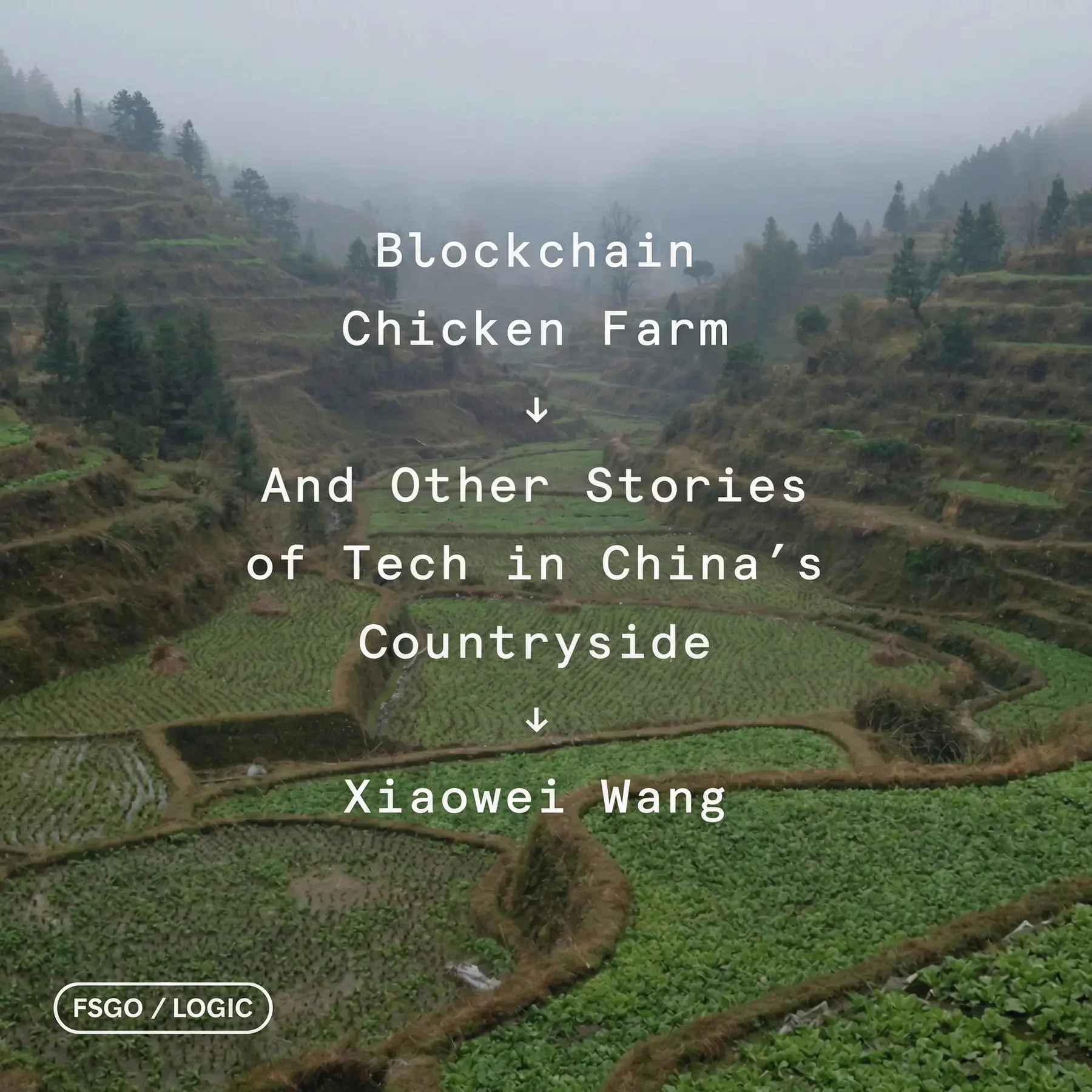
Blockchain Chicken Farm: And Other Stories of Tech in China's Countryside
By Xiaowei Wang
Blockchain Chicken Farm examines the unexpected ways high-tech innovations like artificial intelligence and distributed ledgers are reshaping rural China, moving beyond the shiny skyscrapers of cities into the mud of the countryside.
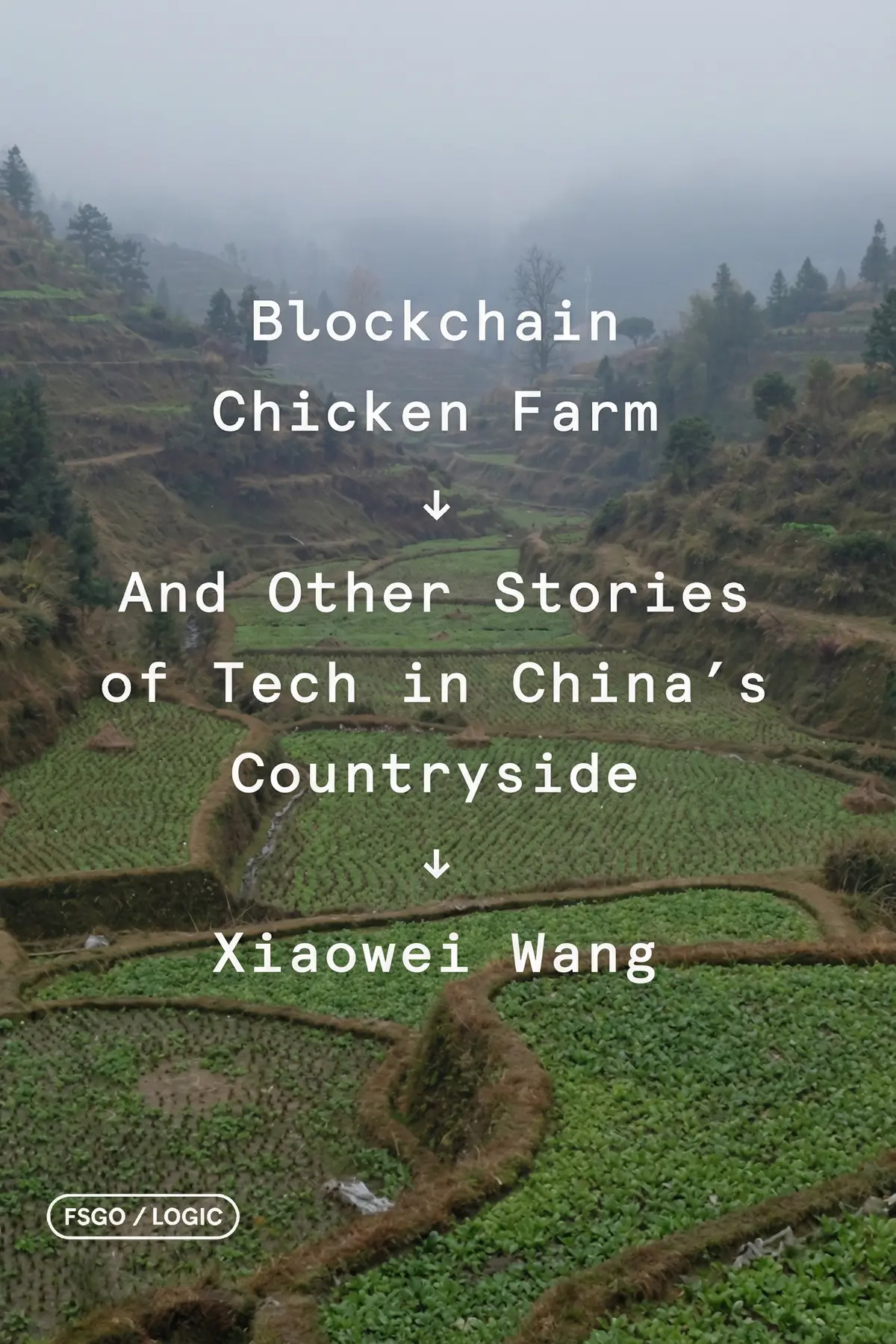
Table of Content
1. Introduction
1 min 28 sec
When we think about the epicenters of the digital revolution, our minds usually drift to the neon-lit streets of Tokyo, the glass-and-steel campuses of Silicon Valley, or the high-tech laboratories of world-class universities. We imagine a future built in clean rooms and air-conditioned offices. But there is another side to this story—one that unfolds in the damp soil of rice paddies, the crowded stalls of rural markets, and the remote mountain villages of inland China.
In this exploration, we are stepping away from the predictable narratives of urban tech growth to look at the hinterlands. This is where the true friction of the twenty-first century is felt. We are following the journey of technology as it migrates from the megacity into the countryside, altering everything from how a chicken is raised to how a young person finds their place in the world.
This isn’t just about the hardware of drones or the code of a blockchain; it is about the human relationships and historical forces that define a nation’s development. We will trace the throughline of China’s evolution—from its agrarian roots to its current status as a digital powerhouse—and see how the rural landscape is not a relic of the past, but the laboratory of the future. Along the way, we’ll see how global markets reach into the most isolated corners of the globe and how the people living there are pushing back, adapting, and creating something entirely new. Get ready to see the future of technology through a lens you likely haven’t considered before.
2. The Deep Connection Between the City and the Soil
2 min 35 sec
Discover how the rhythmic migration of millions reveals the hidden heart of China’s economic power and its historical reliance on the rural population.
3. Restoring Trust Through the Digital Ledger
2 min 24 sec
Learn how the ‘GoGoChicken’ project uses blockchain to solve a crisis of confidence in the food supply, bridging the gap between farmers and wealthy urbanites.
4. The Drone Pilot and the Education Gap
2 min 35 sec
Explore how online learning and precision agriculture are offering new paths for rural youth, while still highlighting a persistent social divide.
5. Innovation Through the Art of the Remix
2 min 16 sec
Challenge your ideas about ‘copycat’ culture by looking at ‘shanzhai,’ a unique form of grassroots innovation that thrives on sharing and adaptation.
6. The Messy Reality of the Surveillance State
2 min 24 sec
Go behind the headlines of high-tech tracking to see the logistical hurdles and ethical dilemmas facing China’s massive data collection efforts.
7. How E-Commerce Reaches the Mountain Peaks
2 min 13 sec
See how the ‘Rural Taobao’ initiative is turning remote villages into global manufacturing hubs, creating new wealth and new anxieties.
8. The Nihilism and Hope of the Digital Youth
2 min 24 sec
Uncover the ‘shehui ren’ subculture, where disillusioned young people use memes and livestreams to navigate an increasingly unequal world.
9. Conclusion
1 min 51 sec
As we close this journey through the fields and servers of rural China, a clear picture emerges: the future is not a single, unified destination. It is a messy, vibrant, and often contradictory process of adaptation. We have seen how technology like blockchain is being used to rebuild the trust that was lost in the rush to modernize, and how drones are giving rural youth a new vantage point on the world. We have explored the ‘shanzhai’ spirit, which proves that innovation can thrive in the absence of traditional rules, and we have witnessed the digital hustle of a generation trying to find meaning in a rapidly changing society.
The throughline of China’s story is one of constant movement between the past and the future, the city and the country. The digital revolution hasn’t replaced the agrarian heart of the nation; it has transformed it. The chickens on the blockchain and the drone pilots in the fields are symbols of a world where ancient traditions and futuristic tools are forced to coexist.
What this means for all of us is that we must broaden our definition of progress. Innovation isn’t just about the next big app or the newest gadget; it’s about how those tools are picked up and repurposed by real people to solve real problems. It’s about the paved road that brings both commerce and chaos, and the online classroom that offers a slim but vital hope for a better life. As China continues to experiment with these new forms of living and working, it offers a preview of the challenges and possibilities that will define the rest of the twenty-first century. The lesson is simple: to see where the world is going, don’t just look at the towers of the city. Look at the mud on the tires of the tractor, and the smartphone in the hand of the farmer. That is where the future is truly being built.
About this book
What is this book about?
What happens when the world’s most advanced technologies meet the most traditional ways of life? This exploration takes listeners deep into the rural heartland of China, a place often overlooked in stories of global tech dominance. From chickens tracked on a blockchain to drone-assisted farming, the narrative reveals a landscape where the digital and the agrarian are becoming inextricably linked. It is not just a story of gadgets, but a deep dive into the socio-economic forces that drive a nation. Through a series of on-the-ground encounters, you will discover how the internet is bridging the gap between isolated mountain villages and global markets. The book promises to challenge your assumptions about innovation, showing that the most radical changes are sometimes happening in places without paved roads. It examines the tensions of a surveillance state, the hustle of the digital economy, and the unique brand of creative adaptation that defines modern Chinese industry. Ultimately, it offers a window into the future of food, work, and social identity in a rapidly shifting world.
Book Information
About the Author
Xiaowei Wang
Xiaowei Wang is a multidisciplinary artist, filmmaker, and writer whose work focuses on the complex relationship between technology and society. They serve as the creative director for Logic magazine. Wang’s insights and reportage have been featured in prominent global outlets, including the New York Times, the BBC, CNN, and VICE.
Ratings & Reviews
Ratings at a glance
What people think
Listeners find the work to be informative and skillfully composed, with one review noting its sharp attention to detail. They value the perspective offered, as one listener highlights its innovative look at Chinese culture.
Top reviews
Kanokporn
Xiaowei Wang offers a piercing look into the collision of high-tech logistics and rural life that feels light-years ahead of Western discourse. I was particularly struck by their exploration of 'metronormativity' and how we urbanites tend to project our own fantasies onto a countryside we barely understand. The chapters on Taobao villages and the sheer scale of the digital pearl trade provide a much-needed reality check for anyone still thinking of rural China as a primitive backwater. While some critics find the prose repetitive, I found the direct, declarative style refreshing and grounded in its observations. The inclusion of 'Sinofuturist' recipes adds a surreal, artistic layer that distinguishes this from a dry academic text. It’s a haunting, beautifully weird meditation on how technology actually functions on the ground, away from the sleek glass offices of Shenzhen or Silicon Valley. This is essential reading for anyone trying to grasp the global reach of racial capitalism.
Show moreLars
Wow, this was not at all what I anticipated when I saw a title about blockchain chickens. It is a brilliant, intersectional critique of how technology is reshaping the very fabric of our lives. Wang’s voice is empathetic and deeply human, especially when discussing the precarity of gig workers and the environmental cost of our 'shopping religion.' I felt a sense of daze and gratitude reading their observations of 'ghosts in the machine' and the hukou system. The philosophy of Shanzhai as a tool for community building rather than just 'counterfeiting' was a total lightbulb moment for me. It’s a book that asks what kind of world we actually want to build, rather than just optimizing for efficiency. The recipes are a quirky touch that makes the whole experience feel like a collaborative art piece. Highly recommended for those who like their tech analysis with a side of soul.
Show moreConnor
Finally got around to reading this and it’s easily one of the most provocative things I’ve read this year. The central argument—that AI is a quest for scale that ignores the stewardship of the land—is incredibly powerful. Wang highlights how the shift from growing wheat to chili peppers for American Halloween costumes is a form of ecological violence. I loved the 'buffet life' chapter and the way it connects global markets to the precarity of individual workers in China. The writing is visceral and haunting, especially the descriptions of the glistening skylines in Chongqing versus the neglected chickens in the hills. It’s a reminder that a computer can never enter into a commitment, and that our current tech path is fundamentally anti-human. If you want to understand the true cost of globalism, start here.
Show morePaiboon
Ever wonder where those weird 'oyster opening' livestreams on Facebook actually come from? Wang tracks the supply chain back to rural Zhejiang in a way that is both fascinating and deeply depressing. The book is less of a technical manual and more of a travelogue through the fringes of the global economy. I loved the section on 'Shanzhai' culture and how it challenges Western notions of intellectual property. However, the book does get bogged down in some pretty dense political theory that felt a bit shoehorned in. One minute you’re reading about pig farming, and the next you’re being lectured on the 'patriarchal authoritarianism' of the CCP. Still, the vivid descriptions of Taobao towns—where entire villages produce nothing but Halloween costumes—will stick with me for a long time. It’s a fresh, necessary perspective on Chinese culture that avoids the usual 'us vs. them' geopolitical tropes.
Show moreWararat
As someone who follows the intersection of AI and ethics, the chapter on predictive policing in Guiyang was absolutely chilling. Wang has a keen eye for the 'gulf between the database and the visceral,' showing how numbers can abstract away human suffering and fear. I appreciated the author’s transparency about their own positionality and the mandatory statement on the Uyghur crisis at the beginning. Some might call it virtue signaling, but in today’s climate, it feels responsible to acknowledge the state violence inherent in these technologies. The book isn't perfect; the transitions between anecdotes can feel a bit fragmentary and disjointed at times. You really have to be in the mood for a peripatetic meander rather than a coherent narrative arc. But the insights into how AI scales at the expense of local ecology are worth the price of admission alone.
Show moreWachira
Picked this up because I was obsessed with those YouTube videos of idealized rural Chinese life. This book is the perfect antidote to that fantasy, showing the gritty reality of fallow land and industrial waste that powers the e-commerce boom. The way Wang describes the 'race to the bottom' on pricing in Taobao towns is heart-wrenching. They show how Jack Ma’s 'miracle' often transfers all the risk onto the villagers while the platforms reap all the rewards. I did find the writing a bit repetitive in places, almost like a collection of separate articles that weren't quite edited into a single book. However, the information is so fresh and the perspective is so unique that I couldn't put it down. It’s a sobering look at how our desire for cheap junk on Etsy is literally changing the ecology of the Chinese countryside.
Show moreSakura
Beyond the catchy title, this is a deep meditation on the 'Sinofuturist' reality we are all living in. Wang does a fantastic job of dissolving the myth that the countryside is conservative or stagnant; if anything, it’s the testing ground for the most radical tech experiments. I enjoyed the blend of travelogue, recipes, and social critique, even if the transitions were sometimes a bit clunky. The book effectively challenges the idea that tech is 'lifting people out of poverty' without mentioning the massive ecological and social debt being accrued. While I disagreed with some of the author’s more ideological conclusions, I appreciated the intellectual honesty of the contradictions they explored. It’s not a perfect book, but it’s an important one that stays with you long after you finish it. A great read for anyone interested in the messy intersection of culture and code.
Show moreSaovapa
The title is a bit of a bait-and-switch, as the actual blockchain chicken farm only gets about ten pages of coverage. Most of the book is actually a series of essays on the social implications of tech, ranging from pearl parties to pig-farming AI. While the reporting on the ground is excellent, the author’s takes on political theory really slowed things down for me. For instance, claiming that Elinor Ostrom 'disproved' the tragedy of the commons is a massive oversimplification that ignores the nuances of her actual research. I also found the constant mentions of the author’s non-binary identity to be a bit distracting when I just wanted to learn about agriculture. There is some great prose hidden in here, and the facts about Taobao villages are genuinely eye-opening. I just wish it had more focus and less 'fully automated luxury space communism' posturing.
Show moreSaengdao
To be fair, I expected a rigorous analysis of decentralized ledgers in agriculture, but what I got was a meandering art project masquerading as journalism. The writing style is exhausting; page after page of simple subject-verb-object sentences makes the narrative feel like a primary school textbook. More importantly, the author seems to have a tenuous grasp on the very economic systems they criticize. They spend pages debating Hobbesian philosophy and 'disproving' the tragedy of the commons using Elinor Ostrom, but they provide almost zero technical data on how the actual blockchain integration works for the chickens. I was looking for a deep dive into tech, but instead, I was forced to sit through a 'critical theory striptease' that often ignored the actual voices of the peasants. It felt like the author was more interested in their own identity and performative virtue signaling than the actual farmers. If you want a book about blockchain, look elsewhere.
Show moreAkosua
Look, I really wanted to like this, but the author’s sanctimoniousness was a major hurdle. The book starts with a lecture on 'metronormativity' and then proceeds to do exactly what it critiques: talking over actual peasants with high-level academic mumbo-jumbo. I was hoping for a deep dive into the technical side of how China is using tech to solve food safety issues. Instead, I got a lot of 'vague platitudes' about doing 'the work' of care over efficiency. What does that even mean in a world of 8 billion people who need to eat? The author’s disdain for capitalism is palpable, yet they offer no realistic roadmap for how to feed people without the scale they so despise. It feels like a book written for a very specific type of intellectual rather than anyone actually interested in agricultural tech. A visceral disappointment.
Show moreReaders also enjoyed

AUDIO SUMMARY AVAILABLE
Listen to Blockchain Chicken Farm in 15 minutes
Get the key ideas from Blockchain Chicken Farm by Xiaowei Wang, plus 5,000+ more titles in English and Thai.
- 5,000+ titles
- Listen as much as you want
- 7-day free trial
- Cancel anytime







