

A Biography of Loneliness: The History of an Emotion
Fay Bound Alberti
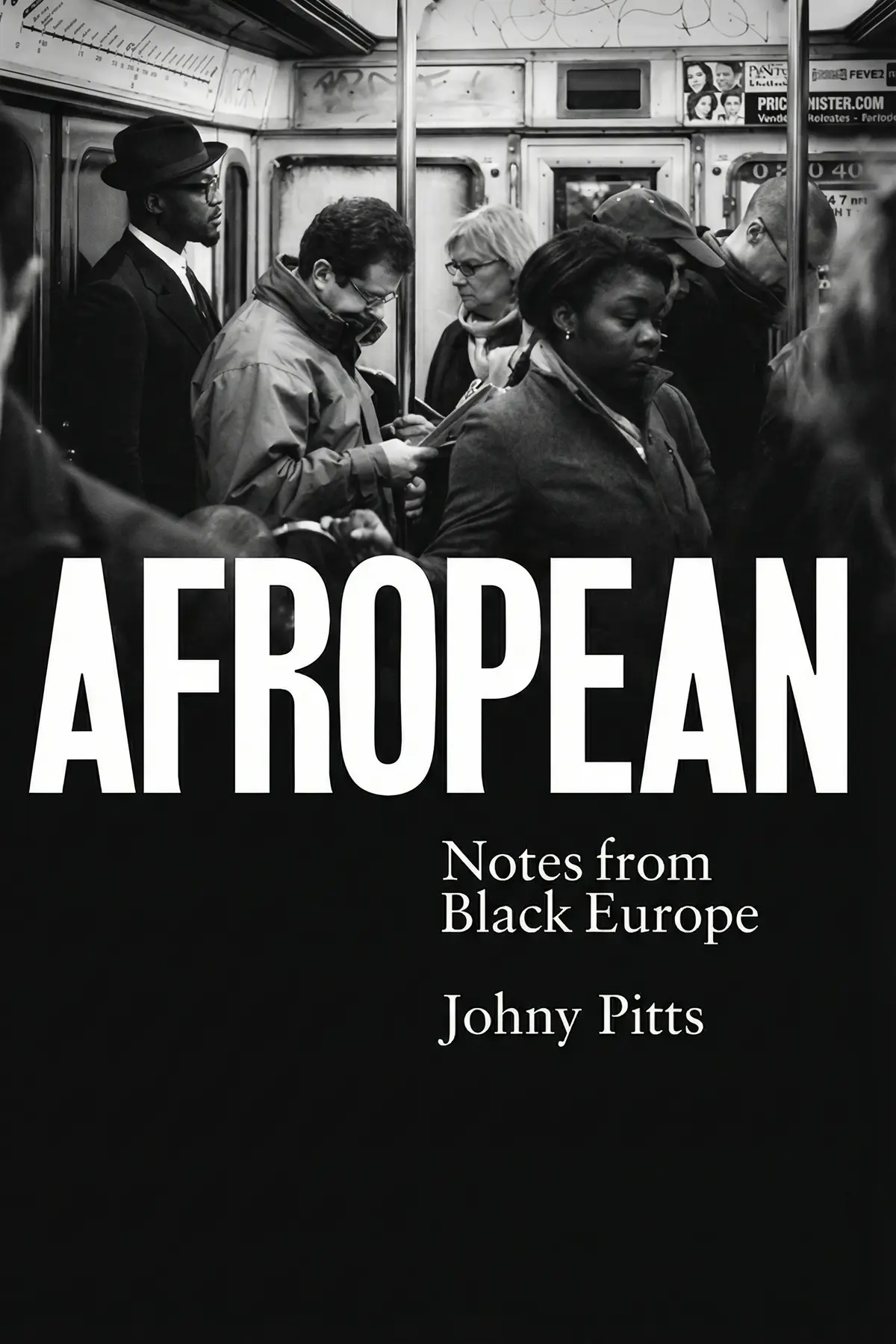
Johny Pitts embarks on a transformative journey across the continent, uncovering the hidden narratives and rich cultural contributions of Black Europeans while redefining the very meaning of a modern European identity.
1 min 49 sec
When we think of the word “European,” what image comes to mind? For a long time, the dominant narrative has suggested a monolithic, white identity, often ignoring the millions of people who have called this continent home for generations while tracing their roots back to Africa. This erasure creates a profound sense of displacement for those living at the intersection of these cultures. They are told they are European by birth or citizenship, yet society often treats them as outsiders. This tension is at the heart of the Afropean experience—a term that seeks to bridge the gap between being Black and being European, acknowledging that these two things are not in conflict, but are part of a singular, rich identity.
In this exploration, we follow Johny Pitts, a writer and photographer who grew up in the north of England, feeling this very pull between worlds. Born to a Black American father and a white British mother, Pitts navigated a childhood that was both multicultural and working-class. However, as he grew older, he realized that the stories of people like him were largely missing from the official history books and the mainstream media. He decided to set out on a journey across the continent to find “Afropea”—not as a physical place on a map, but as a community of people, ideas, and shared histories.
Throughout this journey, we will travel through the banlieues of Paris, the hidden quarters of Brussels, the activist hubs of Amsterdam, and the resilient settlements of Lisbon. We will see how the legacy of colonialism continues to shape European cities and how Black Europeans are reclaiming their narratives. This is a story about belonging, about the power of community, and about the vibrant cultural tapestry that exists just beneath the surface of the Europe we think we know. It is a call to recognize that Black history is European history, and that the future of the continent depends on embracing this complexity.
2 min 46 sec
Explore how the economic shifts of the late twentieth century transformed a once-vibrant melting pot in northern England into a site of social struggle and identity searching.
2 min 44 sec
Discover the profound historical ties between France and the African diaspora, from literary legends to the revolutionaries of the Negritude movement.
2 min 34 sec
Witness how Belgium’s brutal history in the Congo still lingers in its capital and how a new generation is reclaiming that history through art.
2 min 35 sec
Learn how the descendants of enslaved people in the Netherlands have created a powerful hub for Black history and political activism.
2 min 41 sec
Discover the tension between performative politics and the authentic, joyful community spaces created by Black residents in Germany’s capital.
2 min 31 sec
Unveil the hidden layers of one of the world’s most progressive societies, where outward tolerance masks a problematic role in global conflict.
2 min 51 sec
Trace the shifting relationship between Russia and the African diaspora, from the era of communist brotherhood to the challenges of today.
2 min 33 sec
Experience the unique charm of a Mediterranean port city where cultures have collided and coexisted for generations, creating a model for a diverse Europe.
2 min 46 sec
Discover the incredible resilience and vibrant street culture of the illegal settlements in Portugal, where a tight-knit community defies invisibility.
2 min 08 sec
As we reach the end of this expansive journey through Black Europe, one thing becomes strikingly clear: the Afropean experience is not a monolith, but a diverse and vibrant tapestry of narratives that have been hidden for far too long. From the industrial streets of Sheffield to the activist archives of Amsterdam and the resilient settlements of Lisbon, Johny Pitts has shown us that Blackness is not an addition to the European story, but a foundational part of it. The history of this continent cannot be understood without reckoning with its colonial past and the ongoing contributions of the African diaspora.
Throughout these chapters, we have seen how Afropeans are redefining what it means to belong. They are navigating the tension between their dual heritages, often in the face of systemic invisibility and economic marginalization. Yet, in every city, we found a common thread: the power of community and the persistence of cultural pride. Whether it is through the joyful music of a Cape Verdean dance in Lisbon or the radical scholarship of an archive in Amsterdam, Black Europeans are reclaiming their right to define their own identities and to shape the future of the continent they call home.
The throughline of this journey is a call for a more honest and inclusive European identity. It is an invitation to look past the white-washed version of history and to see the multicultural reality that exists right in front of us. To be Afropean is to embrace a holistic sense of self that honors both African roots and European life, recognizing that these two things can—and do—exist in a powerful, creative synthesis.
In closing, let the stories of the people we met along the way serve as an inspiration. Let them remind you that identity is not something that is handed to us by others, but something we build through our actions, our communities, and our willingness to speak our own truths. As you move forward, consider the hidden histories in your own surroundings. How can you help bring these narratives to light? The future of a diverse and just Europe depends on our collective ability to listen to, learn from, and celebrate the Afropean experience in all its complexity.
What does it truly mean to be Black and European? For many, these two identities are often presented as mutually exclusive, yet the history of the continent is inextricably linked to the African diaspora through centuries of conflict, colonialism, and cultural exchange. In this deep dive, Johny Pitts takes us on a hitchhiking and backpacking journey through the major hubs of Europe—from the bustling streets of Paris and the bureaucratic heart of Brussels to the cold landscapes of Moscow and the vibrant neighborhoods of Lisbon. This is more than a travelogue; it is an exploration of the Afropean experience. Pitts seeks out the artists, activists, and everyday citizens who are forging a new, holistic identity that embraces both their African roots and their European home. You will discover the forgotten revolutionaries of Amsterdam, the jazz-fueled history of Black Paris, and the resilient communities in Portugal that have built their own worlds on the margins of society. By the end, you’ll see Europe not as a monolithic white space, but as a diverse mosaic where Black history is not just an addition, but a foundational element of the continent’s past, present, and future.
Johny Pitts is a British writer, photographer, and journalist. His online journal, Afropean, which highlights art, literature, and events from the Afro-European diaspora, has become a network for Black Europeans across the continent. Before the eponymous book, he collaborated with author Caryl Phillips on a photo essay about London's immigrant communities for the BBC.
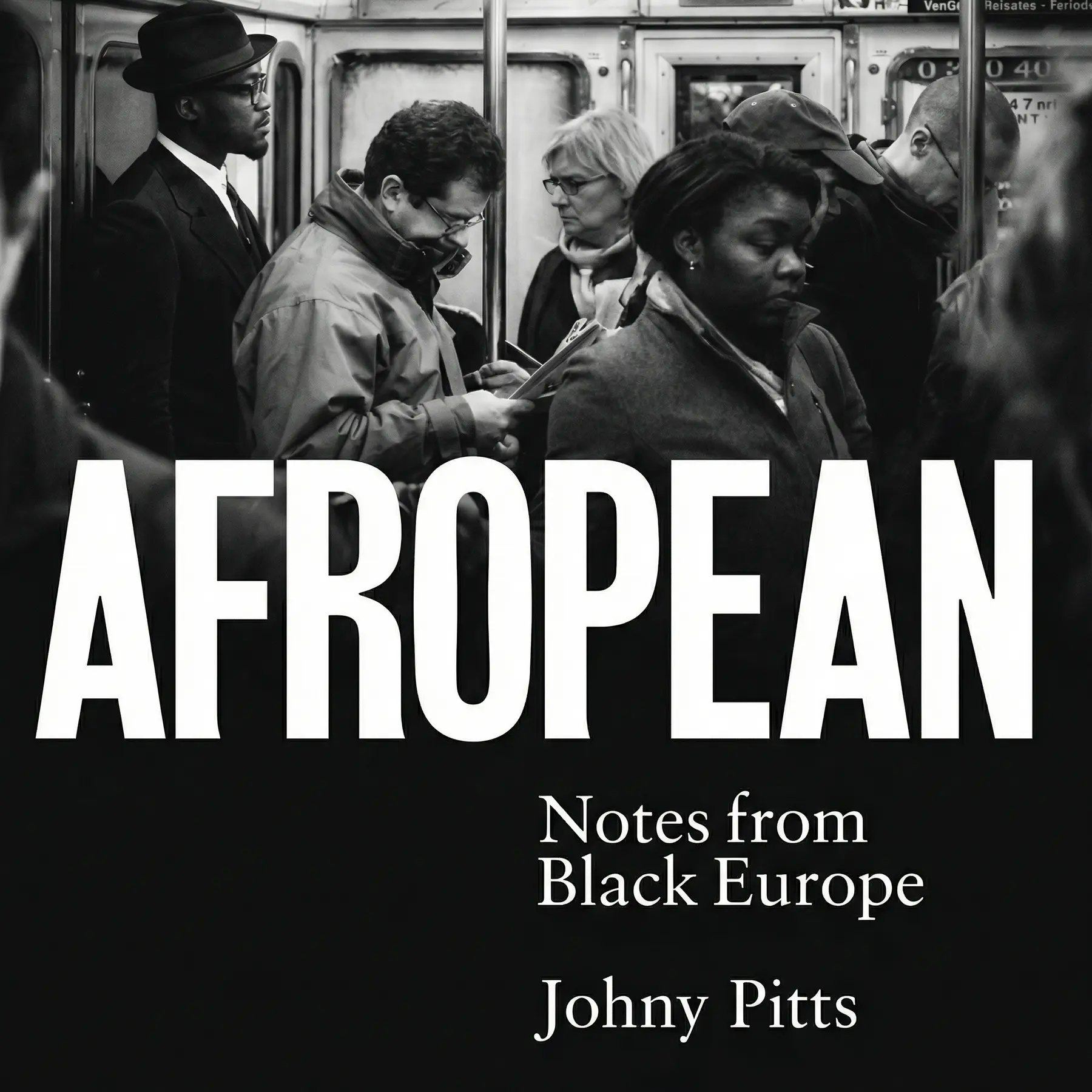
Listeners value this perceptive examination of Black identity throughout Europe, characterizing it as a stimulating mixture of personal memoir, travel writing, and historical analysis. The author's interactions with diverse communities and literary icons are considered highly absorbing, with one listener observing that the work acts as a "reimagined travel guide" uncovering intricate, obscured histories. Furthermore, many point to the stirring black-and-white photos documenting the genuine everyday experiences of the African diaspora. Although views differ regarding the narrative's relaxed, journalistic format, the majority believe it represents a powerful and essential addition to the dialogue on identity. Beyond that, listeners perceive the prose as an approachable and "intelligent" achievement that effectively disputes conventional views of European legacy.
Finally got around to reading this award-winning travelogue and it completely shifted my perspective on what it means to be European. Johny Pitts takes us from his childhood home in Sheffield across the continent on a shoestring budget, uncovering stories that history books usually ignore. I was particularly struck by the section on Lisbon; the way he describes the city as a masterpiece with 'troubling details' in the brushstrokes is pure poetry. The black-and-white photography scattered throughout adds such a haunting, authentic layer to the narrative. It’s not just a book about travel; it’s an urgent exploration of belonging and identity. Frankly, it’s the kind of reimagined travel guide we’ve needed for decades. Every chapter feels like a conversation with a friend who happens to be incredibly well-read.
Show moreThe photography alone is worth the price of admission here. Pitts captures the daily lives of Black Europeans with such dignity and grace, from protesters in Paris to the statue of Pushkin in Moscow. It is a beautiful, melancholic journey that feels deeply personal yet globally significant. I was moved by his search for home and how he navigates spaces that often feel hostile to his presence. The encounters with writers like Linton Kwesi Johnson felt like organic, lucky moments in a very human story. Not gonna lie, I teared up a few times reading about the struggle for belonging. This isn't just a book; it's a mood and a movement. It challenges the facade of a white Europe in the most sophisticated way possible.
Show moreThis book is a necessary slap in the face to the 'white-only' version of European heritage we are usually sold. Pitts writes with an accessible intelligence that makes complex history feel immediate and vital. I loved his descriptions of the Parisian suburbs; they felt so vivid and far removed from the typical tourist traps. His ability to link his own Sheffield roots to the wider African diaspora is masterfully done. The black-and-white images are hauntingly beautiful and anchor the stories in reality. Personally, I didn't mind the journalistic structure at all—it made the book feel like a living, breathing document. It’s a brilliant exploration of identity that finally gives a voice to millions of people living in the shadows of the continent.
Show moreWhat a stunning achievement. Pitts manages to capture the nuance of being Afropean with such sensitivity and sharp observation. I was completely absorbed in his journey from the very first page, following him through the cold streets of Stockholm and the radical pockets of Berlin. The way he discusses the impact of colonial power without becoming overly academic is a rare talent. The photography provides a wonderful visual counterpoint to his prose, showing an African presence that has survived for centuries. This book is about the fundamental human need to belong, and it resonated with me on a very deep level. It’s an intelligent, forceful piece of work that I’ll be recommending to everyone I know. Truly essential reading for our times.
Show moreHonestly, this is one of the most eye-opening books I’ve read in years. Johny Pitts doesn't just travel through Europe; he deconstructs it. By focusing on the African diaspora, he reveals a hidden history that is both heartbreaking and resilient. I loved the personal touches, like his nervousness in the Parisian suburbs or his unexpected meeting with Caryl Phillips. The book successfully bridges the gap between a gritty travelogue and a serious historical inquiry. It feels authentic because it doesn't try to be a definitive encyclopedia; it’s a subjective, deeply felt exploration of a complex identity. The black-and-white photos of daily life are the perfect finishing touch. If you care about the future of Europe and the people who inhabit it, read this book.
Show moreAs someone who spent years studying European history without ever seeing a Black face in the syllabus, this was a revelation. Pitts expertly mingles the literary and the political, bringing in heavyweights like Frantz Fanon and James Baldwin to ground his observations. I loved the gritty, impressionistic feel of his writing as he navigates the Parisian suburbs and the streets of Berlin. To be fair, the structure is a bit loose—it often feels more like a series of interconnected journalistic articles than one cohesive study. However, that fluidity allows for some really raw and honest encounters with the African diaspora. It’s an intelligent, accessible piece of work that asks hard questions about why 'European' is still treated as a synonym for 'white.' Definitely worth a read.
Show moreEver wonder what it actually means to be both Black and European in a world that often treats those terms as opposites? Johny Pitts sets out to answer this by backpacking through various communities on a budget, and the result is quite powerful. His observations on the Cold War’s legacy and colonial power structures are woven seamlessly into his travel diary. I particularly enjoyed the Berlin chapter, though I agree with other reviewers that the scope is somewhat limited. Truth is, you can’t cover everything in one trip, and Pitts is honest about his partial perspective. The book serves as a fantastic conversation starter rather than a final word on the subject. It’s a forceful, necessary contribution to modern literature that everyone should pick up.
Show morePicked this up after seeing it on several 'best of' lists and I wasn't disappointed by the content. Pitts has a gift for finding the extraordinary in the ordinary, documenting the lives of people he meets in hostels and on street corners. The book feels like a reimagined travel guide for the marginalized, focusing on the brushstrokes of cities like Lisbon and Brussels. His encounters with the ghosts of Fanon and Baldwin provide a rich intellectual backdrop to his winter travels. While some might find the journalistic style a bit loose, I thought it suited the 'backpacking on a shoestring' vibe perfectly. It’s a thought-provoking blend of memoir and history that successfully challenges traditional perceptions of European culture. A very solid four stars.
Show moreNot what I expected given the massive hype surrounding its Jhalak Prize win. While the concept of 'Afropean' identity is fascinating, the book felt a bit too much like a collection of travel notes rather than a finished product. I found the literary references a little heavy-handed at times, and the narrative flow was quite uneven. For example, the exclusion of Eastern Europe—aside from a brief look at Moscow—felt like a missed opportunity to provide a truly comprehensive view of the continent. Look, the writing is undeniably good and the photography is stunning, but I wanted more depth and a tighter structure. It’s an interesting backpacker’s journey, but it lacks the analytical punch I was hoping for in a definitive study.
Show moreI'll be frank: while the premise is brilliant, the execution felt a bit hit-or-miss for me. There are moments of absolute brilliance where the history and the personal narrative align perfectly, but then there are long stretches that feel like aimless wandering. I felt the lack of a broader perspective on Southern Europe, specifically Italy and Greece, left a big hole in the argument about the refugee crisis and migration. The writing style is impressionistic, which works for a travelogue, but I found myself wishing for a more rigorous framework. It’s a good book, and certainly an important one, but it didn't quite reach the five-star status I was expecting. It’s a series of interesting insights that don't always add up to a full-fledged book.
Show moreFay Bound Alberti
Daniel Goleman

Virginia Woolf
Tracy Rosenthal
Jessica Valenti
bell hooks
AUDIO SUMMARY AVAILABLE
Get the key ideas from Afropean by Johny Pitts, plus 5,000+ more titles in English and Thai.







