




7 Powers: The Foundations of Business Strategy
Hamilton Helmer
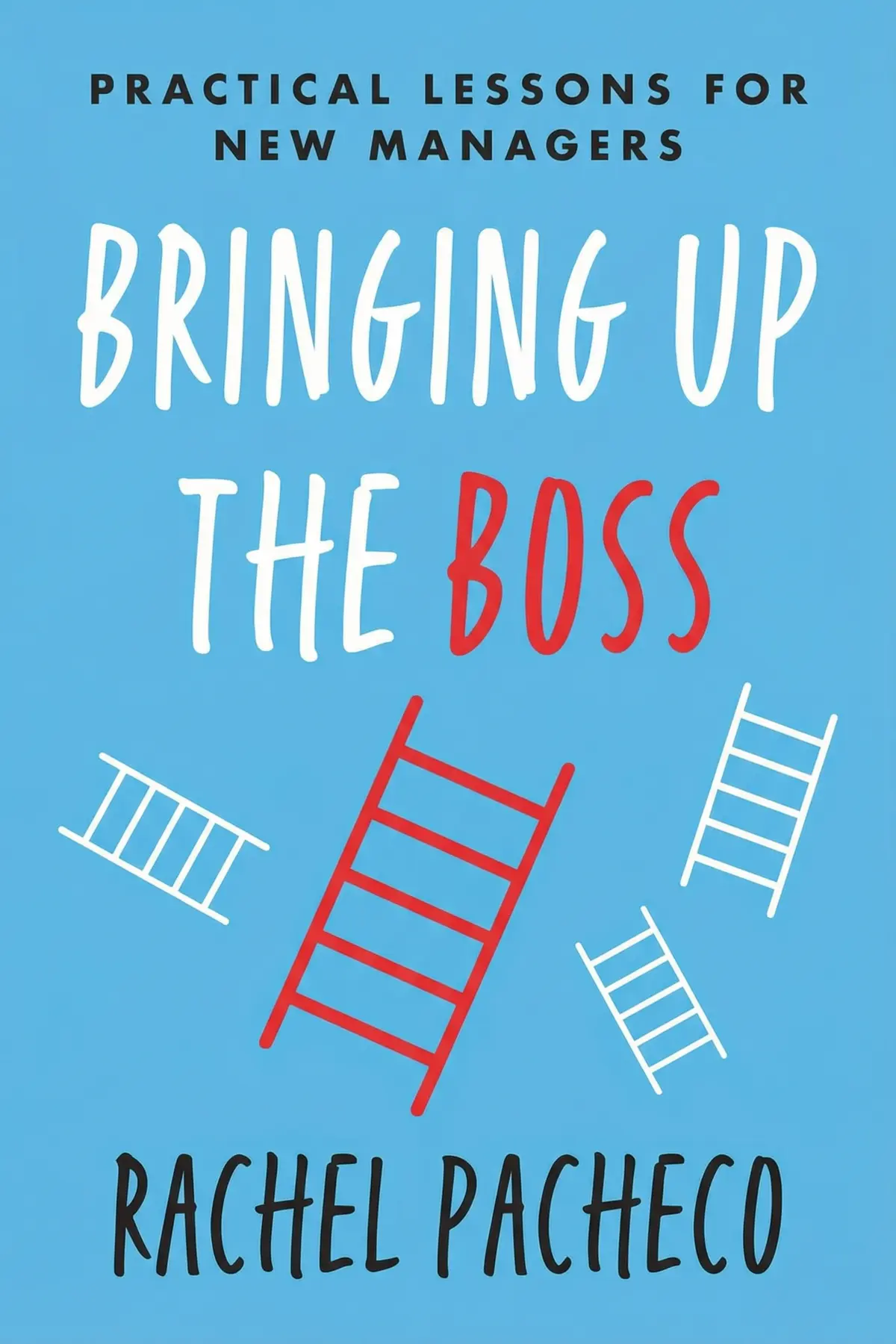
A comprehensive guide for first-time leaders, offering actionable strategies to navigate the transition from individual contributor to effective manager while building resilient teams and fostering a positive work culture.
1 min 39 sec
Most of us start our careers as ‘doers.’ We are hired for our specific skills, whether that is writing code, designing graphics, or selling products. When we do those things well, we get promoted. But then, a strange thing happens. Suddenly, the very skills that made us successful are no longer the ones we need most. We are thrust into a world where our primary responsibility isn’t the work itself, but the people doing the work. This is the central paradox of management: the better you are at your technical job, the more likely you are to be moved into a role that requires an entirely different set of muscles.
Being a boss can feel like being an amateur tightrope walker. You are trying to balance the needs of the company with the needs of your team, all while trying to maintain your own sanity. If you have ever felt like you are just ‘faking it’ or stumbling through difficult conversations, you are in the right place. Transitioning into leadership is a profound shift in identity, and it requires a new toolkit that most universities and entry-level jobs simply don’t teach.
In this guide, we are going to break down the essential components of that toolkit. We will explore how to manage three distinct areas: the individual, the team, and yourself. We’ll look at the psychological drivers that make people want to do their best work and the communication strategies that turn a group of individuals into a high-performing unit. By the end of this journey, you’ll see that being a great manager isn’t about having all the answers. It’s about asking the right questions, setting the right stage, and having the courage to grow alongside your team. Let’s explore how you can stop just ‘being’ the boss and start leading with purpose.
2 min 18 sec
Discover why the best managers stop giving answers and start asking questions to unlock their team’s hidden potential.
2 min 25 sec
Money isn’t everything; learn the three psychological drivers that truly dictate how your team performs and thrives.
2 min 22 sec
Find out how to turn a list of tasks into a meaningful mission by focusing on ‘small m’ meaning every single day.
2 min 24 sec
Learn the secrets to hiring for fit, onboarding with heart, and managing the inevitable conflicts that arise in any group.
2 min 18 sec
Discover how to manage your own career, navigate the complexity of leading former peers, and balance vulnerability with strength.
1 min 30 sec
The journey from individual contributor to manager is rarely a straight line. It is often a messy, confusing process of trial and error. But as we’ve seen, it is also an incredibly rewarding opportunity to influence the lives and careers of others. We’ve explored the importance of setting clear expectations and using coaching as a way to empower individuals. We’ve looked at the deep psychology of motivation and how to connect daily work to a larger sense of purpose. We’ve also discussed the practicalities of building a healthy team culture and the vital importance of managing your own internal state.
If there is one throughline to remember, it is that management is a practice, not a destination. You will never ‘arrive’ at a point where you have everything figured out. The best managers are the ones who stay curious, who continue to ask for feedback, and who treat their leadership as a craft to be honed over time. The transition into being a ‘boss’ is about moving from the spotlight to the wings—your success is no longer measured by your own performance, but by the heights your team reaches.
As you move forward, take the tools we’ve discussed and apply them one by one. Start by having a coaching conversation today. Look for a way to add ‘small m’ meaning to a routine task tomorrow. And most importantly, give yourself the grace to make mistakes. By focusing on growth—both for your team and yourself—you won’t just be ‘bringing up the boss’; you’ll be building a legacy of leadership that lasts. Now, go out there and lead with clarity, empathy, and purpose.
Stepping into a management role is often one of the most jarring transitions in a professional career. This summary explores the foundational skills required to lead people effectively, moving beyond technical expertise to focus on the human elements of leadership. It covers the essential pillars of modern management: setting crystal-clear expectations, mastering the delicate art of feedback, and evolving from a supervisor into a coach who empowers others. The promise of the book is to turn the often-overwhelming experience of being a 'new boss' into a structured path for growth. It dives deep into what actually motivates employees—revealing that it is rarely just about the paycheck—and explains how to infuse daily tasks with a sense of purpose. Furthermore, it addresses the difficult realities of the job, such as hiring the right talent, managing conflict, and even the emotional weight of letting someone go. Ultimately, it provides a roadmap for managers to not only lead their teams to success but also to manage their own professional development and internal mindset during the process.
Rachel Pacheco is an author and management professor at the McDonough School of Business at Georgetown University. As a former Chief People Officer, she’s dedicated to providing practical tools for leaders, executives, and managers so they can foster thriving teams and cultivate inclusive and resilient cultures. Pacheco also actively contributes to the growth of various startups and high-growth organizations as a board member.
Listeners find this management book extremely engaging and accessible, with one review mentioning its straightforward explanations of research-derived guidance. Furthermore, the text is relatable and grounded in research while remaining quite insightful. They value its utility; one listener points to the practical techniques it offers, while another says it changes the atmosphere at work. Also, the author’s witty style makes for an enjoyable experience.
Wow. This is exactly what I needed after being thrown into a lead role without any formal guidance or mentorship from my company. Pacheco manages to take these incredibly dense, academic management theories and translate them into something that actually makes sense on a Tuesday morning at the office. The illustrations and cartoons aren't just for show; they actually help anchor the concepts so you remember them when a crisis hits. I particularly loved the section on "managing up" because it’s a skill we all need but rarely talk about openly. While some might find the tone a bit too casual, for me, it felt like getting advice from a brilliant friend who actually understands the modern workplace. It’s practical, grounded in real data, and surprisingly fun to get through during a busy week.
Show moreEver wonder why some teams just click while others are a total disaster? This book pulls back the curtain on the psychology of management without making you feel like you're sitting through a dry university lecture. I’ve been following Rachel’s content for a while, and seeing her insights compiled into such a cohesive guide is fantastic for any professional. The advice on handling difficult conversations with former peers—now direct reports—is worth the price of the book alone. It’s hard to find business books that are both data-driven and genuinely humorous, but this one strikes that balance perfectly. My only tiny gripe is that I wish there were even more templates for the performance reviews mentioned. Still, it’s an essential resource for anyone who cares about being a decent human being while also hitting their quarterly targets.
Show moreAs a middle manager who has been in the game for over a decade, I didn’t think I’d learn much from another primer, but I was wrong. Frankly, I had developed some pretty stale habits over the years that needed to be dismantled and replaced with more modern approaches to soft skills. Pacheco's breezy writing style makes it an easy read, though at times I felt the humor slightly overshadowed the depth of the research she was citing. The focus on empathy and clear communication is a breath of fresh air compared to the old-school "command and control" style of leadership. It’s organized beautifully into bite-sized morsels that make it easy to refer back to when you’re preparing for a tough one-on-one meeting. If you feel like your management style has become a bit robotic lately, this will definitely help you reconnect with your team.
Show moreFinally got around to reading this after seeing it all over my LinkedIn feed, and it mostly lived up to the hype surrounding it. The layout is incredibly user-friendly, using tables and graphs to break up the text, which is great for those of us who don't have hours to spend reading. I appreciate how the author focuses on the "human" element of the job, especially when it comes to motivating people who might be struggling. While some of the strategies felt a little basic for seasoned execs, the section on unlearning bad behaviors was a much-needed reality check for me. It’s the kind of book you keep on your desk to flip through before you have a difficult talk with your own boss. Not every joke landed for me, but the tactical advice is solid enough to ignore the occasional cheesy pun.
Show moreThe chapter on managing friends was the highlight for me because that transition is always awkward and poorly handled in most corporate environments. Rachel Pacheco has a way of cutting through the nonsense and giving you scripts and frameworks that you can actually use in real life. It’s refreshing to see a management book that acknowledges how messy and emotional the workplace can actually be. To be fair, some of the charts felt a bit repetitive after a while, but the overall message of "bringing up the boss" is clear and effective. It’s more of a guidebook than a manifesto, which I think is exactly what new managers need when they’re feeling overwhelmed. I've already recommended it to a few of my colleagues who are struggling with their team dynamics.
Show moreAfter hearing so much buzz about Pacheco's blog, I had to see if her book lived up to the reputation. This is a remarkably effective primer that transforms complex workplace environments into navigable maps. The writing is snappy and the research-based advice is presented with such simplicity that you can apply it almost immediately. I found the section on handling uncomfortable situations especially insightful, as it provides a clear path forward when you're feeling stuck. My only criticism is that the focus is very heavy on the early-stage management experience, leaving a bit to be desired for those at the director level. However, the humorous approach makes even the most dry topics digestible. It’s a great addition to any office library, specifically for those looking to polish their interpersonal leadership skills.
Show moreTruth is, I had high expectations given the author’s background, but this felt like a bit of a mixed bag for my specific needs. If you are a brand new manager with zero training, this will be an absolute lifesaver that covers all the necessary bases from A to Z. However, for those who have already read the "classics" of the management genre, a lot of this might feel like a repackaged version of things you already know. The writing is definitely entertaining and the research is sound, but I was hoping for more advanced strategies on scaling larger organizations. It’s a great primer, but maybe not the deep dive I was looking for at this stage of my career. That being said, the sections on emotional intelligence are quite insightful and worth a quick skim.
Show morePicked this up during a promotion transition, and while it’s a decent resource, it didn't quite blow me away like I hoped it would. The breezy and informal tone is a double-edged sword; it makes it very readable, but sometimes it feels like it lacks the gravitas of a serious management text. I did find the charts and cartoons helpful for visualizing some of the trickier concepts regarding team motivation. Not gonna lie, I found myself skipping over some of the longer anecdotes to get to the actual actionable tips hidden in the text. It’s a solid 3-star read that serves its purpose as a basic introduction to management for people in startups. It’s good for a quick reference, but I probably won’t be re-reading the whole thing anytime soon.
Show moreLook, finding a management book that isn't soul-crushingly boring is a win in itself, and Pacheco definitely succeeds there. The book is grounded in research, which I appreciate, but at times the "hip" writing style felt like it was trying a little too hard to be relatable. It’s definitely a useful tool for anyone who feels lost in their new leadership role, especially with the practical advice on "managing up." I would have liked more focus on technical management rather than just the soft skills, as that’s where my team usually struggles with performance. It’s a quick read, and you can finish it in a few sittings, which is a plus for any busy professional. It's a fine addition to the shelf, just not the revolutionary text I was led to believe it was.
Show morePersonally, I think the buzz around this one might be a bit overstated for anyone who isn't a total novice in the corporate world. While the research-based advice is presented in a way that is easy to understand, the actionable strategies felt a bit too elementary for my needs. I found the "managing up" section to be the only truly relevant part, as that's a hurdle regardless of tenure. My main critique is that the book spends a lot of time on the absolute basics of communication that really should be common sense at this stage. It’s an entertaining read that doesn’t take itself too seriously, but I was expecting much more depth given the price point and the glowing recommendations. It might transform a workplace for a brand new intern, but for a seasoned pro, it's largely things you've heard a dozen times before.
Show moreHamilton Helmer

Margaret Heffernan


Joseph A. Maciariello


AUDIO SUMMARY AVAILABLE
Get the key ideas from Bringing Up the Boss by Rachel Pacheco, plus 5,000+ more titles in English and Thai.







