
Abortion: Our Bodies, Their Lies, and the Truths We Use to
Jessica Valenti
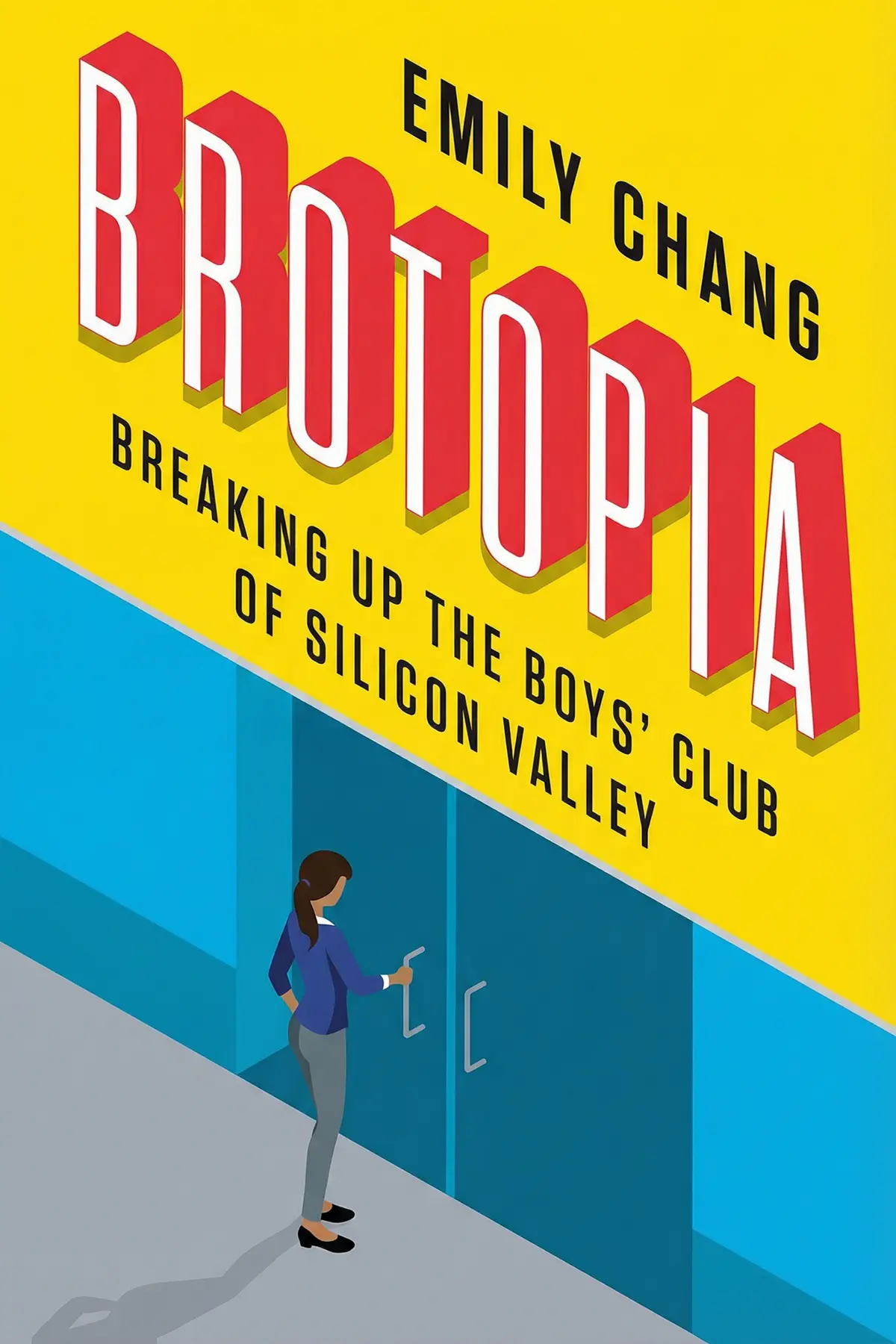
Brotopia investigates the deep-seated gender bias and exclusionary bro culture of Silicon Valley, revealing how the tech industry shifted from female-led origins to a male-dominated environment that limits innovation and equality.
2 min 24 sec
When we think of Silicon Valley, we often conjure images of brilliant innovators, sleek glass campuses, and a culture that values the best ideas above all else. It is marketed as a true meritocracy—a place where your background doesn’t matter as much as your ability to write clean code or disrupt an entire industry. For decades, companies like Google, Facebook, and Apple have been held up as the gold standard for the modern workplace, offering everything from free organic meals to on-site laundry services. The message to the world has been clear: this is the future of work, and it is more progressive than anything that came before it.
But if we look past the colorful beanbags and the ping-pong tables, a different reality emerges. Despite its reputation for being ahead of the curve, the tech industry struggles with a glaring and persistent problem: it is overwhelmingly male. Even worse, the culture that has developed within these companies often feels less like a professional environment and more like a fraternity house. This “bro” culture isn’t just an accidental byproduct of a young workforce; it is a systemic issue that impacts who gets hired, who gets funded, and who ultimately succeeds in the digital age.
To understand how we got here, we have to look at the history of computing itself, which tells a very different story than the one we are used to hearing. We also have to examine the psychological profiles and marketing tactics that helped create the stereotype of the “lonely male genius.” As we dive into this exploration, we will see that the current state of Silicon Valley is not an inevitable result of biological differences or natural preferences. It is the result of specific choices made over decades—choices that have led to the exclusion of half the population from one of the most powerful and lucrative industries in human history.
This journey will take us through the early days of programming, the rise of the “brogrammer,” and the high-stakes world of venture capital. We will look at how the myth of the meritocracy actually protects the status quo and why a lack of diversity isn’t just a social failure, but a business risk. By the end, the goal is to see why breaking up this exclusive club is the only way for the tech industry to truly live up to its promise of changing the world for the better.
2 min 36 sec
Before programming was a high-status career for men, it was considered a clerical task suited for women, featuring some of the most brilliant mathematicians in history.
2 min 10 sec
The shift in tech demographics was fueled by a cultural movement that rebranded computers as toys specifically for boys, alienating girls from a young age.
2 min 33 sec
The modern tech workplace often mirrors a fraternity house, where business is conducted in strip clubs and social events exclude or objectify women.
2 min 02 sec
From a massive funding gap to workplace structures that ignore family life, the tech industry is built to favor single men over everyone else.
2 min 01 sec
Hiring for ‘culture fit’ often serves as a mask for bias, leading to a lack of diversity that results in products that fail to protect or represent users.
2 min 00 sec
Diversity isn’t just a moral goal; it’s a financial one, with data showing that inclusive companies are more profitable and less prone to failure.
1 min 31 sec
The story of Silicon Valley is one of incredible achievement, but it is also a story of missed opportunities. For too long, the tech industry has relied on a narrow definition of what a genius looks like and what a successful workplace should feel like. We have seen how the historical shift from female-led programming to a male-dominated “bro” culture was not a natural evolution, but a result of marketing, flawed psychological profiling, and systemic exclusion.
Today, the consequences of this culture are undeniable. It has led to a massive funding gap for female entrepreneurs, a hostile environment for women in the workplace, and products that often ignore the needs and safety of a diverse global population. However, the path forward is also clear. By dismantling the myth of the meritocracy and actively working to build more inclusive teams, tech companies can unlock a new wave of innovation and economic growth.
True progress in Silicon Valley won’t come from a new gadget or a faster algorithm. It will come from a fundamental shift in how the industry treats people. When we open the doors of the boys’ club to everyone, we don’t just create a fairer society; we create a more successful and resilient industry. It is time for the architects of our future to ensure that the digital world they are building actually has a place for everyone. The benefits of doing so—both moral and financial—are simply too great to ignore.
Silicon Valley often presents itself as a beacon of progress, meritocracy, and forward-thinking innovation. However, beneath the sleek headquarters and generous employee perks lies a culture that frequently excludes and marginalizes women. This book explores the historical shift that redefined computer programming from clerical women’s work to a high-status male pursuit, fueled by psychological profiles that favored antisocial traits. From venture capital funding gaps to toxic workplace environments involving strip clubs and exclusionary social circles, the narrative exposes the systemic barriers women face. It also tackles the myth of the meritocracy, showing how hiring for culture fit often results in a homogenous workforce that is ill-equipped to serve a diverse global population. Ultimately, the book argues that breaking up the boys' club is not just a matter of social justice, but a necessary step for the long-term economic success and creative health of the technology sector.
Emily Chang is a prominent journalist and broadcaster who has earned five local Emmy awards for her insightful reporting. She is widely recognized as the presenter and executive producer of Bloomberg Technology and Bloomberg Studio 1.0, where she covers the intersection of tech, business, and culture.
Listeners consider this work a required read for those in technology, commending its thoroughly researched details and crucial reporting on sexism within Silicon Valley. The prose is expertly written, and listeners appreciate the way it navigates through compelling narratives. They also value the book's overall flow, with one listener observing that it provides practical steps for making progress, while another praises its honest look at the difficulties involved.
As a woman who has navigated the labyrinth of Silicon Valley for years, this book felt like a long-overdue validation of my own lived reality. Chang does a phenomenal job of stitching together the disparate threads of sexism into a tapestry that is impossible to ignore. Truth is, many of us have internalized these microaggressions for so long that we stopped seeing them as problems. The reporting on the "good guy" myth was particularly stinging because it perfectly describes the oblivious leaders I work with every day. While some critics argue it’s a rehash, seeing these stories documented with such rigor creates a powerful collective voice. It’s a must-read for anyone who thinks tech is a pure meritocracy. We need this mirror to see the cracks in our culture.
Show moreFinally, someone had the guts to put all of these fragmented news stories into one cohesive, stinging narrative that demands attention. The way Chang connects the dots between the early "hacker" culture and modern-day exclusion is nothing short of brilliant. I appreciated the actionable pathways suggested toward the end, as it moves the conversation from mere complaining to actual reform. It’s an essential report for every hiring manager who wonders why their pipeline lacks diversity. Look, the industry is changing, but it won't happen without the blunt honesty found in these pages. The pacing is excellent, making a dense subject feel like a gripping page-turner. Highly recommended for anyone who cares about the future of innovation.
Show moreWow, what a punch to the gut this was. I listened to the audiobook read by the author, and her passion for the subject really shines through in every sentence. It’s one thing to hear about "bro culture" in passing, but it’s another to see the data and the history laid out so clearly. The title "Brotopia" is perfect because it captures the exclusionary utopia these men have built for themselves at the expense of everyone else. Truth is, I was mad as hell for most of the nine hours. This should be required reading in every computer science department in the country. It offers a necessary reboot for an industry that has lost its way.
Show moreChang’s deep dive into the historical roots of the "antisocial coder" stereotype is absolutely fascinating and provides much-needed context for today’s toxic environment. I was particularly struck by the 1960s history, showing that the gender gap wasn't an accident but a manufactured outcome. The writing is punchy and the pacing keeps you engaged, even when the subject matter makes your blood boil. Personally, I found the analysis of venture capital funding to be the most revealing part of the narrative. To be fair, I wish there were more interviews with mid-level engineers rather than just high-profile CEOs like Sheryl Sandberg. Despite that, the book offers a transparent view of the hurdles women face. It’s a well-crafted wake-up call for the industry.
Show moreThe section detailing the "PayPal Mafia" and their definition of meritocracy really opened my eyes to how the deck is stacked from the start. It’s a sobering look at how the systems built by a small group of men have essentially codified exclusion into the very DNA of the tech world. Chang writes with a lively spirit that makes even the most frustrating anecdotes readable. In my experience, the most powerful parts were the stories of whistleblowers who risked everything to speak out against harassment. I do think the book could have benefited from a broader look at global tech culture instead of just the California bubble. Still, the well-researched content makes it a foundational text for the #metoo era in technology.
Show moreTo be fair, much of this information has been circulating in tech circles for years, yet seeing it compiled so starkly remains a gut-wrenching experience. Chang’s writing is well-crafted, balancing personal anecdotes with broader industry trends in a way that feels both intimate and expansive. I was especially interested in the chapter about managing motherhood and how the "hustle culture" specifically penalizes women. There are minor criticisms to be made about the focus on "big names," but the overall message is too important to ignore. Diverse teams produce better products, and this book explains exactly why we are currently failing to build them. It’s a transparent look at a very ugly reality.
Show moreTruth is, the tech world desperately needed this mirror held up to its face, even if the reflection is quite ugly. Chang provides an essential report on Silicon Valley sexism that feels both urgent and deeply documented. I appreciated how she navigated the complexities of the James Damore situation without being overly dismissive. The book is well-paced and manages to make a lot of complex social issues accessible to a general audience. While I wish there was more discussion on the roots of patriarchal behavior in broader society, the focus on tech remains laser-sharp. It’s a must-read for anyone who believes that what is moral is also ultimately good for business. Let’s hope the disruptors are actually listening.
Show moreWhile the reporting here is undoubtedly vital, I couldn't help but feel it read a bit like a high-end tabloid at times. The focus on the infamous sex parties felt slightly sensationalized, especially when compared to the systemic policy issues that deserve more page time. I wanted more depth on how we can actually dismantle the patriarchal structures of corporate America rather than just another list of SV's greatest hits. To be fair, Chang is a talented journalist and her prose is undeniably fluid. However, the lack of an index for female-friendly resources felt like a missed opportunity to provide a roadmap for change. It’s a decent primer for newcomers, but those already in the trenches might find it a bit surface-level.
Show moreAfter hearing all the buzz, I expected a bit more focus on solutions rather than just a dramatic exposé of problems we already know exist. The stories are powerful, don't get me wrong, but I found myself asking "okay, now what?" several times. Chang mentions the importance of "Girls Who Code," but the ending felt somewhat rushed and lacked a comprehensive strategy for professional women. Look, the reporting on the culture of "meritocracy" is sharp and well-researched, but the lack of diverse perspectives from non-white women was a noticeable gap. It’s a good book to give to a leader who is oblivious, but it might not offer enough new insight for those already working in these environments.
Show moreI picked this up hoping for a rigorous sociological study, but what I got was mostly a collection of Silicon Valley’s most offensive hits. Frankly, if you’ve been reading the news for the last three years, there isn’t much new information here. My biggest issue is that Chang unthinkingly reinforces gender essentialist tropes by suggesting women are naturally more community-oriented. This kind of thinking is exactly what books like "Testosterone Rex" warn against because it validates the status quo. The section on the James Damore memo was a particular letdown, as it failed to provide the hard scientific counter-arguments we actually need. It feels more like a long-form magazine article than a definitive book. It’s disappointing given the hype.
Show moreJessica Valenti



Johny Pitts

bell hooks

Margaret Heffernan

AUDIO SUMMARY AVAILABLE
Get the key ideas from Brotopia by Emily Chang, plus 5,000+ more titles in English and Thai.







