
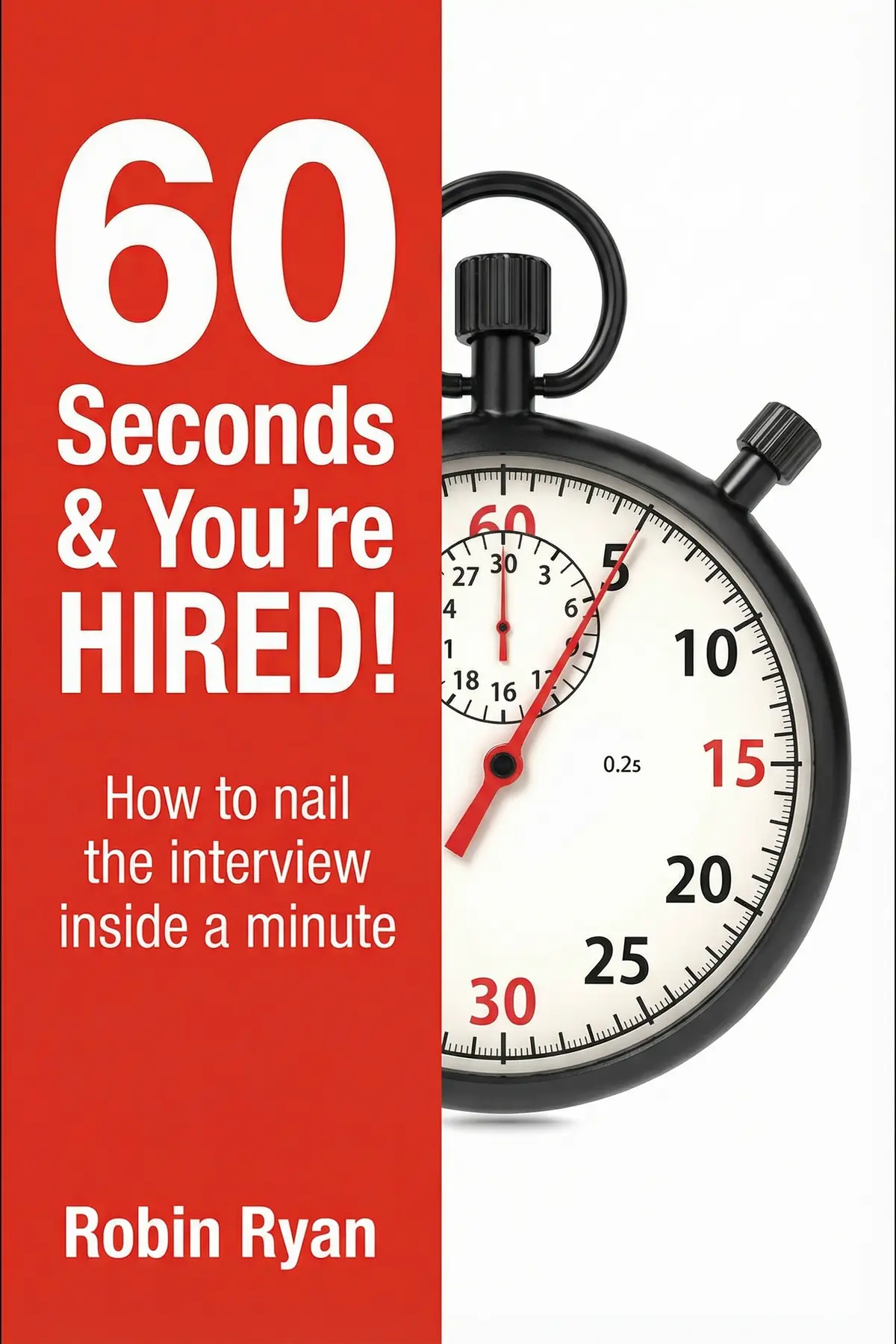
60 Seconds & You’re Hired!
Robin Ryan
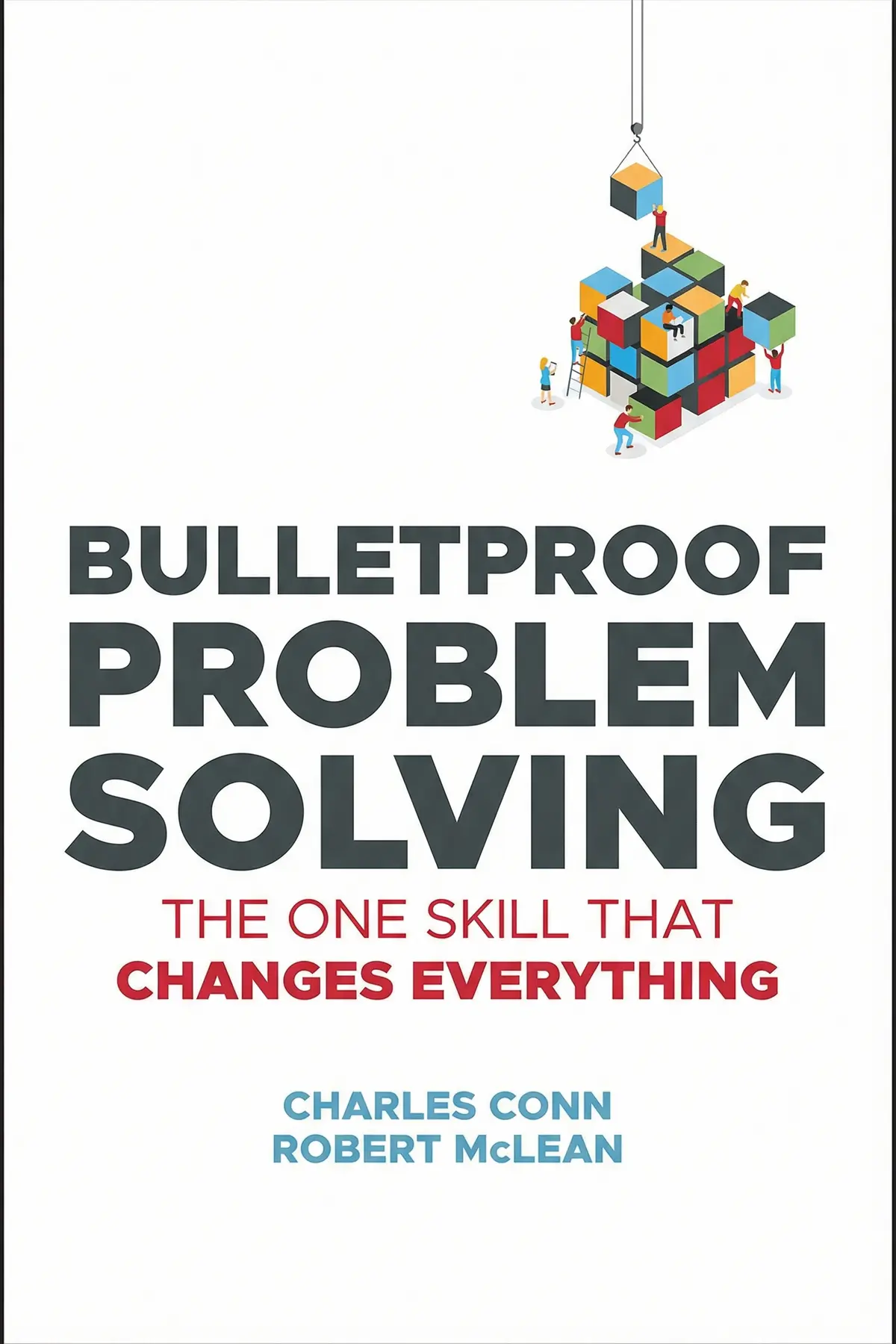
Learn a rigorous seven-step framework to tackle complex challenges. This guide combines logic, structured thinking, and creativity to help individuals and teams make better decisions in an increasingly unpredictable and automated world.
2 min 22 sec
The modern professional landscape is shifting beneath our feet at a rate never seen before. If you look at the trajectory of the global economy over the last several decades, a clear and somewhat jarring pattern emerges. Since the 1960s, the demand for routine work—the kind of tasks that rely on memorized knowledge or repetitive manual labor—has been in steady decline. Today, with the rise of robotics, programmable biology, and artificial intelligence, that decline has accelerated into a freefall. The jobs that defined the middle class for generations are being automated away, leaving a void that can only be filled by a specific type of human capability: the ability to handle non-routine, cognitive challenges.
In this environment, traditional strategic planning is often a liability. It is too slow, too rigid, and too reliant on the assumption that tomorrow will look more or less like today. When external shocks cut across borders and disrupt even the most stable industries, organizations cannot afford to spend months in a committee before making a move. What is required now is real-time, creative problem-solving. It is the one skill that transcends specific industries and job titles. Whether you are leading a nonprofit, managing a tech startup, or navigating a personal career pivot, your success depends on how effectively you can leverage information to make informed choices under pressure.
This is where the concept of being “Bulletproof” comes in. It is a systematic approach to complexity that replaces panic with process. Developed by experts with decades of experience at the highest levels of business and philanthropy, this method is built on seven distinct steps. It is a framework that encourages you to slow down where most people rush, and to accelerate where most people get bogged down in data.
Over the course of this summary, we will walk through this journey together. We will explore how to strip a problem down to its bare essentials, how to visualize the hidden drivers of success using logic trees, and how to focus your limited energy on the levers that actually move the needle. This is not just about finding an answer; it is about building a mental toolkit that allows you to face any challenge with the confidence that you have a path forward. Let’s begin by looking at why most problem-solving efforts fail before they even start.
3 min 02 sec
Most people rush to find answers before they truly understand the question. Discover why a single, precise sentence is the foundation of every successful solution.
2 min 33 sec
Big problems are often too heavy to lift all at once. Learn how logic trees allow you to break complexity into manageable, bite-sized components.
2 min 26 sec
Not all parts of a problem are worth your time. Discover how to use a prioritization matrix to focus on what you can actually change.
2 min 24 sec
A great strategy is useless without execution. Learn how to transition from abstract ideas to a team-based plan with clear deliverables.
2 min 42 sec
Don’t get lost in massive datasets. Explore how simple mental shortcuts like the 80/20 rule and Occam’s Razor can reveal solutions faster.
2 min 40 sec
Data alone doesn’t convince people; stories do. Learn how to weave your findings into a compelling narrative that drives decision-makers to act.
1 min 06 sec
Mastering the seven steps of the Bulletproof method is not just about becoming a better analyst; it is about developing a mindset that thrives in the face of ambiguity. We have traveled from the initial discipline of defining a problem correctly to the creative rigor of logic trees, the strategic focus of prioritization, and the practical execution of a work plan. We’ve seen how simple heuristics can cut through the noise of big data and how synthesis turns raw findings into a persuasive story.
This process is iterative. You don’t just walk through it once and arrive at perfection. You circle back, you refine your questions, and you update your hypotheses as the world changes around you. In a world where routine is the domain of machines, this kind of structured, dynamic thinking is your ultimate competitive advantage. By applying these steps, you can move from being overwhelmed by complexity to being the person who can find a way through it. The next time you face a challenge that feels impossible, remember to slow down, build your tree, and start pruning. The solution is there; you just need the right framework to uncover it.
In an era where routine tasks are increasingly handled by artificial intelligence and automation, the most valuable asset any professional can possess is the ability to solve complex, non-routine problems. This book provides a comprehensive roadmap for mastering this skill, moving away from gut feelings and toward a systematic, logical approach. The authors introduce the Bulletproof method, a seven-step process designed to break down overwhelming challenges into manageable tasks. You will learn how to define problems with precision, use logic trees to explore every possibility, and prioritize actions that yield the highest impact. The promise of this approach is not just a solution, but a repeatable system for navigating uncertainty across any industry or personal endeavor, ensuring that your decisions are backed by rigorous analysis and clear communication.
Charles Conn is an investor and entrepreneur who serves as the Board Chair of Patagonia. He previously led the Rhodes Trust and was a partner at McKinsey & Company. Robert McLean is a Director Emeritus of McKinsey & Company and former Dean of the Australian Graduate School of Management. Both authors have extensive experience in global philanthropy and strategic leadership.
Listeners value the systematic framework for tackling issues and describe the content as both functional and beneficial. The work is thoroughly documented, with one listener highlighting that it is chock-full of case studies, and listeners characterize the material as lucid and simple to track. They view it as a remarkable piece of work and highly prize its instruments for making decisions.
This book is essentially a masterclass in structured thinking that feels like a secret weapon for anyone working in a high-pressure corporate environment. The authors break down the complex art of tackling challenges into a clear, seven-step process that actually feels actionable. I particularly enjoyed how they use logic trees to disaggregate problems into manageable, bite-sized chunks. To be fair, some of the concepts like MECE might feel familiar if you’ve spent any time in management consulting, but the depth of explanation provided here is unmatched. It’s not just abstract theory; the case studies range from personal finance to global health issues, making the framework feel truly universal. Frankly, I think this provides a real unfair advantage in a world where routine tasks are increasingly being automated. It demands a lot of mental energy to get through, but the payoff is a much sharper analytical lens.
Show moreFinally got around to finishing this, and the chapter on logic trees alone is worth the price of admission for any serious professional. The authors do a fantastic job of illustrating how a dash of creativity paired with rigorous strategy can solve almost anything. I loved the practical nature of the case studies, which helped bridge the gap between abstract theory and real-world application. It’s one of those rare books that makes you realize it’s not just about what you know, but how you organize that knowledge. Not gonna lie, the level of detail is intense, and you have to be willing to do the mental work to follow along. However, the reward is a comprehensive framework that you can apply to everything from business turf wars to personal investment decisions. This is an exceptional read for anyone looking to level up their cognitive toolkit.
Show moreWow, I wish I had read this at the very start of my career instead of discovering it years later. The way Conn and McLean explain the importance of cleaving a problem using logic trees changed my entire perspective on strategy. It is not just about being smart; it is about having a repeatable process that prevents you from getting lost in the weeds. I’ve started applying the prioritize and prune step to my weekly goals, and the results in my productivity have been immediate. The book is chock-full of case studies that prove these methods work for everything from small business hurdles to massive social crises. Got to say, this feels like the kind of book you keep on your shelf and revisit every time you hit a wall. It’s sophisticated, rigorous, and ultimately empowering for anyone who wants to be a better thinker.
Show moreAfter hearing so much about the McKinsey way of doing things, I finally dove into this guide to see if the hype was real. What I found was a very disciplined approach to analysis that emphasizes the importance of the problem-definition cycle. The sections on inductive and deductive trees were particularly enlightening, providing a visual way to cleave a problem into its component parts. I've read several strategy books, but few provide this level of quantitative tint to the decision-making process. My only gripe is that the analysis portion felt slightly underdeveloped compared to the time spent on team dynamics. Still, the emphasis on being mutually exclusive and collectively exhaustive is a game-changer for my daily work plan. It’s a professional, well-structured manual that I’ll likely keep on my desk for reference during complex projects.
Show moreLook, if you’re looking for a quick fix or a light weekend read, you should probably look elsewhere. This is a dense, high-level manual that demands your full attention to grasp the nuances of their seven-step approach. I found the sections on synthesizing findings particularly useful, as that is where most people—including myself—usually stumble. The authors include a lot of tables and illustrations that are crucial for understanding the more technical analytical frameworks they propose. Personally, I found it a bit similar to Principles by Ray Dalio in its systematic approach, though much more focused on specific problem-solving tactics. It’s a bit of a slog in the middle, but the clarity you gain on how to prioritize crucial elements is worth the effort. A solid resource for anyone entering the world of strategy consulting or high-level management.
Show moreAs someone who deals with complex project management daily, I found the 7-step model incredibly grounding and surprisingly versatile. The book moves beyond simple brainstorming and introduces a quantitative rigor that is often missing from modern leadership literature. I specifically appreciated the focus on disaggregation, which taught me how to break down massive, intimidating hurdles into small, solvable units. The truth is, the book can feel a bit repetitive if you are already familiar with standard consulting frameworks like SWOT or the BCG Matrix. However, seeing these tools applied through the lens of modern challenges like machine learning or environmental issues was very refreshing. It’s well-researched and clearly written, even if it occasionally leans too heavily into the consultant persona. I’d recommend it to anyone who feels overwhelmed by the open-ended challenges of the modern workplace.
Show moreThe chapter on communicating findings was a standout for me, especially the advice on the pyramid communication pattern. Most books focus on the doing of the work, but this one realizes that synthesis and communication are just as vital for a solution to actually take hold. I found the authors’ tone to be professional and authoritative, which fits the McKinsey-style content perfectly. Some of the charts and data-heavy examples required me to slow down and really focus, which might be a turn-off for some. Frankly, it’s a lot to digest in one go, but the structured approach is a breath of fresh air compared to more fluffy business books. It provides a formal way to tackle problems that usually feel chaotic, giving you a sense of control over complex variables. If you’re a fan of data-driven decision-making, you’ll find a lot of value in these pages.
Show moreEver wonder why business books often feel like they could have been a twenty-page white paper? While the core methodology here is undeniably solid, the delivery often feels a bit dry and textbook-ish for my taste. I appreciated the initial breakdown of the define and disaggregate steps, yet the middle section became incredibly repetitive after a while. The authors use a lot of detailed examples, like the obesity crisis, which are interesting but sometimes feel like they are burying the lead. In my experience, the constant jumping between different case studies made it hard to maintain a steady flow of learning. It’s a good introduction for those unfamiliar with the McKinsey style, though I wouldn't call it a page-turner. If you can push through the dense parts, there is value here, but it is definitely a slow burn.
Show morePicking this up felt like a good career move, but I have mixed feelings about the actual reading experience. On one hand, the bulletproof methodology is clear, structured, and obviously based on decades of high-level experience. On the other hand, the prose is quite dry and can feel like you’re reading a very long slide deck at times. I think management-consultant-wannabes will absolutely love the level of detail, but for a general business reader, it might be overkill. Some parts felt very familiar, and I didn't feel like I was getting many head-exploding new ideas. To be fair, the checklists and work-planning tips are helpful, but I found myself skimming the later chapters on communication. It's a useful reference book to have, but not necessarily something I’d sit down and read from cover to cover again.
Show moreNot what I expected at all, especially given the glowing recommendations I’ve seen on LinkedIn lately. While the authors are clearly brilliant experts, they seem to struggle with distilling their knowledge into something that doesn’t border on being totally confusing. I found myself reading the same chapters multiple times just to figure out what the actual takeaway was supposed to be. They’ll introduce a fascinating concept like design thinking, but then only share a tiny bit of info before pivoting to something else entirely. To be honest, it felt like the book was trying to cram too much information into one volume without a clear narrative thread. The seven steps are there, but the meat of the advice is scattered across different chapters in a way that feels disjointed. I didn't finish it because it just became too boring and academic for my current needs.
Show moreRobin Ryan

Marianne Cantwell
William Vanderbloemen
AUDIO SUMMARY AVAILABLE
Get the key ideas from Bulletproof Problem Solving by Charles Conn, plus 5,000+ more titles in English and Thai.







