
22 min 04 sec
Burn Rate: Launching a Startup and Losing My Mind
By Andy Dunn
Burn Rate explores the high-stakes journey of Bonobos founder Andy Dunn, revealing his hidden battle with bipolar disorder while building a retail empire and navigating the intense pressures of startup culture.
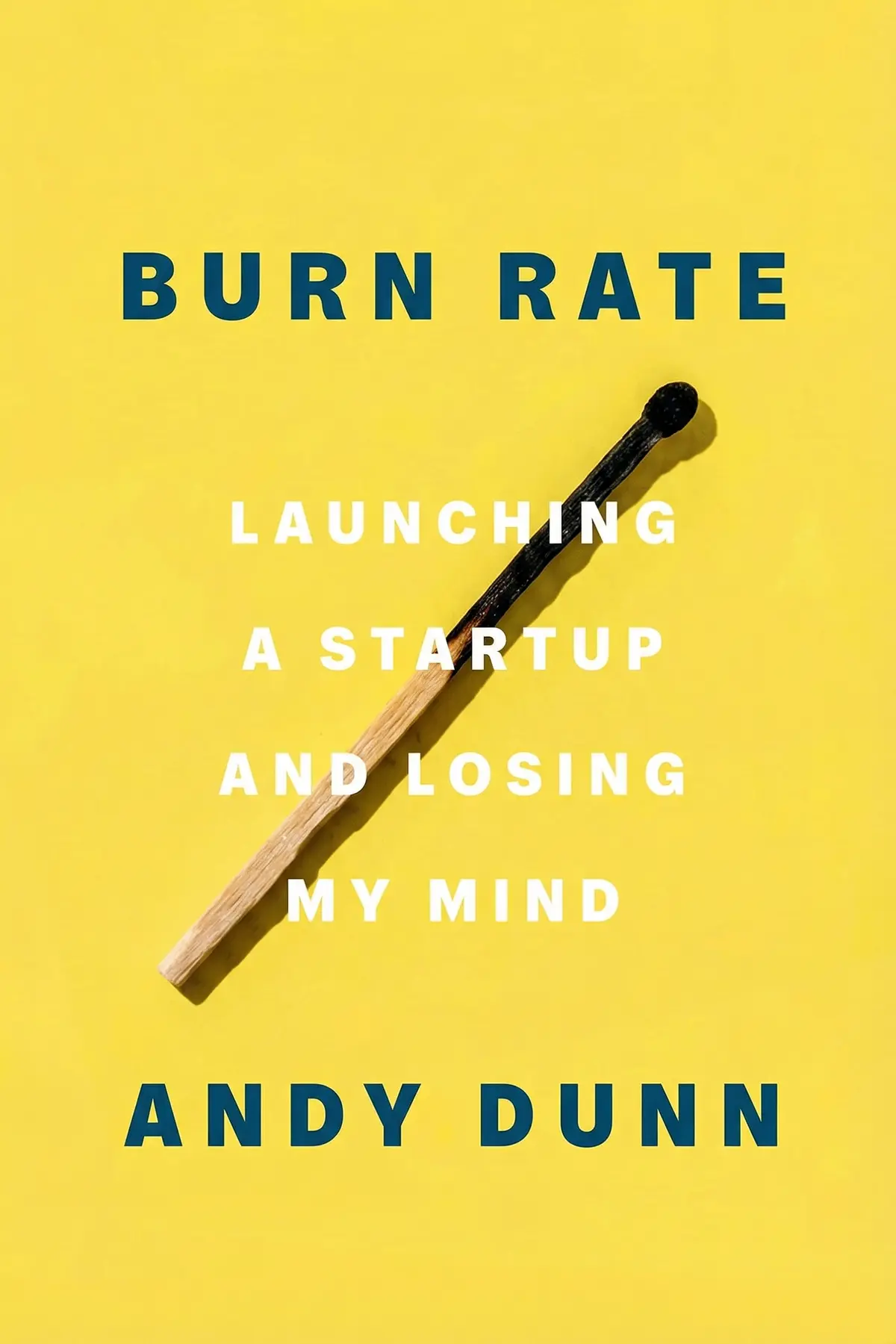
Table of Content
1. Introduction
2 min 10 sec
In the world of high-growth startups, we are often sold a specific kind of hero’s journey. It’s the story of a visionary who sees a gap in the market, hustles through the lean years, and eventually rings the bell at the stock exchange or signs a massive acquisition deal. We celebrate the ‘burn rate’ of their cash as a metric of their ambition. But in his memoir, Andy Dunn invites us to look at a different, far more dangerous kind of burn rate: the speed at which a founder’s mind can consume itself when fueled by an untreated mental illness.
Andy Dunn was the golden boy of the direct-to-consumer revolution. As the cofounder of Bonobos, he revolutionized how men buy clothes, transforming a simple idea about better-fitting pants into a $310 million exit. To the outside world, he was the embodiment of the successful entrepreneur—charismatic, energetic, and relentlessly optimistic. But behind the scenes, Dunn was living a double life. For sixteen years, he navigated the highest peaks of the business world while teetering on the edge of a psychological precipice, haunted by a diagnosis he refused to accept.
This isn’t just a business book about retail strategy or venture capital. It is an intimate, often uncomfortable exploration of bipolar disorder and its complex relationship with the ‘entrepreneurial personality.’ About three percent of the general population lives with bipolar disorder, but among founders, that number is estimated to be as high as twenty percent. Dunn’s story forces us to ask: Is the startup world’s obsession with ‘disruption’ and ‘obsession’ actually providing a hiding place for mania?
Through the following chapters, we will trace Dunn’s path from his first terrifying break with reality in college to the high-pressure boardrooms of New York and, eventually, to a prison cell and a psychiatric ward. It’s a journey that moves from denial to a hard-won transparency. Along the way, we’ll see how mental illness can amplify a person’s potential for greatness while simultaneously sowing the seeds of their destruction. This is a story about the cost of success, the power of vulnerability, and the vital necessity of bringing our darkest struggles into the light.
2. The Illusion of Early Invincibility
2 min 13 sec
Early success and a feeling of ‘otherness’ can create a dangerous sense of exceptionalism that masks the onset of serious mental health challenges.
3. The Thin Line Between Genius and Mania
2 min 11 sec
Understanding the progression from the ‘superpower’ of hypomania to the destructive reality of full-blown mania is essential for recognizing mental health crises.
4. The Heavy Burden of Denial
1 min 54 sec
Ignoring a mental health diagnosis doesn’t make it disappear; it only forces the struggle underground, creating a life of exhausting secrecy.
5. The High-Stakes Mask of Startup Culture
1 min 56 sec
The ‘hustle’ and ‘chutzpah’ of the startup world provide a perfect camouflage for the volatile ups and downs of bipolar disorder.
6. Navigating the Sine Curve of Moods
2 min 13 sec
Bipolar disorder is not a series of sudden flips, but a gradual, rolling cycle of highs and lows that impacts every leadership decision.
7. The False Prophecies of the Manic Mind
1 min 51 sec
Mania creates a distorted reality where everything is a sign, leading to dangerous decisions and a total loss of perspective.
8. The Brutal Intersection of Illness and Justice
1 min 56 sec
Mental health crises can lead to legal consequences that highlight the lack of distinction between illness and criminality in our society.
9. The Power of Radical Transparency
1 min 54 sec
Coming clean about a mental health struggle can lead to unexpected support and is the first step toward long-term stability.
10. Duty as the Ultimate Antidote
1 min 50 sec
A lifelong commitment to mental health is not just for oneself, but a duty to those we love and lead.
11. Conclusion
1 min 56 sec
The story of Andy Dunn and the ‘burn rate’ of his own mind is a profound departure from the typical startup narrative. It serves as both a cautionary tale and a beacon of hope for anyone navigating the intense pressures of high-performance environments while carrying the weight of a mental health condition. For sixteen years, Dunn proved that it is possible to build a massive, culture-shifting company while battling a serious illness. But he also proved that doing so in silence is unsustainable and incredibly dangerous.
Through his journey, we see that the very traits we often celebrate in entrepreneurs—the sleepless nights, the obsessive focus, the ‘manic’ energy—can be the very things that mask a brewing crisis. By bringing his struggle with bipolar disorder into the light, Dunn challenges the business world to redefine what success looks like. True success isn’t just a nine-figure acquisition; it is the ability to maintain one’s health, protect one’s relationships, and live with integrity and transparency.
Dunn’s ‘throughline’ is the transition from denial to duty. He shows us that accepting a diagnosis is not a sign of weakness, but an act of immense courage that opens the door to a more stable and meaningful life. He encourages us to view mental illness with the same pragmatic compassion we afford to physical ailments, stripping away the stigma that forces so many to suffer in isolation.
As you move forward, take a moment to reflect on your own ‘burn rate.’ Are you sacrificing your internal stability for external metrics? Are you hiding a ‘ghost’ of your own? Andy Dunn’s story reminds us that the most important investment we will ever make is in our own mental health. By being honest about our struggles, seeking the right help, and fulfilling our duty to stay well, we can achieve greatness without losing our minds. The light of transparency is the only thing that can truly chase away the ghosts of the past, allowing us to lead lives that are not just successful, but whole.
About this book
What is this book about?
Burn Rate is a raw and courageous memoir that pulls back the curtain on the glamorous world of tech entrepreneurship to reveal a harrowing personal struggle. Andy Dunn, the cofounder and former CEO of the menswear brand Bonobos, shares the untold story of his career: for sixteen years, as he raised millions of dollars and built a household name, he was secretly battling bipolar disorder. The book navigates the volatile cycles of mania and depression that fueled his creative vision while simultaneously threatening to destroy his relationships, his reputation, and his life. Dunn explores the provocative link between the entrepreneurial spirit and mental illness, suggesting that the very traits celebrated in founders—visionary thinking, relentless energy, and risk-taking—often mask or exacerbate clinical conditions. Through his journey from a psychiatric ward to a nine-figure acquisition by Walmart, Dunn offers a promise of hope and a call for transparency. He provides a blueprint for how to manage a serious diagnosis while pursuing professional excellence, advocating for a world where mental health is treated with the same urgency and lack of stigma as physical health.
Book Information
About the Author
Andy Dunn
Andy Dunn earned his MBA from Stanford University, where he cofounded the direct-to-consumer menswear brand Bonobos with Brian Spaly in 2007. He led the company as CEO through its acquisition by Walmart in 2017. Following his tenure at Bonobos, Dunn became a prominent angel investor and currently runs the venture capital firm Red Swan. Throughout his career, he has provided backing and guidance to more than 80 startups, establishing himself as a significant figure in the modern entrepreneurial landscape.
Ratings & Reviews
Ratings at a glance
What people think
Listeners find this memoir a vital narrative regarding mental health that helps progress the public conversation on the issue. The writing is polished and the storytelling is meticulously structured to share experiences with profound depth, creating a relatable journey full of genuine emotion. Listeners call it an authentic piece of entrepreneurial storytelling, and one listener remarks that it is a mandatory read for those in tech. Listeners value the book's candidness and grit, with one review highlighting its first-hand account of bipolar disorder.
Top reviews
Anchalee
This book isn’t your typical tech memoir about scaling a brand to a nine-figure exit. Instead, Andy Dunn provides a visceral, sometimes uncomfortable, look at the reality of building Bonobos while battling untreated bipolar disorder. We often glorify the 'manic founder' archetype, but Dunn strips away that glamour to show the wreckage left in the wake of a mental health crisis. The narrative is fast-paced and reads like a confession, balancing high-stakes boardroom meetings with the terrifying silence of a psychiatric ward. While his immense privilege—the ability to hire top-tier lawyers and expensive specialists like Dr. Z—is clear, it doesn’t diminish the bravery required to share such a private struggle. I found the writing style to be punchy and direct, though it occasionally felt a bit like a series of LinkedIn posts stitched together. Overall, it’s a powerful contribution to the conversation around founder wellness and a must-read for anyone in the startup ecosystem.
Show moreChamp
Picked this up on a whim after seeing it mentioned in a tech newsletter, and I couldn't put it down. The vulnerability Andy Dunn shows regarding his diagnosis is nothing short of heroic in a culture that demands founders be indestructible. He captures the 'up' states of hypomania perfectly—the feeling of being a demi-god who can conquer the retail world—only to crash into the reality of a jail cell or a hospital bed. Not gonna lie, the chapter about the Walmart acquisition was fascinating, not just for the business details, but for the emotional toll it took on him during a period of relative stability. To be fair, the narrative can feel a bit self-absorbed at times, but that’s the nature of a memoir, isn’t it? It’s a raw, pulsating account of survival that every leader needs to read to understand the human cost of the 'hustle' culture that dominates our industry.
Show moreDuangjai
Wow, what a rollercoaster. I’ve read a lot of memoirs, but few are as transparent as this one. Dunn manages to articulate the internal mechanics of a bipolar mind with such clarity that you almost feel the racing thoughts yourself. The book successfully bridges the gap between a high-stakes business narrative and a deeply personal medical journey. While some might find the details of his manic episodes repetitive, I thought they were crucial for illustrating the cyclical nature of the illness. He doesn’t shy away from the 'monsters' he had to face, even when they made him look bad, like when his co-founder was left in tears after a confrontation. The fact that he built a brand as successful as Bonobos while dealing with this albatross is a testament to his resilience. It’s an essential piece of entrepreneurial storytelling that doesn't sugarcoat the damage done to those around him. Truly an eye-opening read.
Show moreSamuel
After hearing Andy Dunn on a podcast, I knew I had to check this out. The book is an open-hearted, unflinching look at a life lived in the extremes. It’s rare to find a business leader willing to admit to such vulnerability, especially regarding a condition as stigmatized as bipolar disorder. The way he describes the internal pressure to perform while his mind was fracturing is something that will stay with me for a long time. I loved the way he brought the reader into the early days of Bonobos, showing the gritty reality of a startup before the big Walmart payout. To be fair, he did catch a lot of breaks that others wouldn't, but he acknowledges his many privileges throughout. This is more than just a business book; it’s a survival guide for the modern era. Highly recommend for anyone looking for a real, raw story about resilience and recovery.
Show moreWan
Ever wonder what’s actually happening behind those glossy “founder success” stories? Dunn reveals the chaotic truth of his journey, showing how a billion-dollar vision can coexist with a mind that is literally breaking apart. The book does an excellent job of weaving the growth of Bonobos with the escalating severity of his episodes. Truth is, I was occasionally put off by the author’s tendency toward hyperbole and the way he sometimes 'storifies' moments that probably felt a lot messier in real life. Some of the decisions he made, like impulsively firing staff or the 6-week CEO debacle, were hard to read about without cringing. However, the level of transparency here is rare in the business world, and for that alone, it deserves a spot on your shelf. It’s a cautionary tale as much as it is an inspirational one, highlighting the fine line between genius-level drive and clinical mania.
Show moreSaovapa
Not what I expected, but perhaps exactly what I needed to read. Most business books are filled with survivor bias and empty platitudes, but this is a gritty, first-hand account of a mental health crisis. Dunn's writing is functional and moves the story along quickly, focusing heavily on the internal sensations of his mania. Look, there are moments where the privilege is a bit blinding; most people experiencing a psychotic break don't have the resources to keep their CEO title or hire elite lawyers. But the honesty regarding the shame and stigma he felt is universal. I appreciated the way he described the 'red flags' he ignored early on, as it provides a roadmap for others who might be struggling. My only gripe is that the middle sections about Bonobos’ internal politics dragged a little too much compared to the intensity of the personal revelations. It's a solid 4-star read that opens up a much-needed dialogue.
Show moreNikolai
As someone who has worked in the NYC startup scene for years, this hit close to home. We’ve all seen the flashy, impulsive CEO types, but we rarely get to see the clinical reality behind that behavior. Dunn is incredibly open about how his bipolar disorder fueled both his creative brilliance and his most destructive choices. Frankly, the parts where he describes the 'ride the dragon' feeling of hypomania were terrifying because they’re so often rewarded in Silicon Valley. I do wish he had spent more time acknowledging the systemic issues in mental health care rather than just his own journey with high-end doctors, but I understand this is a personal memoir. The pacing is excellent, though some of the 'storification' makes it feel a bit like a movie script rather than real life. Still, it’s a refreshing departure from the usual idolization of entrepreneurs who pretend to have it all figured out.
Show moreJoseph
Finally got around to reading this, and it’s a heavy one. Dunn is a skilled writer who knows how to craft a compelling arc, though at times it does feel like an extended blog post stretched to book length. The core of the story—the intersection of mental health and high-pressure leadership—is incredibly relevant today. Personally, I found the descriptions of his time in jail and the subsequent legal battles the most grounding parts of the book. It’s easy to get lost in the glamorous world of fashion and big exits, so those moments of harsh reality were necessary. I agree with other reviewers that the title is a bit of a bait-and-switch; it’s more about the 'burn rate' of a human soul than a company’s cash flow. Despite that, the raw emotion and honesty make it worth the time. It provides a much-needed perspective on the hidden costs of the startup dream.
Show moreCaleb
The chapter on his diagnosis was particularly striking. Dunn doesn't just list symptoms; he describes the 'paternal idealism' and the crushing expectations that contributed to his mental state. It's a thoughtfully crafted narrative that shares his experiences in great detail, making the struggle feel relatable even if his billionaire lifestyle isn't. Truth is, the middle of the book drags a bit when it focuses too much on the minutiae of the apparel business. I also found myself wishing there was more discussion on the lack of affordable care for people who aren't wealthy CEOs. He has his 'Dr. Z,' but what about everyone else in America? Still, his bravery in disclosing his fight with bipolar disorder is commendable. It advances the public dialogue on a topic that is too often ignored in the boardroom. A solid 4 stars for the honesty and the well-written prose.
Show moreBank
I walked away from this one feeling incredibly conflicted. On one hand, the author is a gifted storyteller who manages to make the fashion-tech world feel as thrilling as a thriller novel. On the other hand, the title 'Burn Rate' is quite misleading if you’re looking for a tactical manual on startup finance or operations. It’s almost entirely a memoir about bipolar disorder, and while that’s an important topic, the way he treated his employees during his episodes was genuinely distressing to read. He recounts firing people capriciously and causing emotional damage that a simple 'I’m sorry' in a book can’t really fix. In my experience, memoirs by successful people often gloss over the wreckage they leave behind, and while Dunn is honest about his actions, he doesn't always seem to fully grasp the weight of his privilege in escaping legal consequences after his arrest. Good, but definitely not what I expected going in.
Show moreFeatured in
Readers also enjoyed
A Life Decoded: My Genome: My Life
J. Craig Venter

A Long Way Gone: Memoirs of a Boy Soldier
Ishmael Beah

All Creatures Great and Small
James Herriot
A Promised Land
Barack Obama

A River in Darkness: One Man’s Escape from North Korea
Masaji Ishikawa
A Spy Among Friends: Philby and the Great Betrayal
Ben Macintyre
AUDIO SUMMARY AVAILABLE
Listen to Burn Rate in 15 minutes
Get the key ideas from Burn Rate by Andy Dunn, plus 5,000+ more titles in English and Thai.
- 5,000+ titles
- Listen as much as you want
- 7-day free trial
- Cancel anytime







