
A Splendid Exchange: How Trade Shaped the World
William J. Bernstein
Capital Ideas explores the transformation of financial markets as academic theories on risk, diversification, and market efficiency reshaped Wall Street. It traces how mathematical rigor replaced intuition in modern investment strategies.
1 min 31 sec
For much of the twentieth century, the world of high finance was a clubby, intuitive place. If you walked onto a trading floor in the 1920s or 1940s, you would find men who relied on their gut, their connections, and perhaps a bit of specialized industry knowledge. To them, investing was an art, not a science. The idea that a university professor—someone who had never executed a trade or sat in a boardroom—could tell them how to manage money was not just unlikely; it was offensive.
Yet, as we will explore in this look at Peter L. Bernstein’s influential work, that is exactly what happened. This is the story of a revolution that didn’t involve protest marches or political upheaval, but rather equations, data sets, and a fundamental rethink of what “value” and “risk” actually mean. It is the story of how Wall Street moved from the era of ticker tape and chalkboards into the era of supercomputers and complex algorithms.
Over the next few sections, we are going to trace the lineage of these “Capital Ideas.” We will see how a handful of economists and mathematicians built a new framework for the financial world, piece by piece. We’ll look at the realization that markets are largely unpredictable, the discovery of how to balance risk through diversification, and the eventual rise of the index funds that dominate our retirement accounts today. This transition was a gradual process that spanned decades, eventually reaching a tipping point when technology finally caught up to theory. By the time we reach the end, you’ll understand how the modern financial landscape was built on a foundation of academic rigor that forever changed the way the world moves its money.
2 min 40 sec
Explore why the dream of forecasting market movements is mathematically flawed and how early researchers discovered the chaotic nature of price changes.
2 min 18 sec
Learn how the focus shifted from picking individual winning stocks to building robust portfolios that manage risk through strategic variety.
2 min 33 sec
Discover how the complex world of investing was simplified into two distinct decisions and why the market itself is the ultimate benchmark.
2 min 38 sec
Examine the theory that stock prices already reflect everything we know, making the search for ‘hidden gems’ a difficult and often futile quest.
2 min 19 sec
Understand the different schools of thought on what a company is truly worth, from dividend projections to the hard data of balance sheets.
2 min 06 sec
See how radical academic ideas finally crossed over into the real world, leading to the creation of the first index funds at Wells Fargo.
2 min 35 sec
Follow the rise and fall of ‘portfolio insurance’ and what the 1987 crash taught us about the limits of financial models.
1 min 33 sec
As we look back at the journey from Louis Bachelier’s quiet observations in 1900 to the high-frequency, model-driven markets of today, the throughline is clear: knowledge is the ultimate currency. The academics we’ve discussed didn’t just find a better way to trade; they redefined our relationship with uncertainty. They taught us that while we cannot control the wind—the random movements of the market—we can certainly learn how to set our sails.
The core lesson of Peter L. Bernstein’s Capital Ideas is one of humility and strategy. We must accept that the market is smarter than any individual and that trying to ‘beat’ it is often a fool’s errand. Instead, the path to long-term success lies in understanding the math of risk, embracing the power of diversification, and being patient enough to let the market’s natural efficiency work in our favor.
Today, you have access to tools that would have seemed like science fiction to the investors of the early twentieth century. You can buy the entire world’s economy with a single click, manage your risk with scientific precision, and benefit from the collective wisdom of billions of people. As you move forward with your own financial journey, remember the giants whose ideas built this landscape. Wall Street is no longer just a place of gut feelings and lucky guesses; it is a monument to the power of human intellect and the improbable ideas that changed the world. Use that knowledge wisely, stay disciplined, and always remember that in the world of capital, the most important asset you own is your understanding of the game.
For most of the twentieth century, the world of finance was driven by gut feelings and traditional wisdom. Professionals were skeptical of academics who claimed that math could explain the chaos of the stock market. However, a series of groundbreaking theories eventually dismantled the old guard, leading to the sophisticated, data-driven environment we see today. Peter L. Bernstein takes readers through this journey, highlighting the improbable people who revolutionized how we think about money. The book explores the promise of modern finance: that through understanding risk, information flow, and portfolio construction, we can manage capital with scientific precision. From the early realization that market movements are random to the creation of index funds and portfolio insurance, this summary covers the intellectual evolution that turned Wall Street into a quantitative powerhouse. It is a deep dive into the ideas that now underpin trillions of dollars in global investments.
Peter L. Bernstein was a highly respected financial historian and author. He is most famous for his insightful explorations into the history of finance and risk management. His notable works include Capital Ideas Evolving and Against the Gods. Bernstein's career was dedicated to bridging the gap between theoretical economics and practical investment, and his writing has had a lasting influence on how both academics and professional investors understand the mechanics of the market.
Listeners describe the writing as both accessible and captivating. They enjoy the depth of the technical information, with one listener mentioning that the work offers a superb survey of the financial world. Additionally, listeners prize the historical context provided throughout.
Peter Bernstein has a singular talent for taking dense, academic theories and turning them into a narrative that feels almost like a thriller. This book isn't just about math; it’s about the people—the rebels like Harry Markowitz and William Sharpe—who dared to challenge the "gut feeling" culture of old-school Wall Street. I found the transition from the Cowles Commission to the development of the Capital Asset Pricing Model absolutely fascinating. Bernstein manages to explain complex things like the variance in stock portfolios without drowning the reader in actual hieroglyphics or unsolvable equations. It’s a masterclass in financial history that makes you realize just how much our modern world relies on these once-ignored theories. Truly an essential read for anyone who wants to understand why we invest the way we do today.
Show moreEver wonder how Wall Street transformed from a bunch of guys following their gut into a data-driven powerhouse? This book provides the answer by focusing on the "underdogs"—the professors who were initially laughed at by professional money managers. I loved reading about the "random walk" theory and how it basically proved that most active managers were just lucky rather than skilled. It’s an inspiring look at how abstract economic speculation can eventually reshape the lives of millions of investors through things like index funds. Bernstein’s background as both an academic and a practitioner gives him a unique lens that makes the narrative feel incredibly authentic. This isn't just a finance book; it's a history of an intellectual revolution. Highly recommended for any serious investor.
Show moreCapital Ideas is essentially the definitive biography of the ideas that define our current financial system. I was particularly struck by the discussion on portfolio insurance and how these "capital ideas" were actually put into practice during the 80s. Bernstein captures the tension between the old-school traders and the new-age "quants" perfectly. His ability to explain the Modigliani-Miller theory without using a single complex algorithm is nothing short of brilliant. It’s rare to find a book that treats economists like the philosophical titans they are, showing how their theories on risk and capital structure changed the world. If you want to know why "buy and hold" became the gold standard, this is the book you need to read.
Show moreAs someone who spends all day looking at charts, reading about the 'random walk' theory from a historical perspective was eye-opening. Bernstein does a phenomenal job showing how the stock market isn't just a casino; it's an institution that makes progress possible by pricing risk. The stories of Louis Bachelier and his long-ignored thesis really highlight how ahead of their time some of these thinkers were. I loved the blend of biography and technical analysis—it made the concepts of CAPM and the efficient market feel much more tangible. It’s a readable, engaging, and thoroughly researched account of the intellectual foundation of Wall Street. Even if the models aren't perfect, understanding their origins is crucial for any modern investor.
Show moreAfter finishing Against the Gods, I felt compelled to see where Bernstein would take the story of risk next. Capital Ideas delivers a solid, chronological look at how financial engineering moved from the ivory tower to the trading floor. The way he profiles the nuances and oddities of titans like Paul Samuelson and Myron Scholes adds a much-needed human element to what could have been a very dry subject. My only gripe is that it feels a bit anchored in the 1980s, making some of the later chapters on portfolio insurance feel slightly like a time capsule. Still, the prose is elegant and the technical overview is second to none. It’s a perfect bridge between academic theory and real-world application, even if it lacks the punch of his more famous work.
Show moreThe chapter on Harry Markowitz alone is worth the price of admission for anyone serious about understanding modern portfolio theory. I’ve always known the "risk vs reward" mantra, but seeing the mathematical struggle behind that insight was eye-opening. Bernstein does a great job explaining how the computer was the real catalyst, turning abstract models into tools that firms like Wells Fargo could actually use. The book is technical enough to feel rigorous but remains accessible for the layperson who isn't afraid of a little intellectual heavy lifting. I did find the pacing a bit slow in the middle sections when he gets into the minutiae of dividend discount models. Nevertheless, it remains a foundational text that provides a necessary historical perspective on our current investment landscape.
Show morePicked this up on a recommendation and was surprised by how much I enjoyed the biographical sketches of people like Fischer Black and John McQuown. Usually, finance books are either too simplistic or way too dense, but Bernstein hits a sweet spot. He explains the shift from the "Dow Theory" to the Capital Asset Pricing Model with a clarity that is rare in this field. It’s fascinating to see how the first index funds were met with such fierce resistance before becoming the giants they are today. While the book could have used a bit more skepticism regarding the assumptions of normality in these models, it’s still an engaging read. It gave me a much deeper appreciation for the tools my broker uses every day.
Show moreFrankly, this felt more like a dry history lesson than the provocative insight I was expecting based on the author's reputation. While Bernstein is undoubtedly a gifted writer, I found myself bogged down in the sheer number of obscure characters and minor academic squabbles. The book does an okay job summarizing the Efficient Market Hypothesis and the Black-Scholes model, but much of this information has been covered more dynamically in other finance books. If you are looking for a deep dive into the biography of economists, you'll love it. However, if you want something that applies these ideas to the modern 21st-century market, you might find this a bit irrelevant and dated. It’s a respectable effort, just not a page-turner for me.
Show moreTo be fair, the book does an excellent job of tracing the origins of the Efficient Market Hypothesis, even if it feels a bit dated now. The truth is, while the history is comprehensive, the writing can sometimes wallow in too much detail about which academic moved to which university in 1956. I appreciated the sections on the random walk and how wheat prices influenced our understanding of stocks, but I found my interest flagging toward the end. It’s a solid resource for students or professionals, but for the casual reader, it might be a bit too much "inside baseball" regarding the world of economic journals. It’s definitely a good book, but maybe not the "epic" that some other reviewers claim it to be.
Show moreNot what I expected, given how much praise this gets in finance circles. To be fair, the book feels like a collection of Wikipedia entries for 20th-century economists stitched together with some flowery prose. I was hoping for more "illuminating insights" into the current state of business, but instead, I got a lot of stories about people like Alfred Cowles and Irving Fisher that don't feel particularly applicable today. The focus on the 1987 crash as the "end point" makes the whole thing feel like a relic of a bygone era. If you’re a history buff, you might find some nuggets here, but for someone looking for practical investment wisdom, it’s mostly a slog through outdated theories that the 2008 crisis largely debunked anyway.
Show moreWilliam J. Bernstein


Yanis Varoufakis
Andrew Ross Sorkin
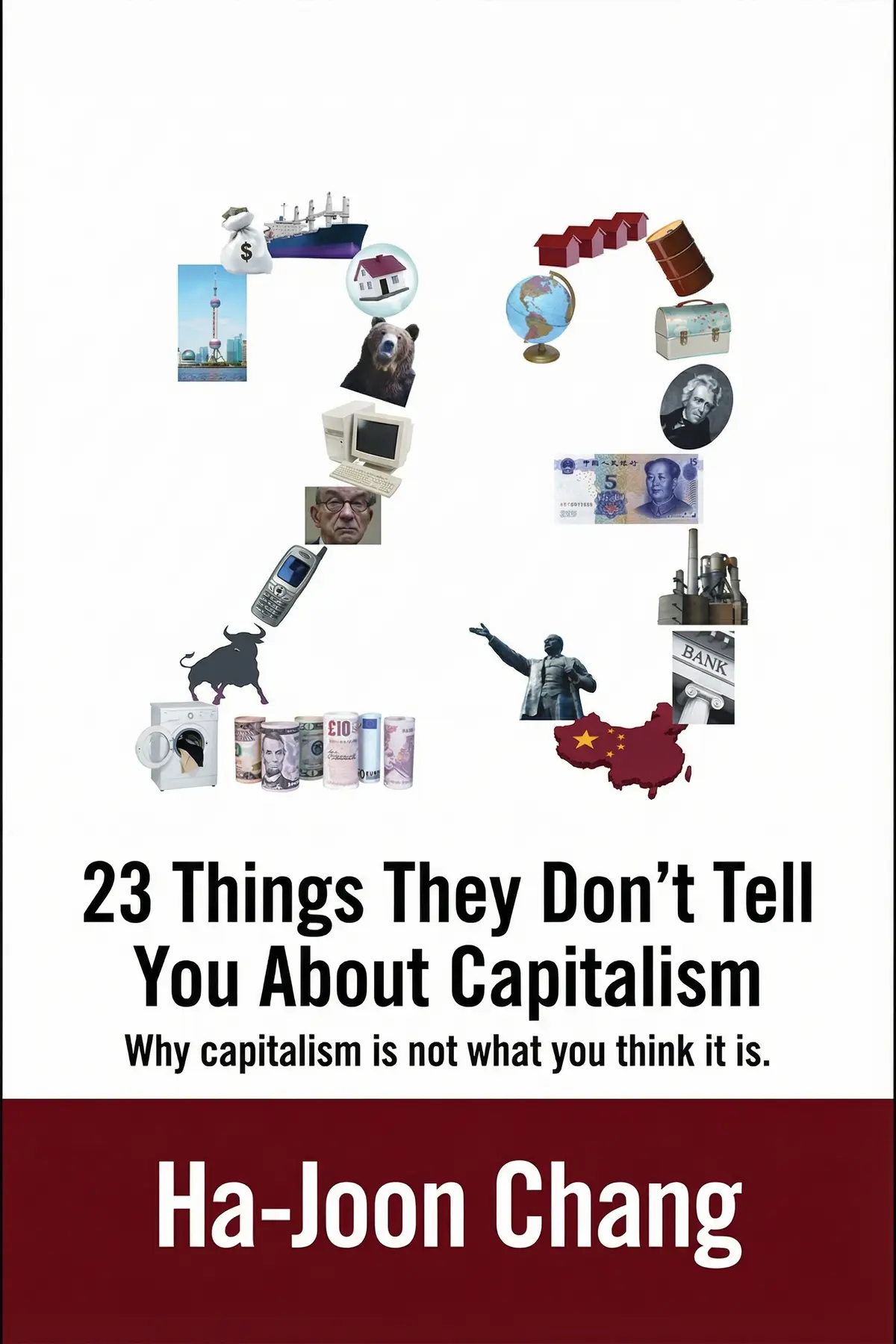
Ha-Joon Chang
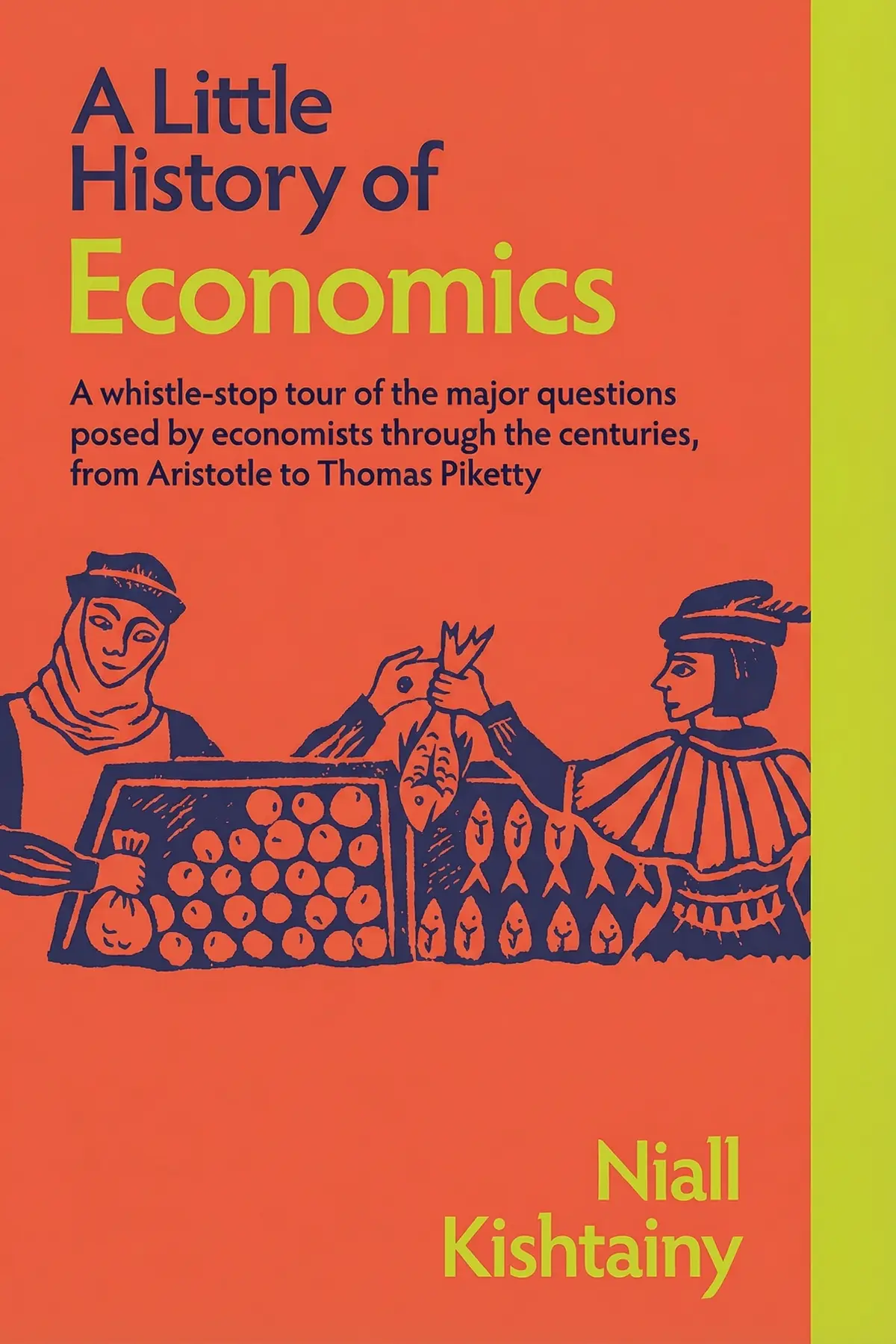
Niall Kishtainy
AUDIO SUMMARY AVAILABLE
Get the key ideas from Capital Ideas by Peter L. Bernstein, plus 5,000+ more titles in English and Thai.







