
12 min 05 sec
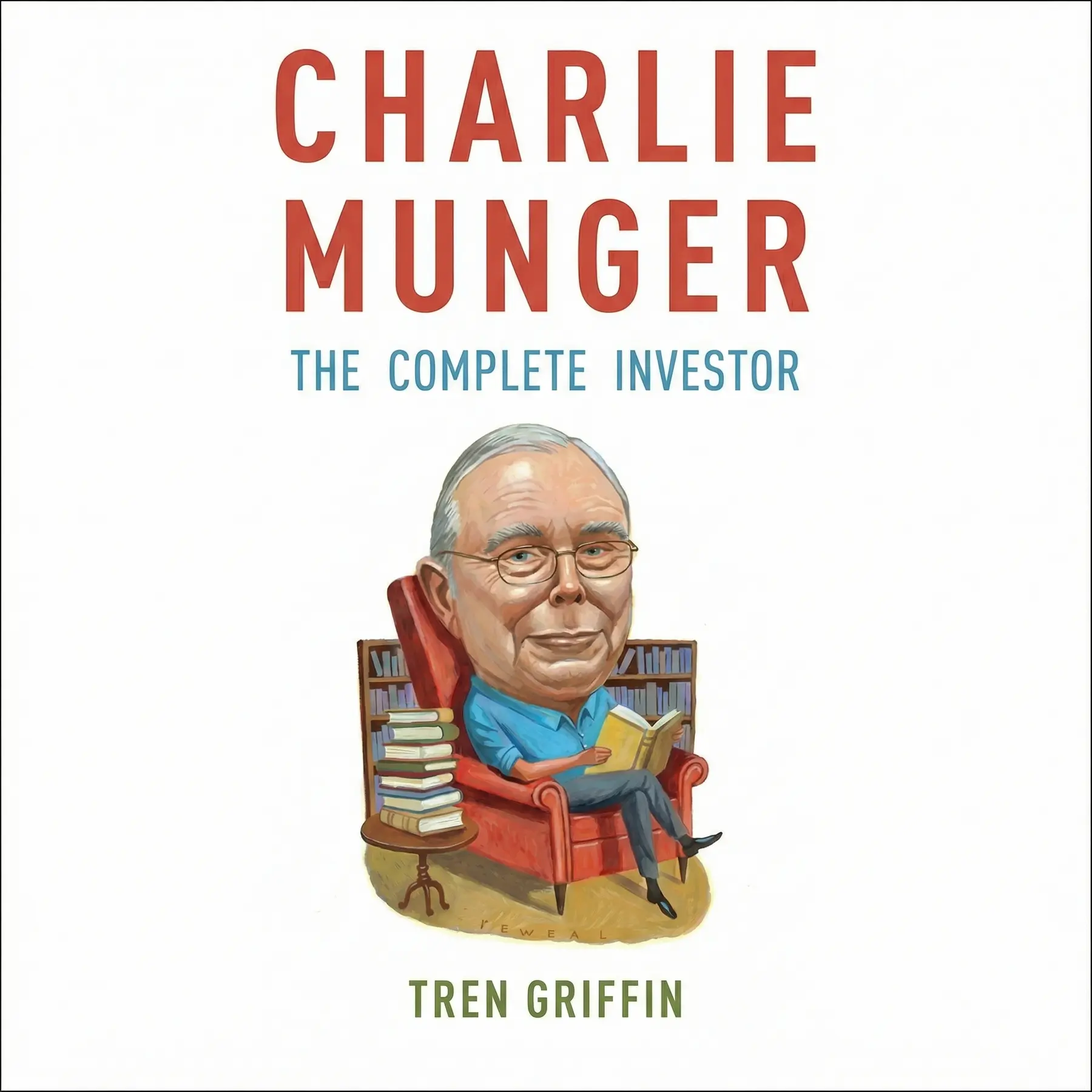
Charlie Munger: The Complete Investor
By Tren Griffin
Explore the mental frameworks and investment strategies of Berkshire Hathaway’s vice chairman. This guide details Charlie Munger’s approach to value investing, rational decision-making, and the importance of lifelong interdisciplinary learning.
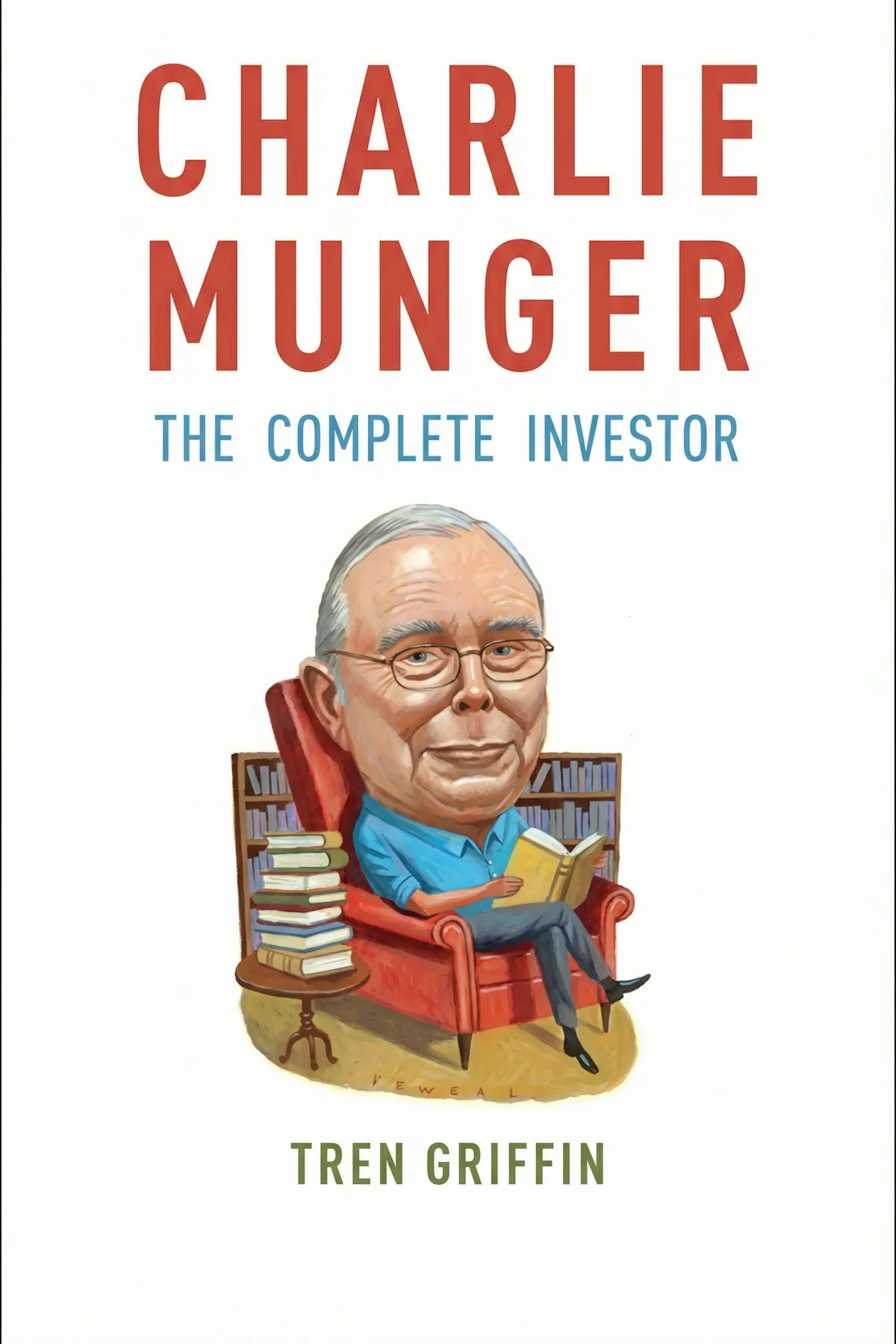
Table of Content
1. Introduction
1 min 22 sec
Imagine having the opportunity to peer into the mind of one of the most successful financial thinkers in history. Most people know Warren Buffett, but fewer realize that his longtime partner at Berkshire Hathaway, Charlie Munger, is the architect behind much of their shared success. Munger isn’t just an investor; he is a practitioner of a unique mental operating system that has allowed him to navigate the volatile world of finance with uncanny precision. This journey isn’t just about picking stocks; it’s about refining how you think, how you learn, and how you act when the stakes are high.
As the Vice Chairman of Berkshire Hathaway, Munger has helped turn a textile company into a global powerhouse. Under his and Buffett’s leadership, the firm has grown to include massive interests in everything from insurance and energy to rail transport and consumer brands like Dairy Queen and Fruit of the Loom. Beyond these subsidiaries, the organization maintains significant investment positions in iconic global brands like American Express and Coca-Cola. But the real story isn’t the list of companies—it’s the methodology used to find them. We are going to explore the core principles that Munger lives by: the pursuit of constant learning, the discipline of value investing, the power of psychological awareness, and the implementation of worldly wisdom. By the end, you’ll see why Munger believes that a sharp, rational mind is an investor’s greatest asset.
2. The Power of the Learning Machine
1 min 42 sec
Success in the financial world isn’t a matter of innate genius or luck. Instead, it comes from a relentless, lifelong dedication to absorbing new information and evolving one’s understanding.
3. Simplifying Decisions Through the Graham System
1 min 52 sec
Legendary investors don’t try to solve the hardest problems; they look for the easiest ones. By staying within a specific area of competence, they avoid the most common pitfalls.
4. Four Pillars of a Rational Investor
2 min 19 sec
True value investing relies on four fundamental concepts that transform how you view the market, helping you remain calm while others are panicking or overpaying.
5. Cultivating the Traits of Patience and Bravery
1 min 47 sec
The psychological makeup of an investor is often more important than their technical skills. Success requires the discipline to stay still and the courage to stand alone.
6. Mastering Worldly Wisdom Through Mental Models
1 min 51 sec
By connecting big ideas from various fields like biology, physics, and psychology, you can develop a ‘latticework’ of understanding that provides a massive competitive advantage.
7. Conclusion
1 min 12 sec
The life and strategies of Charlie Munger offer a profound lesson: great investing is less about complex math and more about character and clarity of thought. We have explored how the foundation of his success is built on becoming a ‘learning machine,’ someone who treats the acquisition of knowledge as a full-time job. We’ve seen how he uses Benjamin Graham’s value system to simplify the chaotic world into manageable ‘baskets,’ ensuring he never operates outside his circle of competence. By maintaining a margin of safety and staying rational in the face of Mr. Market’s moods, Munger has proven that a disciplined mind can overcome the volatility of the financial world.
As you move forward, remember that the most important takeaway isn’t a specific stock tip, but the commitment to ‘worldly wisdom.’ Don’t silo yourself into one way of thinking. Build your own latticework of mental models and have the patience to wait for the right opportunity. When that opportunity arrives, have the courage to act with conviction, even if the rest of the world is running the other way. By combining lifelong learning with radical rationality, you won’t just become a better investor—you’ll develop a more profound understanding of the world around you.
About this book
What is this book about?
This summary explores the philosophy and professional tactics of Charlie Munger, the longtime partner of Warren Buffett and a titan of the investing world. It moves beyond simple stock-picking tips to examine the internal character and cognitive habits required to achieve extraordinary financial results. You will learn about the foundational Graham value investing system, which emphasizes safety and competence over speculative gains. The promise of this exploration is a complete shift in perspective. Instead of viewing the market as a series of numbers, you will learn to see it through a 'latticework' of mental models. The text covers how to manage your own psychological biases, why doing nothing is often the most productive move an investor can make, and how to build a life centered on the continuous acquisition of worldly wisdom. It is a blueprint for becoming a more rational, patient, and successful participant in the global economy.
Book Information
About the Author
Tren Griffin
Tren Griffin is a senior director at Microsoft and the author of The Global Negotiator, an acclaimed guide to negotiating on an international level. Griffin is also a former partner at Eagle River, a private equity firm specializing in software, telecommunications and other tech investments.
Ratings & Reviews
Ratings at a glance
What people think
Listeners find the work stimulating and essential for investors, valuing the dense concentration of wisdom it provides. Furthermore, it earns praise for its helpful insights, and one listener observes that it functions as a good refresher course in Buffett/Munger methodology. The high frequency of quotes also enhances its status as a beneficial resource. On the other hand, the prose and ease of reading spark varied reactions, as some consider it clear and fast-paced while others disagree. Likewise, views on the author’s skill are divided, with some admiring the effort and others criticizing the writing style.
Top reviews
May
Finally finished this over the weekend and I’m genuinely surprised by how much I enjoyed the section on the psychology of human misjudgment. Most investing books focus purely on the numbers, but Munger and Griffin remind us that temperament and character are the real drivers of long-term success. The book outlines a recipe for a life well-lived: read constantly, learn from your mistakes, and don’t let envy dictate your financial decisions. I appreciated the emphasis on how compounding applies to knowledge just as much as it does to money. My only gripe is that the writing style feels a bit stiff, almost clinical at times, which contrasts sharply with Munger’s own blunt wit. Nevertheless, the wisdom here is undeniable and serves as a great reminder to keep things simple.
Show moreBun
As an investor who prefers the Graham-style approach, I found this to be an incredibly helpful refresher course on the basic tenets of the craft. Griffin captures the essence of why Munger is so mythical: he doesn’t just invest; he thinks in systems and probabilities. The book highlights how critical it is to buy at a significant discount to intrinsic value, a rule many modern traders have seemingly forgotten. Personally, I didn’t mind the high volume of quotes because Munger’s voice is so distinct and authoritative. The author serves more as a curator than a narrator here, which works if you’re looking for a reference guide. It’s not going to replace the 'Almanack,' but it’s a worthy companion for your bookshelf. It definitely makes you want to go out and read more, which is the highest praise.
Show moreChiw
Don't expect a fast-paced thriller, but if you want a serious concentration of wisdom, this is a must-read for any disciplined investor. The book focuses on the importance of building a latticework of mental models to avoid the standard traps of human psychology. I particularly liked the discussion on how envy, not greed, is what truly drives the world into financial bubbles. Griffin's tone can be a bit condescending in certain sections, as if he's the sole arbiter of what Munger intended, but the quotes speak for themselves. In my experience, the best way to read this is in small bursts so you can actually digest the logic behind the valuation techniques. It’s a dry read, certainly, but the lessons on discipline and stupidity avoidance are timeless. It will definitely help you refine your temperament for the next market crash.
Show moreCharlotte
Tren Griffin has essentially compiled a highlight reel of Charlie Munger’s most potent wisdom, focusing heavily on the Graham value investing philosophy. While some might find the sheer volume of quotes overwhelming, I found it to be a concentrated shot of financial discipline. It serves as an excellent refresher on concepts like the margin of safety and the importance of being objective when others are panicking. The structure is a bit disjointed, jumping from one insight to another, but the core message about temperament remains clear. Frankly, I think this works better as a desk reference than a cover-to-cover narrative. It’s not a biography, so don't go in expecting a life story; instead, expect a masterclass in how to think about capital and risk.
Show moreSam
Is this a biography? Not exactly, and that seems to be where a lot of readers get tripped up when they pick up this volume. If you are looking for a deep dive into Munger’s personal history, you should probably stick with 'Damn Right' or 'Poor Charlie’s Almanack.' Griffin’s approach is much more academic, focusing on the mental models and the 'latticework' of theory that Munger uses to evaluate businesses. To be fair, the author’s commentary can sometimes feel like a redundant echo of the quotes he just presented. I found the constant repetition of the term 'Graham value investors' to be a bit grating after the third chapter. Still, the underlying principles of avoiding stupidity and practicing extreme patience are worth the price of admission for any serious market participant.
Show moreArthit
The chapter on moats was worth the entire cost of the book for me, even though it was tucked away in the appendix. Griffin does a solid job of breaking down the Munger-Buffett methodology into digestible chunks, especially regarding the 'servant' role of Mr. Market. I’ve read a lot of value investing literature, and while this isn't the most original, it’s a very efficient way to internalize the core principles. Truth is, you could probably find most of this online, but having it all in one place makes for a great study guide. The focus on 'patient aggressiveness' is a concept I’ll be thinking about for a long time. It’s a short read, which is a blessing because it allows you to circle back and re-read the dense parts without feeling exhausted.
Show morePrapaiwan
What a concentrated dose of investment philosophy! I picked this up hoping for a quick overview of Munger's style and that is exactly what Tren Griffin delivered. The book is really about how to develop a model for life, emphasizing reading, health, and avoiding major catastrophes like excessive leverage. I loved the quote about Munger’s kids seeing him as a book with legs—it’s a perfect image for the lifelong learning he advocates. Not gonna lie, the writing style can be a bit robotic and the author repeats himself quite a bit throughout the chapters. However, the core principles of treating a share as a piece of a business are presented very clearly. It’s a high-value resource for anyone trying to stand on the shoulders of giants.
Show moreChatri
If you want to understand the difference between Fama & French factor investing and the classic Graham approach, this book provides a great starting point. It isn’t just about stock picking; it’s about the virtues of patience and the courage to act aggressively when the right opportunity finally appears. The formatting is a bit strange with the heavy reliance on external quotes, but the aggregate effect is a very powerful argument for a specific way of living. I’ve been following Griffin’s blog for a while, and you can see that same analytical DNA in these pages. Some people might find it too short, but I think the brevity helps keep the focus on the most important 'rules' of the game. It’s a solid effort that offers plenty of food for thought for the objective mind.
Show moreStella
Picked this up at the airport and it served as a decent way to kill a few hours during my layover. The content is essentially a 'Best Of' collection of Mungerisms, which is great, but the author's commentary doesn't add much value to the original quotes. Honestly, it feels like it could have been a long-form essay rather than a full book. To be fair, the section on the 'Psychology of Human Misjudgment' is well-handled and provides a good introduction to the concept of mental models. I just wish there was more original analysis or perhaps some fresh interviews to spice up the narrative. If you’ve already read the standard value investing classics, you might find this a bit redundant. It’s a fine entry point for beginners, but seasoned investors might find it a bit too thin on new insights.
Show moreGoy
Look, the writing here is pretty much what you'd expect from a specialized blog post stretched into a full-length book. I struggled with the formatting because it feels like a never-ending loop of quotes followed by a summary of that exact same quote. It’s a bit like watching a movie with a narrator who insists on describing every single action you see on the screen. While the content itself is top-tier—because Munger’s insights are always 5 stars—the delivery is clunky and lacks a cohesive narrative flow. The appendix on moats was actually more engaging than several of the main chapters, which felt repetitive. It’s fine for a quick skim if you want to refresh your memory on Ben Graham’s rules, but it’s not exactly a literary masterpiece.
Show moreFeatured in
Readers also enjoyed



AUDIO SUMMARY AVAILABLE
Listen to Charlie Munger in 15 minutes
Get the key ideas from Charlie Munger by Tren Griffin, plus 5,000+ more titles in English and Thai.
- 5,000+ titles
- Listen as much as you want
- 7-day free trial
- Cancel anytime







