
Acting with Power: Why We Are More Powerful Than We Believe
Deborah Gruenfeld
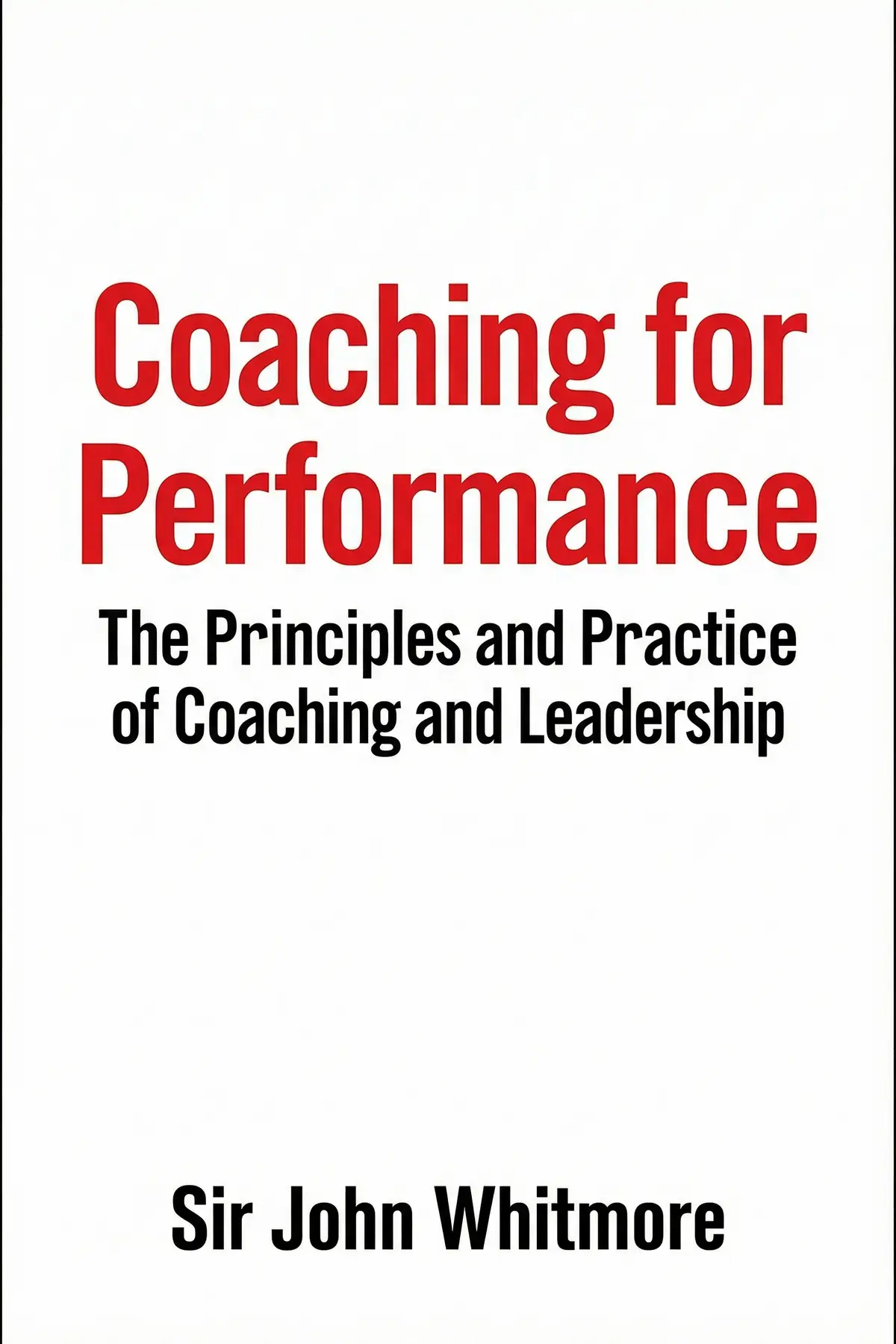
Unlock the potential of your team with Sir John Whitmore’s definitive guide to performance coaching. Learn how the GROW model transforms leadership from top-down management into a partnership of awareness and responsibility.
1 min 44 sec
Imagine a world where the word coach was reserved exclusively for the sports field. In that era, the idea of a business manager acting as a coach was virtually unheard of. This was the landscape when Sir John Whitmore first published his insights, a time when leadership was often synonymous with giving orders and demanding compliance. But Whitmore, drawing from his background in the high-stakes world of professional racing and elite tennis, saw something different. He realized that the same psychological barriers holding back athletes—fear, lack of focus, and self-doubt—were the exact same obstacles preventing business professionals from reaching their peak performance.
In this exploration of Whitmore’s landmark work, we are going to look at how coaching evolved from a specialized athletic training method into a cornerstone of modern organizational leadership. The central throughline of this journey is the shift from ‘telling’ to ‘asking.’ It is about recognizing that every individual possesses a wealth of latent potential, and the role of the leader is to act as a facilitator who helps unlock that potential. This isn’t just about getting more work out of people; it’s about creating a culture of meaning, autonomy, and emotional intelligence.
We will break down the mechanics of the GROW model—a framework so effective it has become the gold standard for coaches and managers worldwide. We’ll see how this four-step process—Goals, Reality, Options, and Will—provides a structured path for navigating complex professional challenges. More importantly, we’ll understand why the principles of awareness and responsibility are the twin engines that drive this entire process. By the end of this journey, you’ll see how coaching is less about providing answers and more about helping others find their own, creating a more engaged and high-performing workplace in the process.
2 min 01 sec
Discover why true coaching isn’t about giving advice, but about fostering a coachee’s internal sense of ownership and deep environmental clarity to eliminate performance-blocking internal barriers.
2 min 04 sec
Learn how to categorize ambitions into four distinct levels, moving from broad dreams to daily process goals, ensuring every action is fueled by personal investment.
1 min 47 sec
Explore the art of non-judgmental inquiry to reveal the root causes of problems, moving beyond surface symptoms to develop a profound understanding of the present moment.
1 min 42 sec
Unlock creative problem-solving by dismantling self-imposed limitations and exploring a wide range of alternative actions before committing to a single course.
1 min 47 sec
Bridge the gap between ideas and results by establishing firm commitment, identifying potential hurdles, and creating a robust accountability loop.
1 min 43 sec
Discover how the GROW model applies beyond one-on-one sessions, fostering collaborative environments and continuous improvement cycles across entire teams.
1 min 34 sec
As we wrap up our exploration of Sir John Whitmore’s Coaching for Performance, it’s clear that the legacy of his work lies in a fundamental belief in human potential. The GROW model isn’t just a management tool; it’s a framework for human connection and empowerment. By grounding every interaction in the principles of awareness and responsibility, you transform the act of leadership. You stop being the person with all the answers and start being the person who helps others find their own strength and clarity.
The shift toward emotionally intelligent leadership is no longer a luxury in the modern world; it is a necessity. People are looking for more than just a paycheck; they are looking for meaning and autonomy. Coaching provides the bridge to that meaning. It allows individuals to align their personal ‘dream goals’ with their professional ‘process goals,’ creating a synergy that drives high performance.
If there is one lesson to take away, it’s that high performance starts with you—the coach. It starts with your ability to listen, to ask rather than tell, and to create a safe space for others to grow. As you move forward, try to look at every challenge through the lens of GROW. Ask yourself: What is the goal here? What is the current reality? What options do we have? And finally, what is the will to act? By consistently applying these principles, you don’t just improve performance; you contribute to a culture where everyone has the opportunity to thrive. Sir John Whitmore may have pioneered the coaching industry decades ago, but his insights remain the gold standard for anyone who believes that the best way to lead is to empower.
Coaching for Performance is a foundational exploration of how leaders can foster high-performance cultures by moving away from traditional command-and-control structures. At its heart is the belief that employees are capable of finding their own solutions if guided correctly through a framework of awareness and personal accountability. The book introduces the GROW model—Goals, Reality, Options, and Will—as a universal methodology for facilitating professional and personal growth. Readers are promised a shift in perspective that prioritizes emotional intelligence over mere instruction. By mastering the art of asking powerful, non-judgmental questions, managers can help their team members overcome internal obstacles and self-doubt. This summary details how to set meaningful goals, assess current situations accurately, brainstorm creative solutions, and build the necessary willpower to follow through. Whether you are an aspiring executive, an experienced coach, or a team leader, the book offers a practical roadmap to unlocking human potential and achieving sustainable success in the modern, meaning-driven business world.
Sir John Whitmore was a trailblazer who transitioned from a career in professional racecar driving to becoming the founding father of performance coaching. Recognizing that high-performance athletic techniques could revolutionize business leadership, he established Performance Consultants, the first agency of its kind. He is credited with developing the GROW method and played a pivotal role in establishing coaching as a legitimate global industry. Sir John Whitmore passed away in 2017, shortly after completing the 25th-anniversary update of his seminal work.
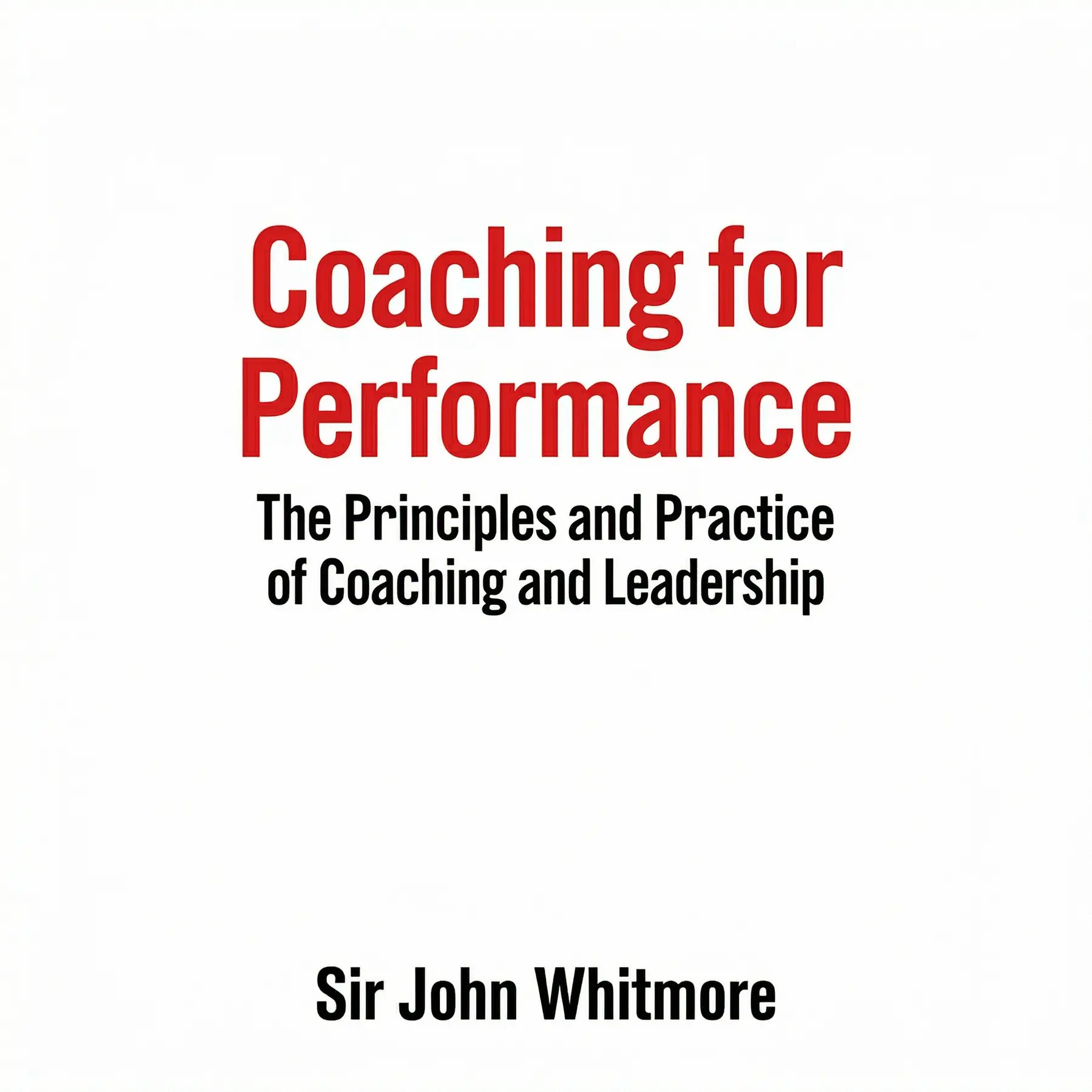
Listeners consider this work the "gold standard" in the coaching field, valuing how it has developed into an essential tool for career coaches and business executives alike. Furthermore, they prize the way the GROW model is applied through practical examples and the addition of a "Coach’s Toolkit," with one listener mentioning its value as a quick reference guide prior to meetings. Also, listeners point out the sixth edition's pertinent revisions concerning the post-pandemic landscape, commending the writing for its clarity, accessibility, and depth of insight.
This book is basically the Bible of the coaching world, and for good reason. I finally sat down with the latest edition and was blown away by how relevant it remains despite the original text being decades old. Tiffany Gaskell has done a fantastic job updating Sir John Whitmore’s foundational work to address the messy, hybrid reality of the post-2020 workplace. While the core GROW model is still the star of the show, the real-life scenarios involving leader-coaches make the theory feel incredibly tangible. It’s not just for professional executive coaches; managers who want to stop micromanaging and start empowering their teams need this on their desks. The Coach’s Toolkit at the back is worth the price of admission alone. Truly a masterclass in unlocking human potential.
Show moreFinally got around to reading this and I’m kicking myself for waiting so long. As a new manager, I struggled with the urge to solve everyone's problems for them, but this book completely changed my perspective on what leadership actually looks like. It’s about building awareness and responsibility in others, not just giving orders. The way the text follows specific leaders through their coaching journeys made the GROW model click for me in a way other resources haven't. Honestly, the shift toward a coaching-led culture is exactly what my organization needs right now. The tone is encouraging yet professional, and the practical Toolkit is something I'll be referencing every week. If you want to actually motivate your team instead of just checking boxes, buy this immediately.
Show moreEver wonder why some leaders seem to effortlessly get the best out of their people? This book provides the answer. Sir John Whitmore’s legacy lives on through these pages, reminding us that coaching is an art form focused on future potential rather than past errors. I loved the Coach’s Toolkit in the back—it’s packed with question prompts that are absolute gold for anyone who occasionally gets tongue-tied in 1-on-1s. The writing is incredibly direct, avoiding the jargon that usually bogs down management books. Transitioning from a directive style to a coaching style isn't easy, but the real-life scenarios provided here make the path clear. It’s an essential read for anyone navigating the complexities of the modern corporate world. A truly transformative piece of literature.
Show moreAs someone who has been training managers for over a decade, I can say this is the one book I always recommend. It perfectly captures the essence of what it means to lead through inquiry rather than instruction. The 6th edition maintains the integrity of Whitmore’s original vision while adding necessary nuances for today’s fast-paced environment. I found the sections on building awareness and responsibility to be particularly poignant. The book doesn’t just tell you what to do; it shows you how to think like a coach. Using the scenarios as a guide, you can see exactly how the GROW model unfolds in real time. It’s an invaluable resource that stays relevant year after year. Every executive should have a copy of this in their office.
Show moreAfter hearing so much hype, I expected a dry textbook, but what I found was a remarkably clear and accessible guide. The truth is, most leadership books are fluff, yet Whitmore’s approach to the GROW model provides a concrete framework that actually works in high-pressure environments. I especially appreciated the specific question prompts in the appendix—they’re perfect for those moments when you’re stuck in a session and don't know where to go next. My only minor gripe is that some of the earlier chapters feel a bit repetitive if you’ve already had basic training. Still, the transition from 'teaching' to 'helping them learn' is a paradigm shift that every modern supervisor should experience. It’s a solid resource for anyone looking to level up their management style.
Show moreThe chapter on the GROW model is essentially the heart of the book, providing a structured yet flexible path for any coaching conversation. Personally, I found the 6th edition’s focus on the post-pandemic landscape to be the most valuable addition. Our world of work has shifted toward hybrid models, and Gaskell’s updates reflect that evolution beautifully. The book strikes a fine balance between high-level philosophy and "boots on the ground" tactics. I did find the absence of some diagrams in my early copy a bit frustrating, but the text is descriptive enough to carry the message. It serves as both a comprehensive introduction for novices and a refreshing resource for veterans preparing for a session. It’s definitely earned its spot on my permanent reference shelf.
Show moreWhat sets this edition apart is its focus on the 'new normal.' We all know the world changed after 2020, and coaching methods have to keep up or risk becoming obsolete. I found the updated scenarios involving remote and hybrid teams to be particularly insightful. Frankly, the GROW model remains the most effective framework I’ve used, and this book explains it better than anyone else. The tone is professional yet very accessible, making it a great pick for someone who isn't a "professional coach" but has people-management responsibilities. I appreciated the inclusion of a glossary, as the terminology can sometimes be confusing for beginners. My only wish was for more visual aids to break up the text, but the quality of the advice is undeniable.
Show morePicked this up on a whim during a career transition and it’s been a total eye-opener. I’d always thought coaching was just a fancy word for "giving advice," but Whitmore completely debunked that for me. Not gonna lie, some of the concepts take a bit of practice to actually implement, but the Coach's Toolkit provides a great safety net. The book is very well-organized, allowing you to jump around to the sections that are most relevant to your current challenges. I particularly liked the focus on unlocking potential rather than fixing mistakes. It’s a positive, forward-thinking approach that feels very refreshing. A few parts felt a little repetitive, but overall, it’s a highly practical guide that I’ll be coming back to often.
Show moreIs it still the gold standard? To be fair, if you already own the 5th edition and have a decent handle on remote leadership, you might find the 6th edition a bit redundant. While the updates regarding the pandemic are insightful, they don't fundamentally change the core methodology. I found myself skimming through several sections that felt like a rehash of material I’d already mastered. However, if you are a newcomer, the writing is undeniably crisp and the practical scenarios are helpful for visualizing the GROW model in action. It’s a great book, don't get me wrong, but the 'new' content felt a little thin for a full repurchase. I’d recommend it to beginners, but seasoned pros might find it a bit basic.
Show moreTo be honest, I struggled with the pacing of the first few sections. While the reputation of this book is stellar, I found some of the philosophical musings a bit drawn out before getting to the meat of the GROW model. Look, the information is top-tier once you get there, but it requires some patience to dig through the introductory fluff. That said, the appendices and the glossary are incredibly useful for quick reference. I can see why it's called the "gold standard," but I think there are more modern, punchier books out there that cover similar ground in half the time. It’s a classic for a reason, but it definitely feels like a legacy text in some spots. Decent, but didn't quite live up to the massive hype for me.
Show moreDeborah Gruenfeld
Mike Michalowicz
Hamilton Helmer
Margaret Heffernan
AUDIO SUMMARY AVAILABLE
Get the key ideas from Coaching for Performance by John Whitmore, plus 5,000+ more titles in English and Thai.







