

21 min
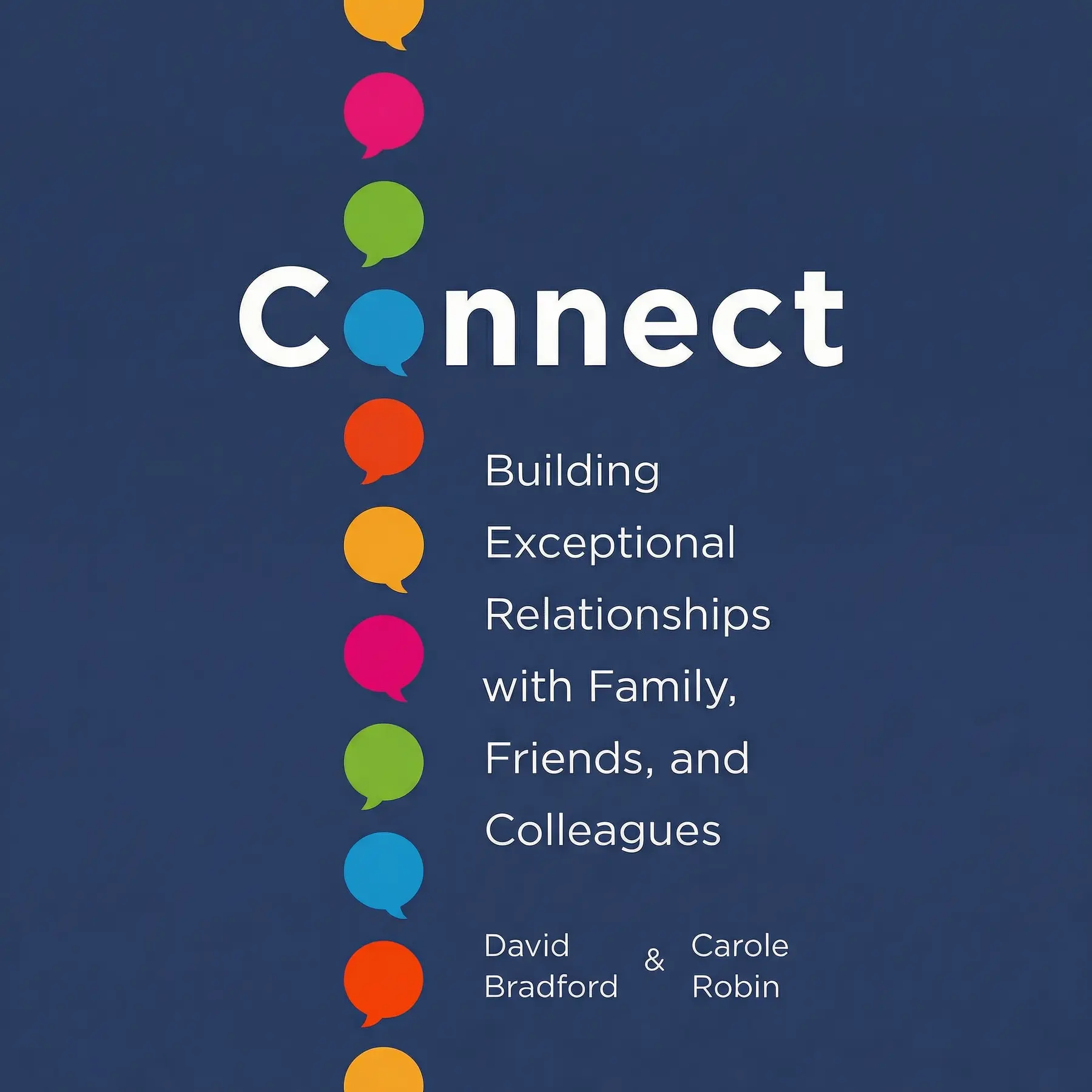
Connect: Building Exceptional Relationships with Family, Friends and Colleagues
Learn to transform superficial interactions into deep, authentic bonds. Using principles from Stanford’s most popular MBA course, this guide provides tools for navigating conflict, building trust, and fostering genuine human connection.
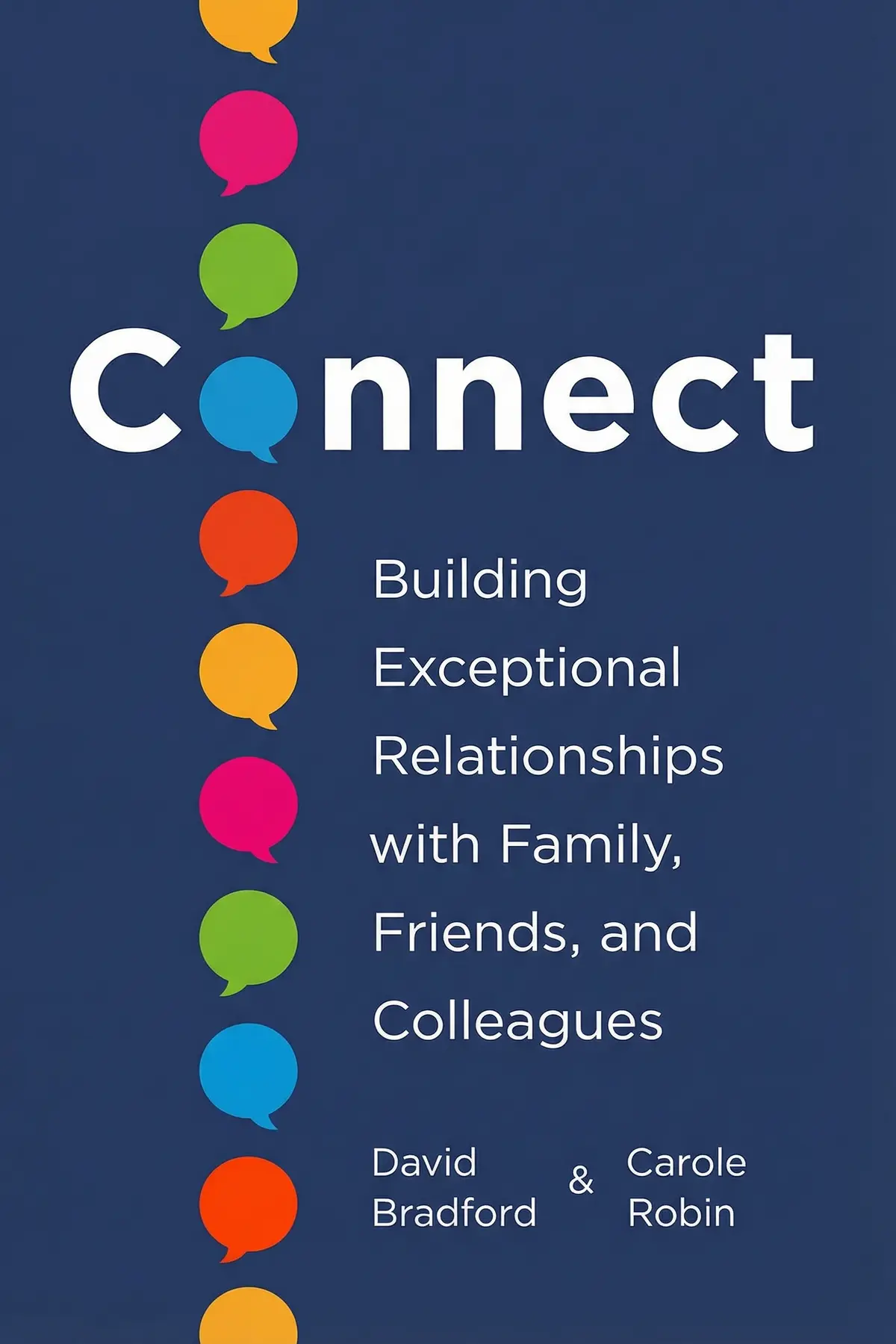
Table of Content
1. Introduction
1 min 42 sec
Have you ever walked away from a conversation feeling like you were just going through the motions? Perhaps you were polite, and the other person was too, but as you left, you realized that neither of you actually said what was on your mind. Most of our lives are spent in this middle ground of social interaction—the space of the “pleasant-but-shallow.” We maintain a surface-level harmony, but we often feel a nagging sense of isolation, even when we are surrounded by people. This summary explores how to break through that barrier to reach what Stanford professors David Bradford and Carole Robin call “exceptional relationships.”
These are the bonds where you feel truly seen, supported, and accepted—not for the polished version of yourself that you present to the world, but for who you actually are. Throughout our exploration of these ideas, we will look at how exceptional relationships aren’t just a stroke of luck or a result of good chemistry; they are built through specific, learnable behaviors. We’ll see how vulnerability, rather than being a sign of weakness, is actually the engine of closeness. We will also learn why conflict, which most of us spend our lives avoiding, is actually the very thing that makes a relationship resilient.
As we move through these concepts, the central throughline is a shift in mindset. You will learn to view your relationships as living organisms that require constant attention and a commitment to growth. The goal isn’t to reach a perfect, static state where nothing ever goes wrong. Instead, it’s to develop the skills to handle whatever comes your way, moving from contact to connection, and ultimately, to something truly exceptional. By the end of this journey, you’ll have a new perspective on how to be more authentic with your colleagues, your friends, and your family, and you’ll understand that the depth of your connections is directly proportional to the risks you are willing to take.
2. The Growth Mindset in Connection
2 min 38 sec
Building deep bonds requires more than just good intentions; it demands a willingness to treat every interaction as a learning opportunity.
3. The Power of Incremental Disclosure
2 min 33 sec
Authenticity is the cornerstone of trust, but you don’t have to reveal everything at once to make an impact.
4. The True Strength of Vulnerability
2 min 16 sec
True closeness is built when you trust someone with the parts of yourself you usually keep hidden.
5. Feedback as a Tool for Change
2 min 26 sec
Transform your relationships by learning to give and receive feedback that focuses on behavior rather than character.
6. Mastering the Language of Emotion
2 min 31 sec
Don’t let your feelings run the show behind the scenes; bring them into the light to build clarity and self-awareness.
7. Conflict as a Catalyst for Growth
2 min 29 sec
Instead of fearing disagreements, learn to use them as a tool to repair and strengthen your bonds.
8. Commitment to Mutual Development
2 min 30 sec
An exceptional relationship is a partnership in growth where both parties are dedicated to helping each other become their best selves.
9. Conclusion
1 min 55 sec
Building an exceptional relationship is a marathon, not a sprint. It is a journey marked by moments of intense clarity and periods of messy confusion. But as we have seen, the tools for navigating this path are within your reach. By embracing a growth mindset, practicing incremental disclosure, and learning to navigate the ‘net’ of feedback, you can transform even the most stagnant bonds into sources of profound energy and support.
Remember the hallmarks we’ve discussed: being your full self, being willing to be vulnerable, trusting that your disclosures are safe, being honest with each other, resolving conflict productively, and committing to each other’s growth. These aren’t just abstract ideals; they are practical benchmarks for your daily interactions. When you find yourself hesitating to speak up or retreating from a difficult conversation, ask yourself which of these hallmarks you are neglecting.
The most actionable thing you can do right now is to choose four or five relationships that you want to move toward ‘exceptional.’ Use the 15 Percent Rule to share something slightly more authentic than you normally would. When a ‘pinch’ occurs, address it before it becomes a ‘crunch.’ Keep a journal of your experiences, not just to record what happened, but to reflect on what you learned about yourself and the other person.
Connecting deeply with others is one of the most rewarding experiences a human being can have. It reduces our sense of isolation and provides a foundation of strength from which we can face the rest of the world. It won’t always be easy, and it will certainly require you to face your fears, but the payoff—a life filled with authentic, resilient, and life-giving connections—is worth every bit of the effort. Start small, stay curious, and keep taking those 15 percent risks. The path to an exceptional relationship is open to anyone willing to take the first step.
About this book
What is this book about?
Connect explores the mechanics of building what the authors call "exceptional relationships." These are bonds characterized by radical honesty, mutual growth, and the ability to navigate high-stakes conflict without damaging the connection. Derived from the legendary "Interpersonal Dynamics" course at Stanford Graduate School of Business, the book breaks down the behavioral competencies required to move past the social masks we all wear. The authors provide a roadmap for moving from functional or competitive relationships to collaborative and personal ones. By focusing on concepts like the "15 Percent Rule" for self-disclosure and learning to stay on "your side of the net" during feedback, readers are promised a practical toolkit for personal and professional evolution. It is a deep dive into the importance of vulnerability, the hidden costs of silence, and the transformative power of treating every interpersonal challenge as an opportunity for mutual learning.
Book Information
About the Author
David Bradford
David Bradford received his PhD in social psychology from the University of Michigan and is the Eugene O’Kelly II Senior Lecturer in Leadership, Emeritus at the Stanford Graduate School of Business. Carole Robin received her PhD in human and organization systems from Fielding University and was the Dorothy J. King Lecturer in Leadership at Stanford, where she co-taught the Interpersonal Dynamics course with Bradford for nearly 20 years. She is also the cofounder of Leaders in Tech.
Ratings & Reviews
Ratings at a glance
What people think
Listeners find this book remarkably profound, as one listener emphasizes how it distills significant principles into practical tips. It assists in reshaping bonds with peers and companions, while listeners also observe better social interactions and management techniques. Additionally, they enjoy the stimulating anecdotes and accessible language, which establish the work as a worthwhile and widely praised resource.
Top reviews
Layla
Finally got around to reading the book version of the legendary Stanford course, and it honestly didn't disappoint. The authors provide a masterclass in emotional intelligence that goes far beyond the usual corporate fluff. I found the '15% rule' for self-disclosure particularly helpful because it gives you a tangible way to test the waters of a new relationship without feeling overly exposed or reckless. Instead of just telling you to 'be vulnerable,' they show you exactly how to build that muscle through incremental steps. My professional interactions have already started to shift as I practice being more direct about my needs. While some might find the detailed case studies a bit long-winded, I thought they were essential for seeing how these theories actually play out in messy, real-world conversations. It is a dense read, but the payoff for your personal growth is immense.
Show moreNim
The concept of 'pinches and crunches' was the lightbulb moment I desperately needed for my marriage. We had fallen into a pattern of avoiding difficult conversations to keep the peace, but Bradford and Robin explain why that strategy eventually backfires. Truth is, building an 'exceptional' relationship requires a level of honesty that most of us are afraid to even consider. I appreciated how the authors shared their own professional falling-out, proving that even the experts struggle with these dynamics. The book moves beyond superficial tips and forces you to look at your own defensive patterns and assumptions. It’s a profound deep dive into what it means to be fully known by another person. I’ve recommended this to three colleagues already because the leadership insights are just as powerful as the personal ones. This is one of those rare books that actually changes how you interact with the world.
Show moreAna
After hearing Carole Robin on a podcast, I knew I had to grab this to level up my leadership style. The book offers a fascinating look at the 'Touchy-Feely' course dynamics, translating that high-intensity learning environment into something you can practice at home. What struck me most was the emphasis on being your full self rather than a curated version of who you think you should be. This authenticity is what builds real trust, yet we spend so much energy masking our true feelings in professional settings. The authors provide a very clear set of hallmarks for what an exceptional relationship looks like, which gave me a helpful benchmark for my own life. It’s insightful, challenging, and surprisingly moving for a book that originated in a business school. If you want to move past small talk and build something substantial, read this.
Show morePrasarn
Wow, I didn't expect a book about 'dynamics' to hit me this hard emotionally. The way the authors describe the journey from superficiality to true vulnerability is nothing short of life-changing. I’ve read a lot of books on this topic, including David Brooks, but this one provides much more concrete suggestions for everyday life. It isn't just theory; it’s a set of tools you can use the moment you put the book down. The stories they share, especially the one about their own partnership, are incredibly moving and demonstrate the power of staying in the room when things get tough. I feel like I finally have a vocabulary for the things I was feeling but couldn't express in my relationships. This is essential reading for anyone who values human connection. It’s easily one of the best books I’ve read this year.
Show moreAstrid
As someone who struggles with office politics, this provided a surprisingly concrete roadmap for navigating tricky social waters. To be fair, I initially rolled my eyes at the idea of a 'feedback model,' but the distinction between 'pinches' and 'crunches' changed my entire perspective on conflict. We often let small annoyances slide until they explode into relationship-ending disasters, which is exactly what this book teaches you to avoid. The writing is clear and the summary sections at the end of each chapter make it easy to revisit the core concepts when you're in a hurry. I do think the authors could have addressed the challenges of remote communication more, as digital interactions lack the nuance they describe. Still, the advice on staying on 'your side of the net' during an argument is worth the price of the book alone. It's a solid tool for anyone looking to refine their leadership style and social skills.
Show moreFon
Look, I was skeptical about another business-school-style self-help book, but the storytelling here is actually quite grounded and relatable. The authors break down the mechanics of trust through the lens of their famous Stanford course, making complex psychological concepts feel accessible to the average reader. I particularly enjoyed the section on the 'concentric rings' of disclosure, which helped me realize why some of my friendships felt stagnant. It’s not just about talking more; it’s about the quality and risk of what you choose to share. My only minor gripe is that the book feels slightly dated in its focus on in-person interactions, ignoring how much of our connecting now happens over screens. However, the core principles of active listening and avoiding judgment are timeless. It’s a thoughtful, well-researched guide that offers a lot of value if you're willing to do the uncomfortable work of self-reflection.
Show moreKamol
Ever wonder why some friendships just fizzle out while others become 'exceptional' over time? This book answers that question by focusing on the friction points we usually try to ignore. The authors argue that conflict, when handled correctly, is actually the fuel that drives a relationship deeper. I found the advice on 'not going over the net'—meaning, don't assume you know someone else's intentions—to be incredibly practical for de-escalating heated moments. The pacing can be a bit slow in the middle chapters, and some of the sample conversations felt a little too 'therapy-speak' for my taste. That said, the underlying framework is brilliant and very easy to apply to both a boss and a partner. It’s a great resource for anyone who feels like their communication has hit a ceiling. I’ll definitely be keeping this on my shelf for future reference.
Show moreDao
This book basically summarizes decades of psychological research into a digestible guide for the modern professional. It’s refreshing to see a focus on the 'messy' side of relationships rather than just positive affirmations and easy fixes. The authors are very clear that building deep connections is risky and often uncomfortable, which feels much more honest than most self-help. I’ve started using the behavioral feedback model with my direct reports, and the clarity it provides has reduced a lot of the usual tension during performance reviews. My only complaint is that the 'exceptional' relationship standard they set feels almost unattainable for someone with a busy life. Still, aiming for even half of what they describe would be a massive improvement for most people. It’s a thought-provoking read that definitely improved my social skills.
Show moreTang
While the core principles are undeniably valuable, the execution felt repetitive and clinical at times. I agree with the idea that we need more empathy and better feedback loops, but did we really need five different examples of the same communication mistake? Personally, I found myself skipping large sections of the fictional vignettes because they felt so staged and lacked the nuance of real human speech. The authors are clearly experts, but the transition from a live workshop to a book format seems to have lost some of the magic. There is a table of 'warmth' words that felt particularly unnecessary—as if using 'alienated' instead of 'isolated' is a magic fix for a failing relationship. It’s worth a read for the general concepts, but don't expect a page-turner. It feels more like a textbook than a guide.
Show moreNan
Does anyone actually talk like this in real life? Frankly, I found the scripted dialogues between characters like 'Phil and Sarah' to be incredibly stiff and unrealistic, which made it hard to take the advice seriously. It felt like I was reading a corporate HR manual disguised as a guide to human connection. The authors seem to want us to treat our emotions like data points in an Excel sheet, categorizing feelings by intensity levels as if humans aren't naturally chaotic. If I told a friend I was disclosing exactly 15% more of my inner self to them, they would probably laugh in my face or walk away. While there are a few decent nuggets about empathy buried in here, the clinical tone and repetitive structure made it a chore to finish. I was hoping for something more organic and less like a business school lecture.
Show moreFeatured in
Readers also enjoyed
AUDIO SUMMARY AVAILABLE
Listen to Connect in 15 minutes
Get the key ideas from Connect by David Bradford, plus 5,000+ more titles in English and Thai.
- 5,000+ titles
- Listen as much as you want
- 7-day free trial
- Cancel anytime







